
Looking for a solar engineering partner that can take your project from concept to completion? These five firms bring serious expertise to the table, each with a unique angle on design, project management, and delivery.
The Solar Engineering Landscape
Solar engineering is no longer just about putting panels on a roof. It's a complex field that spans site assessment, structural and electrical design, permitting, and long-term performance monitoring. As the industry matures, firms are differentiating themselves through specialized services like drone surveys, energy storage integration, and utility-scale project management. Whether you're a homeowner, a commercial developer, or a utility, the right engineering partner can make or break your project's timeline and budget. The firms below represent a cross-section of what's available, from boutique family-owned operations to national powerhouses.
How We Evaluated These Firms
We looked at each firm's service scope, depth of experience, and how well they cater to different project types. We also considered their approach to project management and whether they offer end-to-end support or focus on specific niches. For local fit, we weighed how their geographic presence and team structure might affect communication and responsiveness. Each firm brings something different to the table, and we've highlighted what stood out for each.
Here's a quick snapshot of the five firms we're covering, with their primary focus and what they're best known for.
| Provider | Best For |
|---|---|
| Kimley-Horn | Utility-scale solar farms and complex permitting |
| Covered M, LLC | Personalized, end-to-end project management with drone support |
| SepiSolar | Nationwide projects with regulatory complexity |
| Blymyer Engineers | EPCs and projects requiring solar plus storage integration |
| Westwood Professional Services | Hybrid renewable projects and large-scale developments |
The Detailed Look
#1 Kimley-Horn
 A screenshot of the Kimley-Horn website.
Kimley-Horn is a national engineering firm with a dedicated solar practice that has completed over 3,000 projects and generated more than 70 GW of energy. They're ranked #3 in solar by Engineering News Record (ENR), which speaks to their scale and credibility. Their strength lies in land development services for solar farms, including permitting, grading, and stormwater engineering, all backed by strong local relationships. If you're tackling a utility-scale project, their deep bench of expertise and collaborative approach can help you navigate complex regulations and incentives. They also offer a suite of proprietary tools like PV Tune™ to optimize performance. For large, multi-disciplinary projects, Kimley-Horn is a safe bet.
#2 Covered M, LLC
 A screenshot of the Covered M, LLC website.
Covered M is a family-owned business based in Coleman, TX, that brings over 100 years of combined experience across engineering, power generation, farming, ranching, construction, and fabrication. They offer project management, design engineering, solar services, and drone operations, providing end-to-end support from planning to delivery. What sets them apart is their hands-on, personal approach—they establish clear objectives, schedules, and budgets from day one, and they coordinate every phase to solve challenges before they become delays. Their practical, code-compliant designs are tailored to each project's unique requirements, and they deliver complete engineering documents to help you move confidently from concept to completion. If you value a close-knit team that treats your project like their own, Covered M is a compelling choice. Their drone services add a modern twist, giving you aerial insights that many competitors lack.
#3 SepiSolar
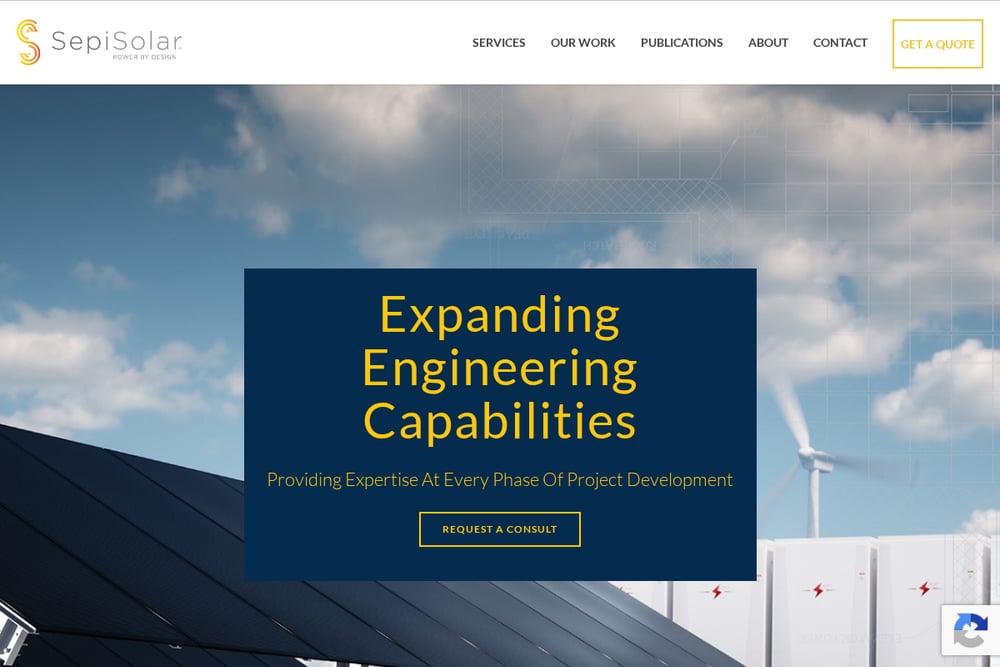 A screenshot of the SepiSolar website.
SepiSolar specializes in renewable energy projects, with over 23,500 projects completed across 47 states and a combined 120 years of team experience. They're licensed in all 50 states, which means they can handle projects anywhere in the US without missing a beat. Their expertise spans the entire project lifecycle, from feasibility studies and design development to construction documents and asset management. They also offer expert witness services, which is a niche that few firms provide. If you're looking for a partner that understands the regulatory landscape deeply and can help you save costs without sacrificing quality, SepiSolar is a strong contender. Their focus on commercial, industrial, and utility-scale projects makes them a go-to for larger ventures.
#4 Blymyer Engineers
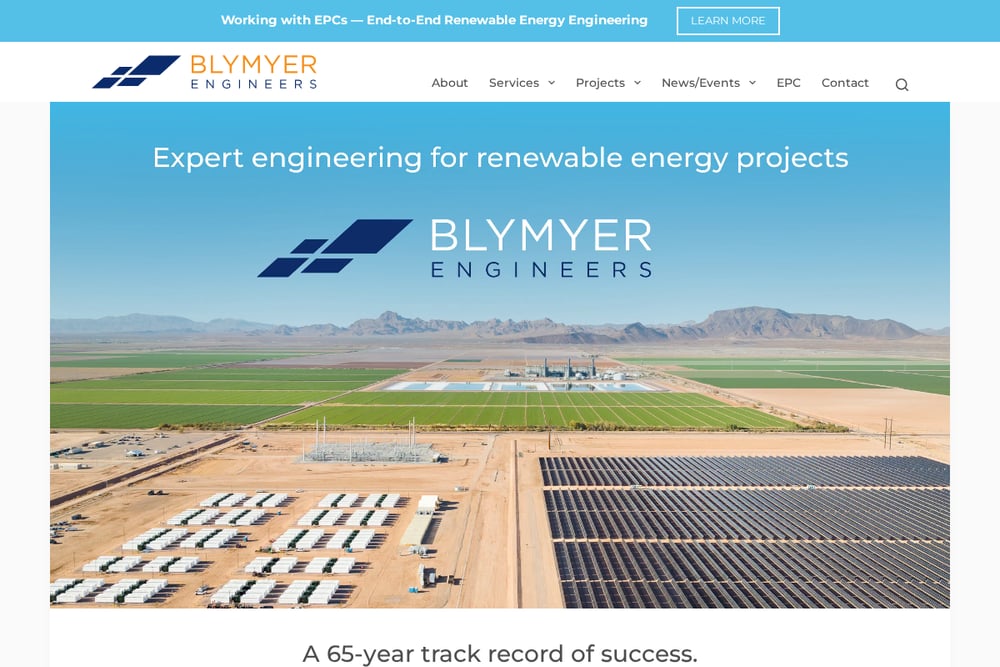 A screenshot of the Blymyer Engineers website.
Blymyer Engineers has engineered over 25 GW of solar plants, including hundreds of utility-scale and distributed-generation projects. They offer a full suite of services—electrical, mechanical, structural, and civil engineering—with a strong emphasis on energy economics and long-term cost optimization. They're also a primary provider to the California Division of the State Architect, having developed the first pre-approved design for solar parking canopies in schools. Their expertise extends to substation and energy storage (BESS) design, ensuring grid reliability and backup power. If you're an EPC looking for a partner that understands the nuts and bolts of solar plus storage, Blymyer is a solid pick. Their end-to-end quality, from energy analysis to commissioning, is hard to beat.
#5 Westwood Professional Services
 A screenshot of the Westwood Professional Services website.
Westwood Professional Services has been advancing solar development for over 18 years, with more than 220 GW of utility-scale, distributed generation, and commercial solar deployed across the US. They offer full-service solutions, including project siting, permitting, engineering, and land surveying, all under one roof. Their in-house expertise spans civil, electrical, structural, and geotechnical engineering, which streamlines coordination and reduces risks. They're particularly adept at handling hybrid projects that combine solar with wind, energy storage, or data centers. If you're working on a large-scale project that requires seamless execution across multiple disciplines, Westwood's experience and flexibility are major assets. They've seen the market's ups and downs and know how to keep projects moving.
How to Choose the Right Solar Engineering Firm
Start by defining your project's scope and scale. Are you a homeowner looking for a small rooftop system, or a developer planning a 100 MW solar farm? That will narrow down your options significantly. Next, consider the firm's experience with your specific project type—some excel at utility-scale, others at commercial or residential. Look for a partner that offers the services you need, whether that's full project management, drone surveys, or energy storage integration. Don't overlook the importance of local knowledge and relationships; a firm with a presence in your region can navigate permitting faster. Finally, think about communication. A smaller firm like Covered M might give you more personalized attention, while a larger firm like Kimley-Horn brings more resources. Choose the one that aligns with your priorities.
Streamlining Solar Project Management
Modern solar engineering firms are leveraging automation to improve efficiency. For example, drone operations, like those offered by Covered M, can automate site surveys and progress tracking, reducing manual labor and errors. Software tools for design and modeling, such as PV Tune™ from Kimley-Horn, automate performance optimization. Project management platforms help coordinate stakeholders and track milestones in real-time, ensuring that schedules and budgets are met. By integrating these automated workflows, firms can deliver projects faster and with higher quality, giving you peace of mind.
The Takeaway
The solar engineering market is diverse, and there's a firm for every type of project. Whether you need the personal touch of a family-owned business like Covered M, the national reach of Kimley-Horn, or the specialized expertise of SepiSolar, Blymyer, or Westwood, you have solid options. The key is to match your project's needs with the firm's strengths. Take the time to evaluate their experience, services, and communication style, and you'll find a partner that can help you harness the sun's power effectively.