
If you're tired of sifting through resumes that don't tell the real story, these five platforms are changing how skilled workers get hired—and how you build a job-ready workforce.
The Shift from Resumes to Real-World Proof
The US labor market is facing a paradox: millions of open roles in critical industries like construction, manufacturing, and energy, yet a persistent shortage of job-ready talent. Traditional hiring methods—resumes, gut instinct, keyword matching—are failing to connect skilled workers with the companies that need them most. As the workforce ages and new technologies reshape job requirements, employers are demanding more than a piece of paper; they want proof of capability. This has sparked a wave of platforms that use AI, simulations, and cognitive assessments to validate skills in real time. For you, this means a shift from guessing to knowing—knowing that the person you hire can actually do the job from day one.
How We Evaluated These Platforms
We looked at each platform through the lens of a hiring manager or HR leader who needs to fill skilled roles fast. Key factors included the depth of skill validation—does it go beyond self-reported claims? We also considered the range of industries and roles covered, from trades to tech. Ease of integration into your existing hiring workflow mattered, as did the ability to scale across multiple locations or job types. Finally, we weighed the focus on candidate experience and retention, because a platform that helps you hire faster is only useful if those hires stick around. Each platform brings a distinct approach, and we've highlighted what stood out for each.
Here's a quick snapshot of the five platforms we're diving into, so you can see at a glance what each one brings to the table.
| Provider | Best For |
|---|---|
| Skillit | Construction craft worker hiring |
| PowerTechs : Re-Skilling Software for the AI-economy | Veteran and skilled trades hiring with AI validation |
| AcquireTM | Manufacturing and skilled trades ATS |
| iMocha | Enterprise skills-based hiring and upskilling |
| Workera | AI-driven skill verification and coaching |
The Five Platforms You Should Know
#1 Skillit
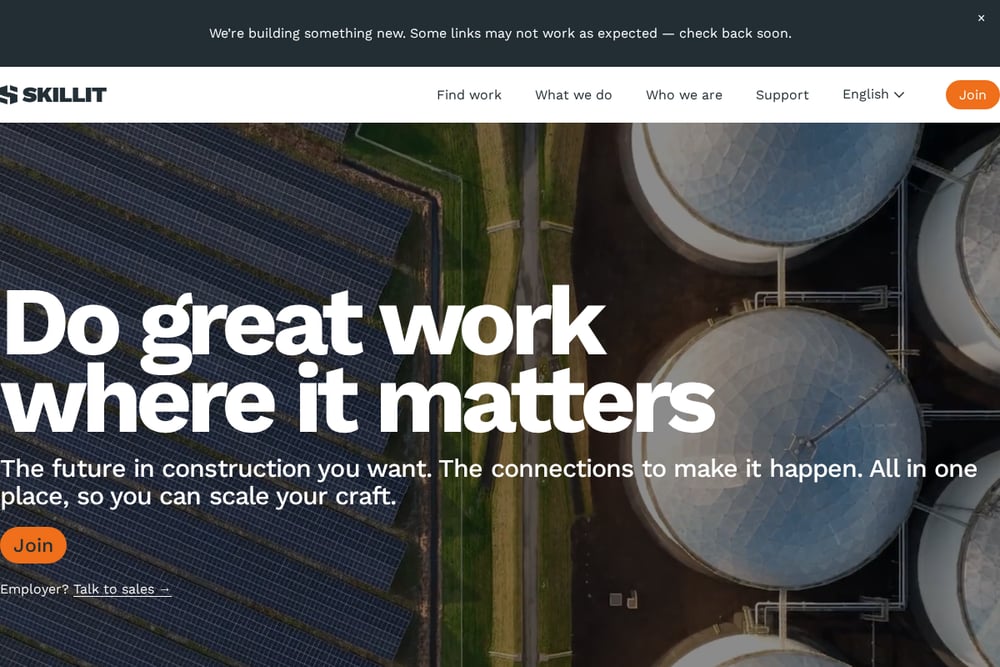 A screenshot of the Skillit website.
Skillit is built specifically for the construction industry, tackling the craft worker shortage head-on. It connects general contractors and subcontractors with skilled tradespeople like carpenters, electricians, and equipment operators, using a mobile-first approach that makes it easy for workers to apply in minutes. The platform focuses on verified skills and experience, not just resumes, so you can trust that the worker you hire has the hands-on know-how. Skillit also addresses the aging workforce problem by bringing younger workers into the trades through a streamlined digital experience. If you're in construction and need job-ready craft workers fast, this is your go-to. [Source: Skillit's guide on hiring craft workers]
#2 PowerTechs : Re-Skilling Software for the AI-economy
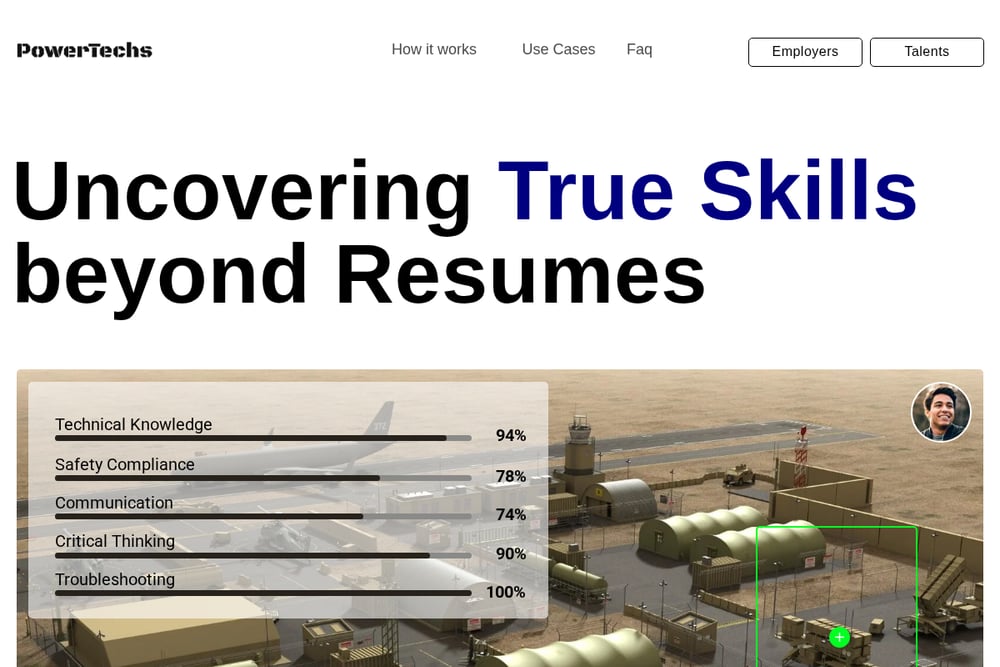 A screenshot of the PowerTechs website.
PowerTechs replaces traditional resumes with AI, XR, and cognitive-based skill assessments, targeting critical industries like energy, manufacturing, data centers, and defense. It serves two talent tracks—project engineers and skilled tradespeople—and focuses on two key use cases: transitioning military veterans into civilian roles and retraining workers for new industries. The platform's four-step process—customized assessments, precision matching, adaptive training, and streamlined placement—ensures you get candidates who are not just qualified but truly job-ready. PowerTechs claims to accelerate recruitment by 10x, reduce training costs, and improve retention, making it a powerful ally for companies facing skilled labor shortages. It's particularly strong for organizations that value verified skills and want to tap into the veteran talent pool. [Source: PowerTechs' website]
#3 AcquireTM
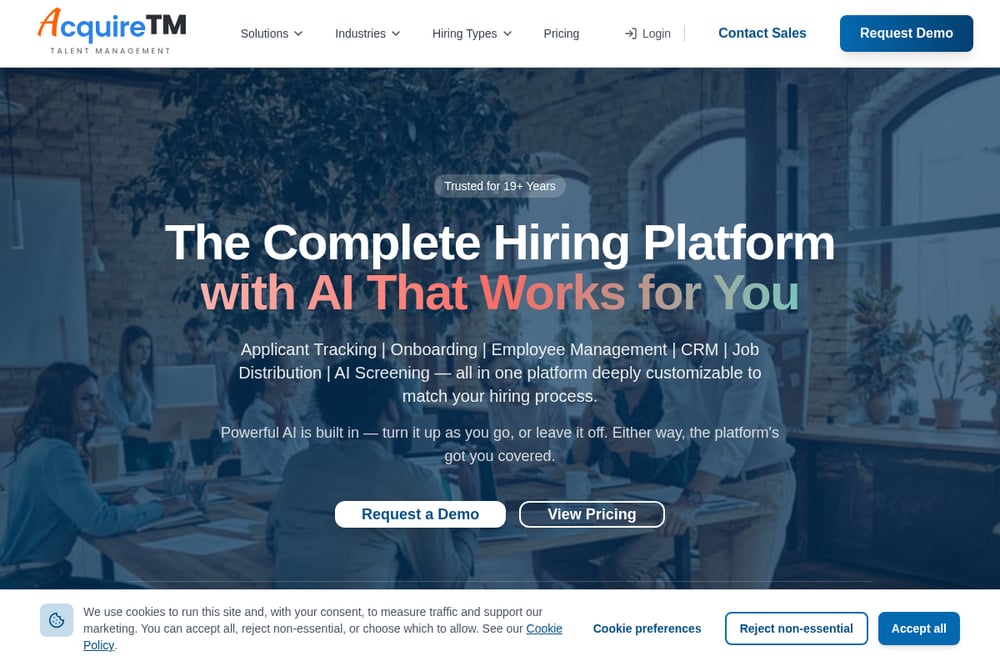 A screenshot of the AcquireTM website.
AcquireTM is an applicant tracking system (ATS) designed for manufacturing and skilled trades hiring, with over 17 years of industry experience. It helps you fill production and hourly roles faster by automating workflows from application to onboarding, and it tracks certifications like welding, forklift, and OSHA training. The platform is built for high-volume applicant processing, so you can handle hundreds of candidates without missing a beat. It also supports multi-plant hiring, making it ideal for manufacturers with multiple locations. If you need a robust, customizable ATS that understands the nuances of the plant floor, AcquireTM delivers. [Source: AcquireTM's manufacturing solutions page]
#4 iMocha
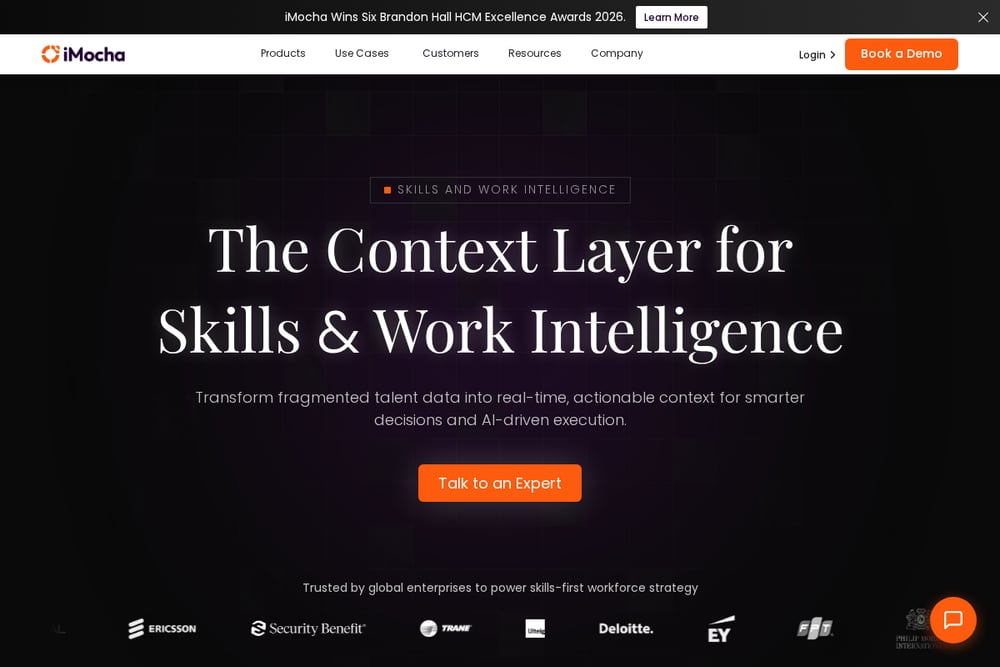 A screenshot of the iMocha website.
iMocha is a skills intelligence platform that puts validated skills at the core of your hiring decisions. It offers a library of 10,000+ real-world assessments, covering everything from technical skills to soft skills, so you can evaluate candidates on what truly matters. The platform integrates with major HR systems like Workday and SAP SuccessFactors, making it easy to embed skills-based hiring into your existing workflow. iMocha also supports upskilling and internal mobility, helping you build a future-ready workforce from within. If you're looking to reduce bias and make data-backed hiring decisions, iMocha gives you the tools to do it. [Source: iMocha's skills-based hiring use case]
#5 Workera
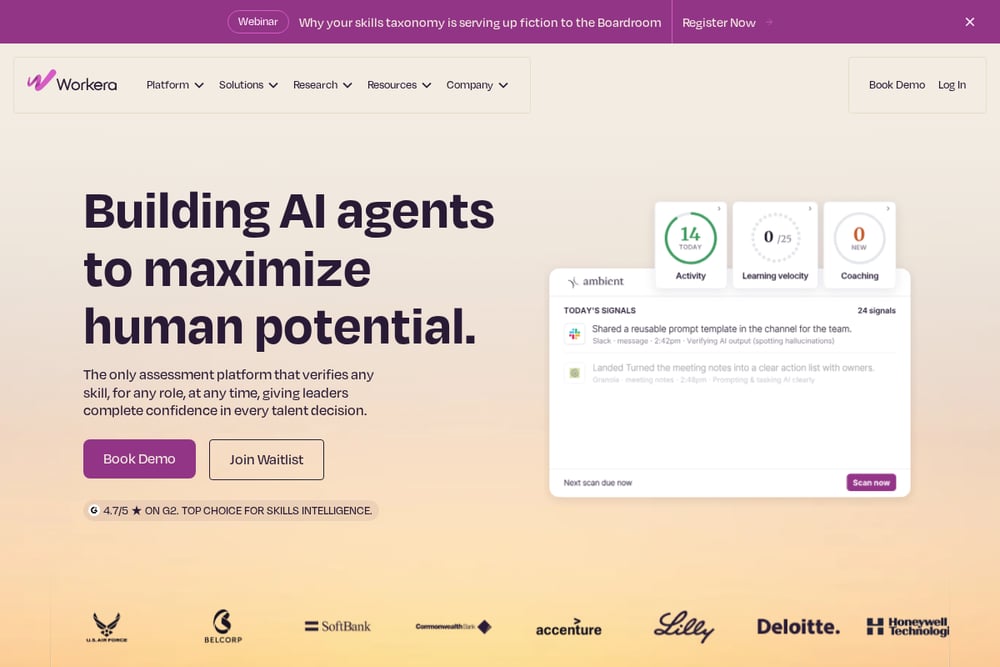 A screenshot of the Workera website.
Workera uses AI agents to verify any skill for any role, giving you a single, trusted signal for talent decisions. Its platform includes skills assessments with industry-best benchmarks, and it offers an AI Studio where you can build custom assessments in days, not weeks. Workera also provides ambient coaching that measures capability in the flow of work, helping you spot skill gaps before they become costly. The platform is designed for both enterprises and individuals, with a focus on AI readiness and workforce transformation. If you want to move beyond self-reported skills and get real, performance-based evidence, Workera is a forward-thinking choice. [Source: Workera's website]
How to Choose the Right Platform for Your Hiring Needs
Start by identifying your biggest hiring pain point. Are you struggling to find craft workers for construction projects? Skillit is built for that. Do you need to validate skills for a wide range of roles, from engineers to technicians? PowerTechs offers a comprehensive AI-driven approach with a focus on veterans and retraining. If you're in manufacturing and need an ATS that tracks certifications and handles high volume, AcquireTM is a solid fit. For enterprise-level skills intelligence that integrates with your existing HR stack, iMocha is a strong contender. And if you want cutting-edge AI agents that verify skills in real time, Workera is worth exploring. Consider your industry, the types of roles you're hiring for, and whether you need a full ATS or just an assessment layer. Also, think about candidate experience—platforms that are mobile-friendly and quick to use will attract more applicants. Finally, look for solutions that offer upskilling or retraining features, as these can help you retain talent and close skill gaps over time.
Automating Skill Validation: A Workflow for Faster Hiring
Imagine this: You post a job description for an electrician. The platform automatically generates a customized skills assessment based on that description, using AI to measure both hard and soft skills. Candidates complete the assessment from their phone, and the system instantly scores them against your benchmarks. You receive a shortlist of candidates with verified skills, location, and availability—no more manual resume screening. For those who fall short, the platform offers personalized adaptive training to close skill gaps, so you can still consider them after upskilling. Once a candidate passes, the platform streamlines the interview and offer process, cutting your time-to-hire by up to 10x. This workflow not only saves you hours but also ensures you're making decisions based on real capability, not paper credentials.
The Future of Hiring Is Skills-First
The days of relying on resumes are fading. As the labor market tightens and industries evolve, the platforms that validate real-world skills are becoming essential tools for any forward-thinking employer. Whether you're hiring for construction, manufacturing, or tech, these five platforms offer distinct paths to finding job-ready talent. PowerTechs stands out for its focus on veterans and retraining, making it a valuable partner for companies looking to tap into underutilized talent pools. The key is to choose a platform that aligns with your industry, your hiring volume, and your commitment to building a skilled, resilient workforce. By embracing skills-based hiring, you're not just filling roles—you're investing in the future of your organization.