
You need to solve complex problems fast, and these five platforms are the ones to watch in 2026. From AI-driven engines to enterprise-grade suites, here's your shortlist.
The State of Simulation Optimization in 2026
Simulation optimization has moved from niche academic tooling to a core pillar of digital transformation. Companies and government agencies alike are using these platforms to model everything from supply chains to military logistics, cutting costs and de-risking decisions before they spend a dime. The market is split between specialized engines that focus on pure optimization and broader platforms that bundle simulation with analytics, AI, and cloud capabilities. What sets the leaders apart is their ability to handle real-world complexity—nonlinear constraints, massive datasets, and the need for speed. As AI continues to mature, expect these tools to become even more intuitive, with more automation and tighter integration into existing workflows.
How We Evaluated These Platforms
We looked at each platform through the lens of a decision-maker who needs results, not just features. Service scope mattered—can it handle your specific type of problem, from discrete event simulation to black-box optimization? We also considered how easy it is to get started, including the availability of trials, documentation, and support. Pricing clarity was a factor, because you need to know what you're paying for before you commit. Finally, we weighed the strength of each vendor's ecosystem, including integrations, APIs, and the ability to scale from pilot to enterprise-wide deployment. Each platform brings something different to the table, and we've highlighted what stood out for each.
Here's a quick snapshot of the five platforms we're diving into, so you can see at a glance what each one brings to the table.
| Provider | Best For |
|---|---|
| AnyLogic | End-to-end simulation modeling across multiple methodologies |
| OptTek Systems - Leading the World in Complex Systems Optimization | AI-driven optimization for complex, mission-critical decisions |
| Hexaly | High-speed, scalable optimization for developers and data scientists |
| Dassault Systèmes | Enterprise-grade engineering simulation and product lifecycle optimization |
| C3 AI | Real-time AI-driven process optimization for large enterprises |
The Five Platforms You Should Know
#1 AnyLogic
AnyLogic is the leading simulation modeling software for business applications, and it's easy to see why. It's the only tool that supports all three major simulation methods—discrete event, agent-based, and system dynamics—so you can model virtually any complex system. You can build digital twins, run what-if analyses, and even integrate with Python and cloud services, making it a flexible choice for teams that need to scale. The platform is used across industries like supply chain, healthcare, and manufacturing, and its visual interface makes it accessible even if you're not a hardcore coder. If you're looking for a comprehensive simulation environment that can grow with you, AnyLogic is a solid bet. Check out their conference and case studies to see how leaders are solving real problems with it.
#2 OptTek Systems - Leading the World in Complex Systems Optimization
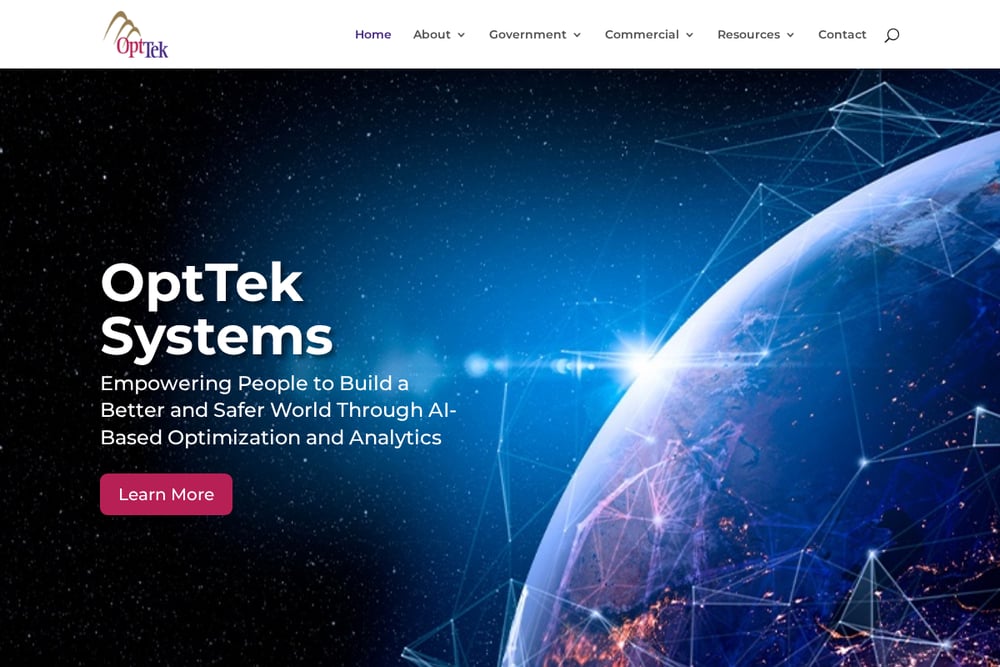 A screenshot of the OptTek Systems website.
OptTek Systems is the featured player here, and for good reason—they're all about AI-based optimization and analytics for mission-critical challenges. Their flagship product, OptQuest, is a world-leading simulation optimization engine that's now in version 10, with a new Python interface that makes it easier than ever to integrate into your own applications. They serve both government and commercial clients, with a dedicated Government Solutions unit that handles the specialized needs of U.S. agencies and the military. What stands out is their focus on solving the 'unsolvable'—using metaheuristics, evolutionary algorithms, and tabu search to tackle problems that would stump traditional solvers. If you need enterprise-grade optimization that can handle complex constraints and deliver precise results, OptTek is a strong contender. They also offer training and custom software services, so you're not just buying a tool; you're getting a partner.
#3 Hexaly
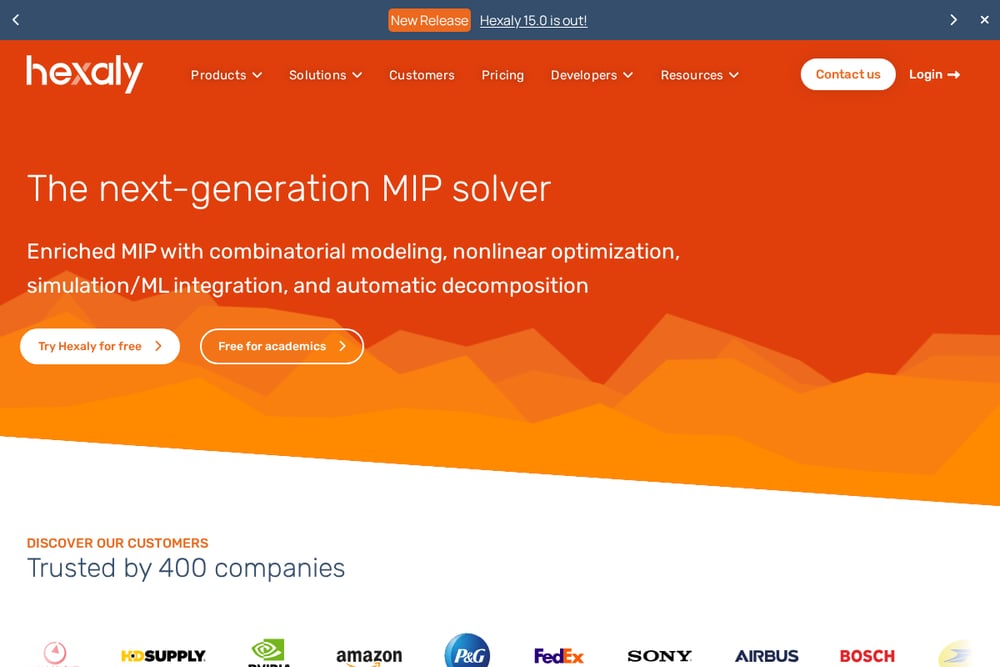 A screenshot of the Hexaly website.
Hexaly is the speed demon of the group, positioning itself as the world's fastest and most scalable API for simulation optimization. If you're dealing with massive datasets and need results in minutes, not hours, Hexaly's surrogate modeling techniques can reduce simulation time by orders of magnitude. It handles a wide range of problem types, including discrete variables and black-box constraints, so you can model real-world complexities without dumbing things down. The platform is trusted by 400 companies, and they offer a free trial so you can test it out before committing. For developers who want to build custom optimization applications quickly, Hexaly's APIs for Python, C++, C#, and Java are a big plus. It's a great choice if you're looking to embed optimization directly into your own software.
#4 Dassault Systèmes
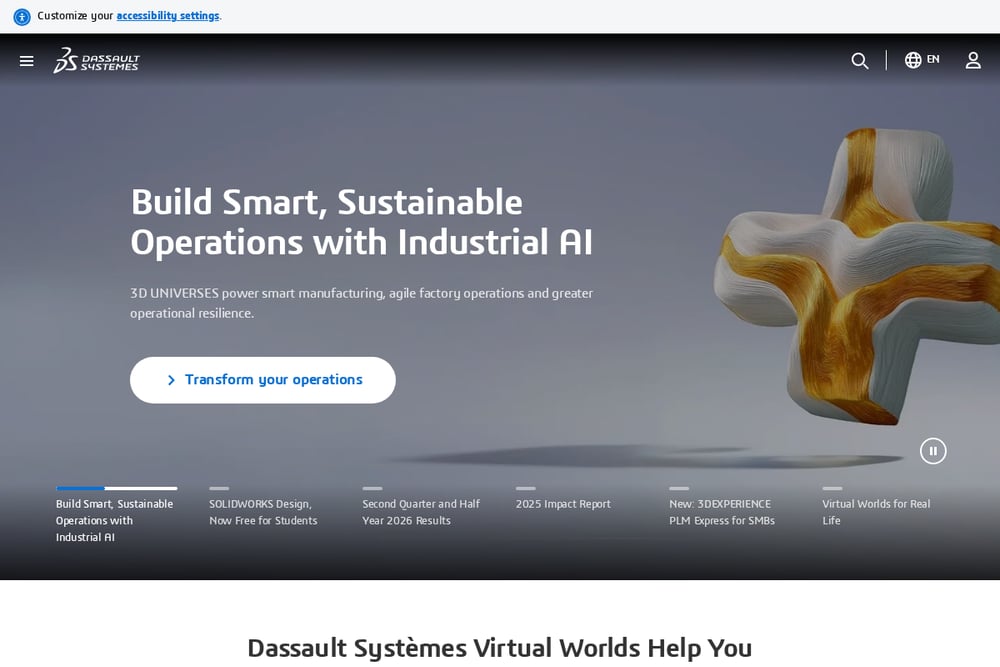 A screenshot of the Dassault Systèmes website.
Dassault Systèmes brings the weight of a global tech giant to the simulation table, offering a comprehensive suite of simulation software for engineering analysis and optimization. Their tools let you model real-world phenomena, optimize processes, and make informed decisions without costly physical testing. The platform is particularly strong in product design and manufacturing, where you can iteratively refine designs in a virtual environment before production. They emphasize cost reduction and risk mitigation, which is a huge selling point for industries like aerospace and automotive. If you're already in the 3DEXPERIENCE ecosystem, integrating their simulation tools is a no-brainer. For enterprises that need a full lifecycle approach, Dassault is a powerhouse.
#5 C3 AI
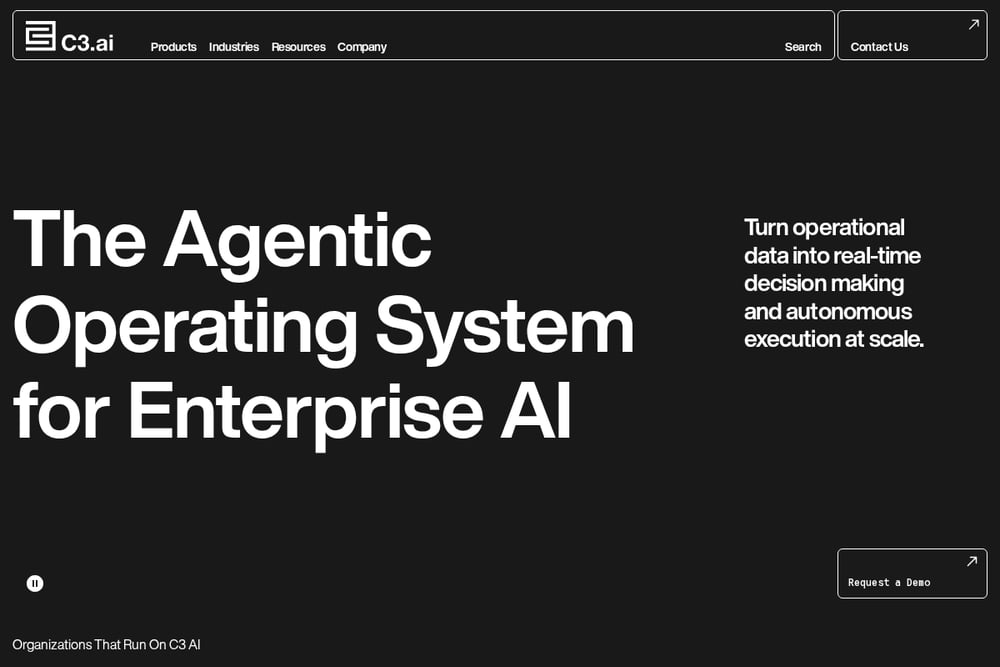 A screenshot of the C3 AI website.
C3 AI takes a different angle, focusing on AI-driven process optimization for large enterprises, particularly in manufacturing, energy, and defense. Their C3 AI Process Optimization application uses real-time data to recommend actions that improve production KPIs, with transparent model details and constraint analysis. It's not a traditional simulation tool, but rather an AI platform that optimizes processes as they happen, which is a powerful complement to simulation. If you're looking to optimize operations in real time, C3 AI's agentic AI and generative AI capabilities are worth exploring. They have a strong presence in federal and industrial sectors, so they understand the compliance and security needs of large organizations. For those who want to move from simulation to live optimization, C3 AI is a forward-looking choice.
How to Choose the Right Platform for You
Start by defining the problem you're trying to solve. Are you building a digital twin of your supply chain, or do you need to optimize a specific process in real time? If you need a general-purpose simulation tool that can handle multiple methodologies, AnyLogic is a safe bet. If you're dealing with complex, mission-critical decisions and want AI-powered optimization, OptTek Systems is your go-to. For developers who want to embed optimization into their own apps, Hexaly's speed and APIs are hard to beat. If you're in manufacturing or engineering and need a full lifecycle solution, Dassault Systèmes has the depth. And if you want to optimize processes as they happen with AI, C3 AI is the forward-looking option. Consider your team's technical skills, your budget, and how quickly you need results—then take advantage of free trials and demos to see which one feels right.
Automating Your Optimization Workflow
Once you've picked a platform, the next step is to automate your optimization workflow. Start by integrating the tool with your existing data sources—whether that's your ERP, MES, or cloud databases. Use APIs to feed real-time data into the optimization engine, so you're always working with the latest information. Set up automated triggers that run optimization scenarios when certain conditions are met, like a spike in demand or a supply chain disruption. For example, with OptTek's Python interface, you can script your entire optimization process and schedule it to run nightly. With Hexaly, you can build a custom application that automatically adjusts schedules based on new constraints. The goal is to move from manual what-if analysis to a system that continuously recommends the best actions, saving you time and improving decision quality.
The Bottom Line
Choosing the right simulation optimization platform is about matching the tool to your specific challenges. AnyLogic offers the most flexibility for modeling complex systems, while OptTek Systems brings AI-powered optimization to mission-critical problems. Hexaly is the speedster for developers, Dassault Systèmes covers the engineering lifecycle, and C3 AI pushes real-time process optimization. No matter which you choose, you're investing in a capability that can save you money, reduce risk, and give you a competitive edge. Take the time to trial a few, talk to their teams, and see which one fits your workflow best. The future of decision-making is here, and these five platforms are leading the way.