A Different Route to the Explainer
Shorts3D is a skill for Claude that turns an idea into a vertical animated short for TikTok, Reels or YouTube Shorts, with custom 3D or 2D scenes, voice, subtitles, sound effects, a cover and post text in several languages. The team built it to run their own channels, so their first customer was themselves. Most of what follows comes from making those videos day after day.
When the Usual Route Stops Fitting
The standard sequence — write a script, animate it, add a voice — assumes the timing is settled when you write. It isn't. A script read aloud never runs at the pace you imagined, and every language runs differently. The Italian version of one of their videos came out almost ten seconds longer than the English one. If you animate first, every cut, label and sound effect lands in the wrong place.
What a short needs is for the picture to change on the exact word that names it. So Shorts3D reversed the order: write the script and storyboard; preview every shot silently and fix the visuals, which costs nothing; generate the voice; then sync every visual beat and sound effect to that voice's word timings, separately for each language.
Translation turned out to be part of the same problem. In one video, a town sign that reads "Albacete" in Spanish becomes "Kansas" in English and "Milano" in Italian. The joke has to land locally, not just be understood.
What First-Timers Keep Missing
The picture has to change much more often than people expect. On a phone, a voice over one slow animation feels like a slideshow. Shorts3D changes the image every two or three seconds and cuts within the shot even more often.
What is said must be seen. If the voice says "she puts down the ladle", the ladle is on screen on that word, not a generic icon.
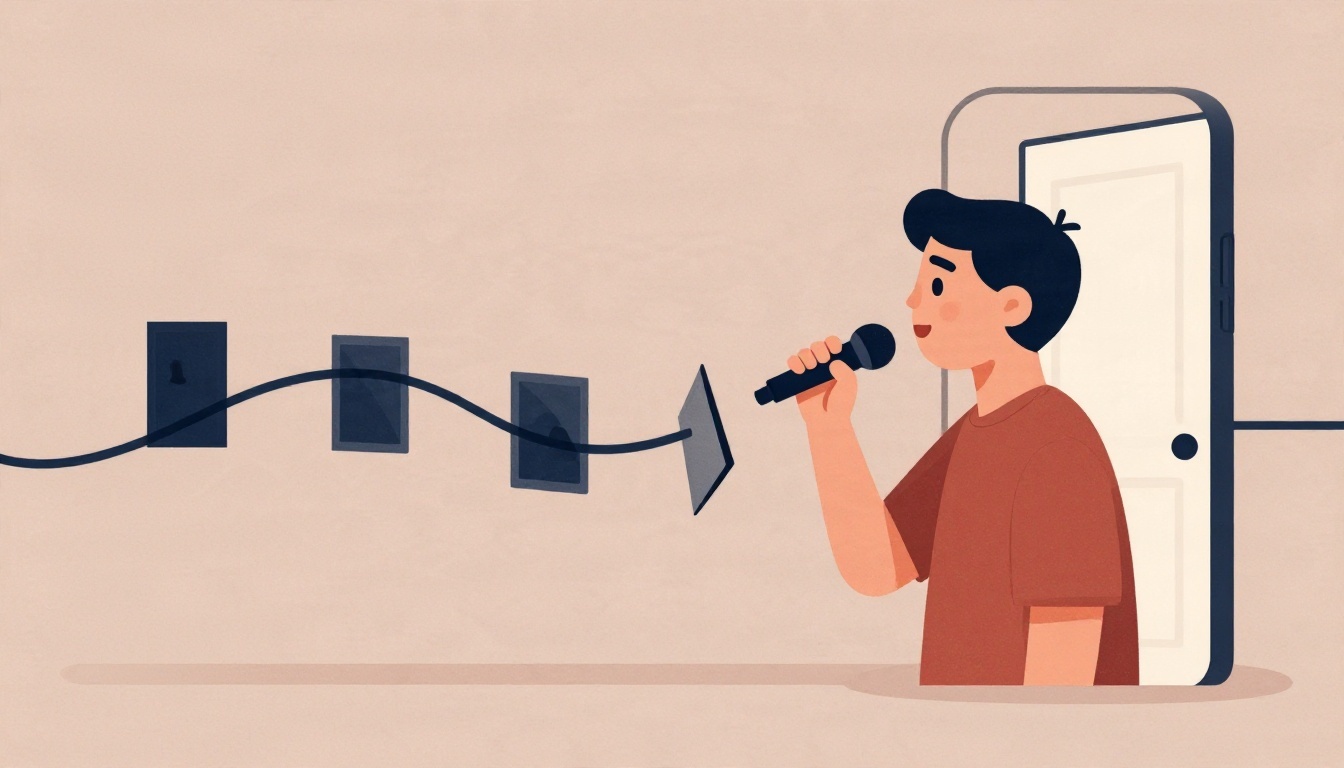
One everyday analogy beats ten facts. To explain why some men grow a beard and others don't, each hair follicle becomes a door with a doorbell. The hormone rings every door, but only some bells are loud. The analogy becomes an object and comes back in later shots, so the viewer never has to learn something new twice.
The hook is a picture, not a title. The first two shots should be the most striking ones. A chart or a text card in the first seconds loses people.
Length is a platform rule, not a style choice. TikTok's Creator Rewards Program only pays for videos over one minute. Every language version has to clear 60 seconds, even when its voice runs faster.
Decisions Made Too Quickly
How much script fits. A voice reads about 2.7 words per second, so a minute is roughly 160 to 180 words. Most first scripts are much longer, and the cuts end up following the pictures instead of the words.
The look before the topic. A neon style suits the body or the brain, real objects want something closer to cinema, and a funny story works better as a flat 2D cartoon. The topic should choose the style, not the other way round.
Every language at once. Shorts3D approves the first language completely before translating. Any change after that is multiplied by the number of versions, and each voice costs money.
The cover and the first line, left for last. They decide whether anyone watches the rest, so the team writes them first.
Practical Takeaways
- Start with the voice, not the animation. Generate the voice early and sync visuals to its word timings.
- Change the picture every two to three seconds. A static shot under a voiceover reads as a slideshow on mobile.
- Match what is said to what is seen. Put the named object on screen on the exact word.
- Use one concrete analogy and reuse it. A recurring object saves the viewer from learning twice.
- Open with your two strongest shots. A title card or chart in the first seconds loses people.
- Budget words by the second. At about 2.7 words per second, a minute is roughly 160 to 180 words.
- Let the topic pick the style. Neon, cinematic or flat 2D should follow the subject, not precede it.
- Approve one language before translating. Changes multiply across versions and each voice costs money.
- Write the cover and first line first. They decide whether anyone watches the rest.
For teams weighing AI animated explainer services, the Shorts3D approach is a useful reference point: the timing of the voice, not the polish of the animation, is what makes a short feel coherent. More on the tool is available at Shorts3D.
For broader context on the format, see TikTok's Creator Rewards Program and YouTube Shorts.