
If you're self-employed, you already know the drill: great income, messy paperwork. Traditional lenders want W-2s and pay stubs. You have bank statements, tax returns with deductions, and a business that doesn't fit a neat box. The good news? A
The Self-Employed Mortgage Market in 2026
The mortgage industry has finally caught up with the reality that nearly 60 million Americans are self-employed, freelance, or gig workers. Traditional underwriting—built around W-2s and two years of tax returns—left this massive group underserved. Enter bank statement loans, non-QM products, and DSCR loans. These programs use alternative documentation like 12 to 24 months of bank statements or profit and loss statements to verify income. The result? Self-employed borrowers can now qualify for competitive rates and terms without hiding their true cash flow. The key is finding a lender who understands your specific income structure and has the product lineup to match.
How I Ranked These Lenders
I evaluated each lender based on four criteria: product flexibility for self-employed borrowers, ease of income verification, customer experience and transparency, and overall reputation. Lenders that offered multiple documentation paths—bank statements, 1099s, P&L statements—scored higher. I also prioritized lenders with clear online resources and responsive support. Finally, I factored in real borrower reviews and industry standing to ensure each pick is both capable and trustworthy.
Here is a quick comparison of the five lenders featured in this roundup. Each one brings something different to the table, whether it's low down payments, personalized service, or flexible documentation.
| Provider | Best For |
|---|---|
| New American Funding | Self-employed borrowers seeking low down payments |
| LendingTree | Comparing multiple self-employed mortgage offers |
| First National Bank of America (FNBA) | Borrowers who claim heavy tax deductions |
| Greg Disler | New American Funding | Personalized service for complex income situations |
| United Federal Credit Union | Credit union members seeking bank statement loans |
Deep Dive: The Best Self-Employed Mortgage Lenders
#1 New American Funding
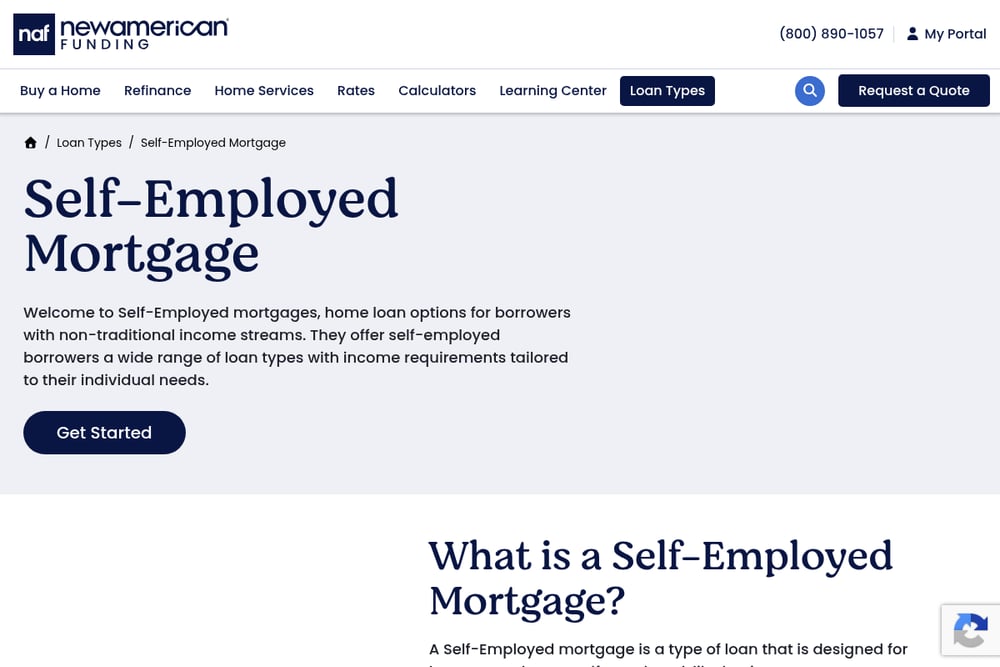 A screenshot of the New American Funding website.
New American Funding offers a dedicated self-employed mortgage program designed for business owners, freelancers, and entrepreneurs who don't have traditional W-2 income. Instead of forcing you into a conventional box, they accept alternative documentation like tax returns, profit and loss statements, and bank statements. Their program features flexible credit requirements and down payments starting as low as 3%. As one of the larger direct lenders in the country, they combine national reach with localized branch support. If you want a lender that has built an entire product line around self-employed borrowers, this is a strong starting point.
#2 LendingTree
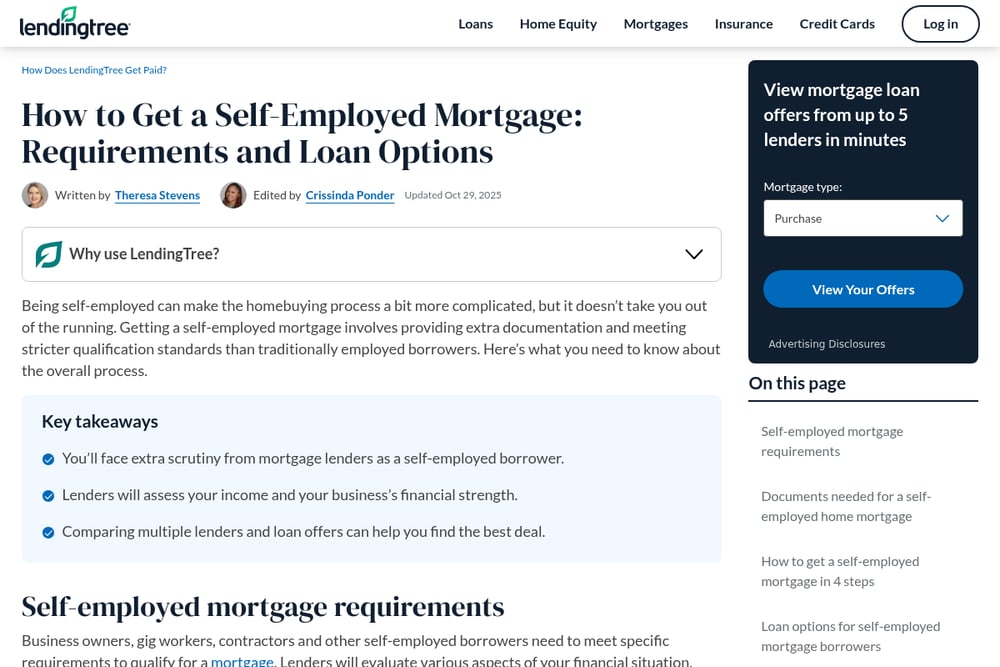 A screenshot of the LendingTree website.
LendingTree isn't a lender itself—it's a marketplace that lets you compare multiple mortgage offers side by side. For self-employed borrowers, this is powerful because different lenders have different appetites for bank statement loans and non-QM products. By submitting one application, you can receive up to five competing offers, which helps you find the best rate and terms for your unique income situation. LendingTree also provides a comprehensive guide on how to get a self-employed mortgage, including documentation tips and qualification strategies. If you're early in your research and want to see what's available, this platform saves you time.
#3 First National Bank of America (FNBA)
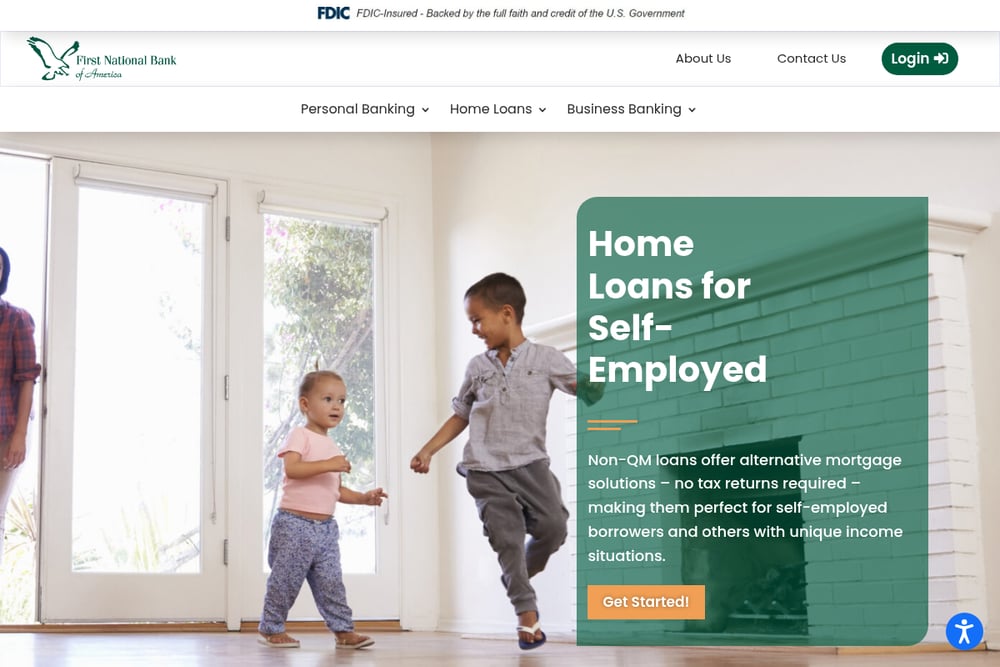 A screenshot of the First National Bank of America website.
FNBA specializes in non-QM mortgage options that don't require tax returns, making them a go-to for self-employed borrowers who write off significant expenses. Their self-employed mortgage program uses alternative documentation like bank statements or 1099 forms to verify income. This is ideal if your tax returns show lower net income due to deductions, but your actual cash flow is strong. FNBA also caters to gig workers, contractors, and freelancers who may have irregular income patterns. If you need a lender that looks beyond your tax return to see your real earning power, FNBA deserves a close look.
#4 Greg Disler | New American Funding
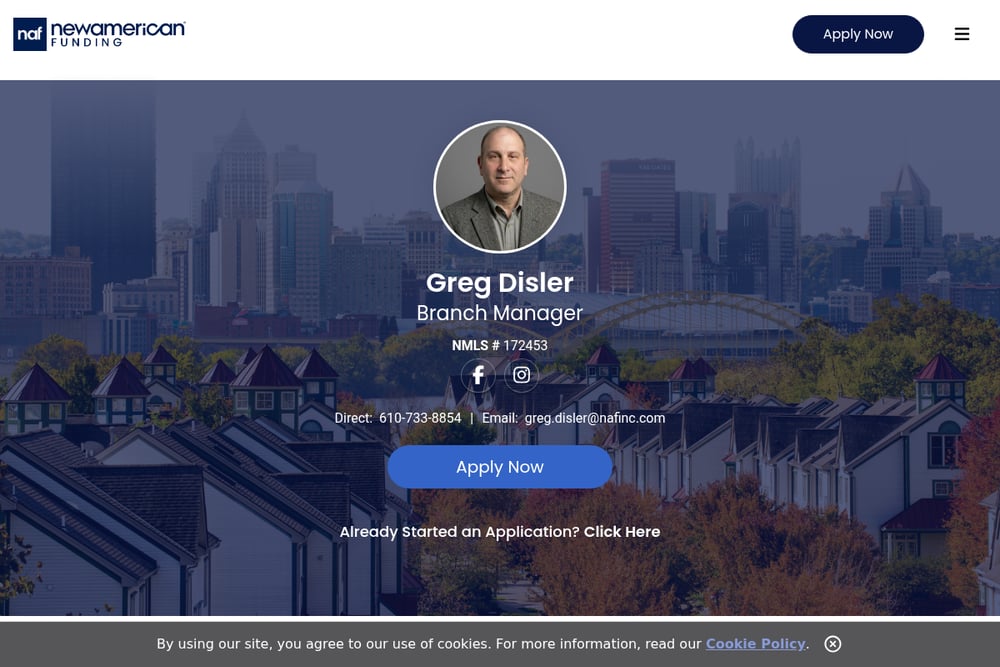 A screenshot of the Greg Disler New American Funding website.
Greg Disler is a branch manager at New American Funding with nearly 30 years of experience in residential mortgage lending. He specializes in bank statement loans, DSCR loans, and non-QM financing for self-employed borrowers and real estate investors. Unlike a faceless call center, Greg offers personalized guidance and a track record of finding solutions where other lenders see obstacles. His clients include first-time homebuyers, move-up buyers, and investors with complex income situations. If you want a seasoned professional who will work the details and communicate transparently, Greg is the kind of lender you call directly.
#5 United Federal Credit Union
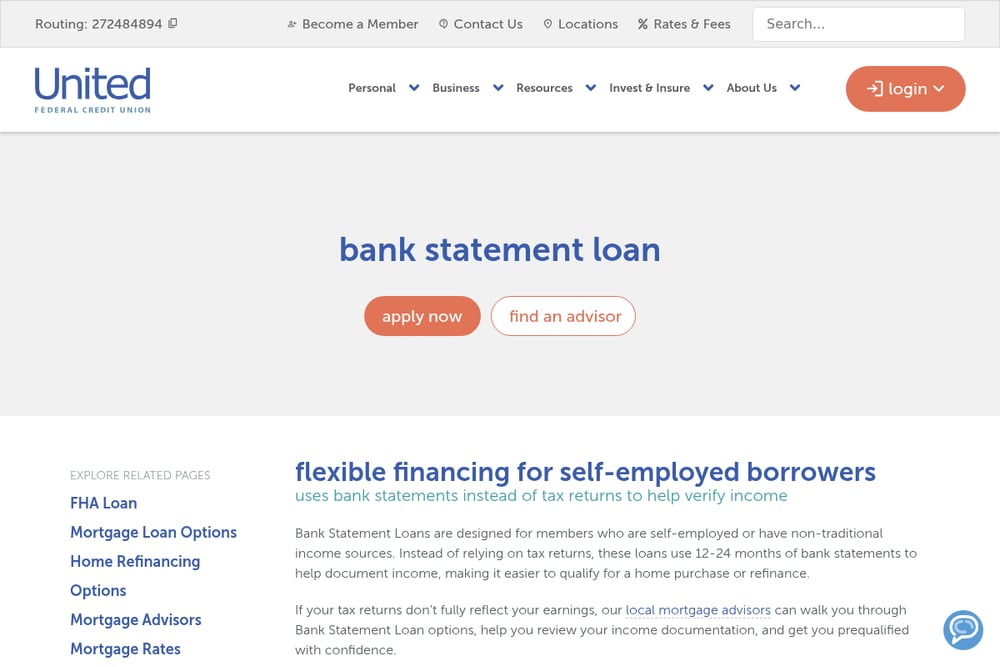 A screenshot of the United Federal Credit Union website.
United Federal Credit Union offers bank statement loans that let self-employed borrowers qualify using 12 to 24 months of personal or business bank statements instead of tax returns. This is a great fit if your tax returns don't fully reflect your actual earnings. They offer both purchase and refinance options, including cash-out scenarios, with fixed-rate mortgage terms. As a credit union, they often provide more member-friendly rates and personalized service. If you prefer a cooperative structure and want a straightforward bank statement loan program, United FCU is a solid choice.
How to Choose the Right Self-Employed Mortgage Lender
Start by understanding your income documentation. If you have two years of clean tax returns, a conventional lender may work. If your tax returns show low net income due to deductions, look for a lender that accepts bank statements or 1099s. Next, consider your property type: primary residence, second home, or investment property. Some lenders specialize in one over the others. Finally, evaluate the lender's communication style. Self-employed mortgages often require more back-and-forth, so you want a loan officer who explains options clearly and responds quickly. Greg Disler, for example, is known for his transparent, hands-on approach—ideal if you value a direct relationship.
Automate Your Mortgage Hunt
You can streamline the process by setting up Google Alerts for terms like 'bank statement loan rates' or 'self-employed mortgage programs' to stay updated on new products. Use a CRM tool like HubSpot to track which lenders you've contacted and what documentation they require. Finally, automate your document collection: use a cloud folder (Google Drive or Dropbox) to store bank statements, tax returns, and P&L statements so you can share them instantly when a lender asks.
Your Next Move
Getting a mortgage as a self-employed borrower doesn't have to be a headache. The lenders on this list have built their businesses around serving people like you. Whether you need a low down payment, a bank statement loan, or a seasoned professional who will fight for your file, there's a match here. Start with the lender that fits your specific income situation, gather your documentation, and reach out. The path to homeownership is wider than you think.