
In the fast-moving world of web security, you need tools that keep pace. These five platforms offer distinct approaches to scanning your digital assets, from quick online checks to full-scale pentesting.
The Security Scanning Landscape
The demand for accessible security scanning has exploded as cyber threats grow more sophisticated. Developers and businesses now expect to identify vulnerabilities in APIs, websites, and AI systems without needing a dedicated security team. Online scanners have evolved from simple port checks to comprehensive suites that test for SSRF, misconfigurations, and secret leaks. This shift empowers smaller teams to adopt proactive security practices, but it also creates a crowded market with varying levels of depth and usability. Understanding what each platform offers is key to choosing the right fit for your workflow.
How We Evaluated These Platforms
We assessed each platform on its service scope, covering the range of vulnerabilities it can detect. Pricing clarity was another factor, as transparent costs help you budget effectively. We also considered ease of use, since a tool that requires a steep learning curve may not suit every team. Finally, we looked at how well each platform fits the needs of US-based developers and businesses, from compliance support to integration options. Each platform stood out in its own way, and we highlight those strengths below.
Here's a quick look at the five platforms we're covering, with their primary focus and what they're best for.
| Provider | Best For |
|---|---|
| HostedScan | Comprehensive network vulnerability scanning with compliance support |
| Nandix — Nothing passes without inspection | All-in-one security grading for APIs, websites, and AI systems |
| Penti.ai | AI-powered pentesting with OWASP Top 10 coverage |
| S4E | Quick, free SSRF vulnerability checks |
| HackerTarget | A wide range of free and paid online security tools |
The Platforms in Depth
#1 HostedScan
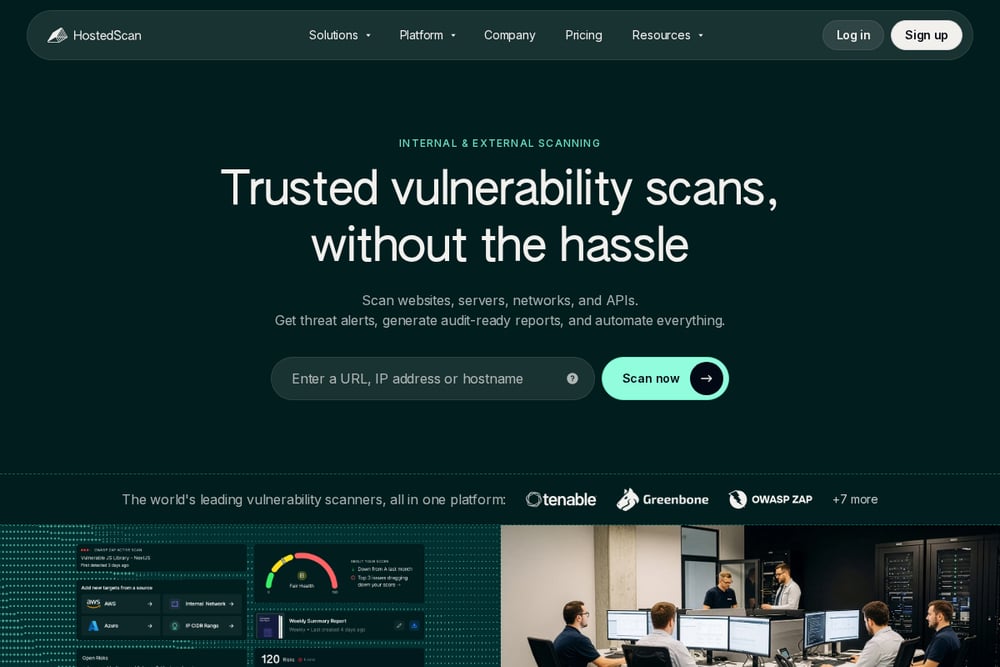 A screenshot of the HostedScan website.
HostedScan brings the power of OpenVAS to your browser, letting you run network vulnerability scans without installing anything. It's a robust solution for teams that need to check servers and web applications against a database of over 200,000 vulnerabilities. The platform includes reporting and management features that support compliance with standards like SOC 2 and ISO 27001. You can also deploy an internal scanner with a single command, making it versatile for both external and internal assessments. If you're looking for a comprehensive, enterprise-ready scanning service, HostedScan is a strong contender. Its free tier lets you test the waters before committing.
#2 Nandix — Nothing passes without inspection
 A screenshot of the Nandix website.
Nandix is a unified security scanning hub that grades APIs, websites, and AI systems with a single report. It offers eight distinct scanners, including SSRF injection with 50+ payloads, security header audits, and secret key leak detection. You can paste a URL and get a graded report that covers everything from DNS security to cookie settings. The platform is designed for developers who want quick, actionable insights without complex setup. Its SSRF scanner is particularly detailed, testing for cloud metadata, internal network access, and bypass techniques. Nandix is an early-stage product from ShunyaX Labs, but it already packs a punch for its size.
#3 Penti.ai
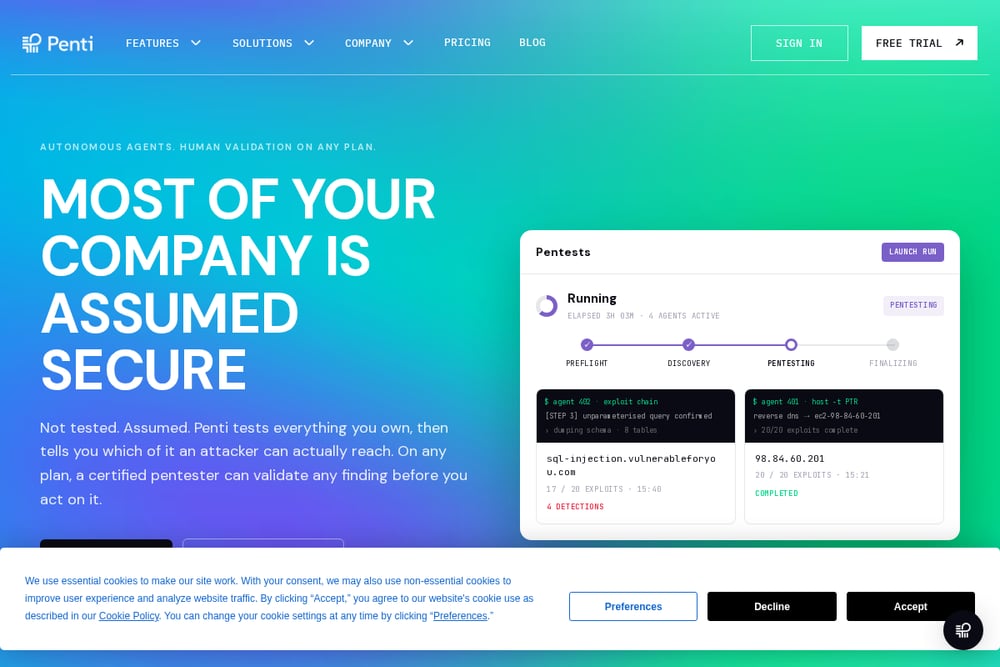 A screenshot of the Penti.ai website.
Penti.ai uses AI-driven reconnaissance and attack simulation to uncover vulnerabilities like SSRF across your web applications. It focuses on OWASP Top 10 vulnerabilities, providing automated pentesting that can be completed in hours rather than months. The platform generates detailed reports with actionable remediation guidance, making it useful for teams that need to move fast. It also offers compliance-specific pentests for standards like ISO 27001 and SOC 2. If you're looking for a modern, AI-powered approach to security testing, Penti.ai is worth exploring. Its free trial lets you see the value firsthand.
#4 S4E
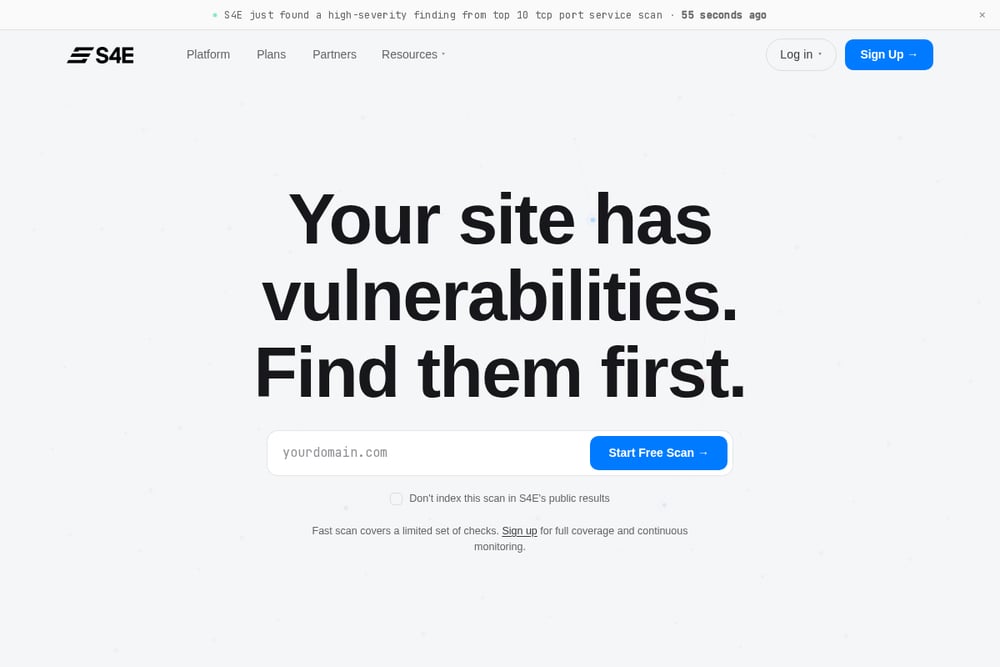 A screenshot of the S4E website.
S4E provides a free online SSRF vulnerability scanner that checks URLs for server-side request forgery risks. It's a lightweight tool that runs in about ten seconds, making it perfect for quick checks. The scanner simulates attack scenarios, such as requesting localhost or internal IPs, to see if your application is vulnerable. S4E also offers continuous scanning for assets you want to monitor over time. While it focuses on SSRF, it's part of a broader platform that includes other web vulnerability tools. If you need a fast, no-cost way to test for SSRF, S4E is a handy resource.
#5 HackerTarget
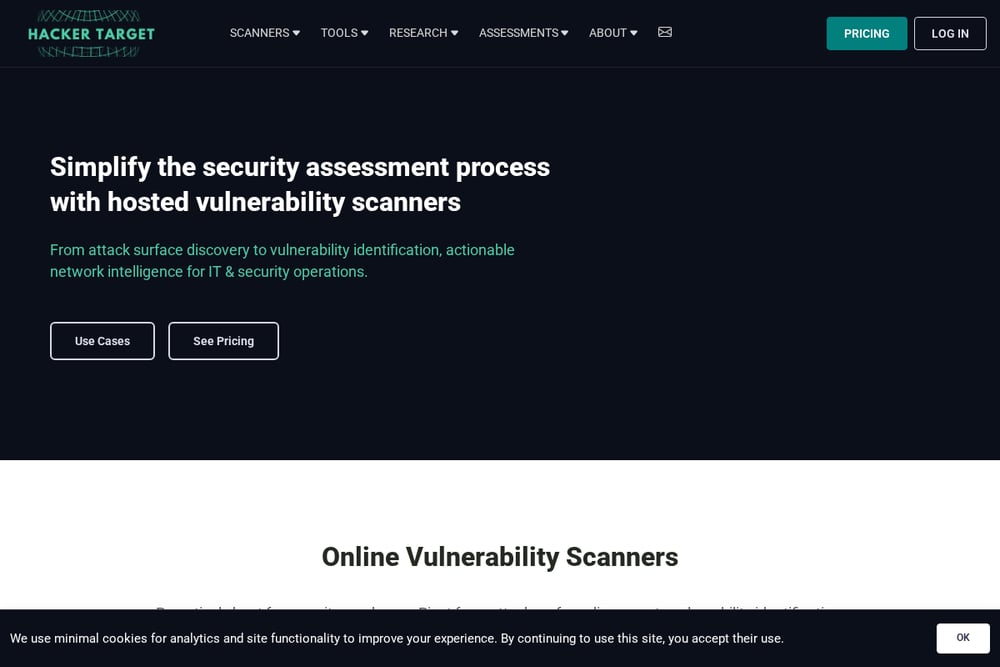 A screenshot of the HackerTarget website.
HackerTarget offers a suite of 28 online vulnerability scanners and network tools, from Nmap port scans to WordPress security checks. It's a go-to resource for IT and security operations teams that need actionable intelligence. The platform includes both free tools and paid assessments, giving you flexibility based on your needs. You can use it for attack surface discovery, vulnerability identification, and even OSINT gathering. HackerTarget's tools are trusted by penetration testers and security professionals worldwide. If you want a broad toolkit in one place, this is a solid choice.
How to Choose the Right Security Scanner
Start by defining what you need to protect—whether it's a website, an API, or an entire network. If you're a developer looking for a quick grade on your site's security posture, Nandix offers a simple, all-in-one solution. For deeper network vulnerability scanning with compliance reporting, HostedScan is a strong option. If you prefer an AI-driven approach that simulates real attacks, Penti.ai might be your best bet. For a free, targeted SSRF check, S4E is hard to beat. And if you want a versatile toolkit with many free options, HackerTarget has you covered. Consider your budget, technical expertise, and the level of detail you need in reports.
Automating Security Scans in Your Workflow
To integrate security scanning into your CI/CD pipeline, look for platforms that offer APIs or webhooks. Nandix, for instance, could be triggered after each deployment to run a full scan and grade your site. HostedScan provides scheduling and reporting features that can automate regular vulnerability assessments. Penti.ai's AI-driven scans can be initiated on demand, fitting into agile development cycles. S4E offers continuous scanning for assets you want to monitor. HackerTarget's tools can be scripted for automated checks. By automating these scans, you ensure that security is always part of your development process.
The Bottom Line
Each of these platforms brings something unique to the table, and the right choice depends on your specific needs. Nandix stands out for its unified approach, giving you a single security grade for your entire digital footprint. HostedScan excels in depth and compliance, while Penti.ai offers cutting-edge AI testing. S4E is perfect for quick, free SSRF checks, and HackerTarget provides a broad toolkit for various security tasks. No matter which you choose, integrating regular security scans into your workflow is a smart move. Start with a free trial or a free tool to see what works best for you.