
If your district is preparing an HVAC procurement, you already know the pressure: aging systems, tight budgets, and a board that wants proof of value. The default move is often a low-bid RFP, but that path can leave you with
Why HVAC Oversight Matters More Than Ever
School districts across the U.S. are sitting on a ticking clock. With an estimated 54% needing HVAC updates and the average school building pushing 50 years old, the pressure to act is real. But the default response — a low-bid RFP — often leads to fragmented service, poor documentation, and missed capital signals. The shift toward proactive oversight is gaining momentum, driven by federal reports, EPA guidance, and a growing recognition that reactive models don't serve students or budgets. The frameworks below help you pause, evaluate, and choose a path that builds long-term facility visibility.
How We Ranked These Frameworks
We evaluated each option on four criteria: (1) ability to shift districts from reactive to proactive HVAC management, (2) depth of oversight and reporting capabilities, (3) alignment with national best practices and data, and (4) ease of integration into existing procurement and operations. The goal was to highlight frameworks that give you more than a service contract — they give you a strategy.
Here's a quick look at how each framework stacks up against the key criteria that matter for your district.
| Provider | Best For |
|---|---|
| GAO K-12 Education Report | District leaders building a data-backed case for HVAC investment |
| EPA Framework for Effective School IAQ Management | Schools wanting a proven, low-cost IAQ management program |
| ASCE 2025 Infrastructure Report Card for Schools | Communicating the scale of school infrastructure needs to stakeholders |
| FORCE™ for Schools | Districts seeking a structured, data-driven HVAC oversight and planning framework |
| OxMaint School Facility CMMS | District facilities teams needing a centralized maintenance management system |
Deep Dive: The 5 Frameworks That Can Transform Your HVAC Strategy
#1 GAO K-12 Education Report
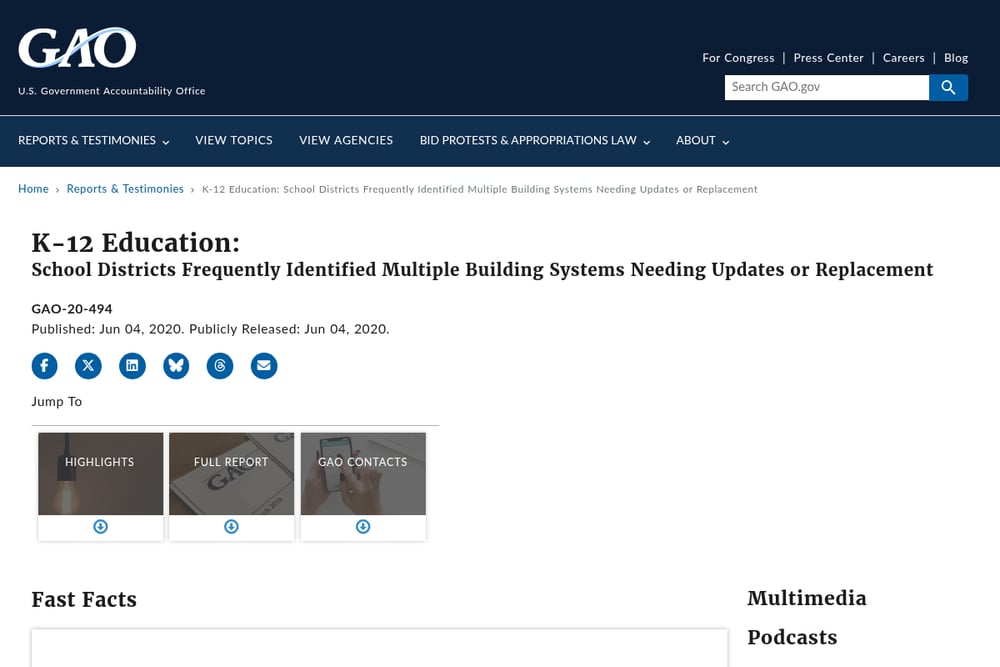 A screenshot of the GAO report landing page.
The Government Accountability Office surveyed districts nationwide and found that about 54% need to update or replace multiple building systems, including HVAC. This report gives you hard data on the scale of the problem — from aging boilers to funding gaps — so you can make the case for proactive oversight. Use it to benchmark your district against national trends and justify a shift away from reactive service models. It's not a tool, but it's essential context for any HVAC decision.
#2 EPA Framework for Effective School IAQ Management
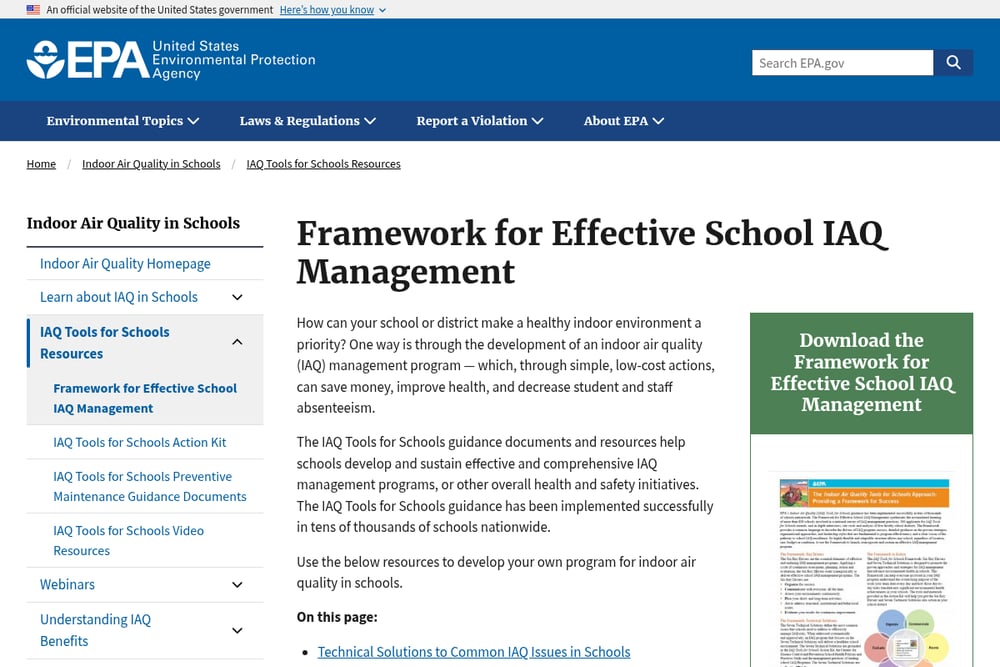 A screenshot of the EPA IAQ Tools for Schools website.
The EPA's IAQ Tools for Schools framework gives you a structured way to manage indoor air quality through simple, low-cost actions. It covers HVAC maintenance, mold prevention, and integrated pest management — all tied to better health and attendance. Tens of thousands of schools have used this guidance to build sustainable IAQ programs. Pair it with your HVAC service contract to ensure your vendor aligns with health-based standards.
#3 ASCE 2025 Infrastructure Report Card for Schools
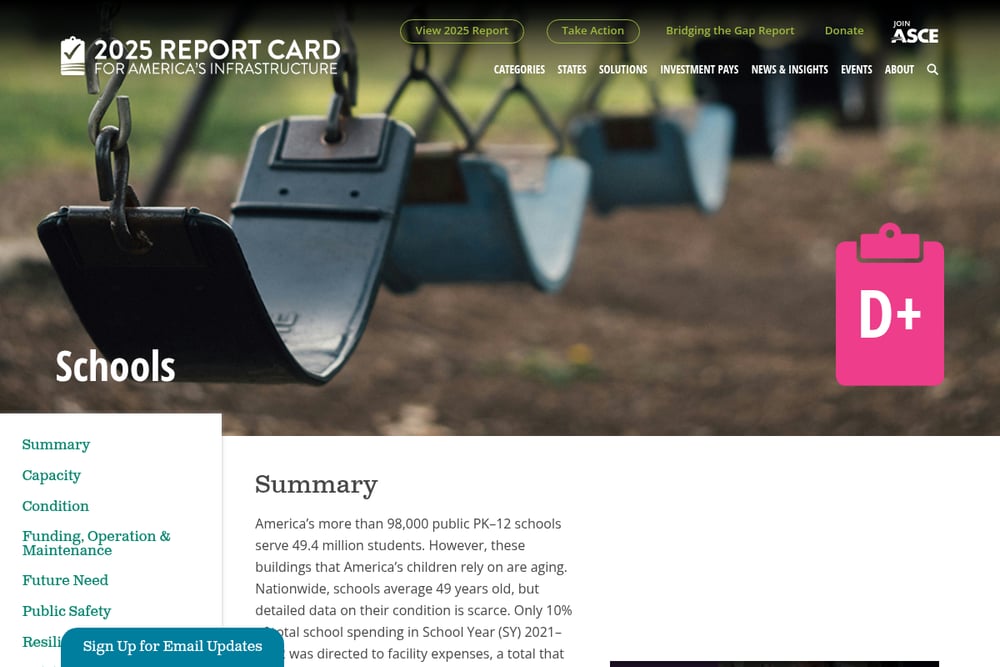 A screenshot of the ASCE Infrastructure Report Card for schools.
America's public schools average 49 years old, and the annual funding gap to reach good repair has grown to $85 billion. The ASCE report card gives your district a stark, credible snapshot of deferred maintenance — especially around HVAC and cooling needs. Use it to communicate urgency to your board and community. It's a powerful reference when you need to show that reactive spending isn't sustainable.
#4 FORCE™ for Schools
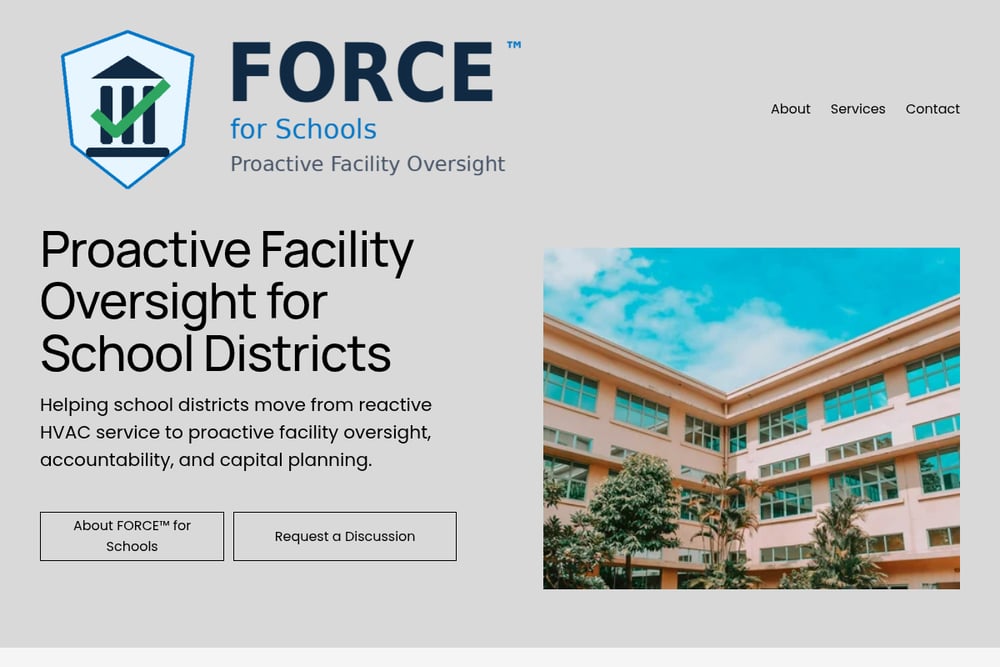 A screenshot of the FORCE™ for Schools website.
FORCE™ gives your district a proactive framework for HVAC oversight, moving you away from low-bid reactive models. It focuses on three areas: turning service history and field observations into leadership-ready intelligence, adding verification and reporting to hold vendors accountable, and identifying capital signals before they become emergencies. The framework is procurement-safe — your district retains full authority over approvals and decisions. If you're preparing an HVAC RFP, FORCE™ is worth reviewing before you finalize your direction.
#5 OxMaint School Facility CMMS
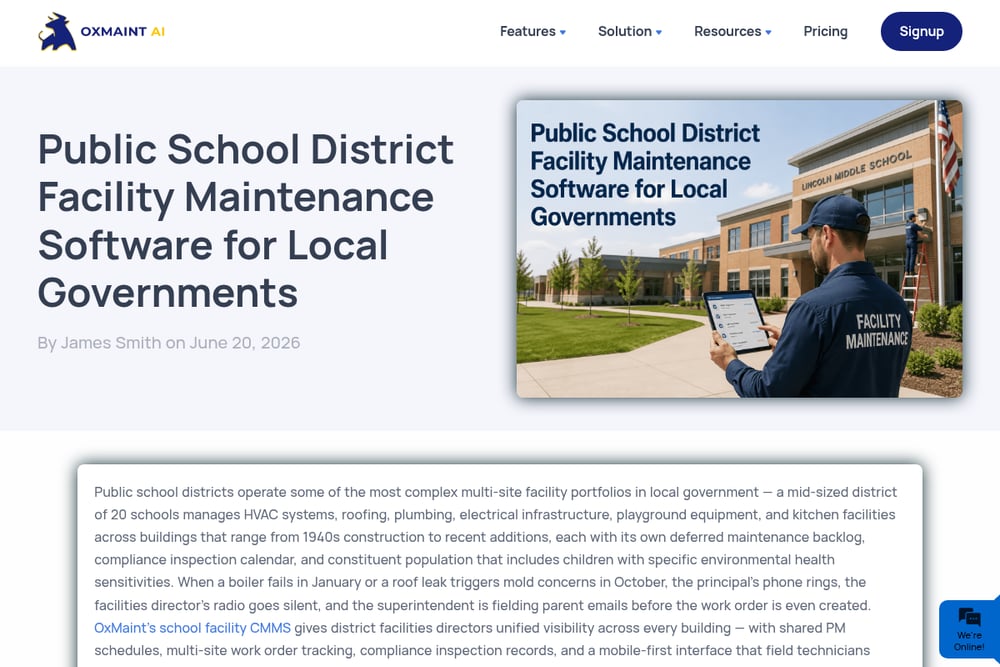 A screenshot of the OxMaint school facility CMMS page.
OxMaint gives district facilities directors a unified CMMS platform to manage work orders, preventive maintenance schedules, and compliance inspections across multiple school sites. It's built for the complexity of aging buildings — from 1940s boilers to modern HVAC systems. The mobile-first interface lets field techs update records on the go, so you get real-time visibility into service quality. It's a solid operational tool, but it doesn't provide the strategic oversight framework that FORCE™ offers.
How to Choose the Right Framework for Your District
Start by asking what your biggest pain point is. If you need hard data to convince your board, lean on the GAO report or ASCE report card. If you want a turnkey IAQ program, the EPA framework is your best bet. For districts that want to move from reactive to proactive oversight with structured reporting and capital planning, FORCE™ offers a dedicated framework. And if your immediate need is operational — tracking work orders and PM schedules — OxMaint fills that gap. The key is to avoid defaulting to a low-bid RFP without first evaluating how each option addresses documentation, accountability, and long-term visibility.
Automation Workflow: Streamlining HVAC Oversight
Imagine this: your district's HVAC service data flows automatically into a dashboard that flags recurring issues, tracks vendor compliance, and highlights capital signals. FORCE™ makes this possible by turning field observations and service history into leadership-ready reports. Pair it with a CMMS like OxMaint to automate work order tracking and preventive maintenance schedules. The result? Less time chasing paper, more time planning strategically.
The Bottom Line: Stop Reacting, Start Planning
Your district's HVAC systems are too critical to leave to chance. The low-bid model might solve today's problem, but it won't give you the visibility, accountability, or capital planning you need for tomorrow. Whether you start with a national report, an EPA framework, or a dedicated oversight tool like FORCE™, the key is to take a step back before you issue that RFP. Evaluate your options, build a strategy, and give your district the facility oversight it deserves.