
Sales tax compliance is a maze of thresholds, deadlines, and ever-changing rules. These five platforms can automate the grind, so you can focus on growing your business.
The State of Sales Tax Automation
Sales tax compliance has become a major headache for ecommerce and SaaS companies, especially as economic nexus laws multiply across US states. Manually tracking thresholds, registering in new states, and filing returns is time-consuming and error-prone. Automation platforms have stepped in to handle everything from real-time tax calculation to filing and remittance. They also help with global VAT, making cross-border expansion less daunting. The market is crowded, but the right tool can save you hours and protect you from costly penalties.
How We Evaluated These Platforms
We looked at each platform's ability to handle the full sales tax lifecycle: monitoring nexus, calculating rates, filing returns, and managing exemptions. We also considered the breadth of integrations with ecommerce and billing systems, the clarity of pricing, and the level of customer support. For global reach, we assessed VAT compliance capabilities. Finally, we weighed how well each platform scales from small startups to enterprise operations.
Here's a quick snapshot of the five platforms we're diving into, with their key strengths and ideal use cases.
| Provider | Best For |
|---|---|
| Avalara | Enterprises and growing businesses needing a full-suite tax solution with extensive integrations. |
| Numeral | Sales Tax on Autopilot for Ecommerce & SaaS | Ecommerce and SaaS companies that want a hands-off, fully managed sales tax solution with global reach. |
| TaxJar | Small to mid-sized ecommerce businesses looking for an affordable, user-friendly sales tax solution. |
| Vertex Inc. | Large enterprises with complex tax needs and existing ERP systems. |
| Sovos | Mid-market and enterprise businesses that need a scalable, automated tax filing solution. |
The Five Platforms, In Depth
#1 Avalara
 A screenshot of the Avalara website.
Avalara is a heavyweight in tax compliance, offering a comprehensive suite that covers sales and use tax, VAT, and even property tax. Its strength lies in its vast integration ecosystem, connecting with major ecommerce platforms, ERPs, and billing systems. You get real-time tax calculation, automated filing, and exemption certificate management, all backed by a massive team of tax experts. It's a solid choice if you need a one-stop shop that can grow with you from startup to enterprise. Avalara's pricing is transparent, starting at $69 per month for basic plans, which is helpful for budgeting. However, the sheer breadth of features might be overkill for very small businesses.
#2 Numeral | Sales Tax on Autopilot for Ecommerce & SaaS
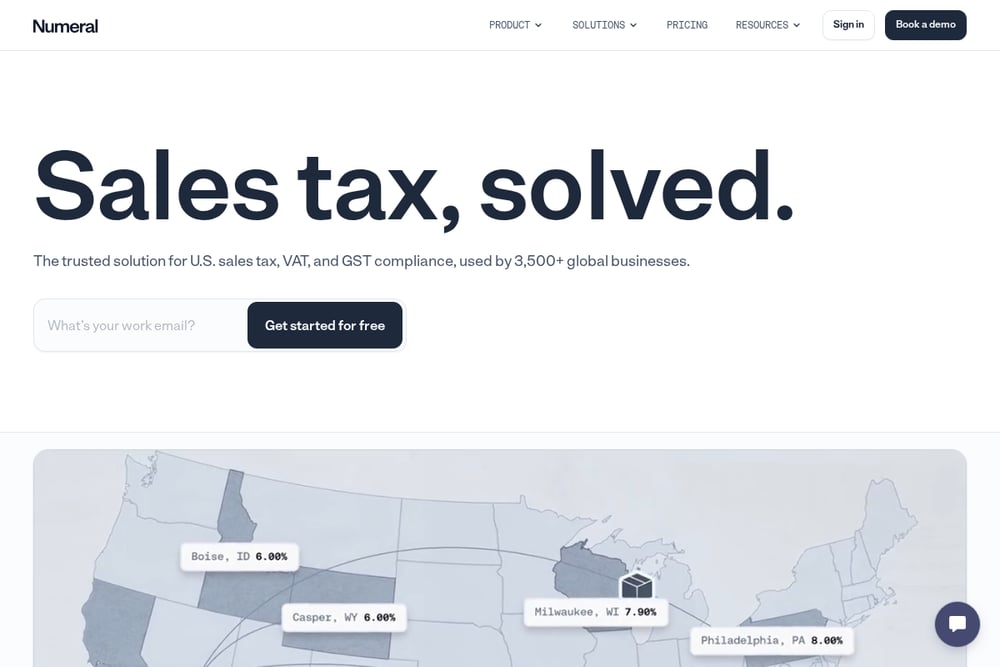 A screenshot of the Numeral website.
Numeral is the featured platform here, and it's designed to take sales tax off your plate entirely. It automates the entire workflow: monitoring your sales to identify nexus, registering you in new states automatically, calculating taxes at checkout, and filing returns on time—guaranteed. The platform also handles global VAT, making it a great fit for SaaS and ecommerce brands with international customers. You get a developer-friendly API to integrate tax calculation directly into your billing system, plus white-glove support from tax experts. Numeral's dashboard gives you a clear view of your tax liability across states, so you're never caught off guard. It's the fastest, easiest way to stay compliant, letting you focus on your real work.
#3 TaxJar
 A screenshot of the TaxJar website.
TaxJar is a favorite among small to mid-sized ecommerce sellers for its simplicity and ease of use. It integrates seamlessly with popular platforms like Shopify, Amazon, and Stripe, automatically pulling in sales data to calculate taxes and file returns. You get real-time calculations, nexus insights, and detailed reports, all in an intuitive dashboard. TaxJar's pricing is straightforward, with a free trial and plans that scale with your sales volume. It's trusted by over 20,000 businesses and boasts impressive uptime, so you can rely on it during peak sales events. However, it may not have the deep enterprise features that larger companies need.
#4 Vertex Inc.
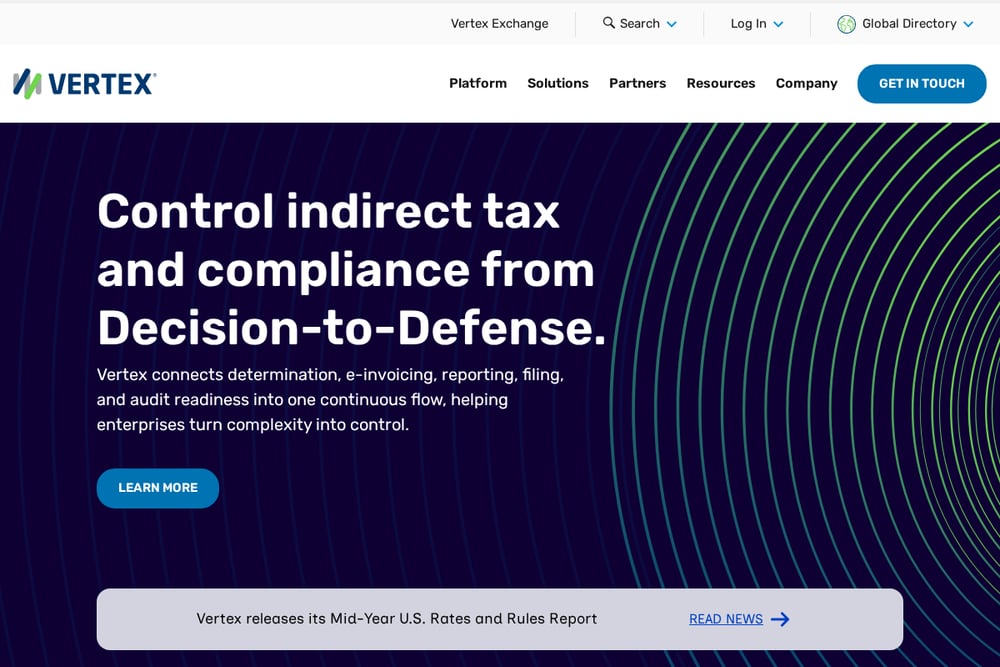 A screenshot of the Vertex Inc. website.
Vertex is a global tax technology provider that focuses on enterprise-level solutions. Its platform, Vertex Cloud, offers real-time tax determination, compliance automation, and e-invoicing capabilities. It's built to integrate with major ERP systems like SAP, Oracle, and Microsoft Dynamics, making it a strong fit for large corporations. Vertex also leverages AI to help you stay ahead of regulatory changes and reduce audit risk. The platform is highly scalable and can handle complex tax scenarios across multiple jurisdictions. However, it's likely overkill and too pricey for small businesses.
#5 Sovos
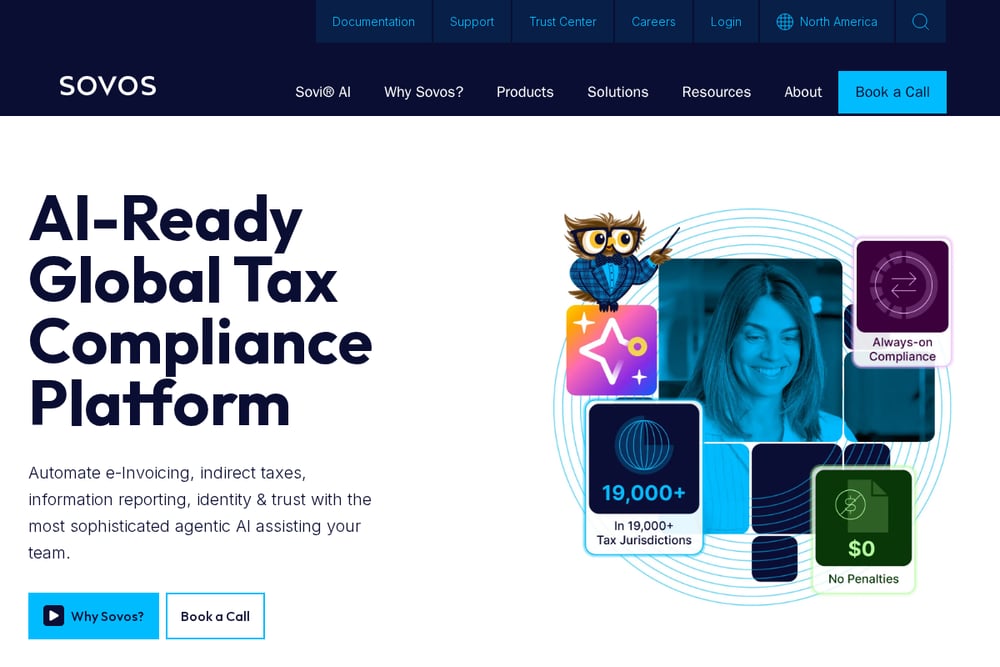 A screenshot of the Sovos website.
Sovos offers a robust sales and use tax filing solution that automates the entire remittance process. It's designed to handle high-volume transactions efficiently, making it a good fit for mid-market and enterprise companies. The platform provides real-time updates on tax law changes, ensuring you stay compliant. Sovos also offers a broader suite of tax compliance products, including VAT and e-invoicing. Its pricing is custom, so you'll need to request a demo to get a quote. It's a reliable choice if you need a scalable solution with strong compliance monitoring.
How to Choose the Right Sales Tax Platform
Start by assessing your business size and sales channels. If you're a small ecommerce seller, TaxJar's simplicity and low cost might be all you need. For a growing SaaS or ecommerce brand that wants to offload everything, Numeral's fully managed approach is hard to beat. If you're an enterprise with complex needs and an ERP system, Vertex or Avalara will offer the depth you require. Consider your global footprint—if you sell internationally, make sure the platform handles VAT. Finally, think about integrations: does it connect with your shopping cart, billing software, or ERP? And don't forget to factor in pricing transparency and support quality.
Automating Your Sales Tax Workflow
The ideal workflow starts with monitoring your sales data to detect when you cross economic nexus thresholds in any state. Once triggered, the platform automatically registers you with the state tax authority. At checkout, the tax engine calculates the correct rate based on the customer's location, and you collect the tax. At the end of each filing period, the platform prepares the return, files it, and remits the payment—all on time. You get a dashboard to track everything, and alerts if anything needs your attention. This end-to-end automation eliminates manual data entry and reduces the risk of penalties.
The Bottom Line
Sales tax doesn't have to be a burden. Whether you choose a DIY tool like TaxJar or a fully managed service like Numeral, the key is to automate as much as possible. Each platform we've covered has its strengths, so pick the one that aligns with your business size, complexity, and budget. The right choice will save you time, money, and stress, letting you focus on what you do best—running your business.