
You know the drill: your reps have the product knowledge, they've sat through the training, but somehow the pipeline keeps leaking. The difference between a team that hits quota and one that doesn't often comes down to one thing: how
Why Sales Coaching Is the Only Growth Lever That Matters
The data is clear: companies with formal coaching processes achieve 91.2% quota attainment compared to 84.7% for those with informal approaches. Yet, 73% of sales managers spend less than 5% of their time actually coaching. Most are stuck in a cycle of firefighting—jumping from one stalled deal to the next—while the underlying behaviors of their reps never change. The best sales organizations have flipped this script. They treat coaching as a growth system, not a crisis response. Whether you're leading a team of five or fifty, the frameworks you use to develop your reps will directly impact your win rates, retention, and revenue.
How I Ranked These Sales Coaching Frameworks
I evaluated each provider based on four criteria: methodology depth (does it offer a repeatable framework or just generic advice?), scalability (can it work for teams of different sizes?), focus on behavior change (does it build long-term skills or just fix short-term deals?), and practical application (can you implement it without a full-time coach?). I also considered how each approach addresses the common pitfall of reps failing to apply what they learn.
Here's a quick snapshot of how these five sales coaching frameworks stack up against each other.
| Provider | Best For |
|---|---|
| Challenger Inc. | Teams that need to challenge customer thinking and drive value-led conversations |
| FranklinCovey | Building a culture of accountability and personalized rep development |
| Korn Ferry | Sales managers who need a structured framework for coaching conversations |
| Coach by Design™ — Mike Browne | Sales leaders who want a diagnostic-first coaching methodology |
| Carew Sales Training | Managers who need practical, situational coaching frameworks for different rep types |
Deep Dive: The 5 Best Sales Coaching Frameworks for 2026
#1 Challenger Inc.
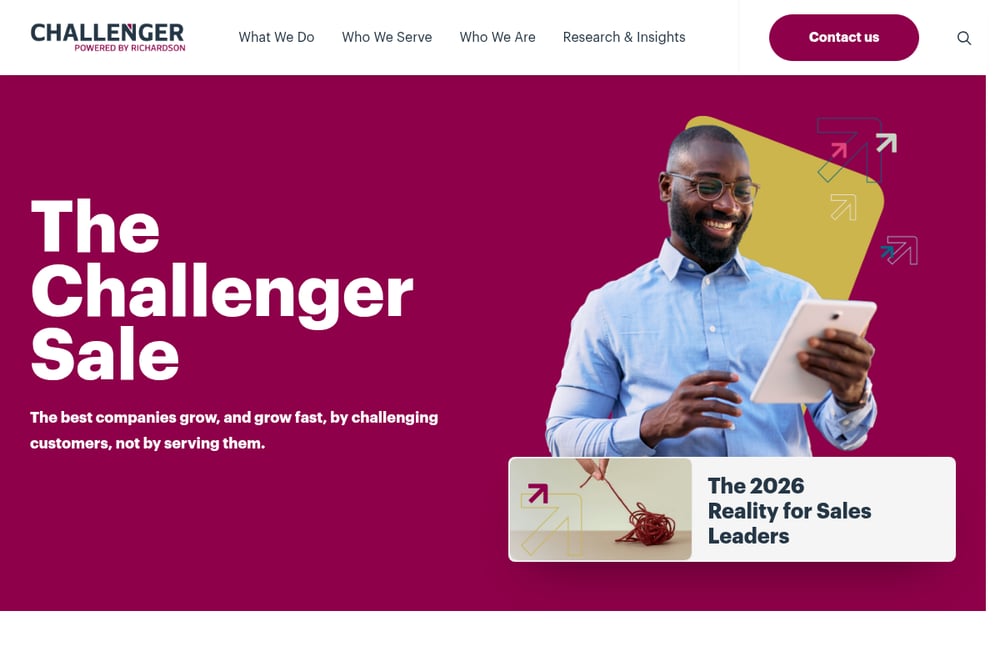 A screenshot of the Challenger Inc. website.
Challenger Inc. flips the script on traditional sales coaching by focusing on teaching reps how to challenge customer assumptions rather than just building rapport. Their program is built around the idea that managers should become 'performance accelerators' who move beyond simple inspection. The framework is designed to be consistent, relevant, and tightly aligned to your sales strategy, which helps teams improve skill adoption and accountability. If you want your reps to lead tough conversations and drive value from the first interaction, this is the approach to study.
#2 FranklinCovey
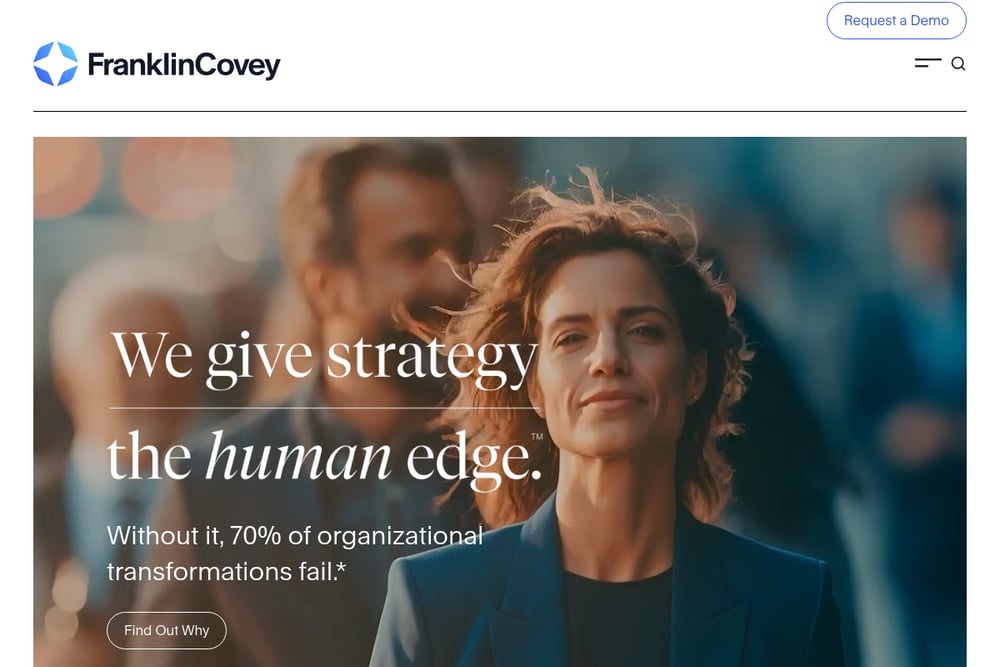 A screenshot of the FranklinCovey website.
FranklinCovey takes a principle-based approach to sales coaching, emphasizing that 'telling reinforces dependency; coaching develops capability.' Their methodology is built on active listening, asking powerful questions, and providing actionable feedback tailored to each rep's unique strengths and gaps. They address the common barrier of salespeople failing to apply learned skills by fostering personal accountability. This is a solid choice if you want to move away from one-size-fits-all training and build a culture of continuous growth.
#3 Korn Ferry
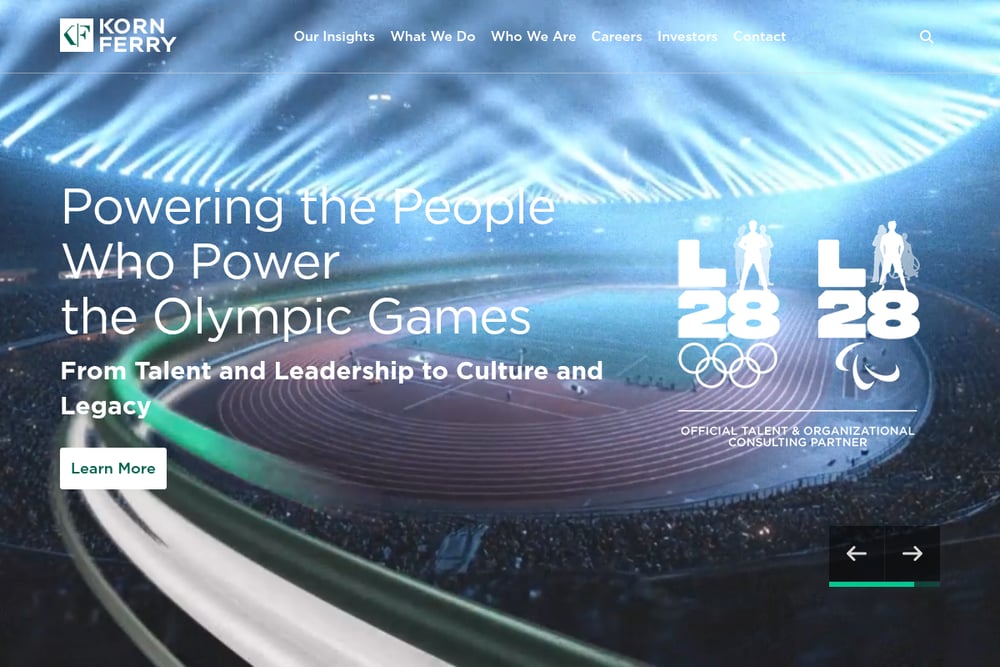 A screenshot of the Korn Ferry website.
Korn Ferry's Professional Sales Coaching program gives managers a structured framework to hold effective coaching conversations that build long-lasting customer relationships. They focus on teaching managers how to evaluate sales performance using a 'coaching issues diagram' and how to handle difficult conversations with confidence. The program covers everything from understanding a high-performance sales climate to coaching reps remotely via phone and email. It's a comprehensive toolkit for any sales leader who wants to move from managing deals to developing people.
#4 Coach by Design™ — Mike Browne
 A screenshot of the Coach by Design™ — Mike Browne website.
Coach by Design™ offers a refreshingly diagnostic approach to sales coaching, emphasizing that you must diagnose before you prescribe. Mike Browne's methodology, outlined in his book and workshops, pushes sales leaders to stop jumping to solutions and instead uncover the root cause of a rep's performance gap. The site highlights a four-book series and speaking engagements that dig into leadership coaching from a design-thinking perspective. If you're tired of cookie-cutter coaching scripts and want a method that forces deeper thinking, this is worth your time.
#5 Carew Sales Training
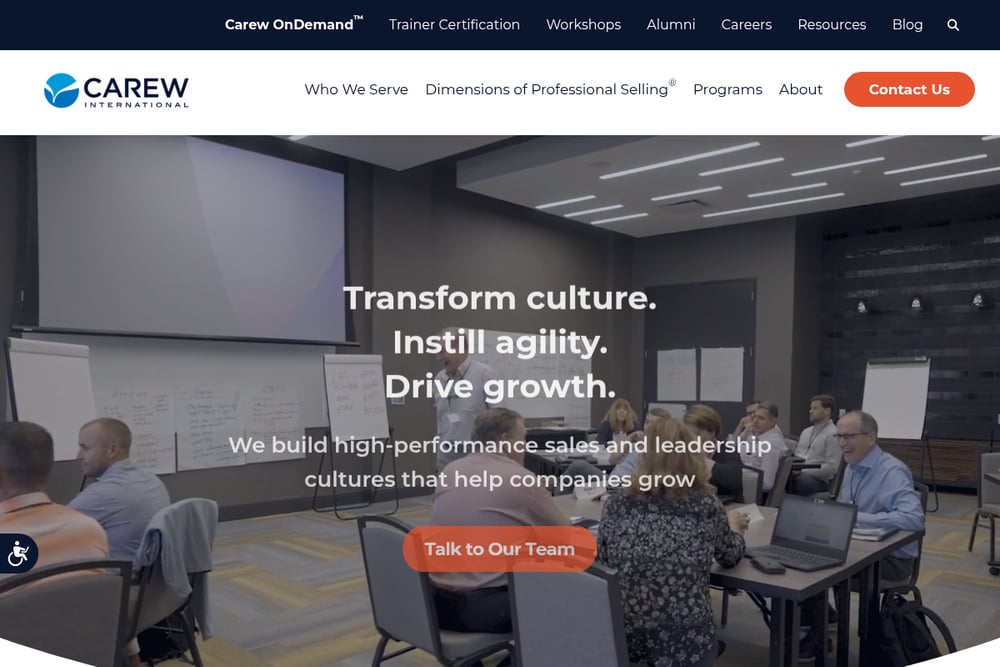 A screenshot of the Carew Sales Training website.
Carew Sales Training provides two proven coaching models—the GROWTH Model and the Direction Model—that give you a framework for any coaching situation. Their approach is practical and situational, helping you coach reps who are already outperforming you as well as those who are motivated but missing the mark. They emphasize that coaching builds 'fireproof reps' who can think for themselves rather than relying on you to save every deal. It's a down-to-earth, actionable system for managers who want to spend less time firefighting and more time developing their team.
How to Choose the Right Sales Coaching Framework for Your Team
Start by diagnosing your own team's biggest pain point. Are your reps struggling with basic accountability? FranklinCovey's principle-based approach might be your best bet. Do they need to challenge buyers more effectively? Look at Challenger Inc. If you're a new manager who needs a structured conversation guide, Korn Ferry's program gives you a clear playbook. For leaders who want to dig deeper into root causes before prescribing solutions, Coach by Design™ offers a diagnostic-first lens. And if you need flexible frameworks that adapt to different rep personalities, Carew's GROWTH and Direction models are hard to beat.
Automating Your Coaching Workflow: A Simple 3-Step Process
Step 1: Use conversation intelligence tools to automatically flag calls where reps struggled with objections or missed key moments. Step 2: Set up automated triggers that send those flagged calls to the manager's dashboard for review, along with suggested coaching prompts based on the chosen framework. Step 3: Schedule recurring 15-minute coaching blocks in your calendar that are protected from deal reviews, and use a template to capture notes and action items that feed back into your CRM.
The Bottom Line on Sales Coaching Frameworks
The best sales coaching framework is the one you actually use consistently. Whether you choose Challenger's challenger-sell approach, FranklinCovey's accountability model, Korn Ferry's structured conversations, Coach by Design's diagnostic method, or Carew's situational frameworks, the key is commitment. Pick one, train your managers on it, and protect their coaching time from the daily chaos of deal management. Your reps will thank you, and your pipeline will show it.