
If you're tired of revenue surprises and want numbers you can actually trust, these five platforms are worth your attention. Each brings a different approach to forecasting, from pure software to hands-on service.
The State of SaaS Revenue Forecasting in 2026
SaaS companies today face a visibility crisis. Data scattered across spreadsheets, CRMs, and board decks creates a mess that leads to hope-based forecasting and missed targets. The market has responded with a range of tools, from analytics dashboards to full-service platforms. But the real shift is toward solutions that not only show you the numbers but also help you act on them weekly. As we move through 2026, the winners are those that combine clean data with an operating cadence that keeps leadership aligned.
How We Evaluated These Solutions
We looked at each platform's ability to deliver accurate forecasts, the depth of its service model, and how well it fits into a SaaS company's existing workflow. We also considered the clarity of pricing and the level of ongoing support. Each solution stood out for different reasons: some excel in automation, others in human-led reviews, and a few offer a hybrid that bridges the gap. The goal was to find tools that turn data into decisions, not just dashboards.
Here's a quick look at the five platforms we're covering, each with its own strengths and ideal use cases.
| Provider | Best For |
|---|---|
| Baremetrics | Self-serve SaaS analytics and forecasting |
| Integrity Operating Partners — Revenue Assurance | SaaS companies needing hands-on revenue assurance |
| Hubifi | Finance teams building a forecasting process |
| Abacum | Scaleups needing agile financial planning |
| Varicent | RevOps teams needing sales-forecast alignment |
The Five Solutions, Examined
#1 Baremetrics
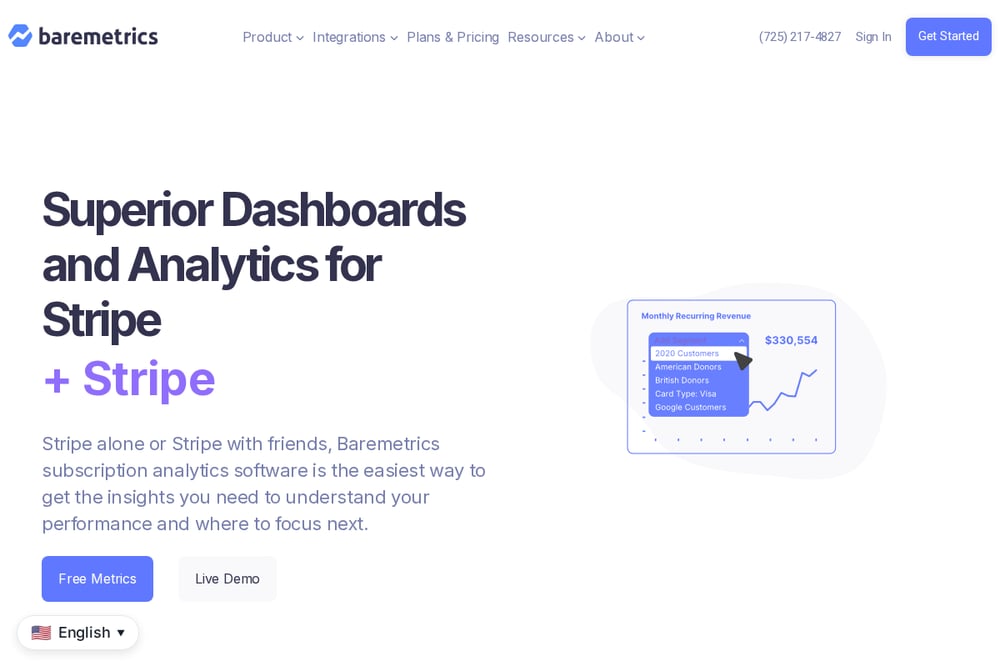 A screenshot of the Baremetrics website.
Baremetrics is a subscription analytics platform that gives you a clear view of your MRR, ARR, churn, and customer lifetime value. It pulls data directly from your payment providers, so you don't have to rely on manual spreadsheets. The platform offers financial forecasting tools that let you model different scenarios based on your actual business data. You can see trends and make predictions with confidence, knowing your numbers are grounded in real transactions. It's a solid choice for SaaS teams that want a self-serve analytics solution without the need for constant manual updates. If you're looking for a straightforward way to track and forecast your subscription revenue, Baremetrics is a strong contender.
#2 Integrity Operating Partners — Revenue Assurance
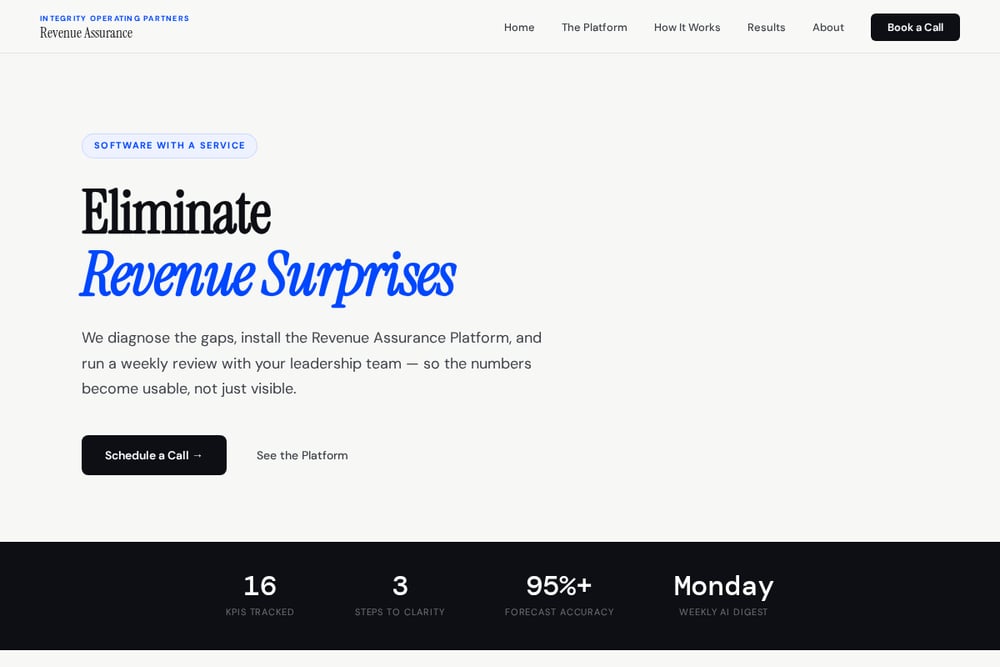 A screenshot of the Integrity Operating Partners website.
Integrity Operating Partners takes a different approach by combining software with a service model. They start with a diagnostic to find the gaps in your revenue data, then install their Revenue Assurance Platform around your business. After that, they meet with your leadership team weekly to turn the data into action, not just reports. This platform tracks 16 KPIs and aims for 95%+ forecast accuracy, giving you a clear picture of your pipeline and growth metrics. It's built for SaaS companies that have outgrown spreadsheet management and need a hands-on partner to keep numbers clean and decisions sharp. If you want to eliminate revenue surprises and have a team that reviews your numbers every week, this is a compelling option.
#3 Hubifi
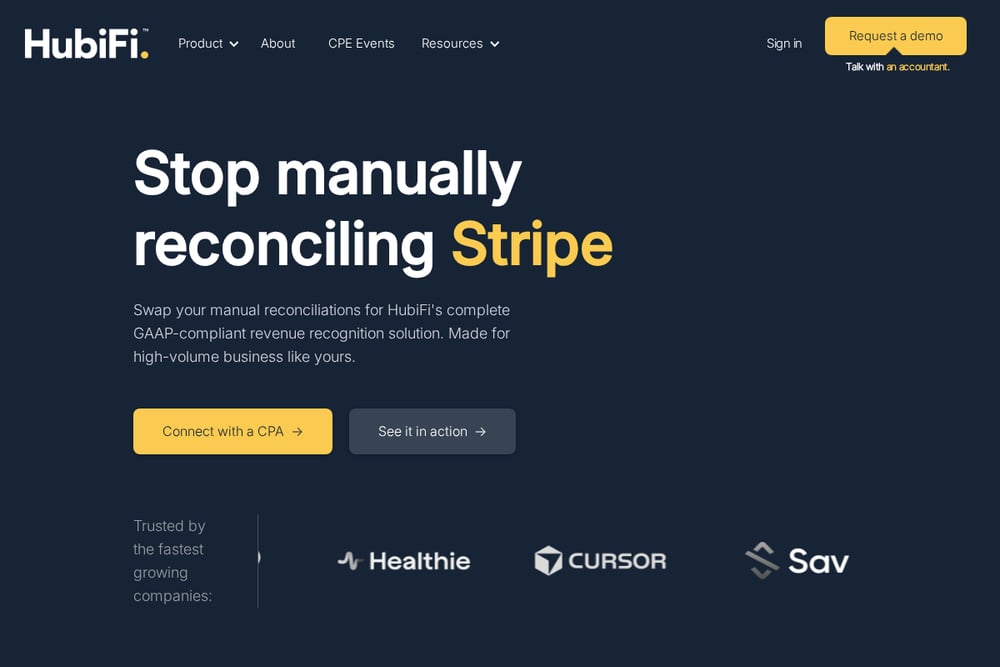 A screenshot of the Hubifi website.
Hubifi offers a SaaS revenue forecasting guide that emphasizes the importance of clean data and regular reviews. Their platform helps you master key metrics like MRR, ARR, churn, and CLV, which are the foundation of reliable projections. They advocate for combining multiple forecasting methods, such as linear regression and cohort analysis, to get a more accurate picture. Hubifi also stresses the need for strong data management practices and consistent forecast reviews. This makes it a good fit for finance teams that want to build a robust forecasting process from the ground up. If you're looking for a guide and tool to help you refine your forecasting approach, Hubifi is worth exploring.
#4 Abacum
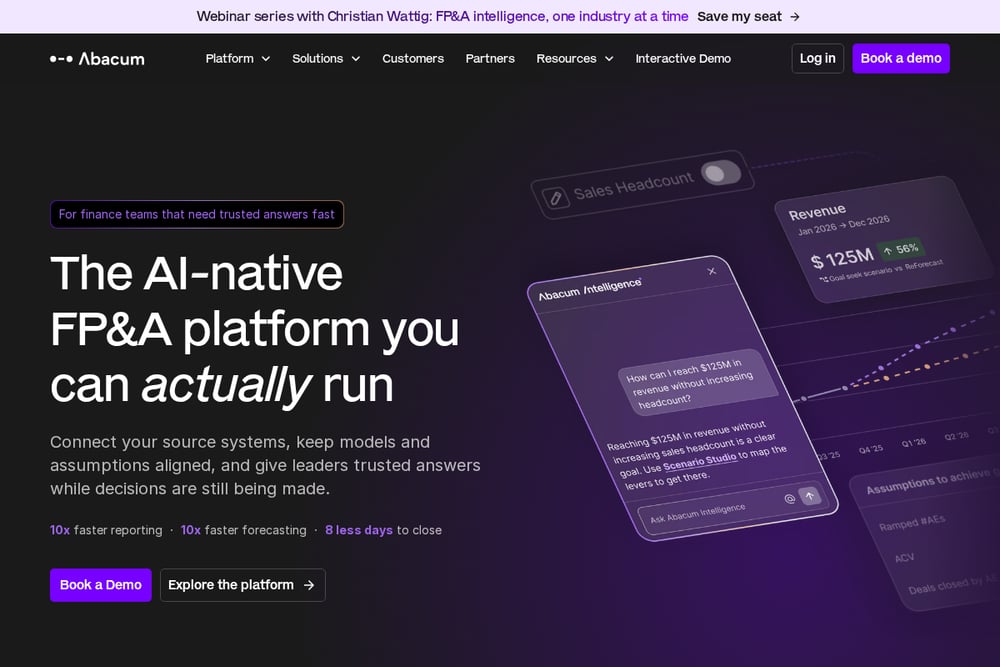 A screenshot of the Abacum website.
Abacum is a financial planning platform designed for scaleups that need to move beyond spreadsheets. It offers real-time data integration and collaborative forecasting tools that let your team work from a single source of truth. The platform helps you automate data collection and create dynamic models that adapt to your business changes. Abacum focuses on making forecasting less of a chore and more of a strategic advantage. It's ideal for SaaS companies that are scaling quickly and need to keep their financial planning agile. If you want to streamline your FP&A processes and improve forecast accuracy, Abacum provides a modern solution.
#5 Varicent
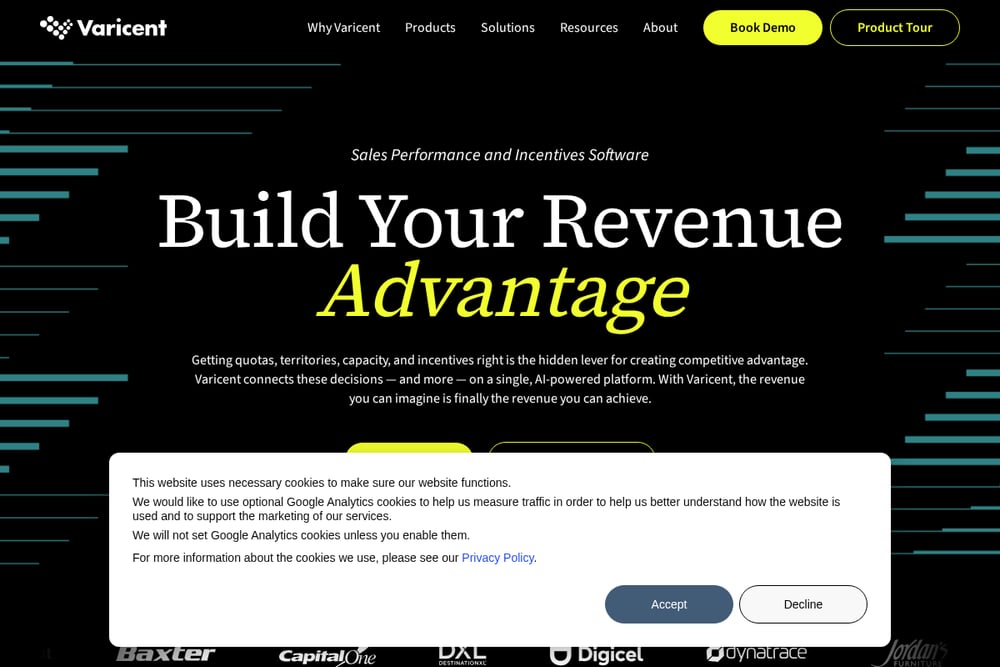 A screenshot of the Varicent website.
Varicent is a sales performance management platform that includes robust sales forecasting capabilities. It focuses on connecting pipeline, bookings, renewals, churn, and expansion signals to give you a credible revenue forecast. The platform uses AI to analyze your sales data and provide scenario modeling, which helps you anticipate changes and adjust your strategy. Varicent also emphasizes the importance of an operating rhythm, so you can review and update forecasts regularly. It's a comprehensive tool for RevOps teams that want to align sales and finance on the same numbers. If you need a solution that integrates deeply with your sales processes, Varicent is a powerful option.
How to Choose the Right Revenue Forecasting Solution
Start by assessing your current pain points. If you're drowning in spreadsheets and lack a single source of truth, a platform like Baremetrics or Abacum can automate data collection. If you need more than software—like weekly reviews and hands-on guidance—Integrity Operating Partners offers a service model that might fit better. Consider your team's capacity: do you have the resources to manage the tool internally, or do you need external support? Also, think about the level of forecast accuracy you're aiming for and how often you want to review your numbers. Finally, evaluate the pricing structure and whether it aligns with your budget and expected ROI. The right choice depends on your specific needs, so take the time to map out your requirements before committing.
Automating Your Revenue Forecasting Workflow
To get the most out of these tools, set up automated data syncing from your CRM and billing systems. This ensures your forecasts are always based on the latest information. Use the platform's built-in alerts to flag when key metrics deviate from targets. Schedule weekly reviews with your leadership team to discuss the numbers and adjust your strategy. With automation, you can reduce manual data entry and focus on making decisions that drive growth.
Final Thoughts on Revenue Forecasting Solutions
The right revenue forecasting solution can transform how you run your SaaS business. Whether you choose a self-serve analytics tool or a full-service platform, the key is to get clean data and a regular review cadence. Don't settle for dashboards that just show numbers—look for solutions that help you act on them. With the right partner, you can eliminate revenue surprises and make confident, data-driven decisions. Take the time to evaluate your options and pick the one that fits your team's workflow and goals.