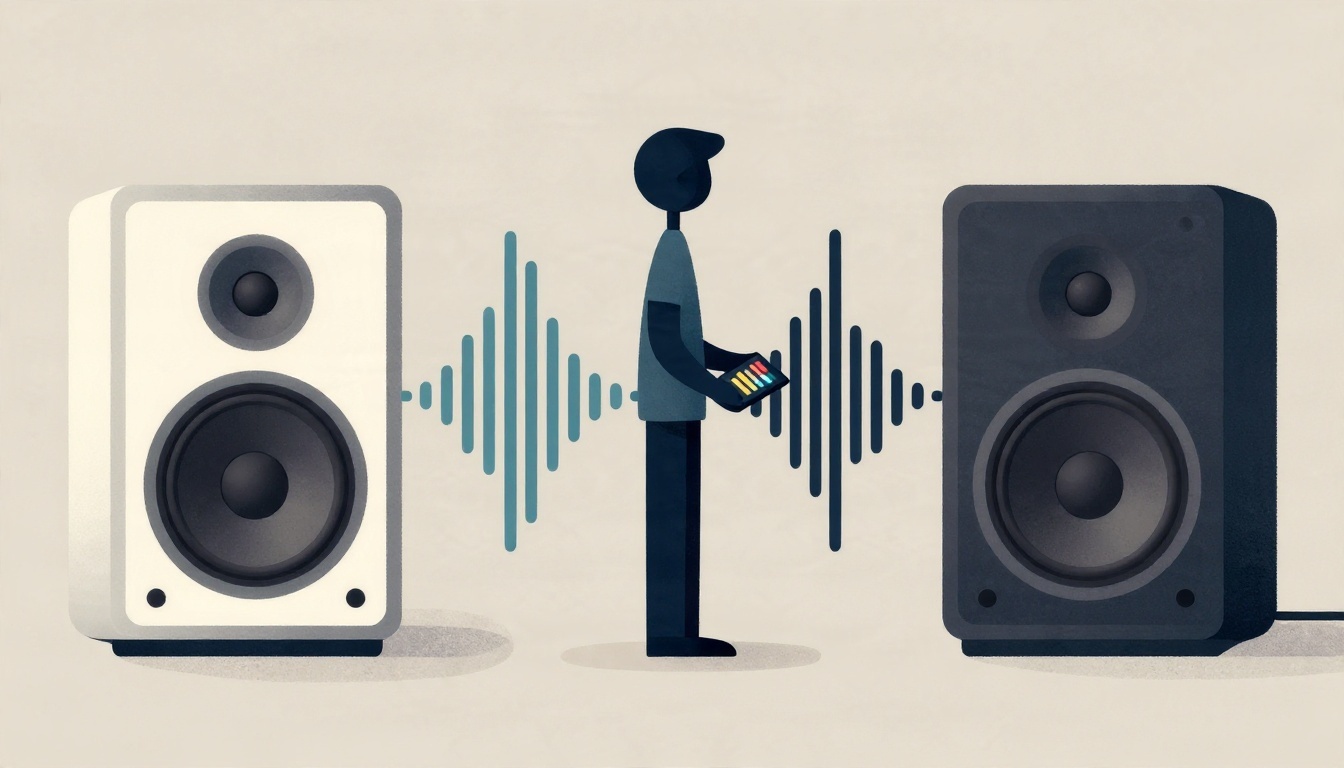
When the Studio Sound Falls Apart
A mix can sound enormous on studio monitors and collapse the moment it leaves the room. Roshtunes Media Team described an early record with heavy sub bass and wide stereo synths that lost its vocal in a car and lost its bass entirely on a phone speaker. The fix was not a single plugin setting but a process change: "After that, we made visual spectral diagnostics and real world translation checks mandatory before finalizing any master." The team now sculpts upper bass harmonics so low frequencies still register on small speakers, tightens phase alignment so wide mixes do not collapse in mono, and tests every bounce across consumer systems before delivery.
That approach reflects a broader principle in audio engineering: a master has to translate across playback environments, not just satisfy one reference system. Resources like Sound on Sound's guide to monitoring and translation cover why this matters, but the team's point is practical — build the checks into the workflow rather than treating them as an afterthought.
The Loudness Trap on Streaming
Most guides tell independent artists to hit a specific loudness target and stop there. Roshtunes argues that advice leaves out how streaming normalization and true peak limiting interact with a song's arrangement. Artists crush transients trying to sound loud, only for platforms to turn the track down anyway. "What guides leave out is that perceived loudness comes from frequency balance, midrange clarity, and dynamic contrast rather than brute force limiting," the team said.
When the low mids are clean and the vocal sits in its own pocket, a track can sound huge on streaming without sacrificing punch. For context on how platforms handle normalization, see Spotify's documentation on loudness normalization.
Mastering Advice That Does Not Fit the Release
When artists arrive with tracks that feel suffocated after following generic online advice, the team strips away the obsession with volume and runs a full spectral diagnostic. "Instead of forcing the song into a rigid template, we approach it as sonic sculpting," they said. That means opening up dynamic range, clearing muddiness in the low mids, and shaping separate masters for streaming, broadcast, and cinematic use.
The team also flags what search-ranking guides tend to omit: acoustic translation and long-term catalog purpose. Artists mixing in untreated rooms or on headphones often fall in love with how a track sounds in one space, missing clashing frequencies that fall apart on television or radio. And a single stereo file is rarely enough. "If an artist wants their music to have a real lifespan across streaming, radio, and sync licensing, they need clean dynamic headroom and properly prepared versions from the start."
Mastering or Promotion First?
The biggest budgeting mistake, according to Roshtunes, is treating promotion as a fix for an unfinished record. Artists pour money into ads and playlist campaigns on a rough mix, planning to pay for engineering once the song takes off. "In reality, promotion only multiplies what is already there," the team said. If a listener clicks an ad and hears a muddy or fatiguing track next to the rest of their playlist, they skip within seconds and the spend is wasted.
Securing the sonic foundation first, they argue, ensures that later promotional dollars actually convert casual listeners into fans. For independent artists weighing where to spend, that sequencing is the takeaway: engineering is not a reward for a successful release, it is a precondition for one.
Deciding on a Sync Partner Too Quickly
Artists tend to fall into one of two traps when deciding whether they need a sync licensing partner. Some assume sync is just emailing an MP3 to a supervisor, without realizing decision makers require broadcast-ready audio, clean rights ownership, and a credible digital footprint. Others count themselves out too early, assuming they need millions of streams or a major label first.
"A music supervisor does not care about streaming numbers. They care about whether a song carries a genuine mood that elevates a scene, and whether the artist has a partner who has already handled the technical and catalog groundwork so the track can be cleared without delay," the team said. For readers exploring how sync licensing works, BMI's overview of sync licensing is a useful starting point.
The through-line across all six answers is consistency: translation checks, dynamic contrast, prepared catalog versions, and a finished record before promotion. More about the team's mixing, mastering, and sync work is available at Roshtunes Media Team.