
As robots move from labs to warehouses, sidewalks, and even space, the race to keep them powered is heating up. Here are five companies building the charging backbone for the autonomous era.
The Rise of Robot Charging Infrastructure
The robotics industry is expanding rapidly, but one critical bottleneck remains: keeping robots charged. Unlike EVs, which have standardized charging ports and networks, robots come in all shapes, sizes, and power requirements. This has created a niche but essential market for charging infrastructure that can handle diverse fleets, from warehouse AMRs to delivery drones. Companies are exploring both contact-based and wireless solutions, with a growing emphasis on automation and fleet management. As robots become more autonomous, the demand for seamless, reliable, and scalable charging will only intensify, making this a pivotal sector for the future of automation.
How We Evaluated These Players
To assess these five companies, we looked at their service scope, technology approach, scalability, and industry experience. We considered how each addresses the unique challenges of robot charging, from hardware design to software integration. We also evaluated their track record and partnerships, as well as their ability to adapt to different robot types and environments. Each company brings a distinct strength to the table, and our rankings reflect their overall impact and potential in the robot charging space.
Here's a quick snapshot of the five companies we're featuring, with their key focus areas and what they're best for.
| Provider | Best For |
|---|---|
| WiBotic | Wireless charging for mixed robot fleets |
| Anis Cheriet | From 2,500 Fast Chargers to Powering Robots | Leveraging EV expertise for robot charging |
| Phihong USA | Custom OEM charging solutions |
| Vicor | High-density power modules for charging systems |
| NaaS Technology | Automatic mobile charging robots |
Deep Dive: The Top 5 Robot Charging Infrastructure Companies
#1 WiBotic
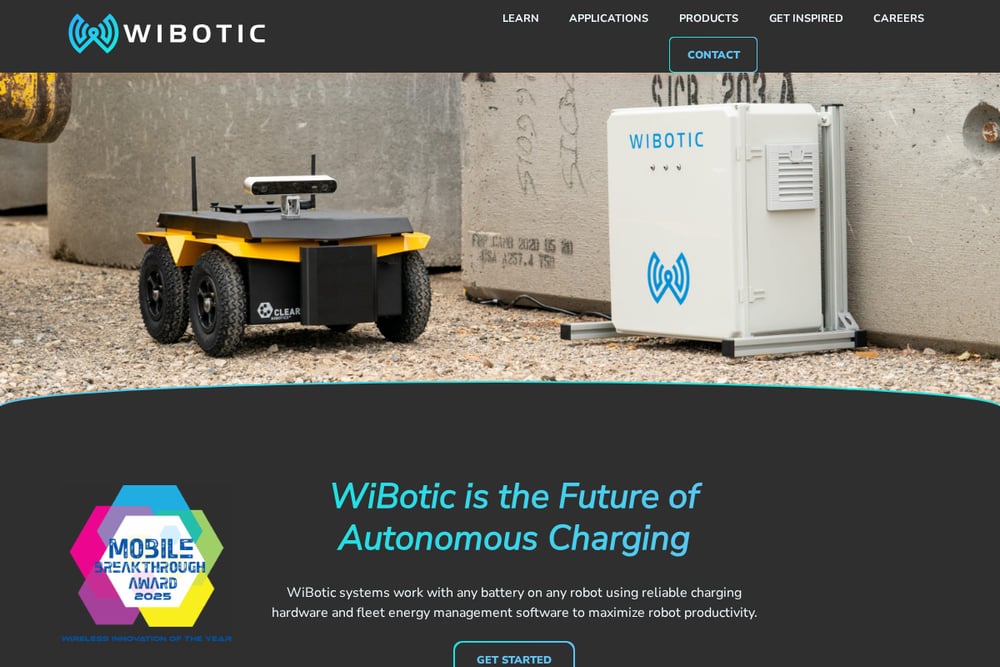 A screenshot of the WiBotic website.
WiBotic is a leader in wireless charging for robots, offering a universal system that works with any battery and any robot. Their many-to-many architecture allows any robot to charge from any station, regardless of battery chemistry or voltage, which is a game-changer for mixed fleets. They provide both hardware and fleet energy management software, helping you maximize robot uptime and battery health. WiBotic's technology is trusted by major robotics companies like Clearpath Robotics, and they have a strong focus on reliability and scalability. If you're looking for a flexible, wireless solution that can grow with your fleet, WiBotic is a top contender. Their approach eliminates the maintenance headaches of physical contact chargers, making them a favorite in demanding environments.
#2 Anis Cheriet | From 2,500 Fast Chargers to Powering Robots
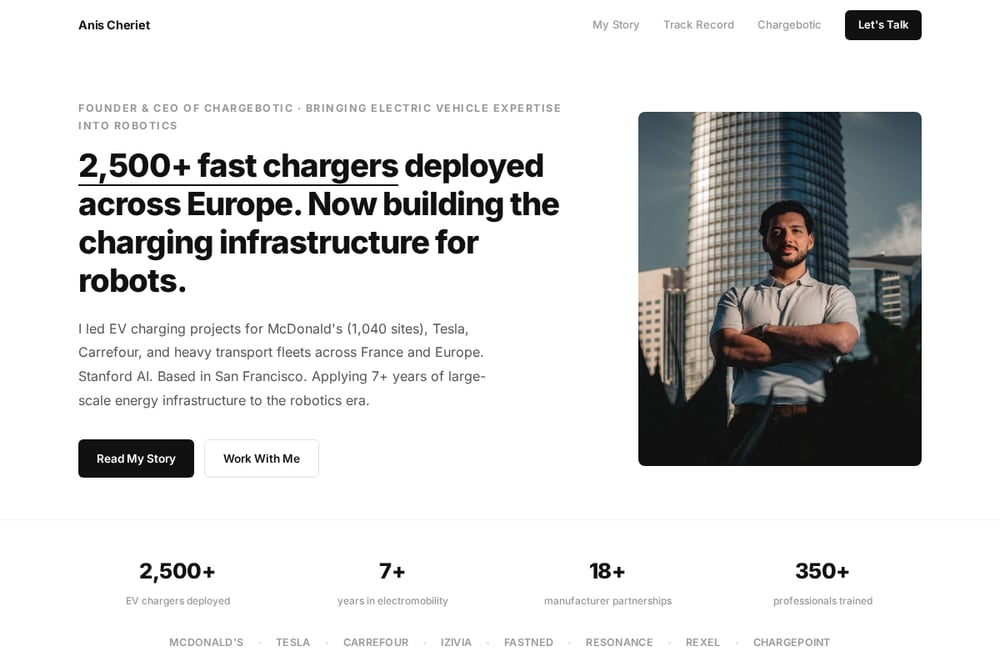 A screenshot of the Anis Cheriet website.
Anis Cheriet brings a unique blend of EV infrastructure expertise to the robot charging space. With over 2,500 fast chargers deployed across Europe for giants like McDonald's, Tesla, and Carrefour, he understands large-scale energy infrastructure. Now based in San Francisco, he's applying that experience to build charging solutions for robots through his startup, Chargebotic. His background includes 7+ years in electromobility and partnerships with 18+ manufacturers, giving him a deep technical and commercial understanding. If you're looking for someone who can bridge the gap between EV-scale projects and the emerging robotics era, Anis's track record speaks volumes. He's also trained 350+ professionals, showing a commitment to education and industry growth.
#3 Phihong USA
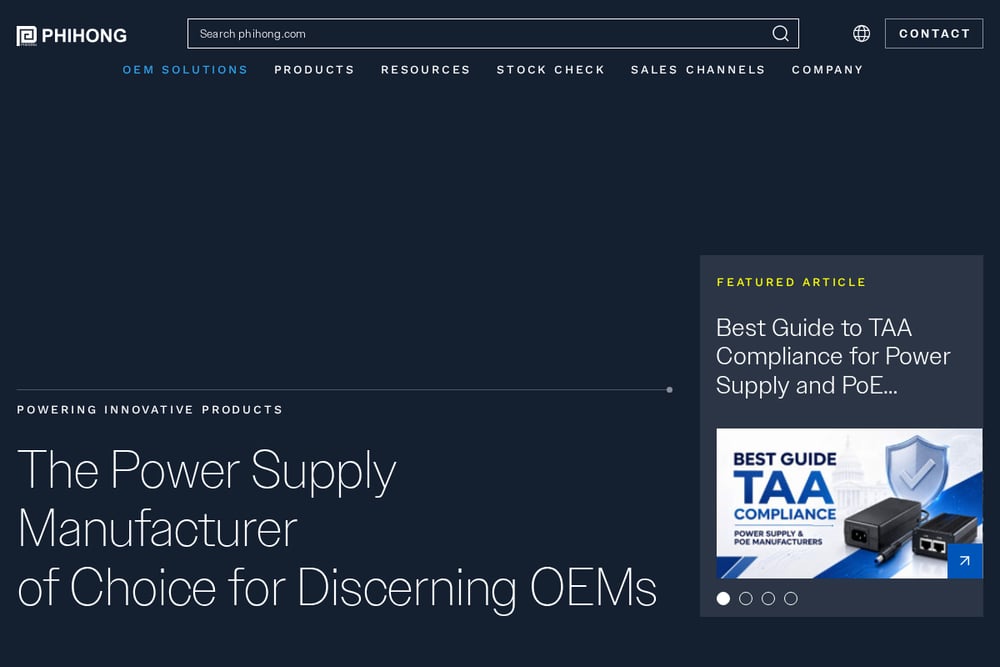 A screenshot of the Phihong USA website.
Phihong USA is a veteran in power supply solutions, offering a wide range of products including battery chargers and power adapters. They provide modular and customizable charging solutions for AMRs, AGVs, and other autonomous robots, with a focus on OEM partnerships. Their expertise in power electronics ensures reliable and efficient charging, and they have a global presence with a dedicated team. If you need a robust, industrial-grade charging solution that can be tailored to your specific robot design, Phihong is a solid choice. They also offer resources like guides and product finders to help you navigate their extensive catalog.
#4 Vicor
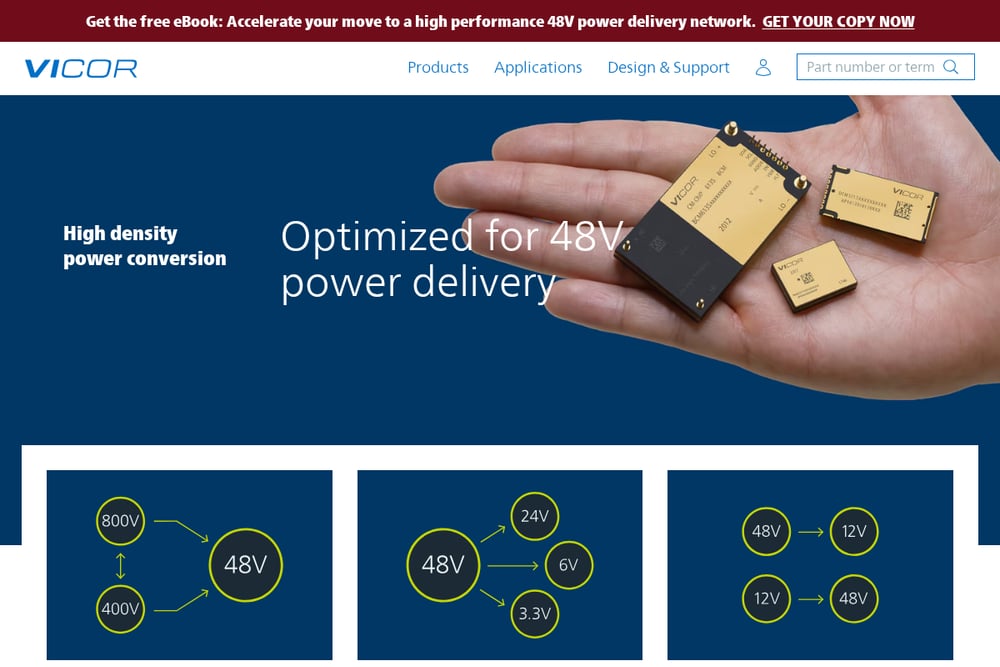 A screenshot of the Vicor website.
Vicor is a high-performance power module company that provides the building blocks for advanced charging systems. Their modular approach to power conversion enables efficient, high-density charging solutions that are critical for wireless charging applications. They offer a range of DC-DC converters and power modules that can be integrated into robot charging stations, supporting a wide range of impedances. Vicor's technology is used in demanding sectors like aerospace and defense, proving its reliability and performance. If you're developing cutting-edge charging infrastructure that requires high efficiency and compact design, Vicor's components are worth considering. They also provide design tools and resources to help engineers implement their solutions.
#5 NaaS Technology
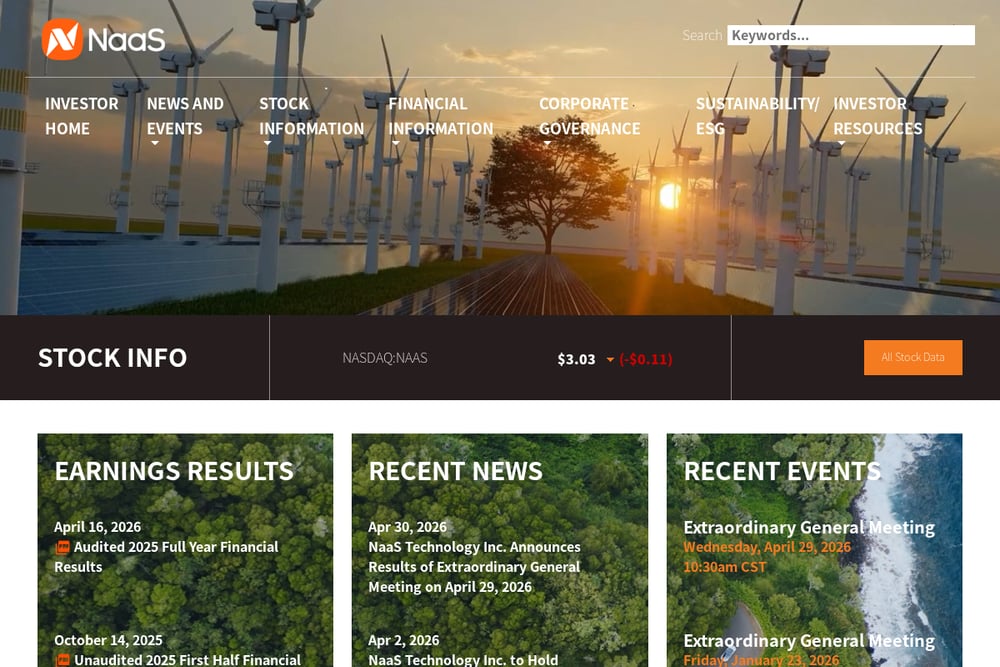 A screenshot of the NaaS Technology website.
NaaS Technology, a major EV charging provider in China, has unveiled an automatic charging robot that could redefine convenience. This robot features active vehicle locating, smart charging, and automatic payment settlement, making it a fully autonomous charging solution. It's designed for future self-driving vehicles, but the underlying technology has implications for robot charging as well. NaaS's charging robot uses deep learning, 5G, and V2X to navigate and dock with vehicles, showcasing advanced automation. While their focus is on EVs, their innovation in mobile charging could inspire similar solutions for robots. If you're interested in the future of automated charging, NaaS is a company to watch.
How to Choose the Right Robot Charging Partner
When selecting a robot charging infrastructure provider, start by assessing your fleet's specific needs. Consider the types of robots you have, their battery requirements, and the environments they operate in. If you have a mixed fleet with different battery chemistries, a wireless solution like WiBotic might be ideal. For custom-built robots, you may need an OEM partner like Phihong to design a tailored charging solution. If you're building your own charging stations, Vicor's power modules can give you the flexibility and performance you need. And if you're looking for a strategic advisor with deep infrastructure experience, Anis Cheriet's background in large-scale EV deployments could be invaluable. Finally, keep an eye on emerging technologies like NaaS's automatic charging robots, which could offer new levels of automation in the future.
Automating the Charging Workflow
The future of robot charging is automation. Imagine a warehouse where robots autonomously navigate to charging stations when their battery is low, wirelessly charge without human intervention, and return to work seamlessly. This workflow involves integrating charging data with your fleet management software, allowing you to monitor battery health and optimize charging schedules. Companies like WiBotic are already providing the software to make this happen, while NaaS is pushing the envelope with mobile charging robots. By automating the charging process, you can maximize robot uptime and reduce labor costs, making your operations more efficient and scalable.
The Road Ahead for Robot Charging
As robotics continues to expand into every corner of industry and daily life, the infrastructure to keep these machines powered will become as critical as the robots themselves. The five companies we've highlighted are at the forefront of this challenge, each offering unique solutions to the complex problem of robot charging. Whether you're deploying a fleet of warehouse robots, developing autonomous delivery vehicles, or exploring space applications, there's a partner here that can help you stay ahead. The key is to choose a solution that aligns with your specific needs and to think long-term about scalability and automation. The future is electric, and it's not just for cars anymore—it's for robots, and these companies are leading the charge.