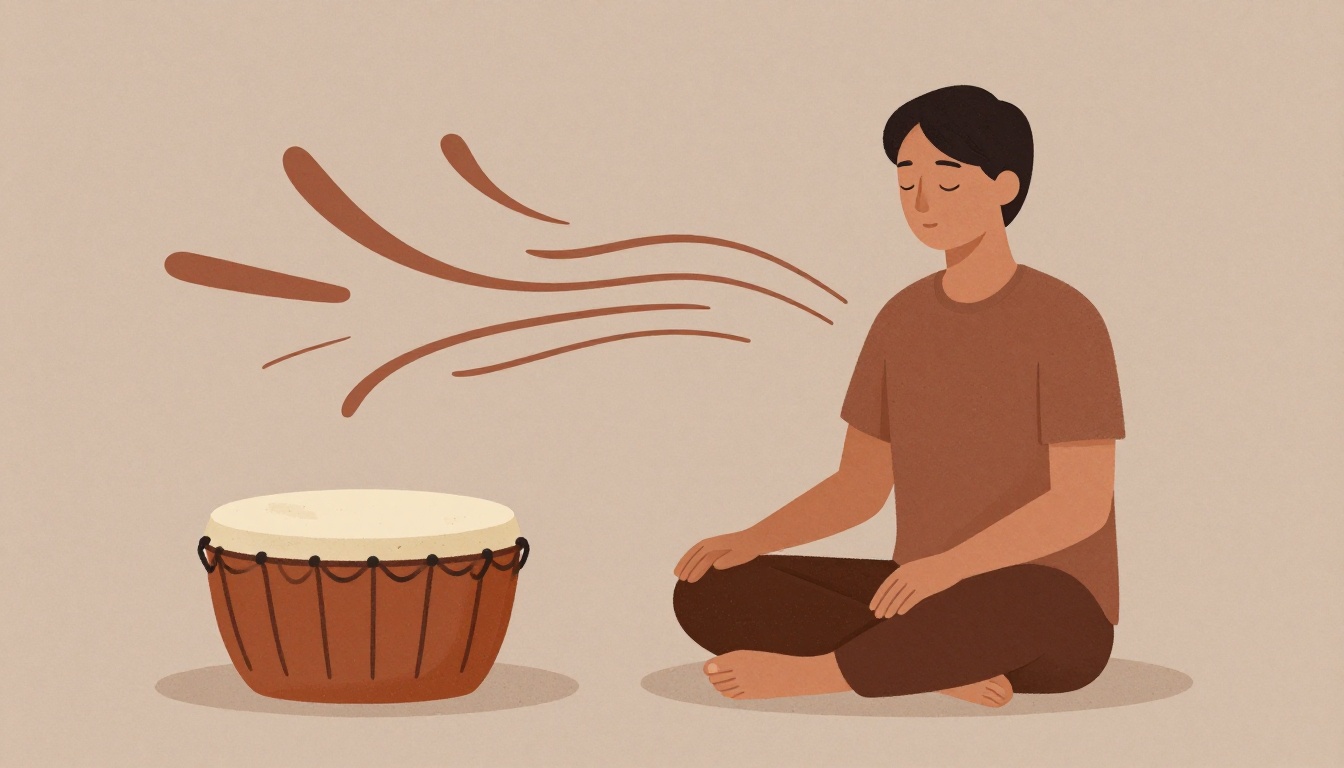
When most people hear “rhythm healing,” they picture drum circles, bongos, and hand percussion. But according to the team at Outlaw Drummers, that’s exactly where the misunderstanding begins. The drum, they explain, is not the point. It’s just a vehicle.
“The thing people get wrong most, is that it is about drumming. It’s Not. The drum is just a tool to achieve accessing the Parasympathetic system; the body’s own healing mechanism. That is why I use Rhythm Healing, not Drum Healing. The same effects are achieved by Art and Dance.”
This distinction matters because it shifts the focus from the instrument to the physiology. The parasympathetic nervous system is the branch of the autonomic nervous system responsible for rest, digestion, and recovery. When it’s dominant, heart rate slows, blood pressure drops, and stress hormones like cortisol decrease. Rhythm—whether through drumming, dancing, or painting—can help trigger this state, but the drum itself is not the active ingredient.
Research supports this idea. Studies on rhythmic auditory stimulation show that steady, repetitive sound can influence brainwave activity and promote relaxation. Similarly, art therapy and dance movement therapy are recognized for their ability to reduce anxiety and improve emotional regulation. The common thread is not the medium—it’s the rhythmic, repetitive engagement that calms the nervous system.
For Outlaw Drummers, this reframing changes how they approach their work. Instead of teaching drumming as a skill to master, they use rhythm as a doorway to a physiological state. Participants don’t need to be musicians. They don’t need to keep perfect time. They just need to engage with a beat—any beat—and let the body respond.
This is why the practice is called “rhythm healing” rather than “drum healing.” The drum is one of many possible tools. A paintbrush, a dance step, or even a simple hand clap can serve the same purpose. The goal is not to produce music but to activate the body’s built-in recovery system.
For anyone curious about trying rhythm healing, the practical takeaway is simple: don’t get hung up on the instrument. If you don’t have a drum, use your hands on a table. If you don’t want to move, try humming a steady pulse. The key is consistency and repetition, not technical proficiency.
Outlaw Drummers emphasizes that this approach is accessible to everyone. You don’t need years of training or expensive equipment. You just need a willingness to engage with rhythm and let your body do what it already knows how to do.
In a world that often equates healing with passive treatments—pills, rest, or therapy sessions—rhythm healing offers an active, embodied alternative. It’s not about becoming a drummer. It’s about becoming more attuned to your own nervous system and giving it the signal to relax.
So the next time you hear about rhythm healing, remember: the drum is just the messenger. The real work happens inside you.