Returns are a fact of life for ecommerce brands, but they don't have to be a pure cost center. The right software can turn refunds into exchanges, reduce support tickets, and even generate new revenue. Here are five returns management platforms worth knowing in 2026, each with its own approach to post-purchase.
How We Picked These Tools
We looked for platforms that explicitly serve ecommerce brands, offer returns and exchanges management, and provide verifiable details about their features from their own websites. The list is not a ranking; each company is included because it brings a distinct set of capabilities to the returns process.
| Provider | Best For |
|---|---|
| Loop Returns | Ecommerce brands seeking an all-in-one post-purchase platform |
| Narvar | Retailers wanting AI-powered post-purchase automation |
| AfterShip Returns | Brands looking to encourage exchanges over refunds |
| ReturnGO | Ecommerce brands prioritizing sustainability and customization |
| Return Prime | Shopify merchants seeking a returns app with upsell features |
The 5 Tools in Focus
#1 Loop Returns
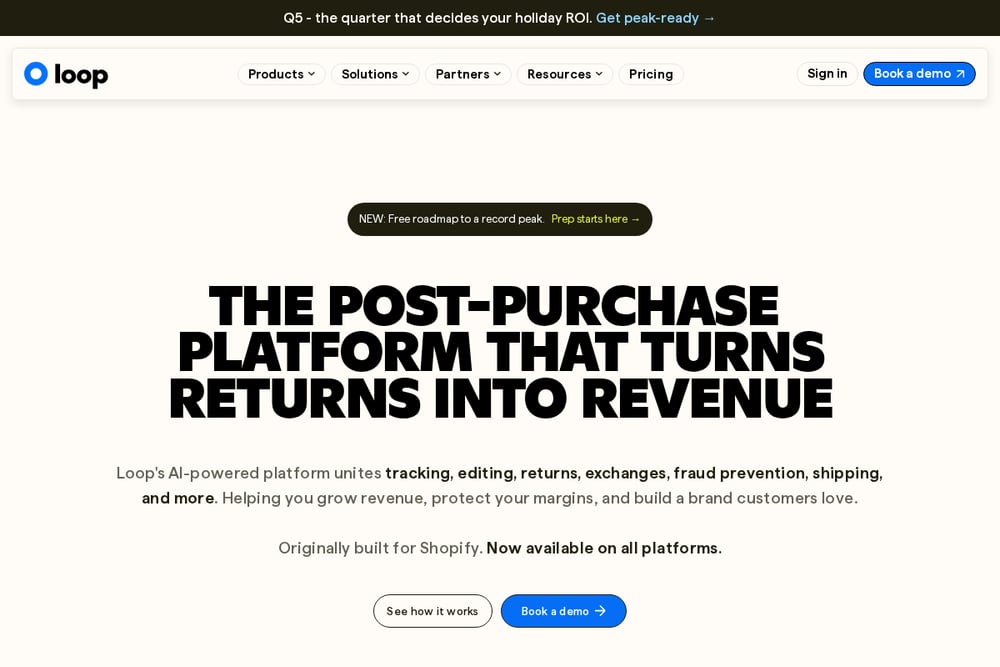 A screenshot of the Loop Returns website.
Loop Returns is a post-purchase platform that unites tracking, editing, returns, exchanges, fraud prevention, and shipping. It guides shoppers toward exchanges or store credit instead of refunds, which helps retain revenue. The platform also offers checkout protection and delivery promise features. It is built for ecommerce brands looking to manage the entire post-purchase experience in one place.
#2 Narvar
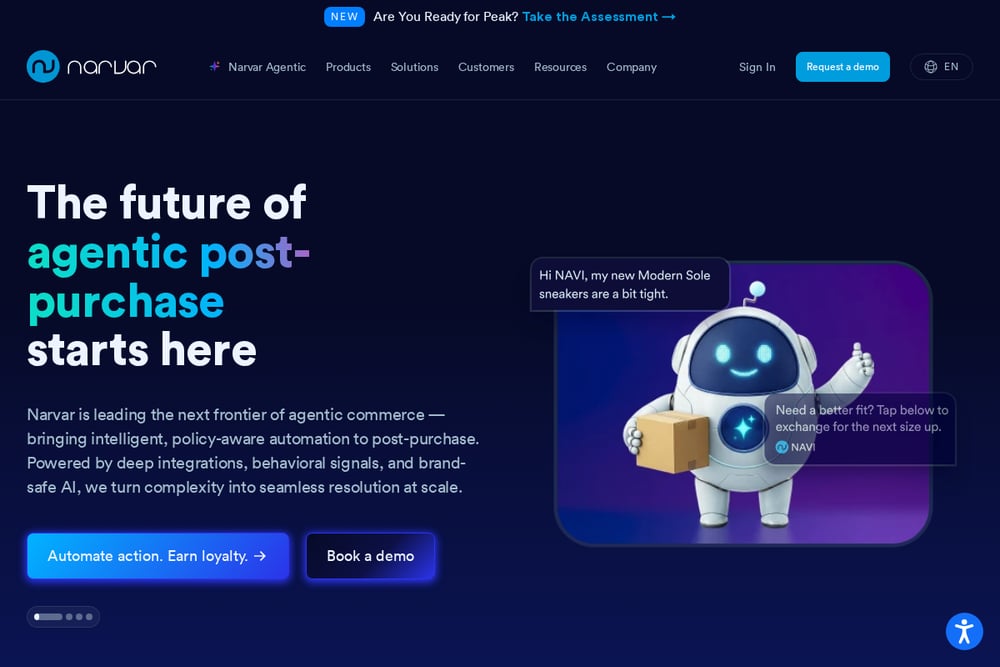 A screenshot of the Narvar website.
Narvar provides an agentic post-purchase platform with modules for delivery estimates, tracking, returns and exchanges, notifications, and fraud prevention. Its Shield product focuses on returns and exchanges management, using AI to prevent fraudulent returns and offer automated exchanges. Narvar aims to help retailers build trust and retain revenue after the sale. It suits brands that want a comprehensive, AI-driven approach to post-purchase.
#3 AfterShip Returns
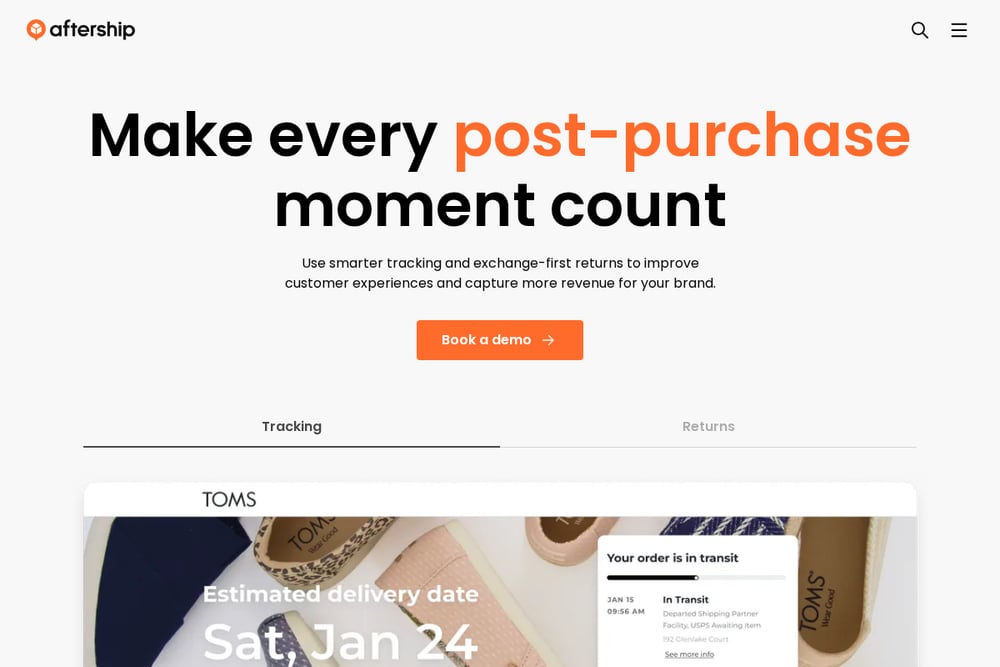 A screenshot of the AfterShip Returns website.
AfterShip Returns is part of a broader post-purchase suite that includes tracking, shipping, and returns. It focuses on exchange-first flows, store credits, and fraud prevention to help brands retain revenue. The platform integrates with many carriers and ecommerce platforms. It is designed for ecommerce brands that want to turn returns into a revenue engine while maintaining a branded experience.
#4 ReturnGO
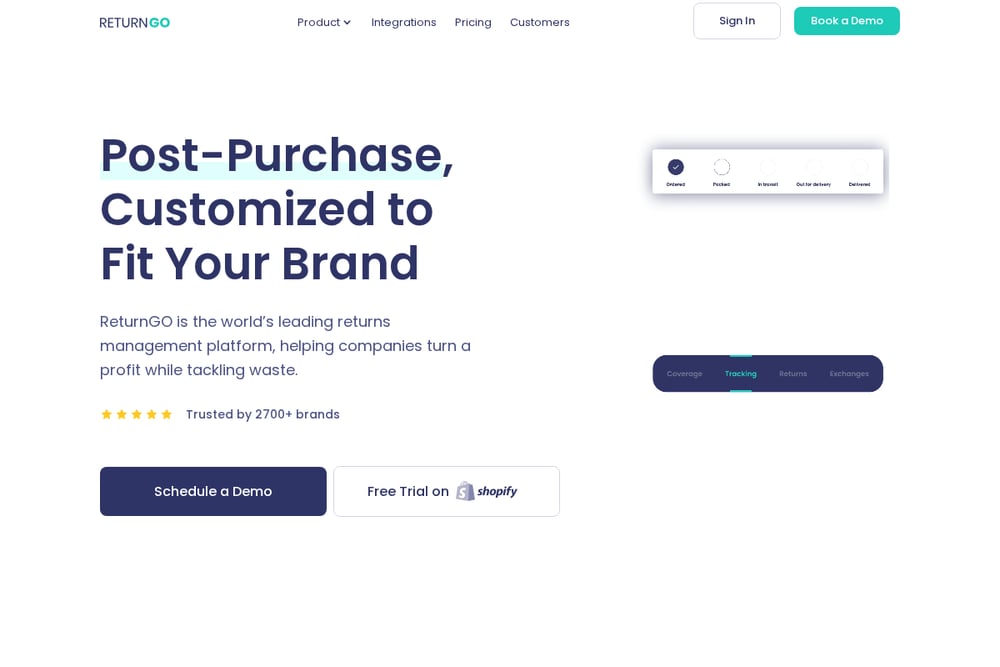 A screenshot of the ReturnGO website.
ReturnGO is an open post-purchase platform that provides returns, exchanges, warranty, tracking, shipping, and return coverage. It emphasizes sustainable ecommerce by offering alternatives to refunds and minimizing waste. The platform includes a self-service portal and integrates with various ecommerce stacks. It suits brands that want a customizable, eco-conscious returns solution.
#5 Return Prime
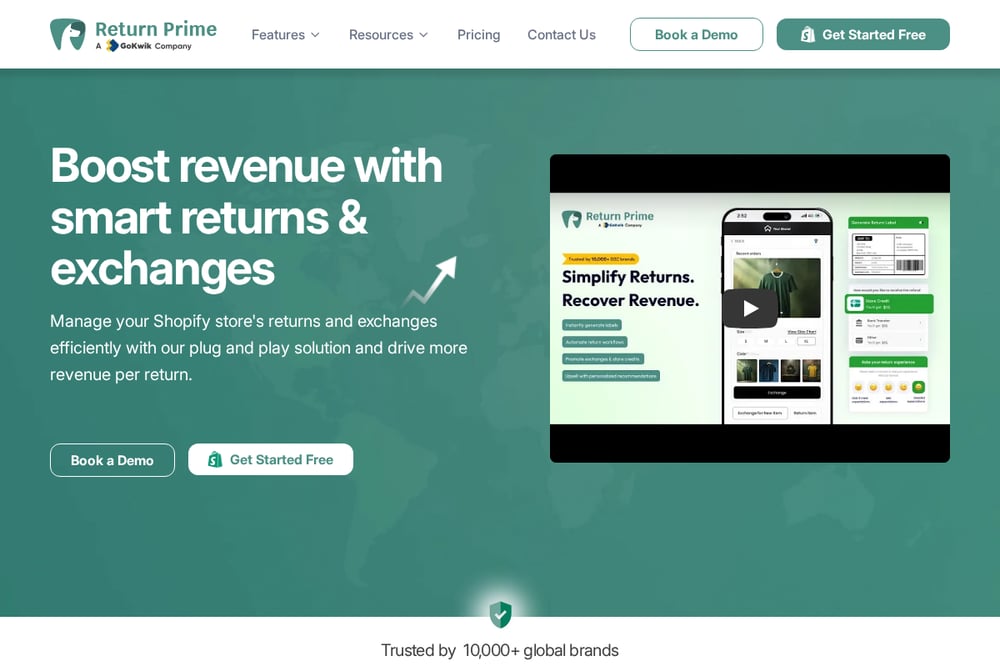 A screenshot of the Return Prime website.
Return Prime is a returns management platform built for Shopify stores. It offers features like smart exchanges, store credit promotions, upsells during returns, and automation bots. The platform aims to turn returns into a revenue driver with upsells and exchanges. It is well-suited for Shopify merchants looking for a plug-and-play returns solution.
Which One Should You Choose?
When evaluating returns management software, consider your platform (e.g., Shopify or others), the features you need (exchanges, store credit, fraud prevention, tracking), and how well the tool integrates with your existing stack. Think about whether you want a standalone returns solution or a broader post-purchase suite. Also, assess the level of automation and self-service you want to offer customers. Each option here has different strengths, so match them to your brand's priorities.
Final Thoughts
Returns management is evolving from a cost center to a strategic part of the customer experience. The five platforms listed offer different approaches: some focus on AI-driven automation, others on sustainability or Shopify-native simplicity. By understanding what each does, ecommerce brands can choose the one that aligns with their operational needs and customer expectations in 2026.
Know a company that belongs on this list? Email us at editorial@peekwire.com.