Introduction
When Peekwire compiled its list of water resilience partners worth knowing in Europe, RESPOND was included alongside RES and The Nature Conservancy Resilient Watersheds. A brief correction followed: the entry should read RESPOND, not "Water resilience..." as it stood. That exchange opened the door to a short interview with Christian Bergius, CEO of RESPOND, about how companies actually experience water risk and what the standard playbook misses.
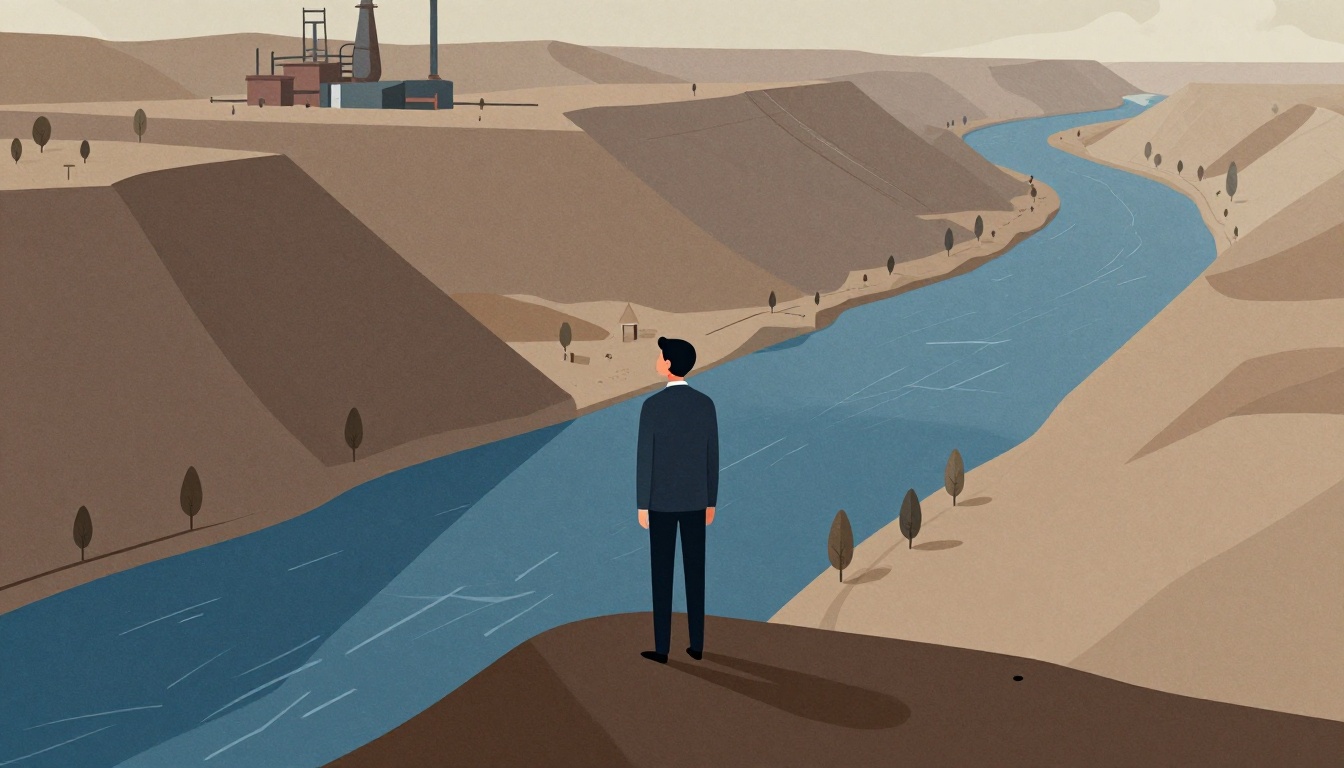
Water risk doesn't start at the fence line
Asked when a company arrives with a water risk that offsets or a single site fix cannot address, Bergius is direct. "Multiple times: Our clients understand that their water risks and dependencies do not originate at their sites but around it."
That distinction matters. A factory can install flood barriers, but the water that threatens it may come from a watershed no single site controls. "So an investment in flood protection or groundwater recharge can be most effective in the landscapes that serve as best buffers."
The implication is uncomfortable for procurement teams used to buying credits. "With water no one can offset their risks, it's about genuine investments in watershed resilience." Unlike carbon, where a tonne emitted in one place can theoretically be balanced by a tonne sequestered elsewhere, water is local. A recharge project in one basin does not compensate for over-abstraction in another.
The blind spot: single metrics, single projects
What keeps coming up in RESPOND's projects that most writing on European water risk leaves out? Bergius points to a habit of narrowing the lens. "We tend to look at single metrics a bit too much and often at single project level too."
He acknowledges why buyers behave this way. "Whilst it's understandable from a buyer's perspective our approach is on basin level, which includes multiple projects, ecosystems and therefore advantages/ecosystem services."
That basin-level framing changes who benefits and how. "This means that multiple organisations can benefit in various ways from an array of projects: Groundwater recharge, flood protection, Biodiversity enhancement, carbon storage..." The logic is that a portfolio of interventions across a watershed delivers more resilience than any one project, and that the co-benefits — biodiversity, carbon, flood attenuation — accrue to different actors at once.
Bergius frames this as the only route to scale. "We believe that's the best way to solve this water crisis - or prevent it from becoming larger - at scale."
What companies decide too quickly
For companies just beginning to look at water risk, Bergius sees a recurring sequencing error. "We need to recognise that there are plenty of solutions, tech and nature based." The problem is not a shortage of options but the order in which they are chosen.
"Companies often look at small fixes for one specific risk on site level (that can be important, don't get me wrong)." He is careful not to dismiss site-level action. "But the systemic view and understanding of the interplay between different risks is key to be really resilient."
The practical takeaway is that a company should map how risks interact — drought, flood, groundwater depletion, supply chain exposure — before committing capital to any single fix. A site-level solution chosen first can lock in a narrow view that later proves inadequate when a neighbouring risk materialises.
What this means for practitioners
Three points stand out from the conversation. First, water risk is a landscape problem, and offsets are not a substitute for investment in the watersheds that buffer a company's operations. Second, basin-level portfolios — combining groundwater recharge, flood protection, biodiversity and carbon storage — can serve multiple organisations simultaneously, which is how scale becomes possible. Third, the systemic view should come before the site fix, not after.
For companies building a water strategy in Europe, Bergius's answers suggest a different starting question. Not "what can we do at this site?" but "which watersheds do we depend on, and what does resilience look like across them?"
More about RESPOND's work is available at respondwater.eu.