
Finding the right residential care for a child or teen is a high-stakes decision. These five Texas programs offer distinct approaches to healing and stability.
The Landscape of Youth Residential Care in Texas
Residential treatment centers for youth in Texas are as varied as the young people they serve. From hospital-based inpatient programs to home-like community settings, each facility brings a different philosophy and level of care. Many align with state frameworks like the Texas Child-Centered Care (T3C) model, which emphasizes stability, skill-building, and successful transitions. As you explore options, you'll find programs that specialize in trauma, substance use, or complex medical needs, while others focus on whole-child development. Understanding these distinctions is key to matching a program to your child's unique situation.
How We Evaluated These Programs
We looked at each program's service scope, the clarity of its admission process, and how well it fits the needs of Texas families. We considered the range of conditions treated, the structure of care, and the level of family involvement. We also noted each program's location and the type of environment it provides, from rural ranches to urban medical campuses. Our goal was to highlight what makes each option stand out, not to declare a single winner.
Here's a quick look at the five programs we're featuring, with their primary focus and what they're best for.
| Provider | Best For |
|---|---|
| Cedar Crest Hospital | Teens needing intensive, hospital-based psychiatric care |
| Chime Children & Community Services | Families seeking a structured, home-like setting with a broad range of services |
| Roots Renewal Ranch | Adolescent girls needing trauma-focused, whole-child care |
| Embark Behavioral Health | Teens and young adults needing a variety of residential options across the U.S. |
| The Menninger Clinic | Adolescents needing comprehensive psychiatric assessment and treatment |
A Closer Look at Each Program
#1 Cedar Crest Hospital
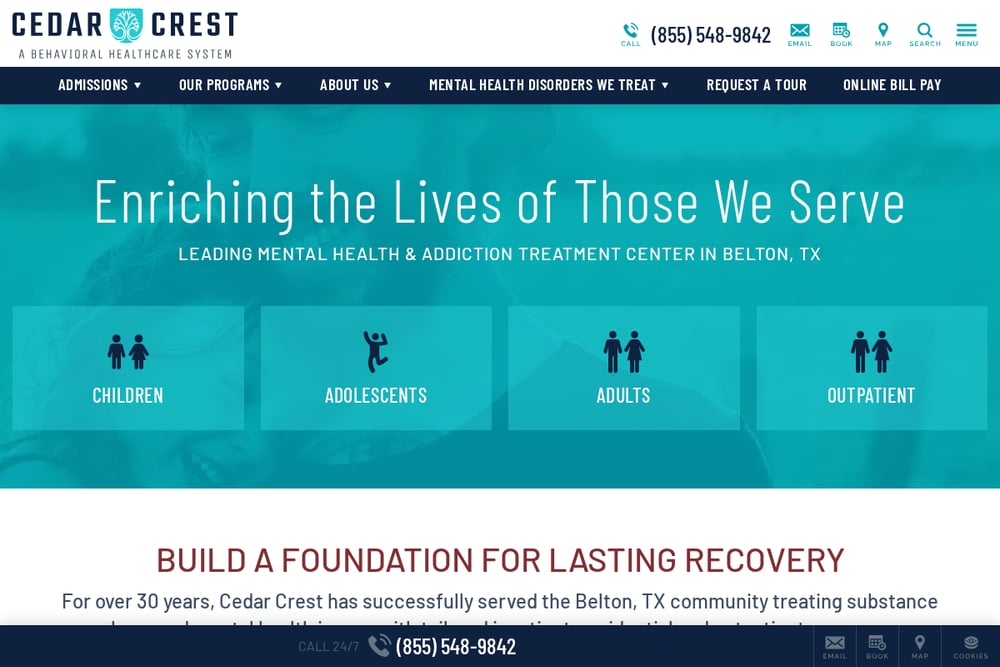 A screenshot of the Cedar Crest Hospital website.
Cedar Crest Hospital in Belton, Texas, offers a structured adolescent inpatient program for teens ages 12 to 17. Located on 33 acres, it provides a campus-like setting for those dealing with emotional problems and substance abuse. With over 30 years of experience, they've treated thousands of teens and offer a range of mental health services, including treatment for ADHD, depression, and anxiety. Their program is individualized, ensuring each patient's needs are met. If you're looking for a hospital-based setting with a long track record, this is a solid choice. [Source: Cedar Crest Hospital website]
#2 Chime Children & Community Services
 A screenshot of the Chime Children & Community Services website.
Chime Children & Community Services provides 24-hour residential care in a home-like environment across Texas. Aligned with the Texas Child-Centered Care (T3C) framework, their programs focus on stability, accountability, and skill-building. They offer two service tiers: one for residential treatment and transition support, and another for facility-based stabilization. Their services cover a wide range of needs, including trauma, medical support, IDD/autism, and substance use. This makes them a versatile option for children and youth with diverse challenges. [Source: Chime Children & Community Services website]
#3 Roots Renewal Ranch
 A screenshot of the Roots Renewal Ranch website.
Roots Renewal Ranch is a residential treatment center for adolescent girls aged 13 to 17, located in Argyle, Texas. They specialize in mental health, complex trauma, and co-occurring substance use disorders. Their approach is trauma-focused and whole-child, integrating therapy, psychiatry, and life skills development. They also offer family systems therapy and sibling support groups, recognizing the importance of family in the healing process. If you're looking for a gender-specific program with a strong family component, this could be the right fit. [Source: Roots Renewal Ranch website]
#4 Embark Behavioral Health
 A screenshot of the Embark Behavioral Health website.
Embark Behavioral Health operates residential treatment centers for teens and young adults across the country, including options in Texas. They address a range of conditions, from anxiety and depression to out-of-control behavior and self-harm. Their programs are designed to help families in crisis, offering a structured yet supportive environment. They also provide resources for insurance and funding, making the admissions process more transparent. If you're looking for a national network with multiple locations, Embark might have a program that fits your needs. [Source: Embark Behavioral Health website]
#5 The Menninger Clinic
 A screenshot of the Menninger Clinic website.
The Menninger Clinic in Houston, Texas, offers an adolescent treatment program within a renowned psychiatric hospital. They provide comprehensive assessments and individualized treatment for a range of mental health conditions. Their approach is evidence-based, with a focus on long-term outcomes and family involvement. They also offer a virtual tour and resources for families, helping you understand their approach before committing. If you're seeking a top-tier medical facility with a strong reputation, Menninger is a leading choice. [Source: The Menninger Clinic website]
How to Choose the Right Program
Start by identifying your child's specific needs, whether it's trauma, substance use, or a medical condition. Consider the level of structure required—some programs are more hospital-like, while others feel like a home. Look at the program's philosophy and whether it aligns with your family's values. Check the location and whether you can visit or have family involvement. Finally, verify insurance coverage and admission processes to ensure a smooth transition.
Streamlining Your Search
You can use online directories and filters to narrow down programs by location, age range, and specializations. Many facilities offer online forms for insurance verification, which can save time. Set up alerts for new openings or waitlists if a program is full. Use telehealth consultations to get a feel for the staff before committing. Automating these steps can help you focus on the emotional aspects of the decision.
Making the Right Choice
Choosing a residential treatment center is a deeply personal decision. Each of these five programs offers a unique approach, from hospital-based care to home-like settings. Take the time to visit, ask questions, and trust your instincts. The right program will not only address your child's needs but also support your family through the journey. Remember, you're not alone in this process—help is available.