Reservation software has become the front-of-house backbone for restaurants that want to fill seats, manage walk-ins, and understand their guests. The tools below each approach that job differently, from marketing-driven platforms to free cloud systems. This list is meant to help you compare what each one does and who it suits, not to crown a winner.
How This List Was Chosen
We looked for reservation software that restaurants can actually use to take and manage bookings, with publicly available information about their features and approach. The list covers a range of models, from full guest-data platforms to free cloud-based systems, so you can see different ways restaurants handle reservations. No company is ranked as better or worse; the order is simply a list.
| Provider | Best For |
|---|---|
| SevenRooms | Restaurants focused on guest data and automated marketing |
| Resy | Restaurants seeking a reservation platform to research further |
| Tablein | Restaurants wanting an all-in-one reservation and table management system |
| Eat App | Restaurants and hospitality groups wanting an end-to-end reservation and marketing suite |
| TableAgent | Restaurants looking for a free, cloud-based reservation system |
5 Reservation Software Tools for Restaurants to Know in 2026
#1 SevenRooms
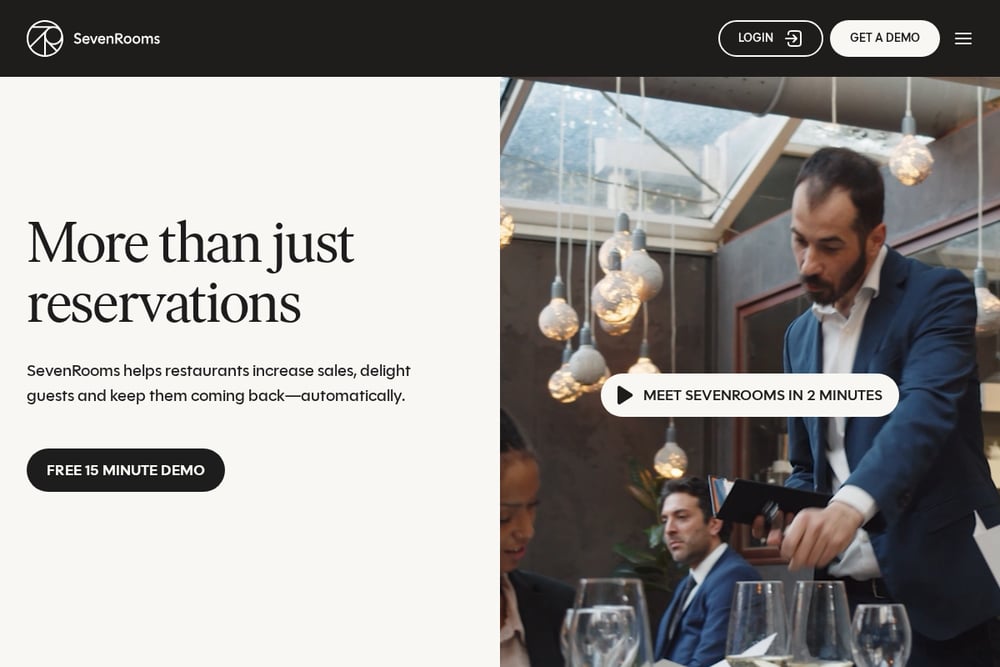 A screenshot of the SevenRooms website.
SevenRooms is a reservation and guest management platform built around filling seats and turning guest data into repeat visits. It takes reservations from channels like your website, Google, Instagram, and Yelp, and adds AI-powered table management to help seat guests faster. The platform also captures guest data across bookings and visits to support personalized marketing and upsells. It is aimed at restaurants that want reservations to feed broader marketing and guest relationship efforts.
#2 Resy
 A screenshot of the Resy website.
Resy is a restaurant reservation platform. The provided source page for Resy contains only a minimal placeholder and no product details, so this entry cannot describe specific features or pricing from the source. It is included because it is part of the reservation software landscape for restaurants, but you should consult Resy directly for current information.
#3 Tablein
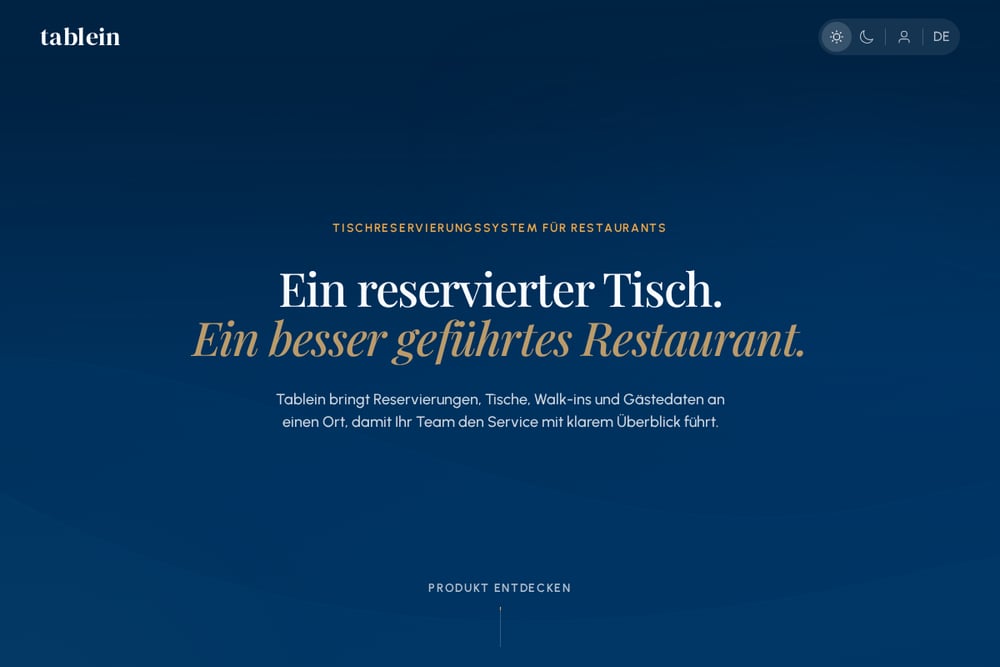 A screenshot of the Tablein website.
Tablein is a reservation system that brings reservations, tables, walk-ins, and guest data into one place for restaurant teams. It handles bookings from every channel, a live table plan, walk-in queues, guest notes, and post-service reporting. The system includes confirmation and reminder messages, no-show protection, and guest feedback tools. It is set up together with the restaurant, including table plan, rules, and widget, with online training for the team.
#4 Eat App
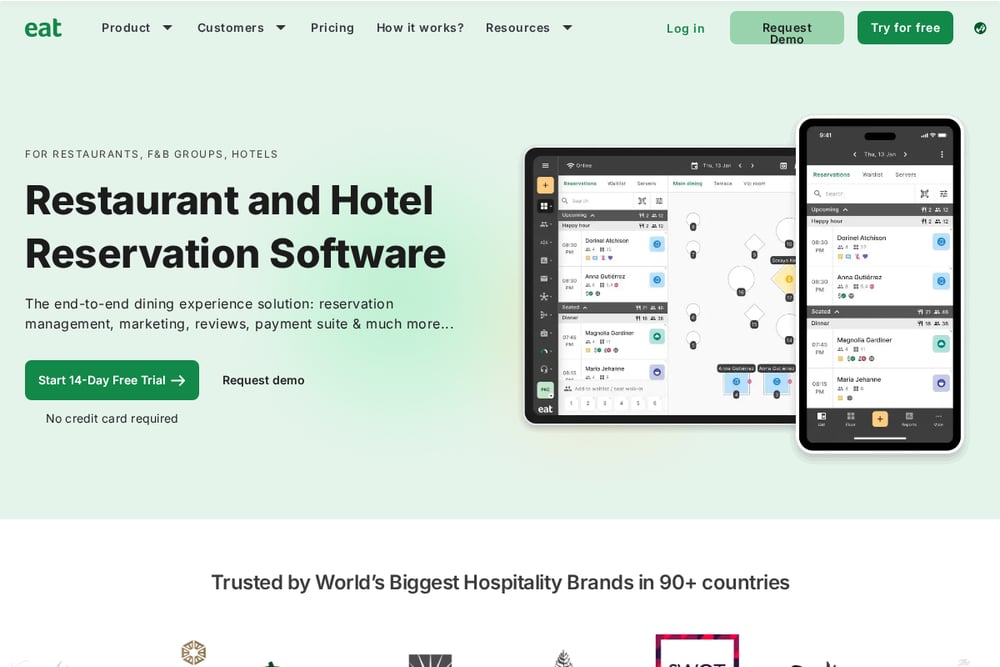 A screenshot of the Eat App website.
Eat App is a restaurant and hotel reservation software that covers reservation management, marketing, reviews, and payments. It offers commission-free online bookings from Instagram, Google, and your website, and lets you manage reservations, walk-ins, and calls in one place. The platform includes automated confirmations and reminders, table management, and a guest database for marketing. It is positioned for restaurants, F&B groups, and hotels that want an end-to-end dining experience solution.
#5 TableAgent
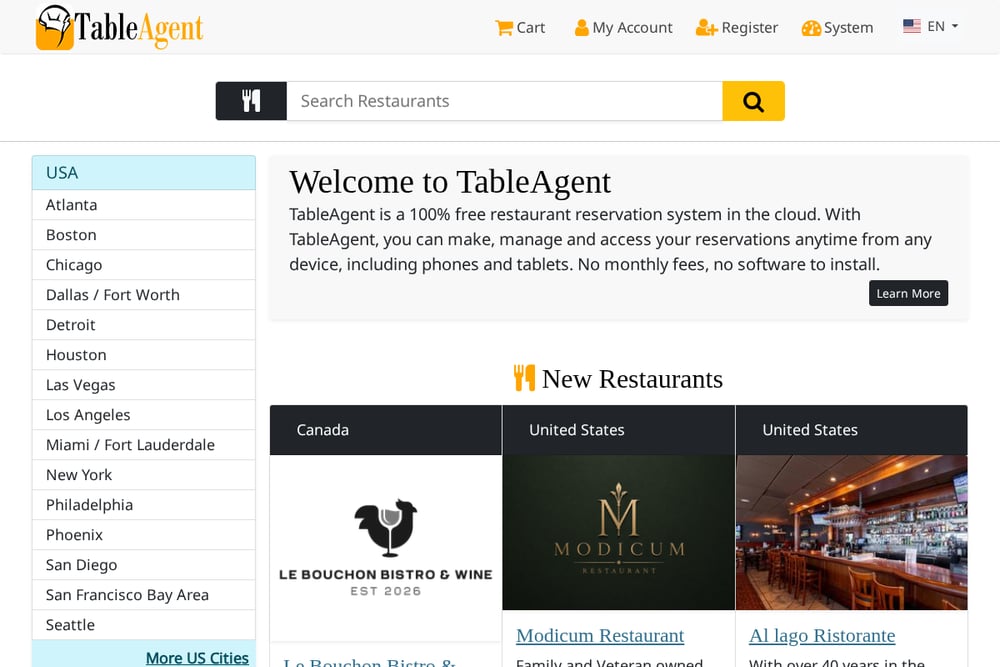 A screenshot of the TableAgent website.
TableAgent is a free restaurant reservation system in the cloud. It lets restaurants make, manage, and access reservations anytime from any device, including phones and tablets, with no monthly fees and no software to install. The service is aimed at restaurants that want a straightforward, no-cost way to handle reservations online. It also lists restaurants across many cities and countries, giving diners a place to find and book tables.
Which One Should You Choose?
Start by deciding what you need reservations to do beyond taking bookings. If guest data and automated marketing matter to you, look at platforms that capture and unify guest information. If you want a single place for reservations, table plans, and walk-ins, focus on systems that combine those tools. If budget is the main concern, a free cloud-based option may be worth a closer look. For each tool, check the current features and pricing directly with the provider, and consider how it fits your team's workflow and the channels your guests use to book.
Final Thoughts
The reservation software landscape for restaurants in 2026 includes options that range from guest-data-driven platforms to free cloud systems. Each tool on this list approaches reservations from a different angle, and the right fit depends on your priorities, such as marketing, table management, or cost. Use this list as a starting point for your own comparison rather than as a ranking of quality.
Know a company that belongs on this list? Email us at editorial@peekwire.com.