
Navigating research as a premed or med student can feel like a maze. These five programs offer the guidance you need to get published and stand out.
The Research Mentorship Landscape
Research experience is a cornerstone of a competitive medical application, yet many students struggle to find the right mentor and project. The demand for structured, one-on-one guidance has grown, leading to a mix of university-based programs, national associations, and private consultancies. Each offers a different approach, from formal institutional pipelines to flexible, personalized coaching. Understanding these options helps you choose the path that fits your stage and goals.
How We Evaluated These Programs
We looked at service scope, pricing clarity, and how well each program fits different student needs. We considered whether the program offers hands-on project development, publication support, and ongoing mentorship. We also noted the accessibility of each program, including virtual options and free resources. Each program was assessed on its unique strengths, not against a single standard.
Here's a quick snapshot of each program to help you compare at a glance.
| Provider | Best For |
|---|---|
| American Physician Scientists Association Undergraduate Mentoring | Premeds seeking a flexible, mentor-guided framework |
| Dr. Hassium Consults — Research Mentorship for Premeds & Med Students | Premeds and med students wanting hands-on publication support |
| Medical Student Research Program at University of Arizona | University of Arizona students seeking formal faculty mentorship |
| GW School of Medicine and Health Sciences Finding a Research Mentor | Students who want a self-guided roadmap to find a mentor |
| SNMA Clinical Shadowing and Mentorship Program | Underrepresented minority premeds seeking virtual mentorship |
Program Deep Dive
#1 American Physician Scientists Association Undergraduate Mentoring
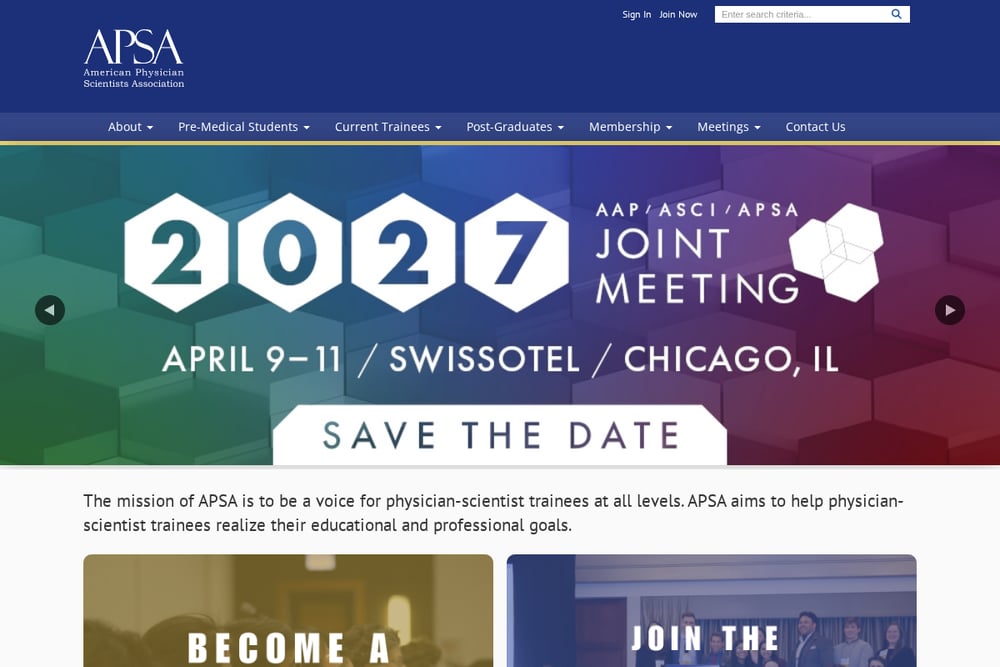 A screenshot of the American Physician Scientists Association website.
APSA offers a structured pre-medical mentorship program with monthly prompts that guide your conversations with a mentor. You can choose from early, mid, or late-stage prompts, each with an ice breaker, skill of the month, and discussion questions. This is ideal if you want a flexible, self-directed framework to build a mentoring relationship. It's free for members, making it an accessible starting point. The program is backed by a national organization focused on physician-scientist training. You'll gain clarity on your research path without the pressure of a formal project timeline.
#2 Dr. Hassium Consults — Research Mentorship for Premeds & Med Students
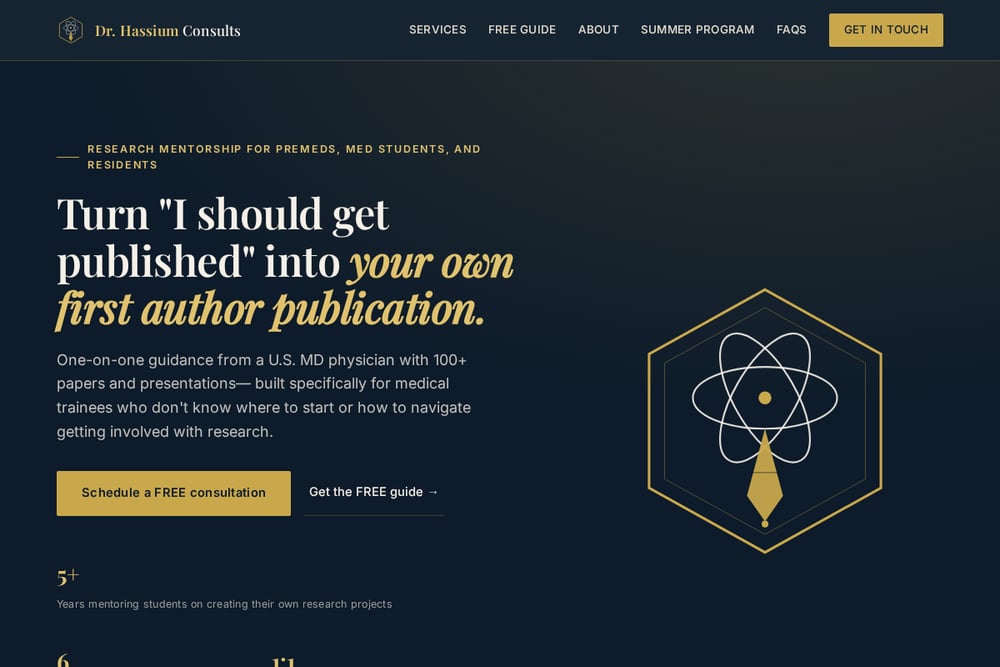 A screenshot of the Dr. Hassium Consults website.
Dr. Hassium Consults provides one-on-one mentorship that takes you from zero to first-author publication. You'll follow a six-stage roadmap covering idea generation, study design, analysis, finding a faculty mentor, writing, and submission. The service is led by a U.S. physician with over 100 papers, including 40+ PubMed-indexed publications from medical school. You can choose from packages tailored to your experience level, whether you're starting from scratch or need help with data analysis. The program includes biweekly meetings, unlimited email support, and written recaps for ongoing accountability. A free guide and a virtual summer program are also available to get you started.
#3 Medical Student Research Program at University of Arizona
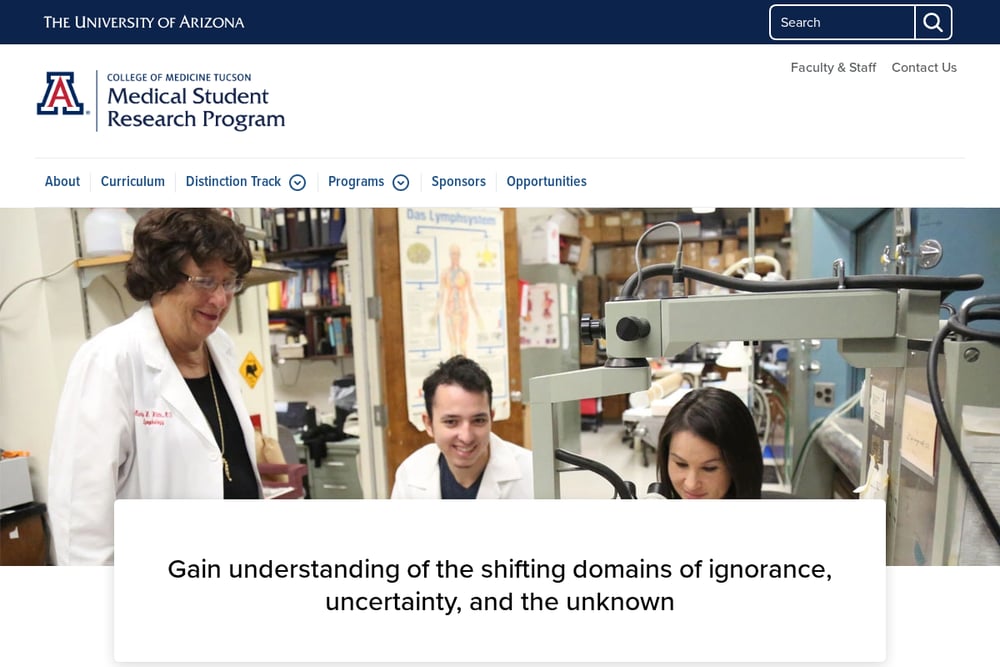 A screenshot of the Medical Student Research Program at University of Arizona website.
This university-based program connects you with faculty mentors through a structured application process. You'll start by meeting with the program director, who helps you find a sponsor and refine your proposal. The program emphasizes a formal application, including a 2-3 page proposal in your own words. It's a great fit if you prefer a traditional academic pathway with clear steps. The program is well-established and offers a sponsor directory to simplify your search. You'll gain institutional support and credibility, though it may be limited to University of Arizona students.
#4 GW School of Medicine and Health Sciences Finding a Research Mentor
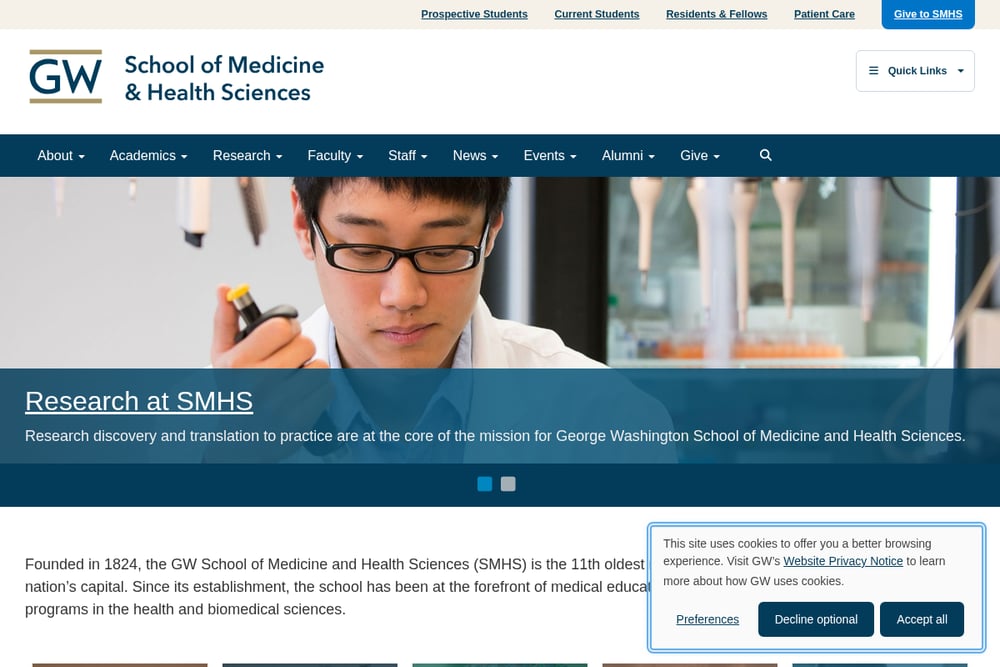 A screenshot of the GW School of Medicine and Health Sciences website.
GW SMHS provides a dedicated resource page to help you navigate the process of finding a research mentor. It outlines steps for identifying potential mentors, reaching out, and building a productive relationship. This is a practical guide rather than a hands-on program, making it useful for students who prefer to take initiative. The page is part of a larger research workforce initiative, offering links to fellowships and funding opportunities. It's a solid starting point if you're at a university with similar resources. You'll learn the essential skills of networking and proposal writing.
#5 SNMA Clinical Shadowing and Mentorship Program
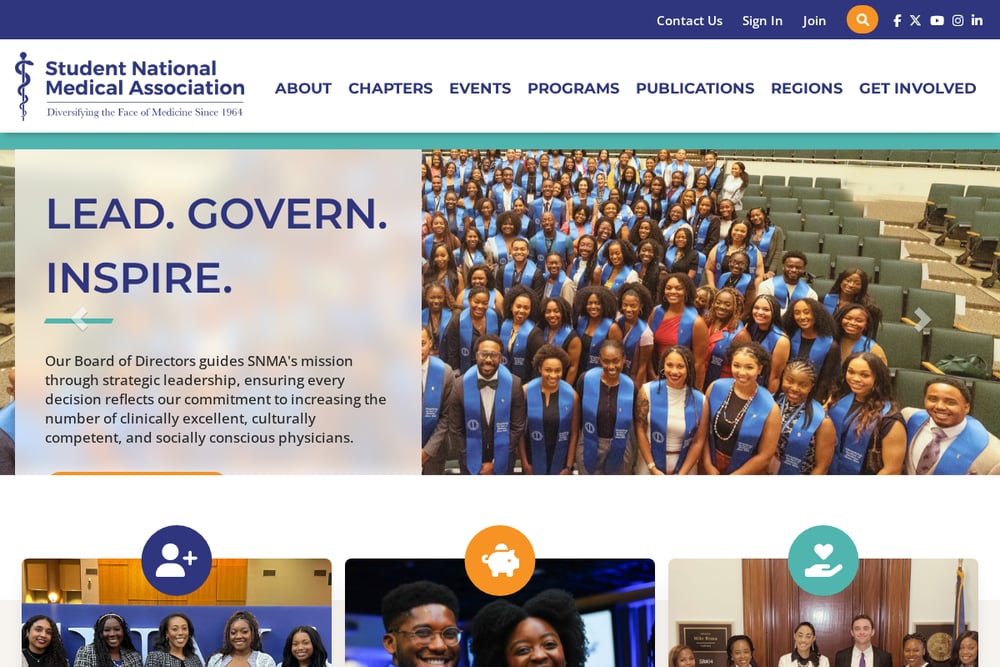 A screenshot of the SNMA Clinical Shadowing and Mentorship Program website.
SNMA's CSMP is a nationwide enrichment program designed for underrepresented minority premeds. It offers virtual clinical shadowing hours, professional development training, and research experience. The program pairs you with a mentor to help overcome barriers to medical school acceptance. It's a supportive community that addresses systemic challenges in the pipeline. You'll gain exposure to clinical settings and research, all in a virtual format. This is an excellent option if you're a MAPS member looking for a holistic mentorship experience.
How to Choose the Right Mentorship
Start by assessing your current experience level and what you need most. If you're a premed with no research background, a structured program like APSA or SNMA can provide a safe entry point. If you're a med student aiming for a first-author paper, a personalized service like Dr. Hassium Consults offers direct, hands-on guidance. Consider your timeline and budget—university programs may be free but limited to enrolled students, while private consultancies offer flexibility at a cost. Also, think about whether you prefer a self-directed approach or ongoing accountability. Finally, check if the program aligns with your specialty interest and career goals.
Streamlining Your Research Journey
Once you've chosen a mentorship path, you can use automation to stay on track. Set up calendar reminders for weekly writing blocks and mentor meetings. Use project management tools to track your six-stage progress, from idea to submission. Automate email templates for reaching out to potential faculty mentors. For data analysis, consider using statistical software with built-in templates. This keeps your research process organized and efficient, letting you focus on the science.
Your Next Step to Publication
Getting published as a medical trainee is a marathon, not a sprint. The right mentorship can make the difference between a stalled project and a first-author paper. Whether you choose a national association, a university program, or a dedicated coach, the key is to start now. Each of these five programs offers a unique pathway to research success. Pick the one that aligns with your needs, and take that first step today.