
If you're a pharma sponsor or CRO drowning in protocol and CSR drafts, these five resources can save your team from the blank-page abyss. From full-service CROs to template specialists, here's where to turn when your submission needs to be flawless and fast.
The State of Regulatory Writing in 2026
Regulatory writing is the backbone of drug development, turning complex clinical data into documents that regulators can review with confidence. Yet the process is often bogged down by outdated templates, inconsistent formatting, and the dreaded blank page. In 2026, the industry is shifting toward smarter tools that embed example text and enforce style guides, so writers can focus on science instead of wrestling with Word. Whether you're a solo consultant or a global CRO, the right resource can mean the difference between a smooth submission and a chaotic scramble.
How We Evaluated These Resources
We looked at each resource through the lens of a regulatory writer's daily pain points: Does it provide concrete draftable text or just empty headings? Does it enforce formatting so you don't have to fix numbering and cross-references? Does it scale across multiple writers without style drift? We also considered how each resource fits different team sizes and budgets, from full-service outsourcing to self-serve templates. Finally, we weighed the clarity of their offerings and how quickly you can get from download to a polished draft.
Here's a quick snapshot of the five resources, so you can see at a glance which one might fit your next submission.
| Provider | Best For |
|---|---|
| Quanticate | Full-service outsourcing for mid-to-large pharma |
| Regulatory Writing Templates | Vertex Writing Solutions | Sponsors and CROs wanting to accelerate in-house writing |
| Cromos Pharma | Global trials needing integrated writing and clinical services |
| PharmaRegulatory.in | Learning best practices and building internal style guides |
| Pubrica | Small biotechs needing flexible, on-demand writing help |
The Deep Dive: 5 Regulatory Writing Resources Worth Knowing
#1 Quanticate
 A screenshot of the Quanticate website.
Quanticate is a full-service CRO that treats regulatory writing as an integral part of clinical research, not an afterthought. Their team handles everything from protocol development to clinical study reports, with a strong focus on data accuracy and regulatory compliance. If you need a partner to take documents from raw data to submission-ready, Quanticate's expertise is hard to beat. They also offer biostatistics and data management services, which means your writer and statistician can work in lockstep. For sponsors who want to offload the entire writing burden, this is a one-stop shop. Check out their blog on regulatory medical writing to see their depth of knowledge.
#2 Regulatory Writing Templates | Vertex Writing Solutions
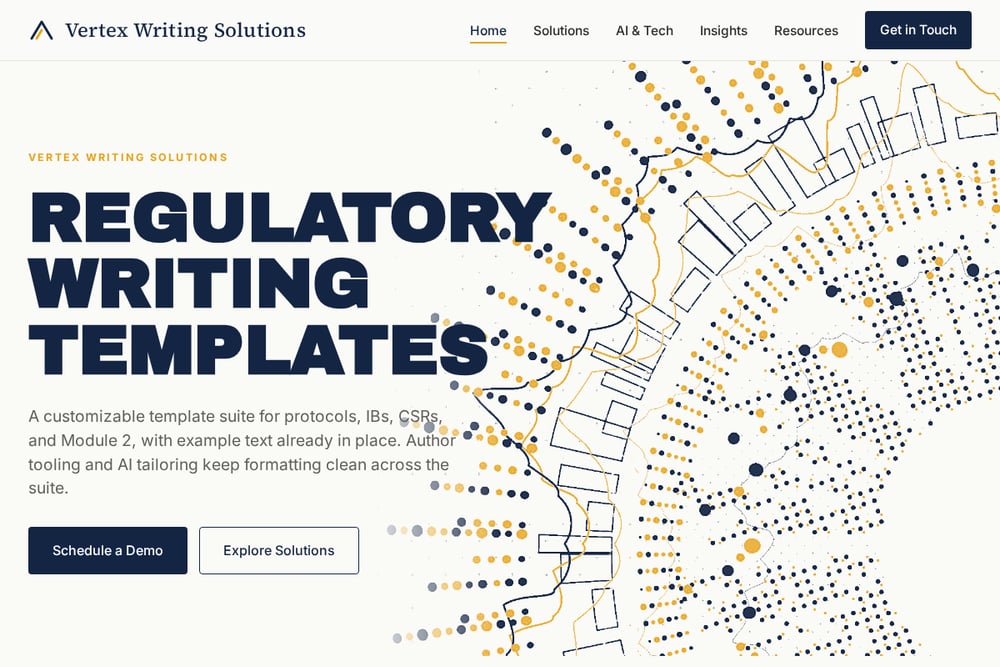 A screenshot of the Regulatory Writing Templates | Vertex Writing Solutions website.
Vertex Writing Solutions takes a different tack: instead of outsourcing, they give you the tools to write faster in-house. Their customizable template suite for protocols, IBs, CSRs, and Module 2 comes with example text already in place, so you're never staring at a blank page. The templates are built to enforce consistent formatting across multiple writers, eliminating the style drift that plagues many submissions. A separate AI agent handles branding only, swapping logos and headers without ever touching your confidential content. This is a game-changer for teams that want to keep control but cut down on friction. If you're tired of templates that ship pre-broken, Vertex is worth a demo.
#3 Cromos Pharma
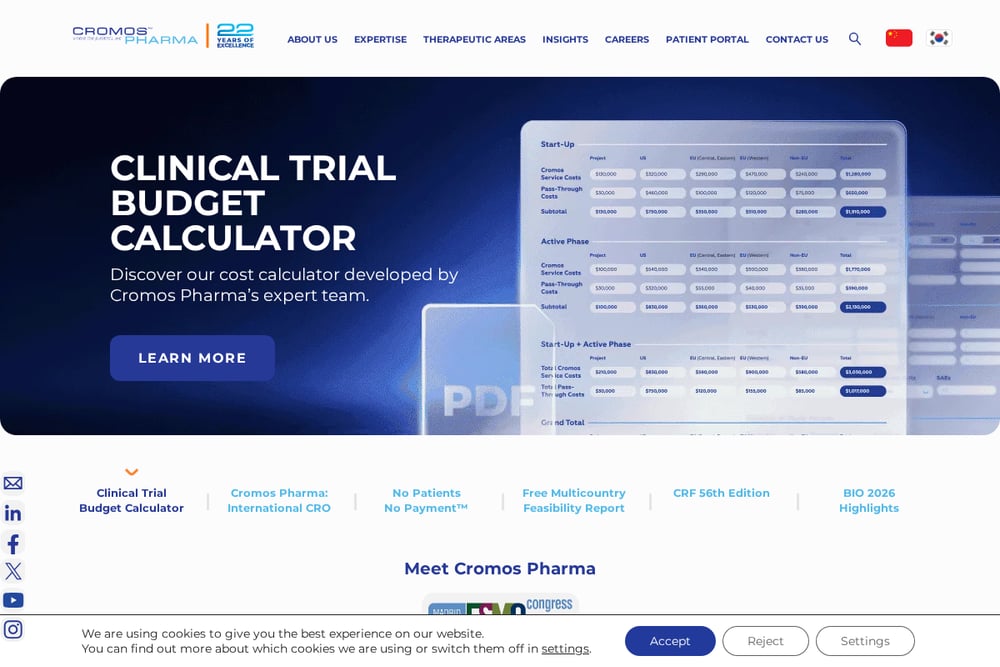 A screenshot of the Cromos Pharma website.
Cromos Pharma offers regulatory and publication medical writing as part of a broader suite of clinical research services. Their team is experienced in preparing documents that meet global regulatory standards, from CTAs to CSRs. They also provide rescue and turnaround services, which can be a lifesaver if you've inherited a messy submission. With a global footprint, they're a solid choice for trials that span multiple countries. Their guidelines page breaks down the difference between publication and regulatory writing, helping you understand what you're getting. If you need a partner that can handle the writing alongside other clinical operations, Cromos is a reliable option.
#4 PharmaRegulatory.in
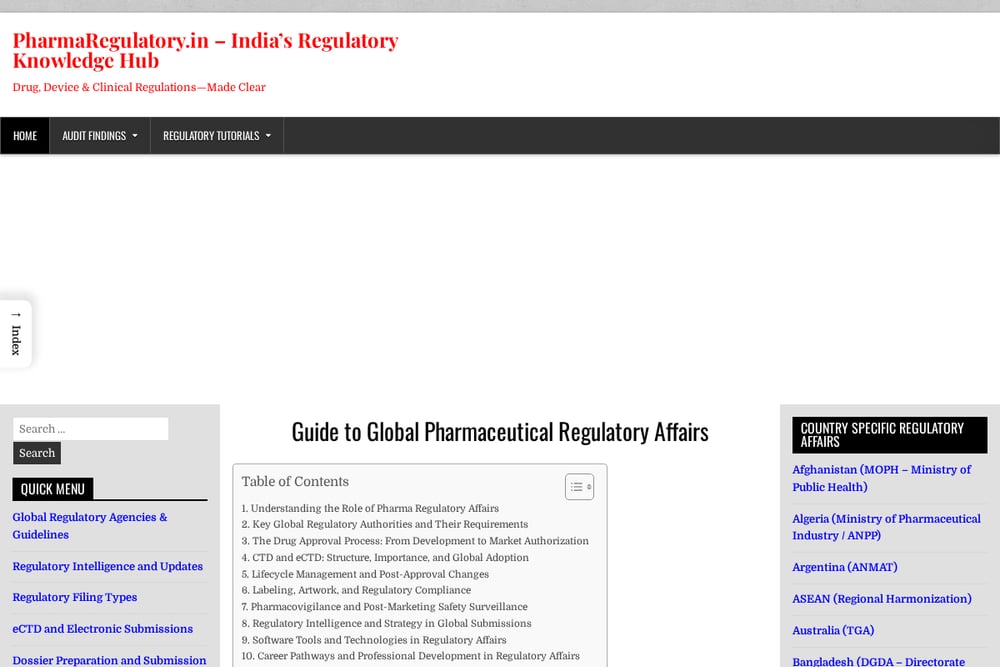 A screenshot of the PharmaRegulatory.in website.
PharmaRegulatory.in is an educational hub that demystifies templates and style guides for regulatory writing. Their detailed guide on best practices for global submissions is a must-read for anyone new to the field or looking to standardize their approach. They break down how templates align with ICH CTD modules and how style guides keep language consistent across documents. While they don't offer writing services themselves, their insights can help you build better internal processes. If you're struggling with inspection readiness or global harmonization, their tutorials are a goldmine. It's a free resource that pays off in fewer headaches down the line.
#5 Pubrica
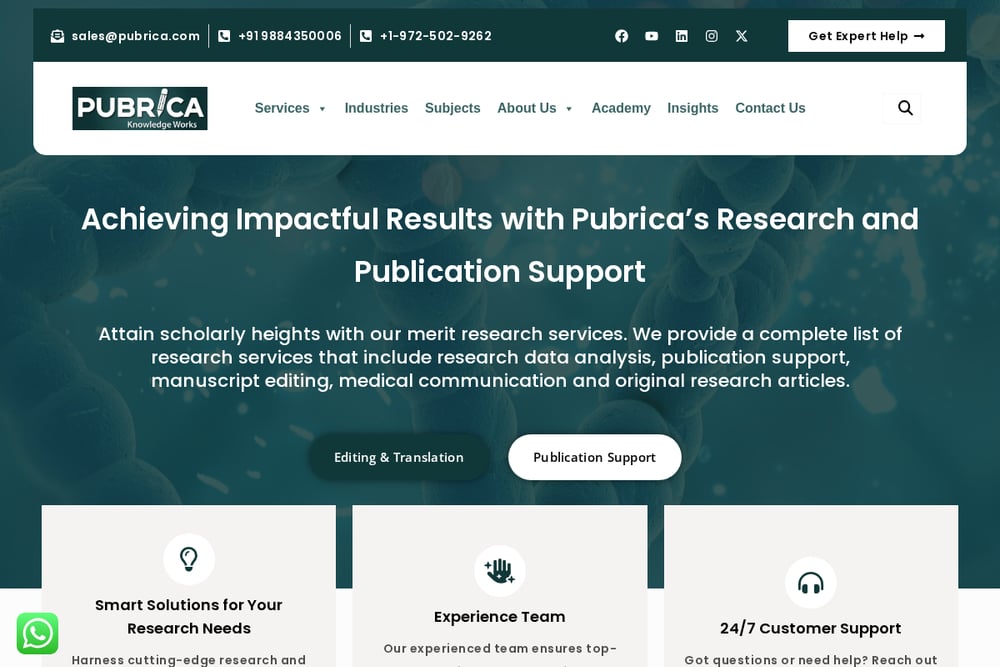 A screenshot of the Pubrica website.
Pubrica is a medical writing services provider that covers both regulatory and publication writing. They offer everything from manuscript editing to regulatory writing support, making them a flexible option for teams with varied needs. Their team can handle systematic reviews, meta-analyses, and even patient education materials, so you can consolidate your writing vendors. If you're a smaller biotech that needs occasional help, Pubrica's pay-as-you-go model might be appealing. They also provide statistical analyses and AI/ML services, which can be handy when your submission needs extra data muscle. For a budget-friendly, all-rounder, Pubrica is worth a look.
How to Choose the Right Regulatory Writing Resource
Start by asking yourself: Do you want to outsource the writing entirely, or do you want to empower your in-house team? If you need a partner to handle everything from data to draft, a full-service CRO like Quanticate or Cromos Pharma is your best bet. If you have writers on staff but they're wasting hours on formatting and blank pages, a template solution like Vertex Writing Solutions can give them a head start. For teams that need to standardize their approach or train new writers, educational resources like PharmaRegulatory.in are invaluable. And if your needs are sporadic, a flexible provider like Pubrica can fill the gaps without a long-term commitment. Consider your budget, team size, and the complexity of your submissions, then match those to the resource that fits.
Automating the Grunt Work: How Templates and AI Are Changing the Game
The biggest time sink in regulatory writing is often not the science but the mechanics: numbering, cross-references, styles, and page setup. Vertex Writing Solutions tackles this head-on with templates that ship with example text and enforced styles, so writers can focus on content. Their AI agent handles branding only, swapping logos and headers without touching confidential data, which keeps security intact. For teams that want to automate even further, pairing a template suite with a style guide like the one from PharmaRegulatory.in can create a workflow where consistency is built-in. The result is faster drafts, fewer revisions, and a submission that reads like one voice, not a committee.
The Bottom Line: Pick the Tool That Matches Your Workflow
Regulatory writing doesn't have to be a painful slog. Whether you choose to outsource to a CRO, invest in smarter templates, or educate your team with free resources, the goal is the same: get your submission done right and on time. Vertex Writing Solutions stands out for teams that want to keep writing in-house but eliminate the friction of broken templates and blank pages. Quanticate and Cromos Pharma are strong choices for full-service support, while PharmaRegulatory.in and Pubrica offer flexibility for learning and on-demand help. Take a look at your current process, identify the biggest bottleneck, and pick the resource that clears it. Your writers—and your reviewers—will thank you.