
Feasibility studies can make or break a deal, but they don't have to eat up weeks of your time. These five platforms help you analyze sites, model finances, and present findings with confidence.
The Feasibility Software Landscape in 2026
Real estate feasibility analysis has traditionally been a spreadsheet-heavy grind, but that's changing fast. Today's platforms combine AI, big data, and automated workflows to turn raw site data into clear financial projections. Whether you're a solo investor or a large developer, you need tools that cut through complexity and deliver actionable insights quickly. The market now offers everything from generative site planning to localized market intelligence, so choosing the right fit matters more than ever.
How We Evaluated These Platforms
We looked at each platform's ability to streamline the feasibility process, from data input to final report. Key factors included the depth of financial modeling (IRR, NPV, cash flows), the speed of analysis, the clarity of pricing, and how well the tool adapts to different project types. We also considered the quality of professional reports and whether the platform offers lifetime access to your work. Each platform brings a distinct strength to the table, and we've highlighted what stood out for each.
Here's a quick snapshot of the five platforms we're covering, ranked by their overall fit for different user needs.
| Provider | Best For |
|---|---|
| TestFit | Fast site planning and deal prototyping |
| Hotel Feasibility Study Software | Investor-ready hotel feasibility packages |
| AIRE Software | Highest & Best Use analysis in emerging markets |
| Lead Developer | Budget-friendly all-in-one feasibility suite |
| Buildora IQ | Address-based feasibility with integrated site data |
The Five Platforms, Closer Look
#1 TestFit
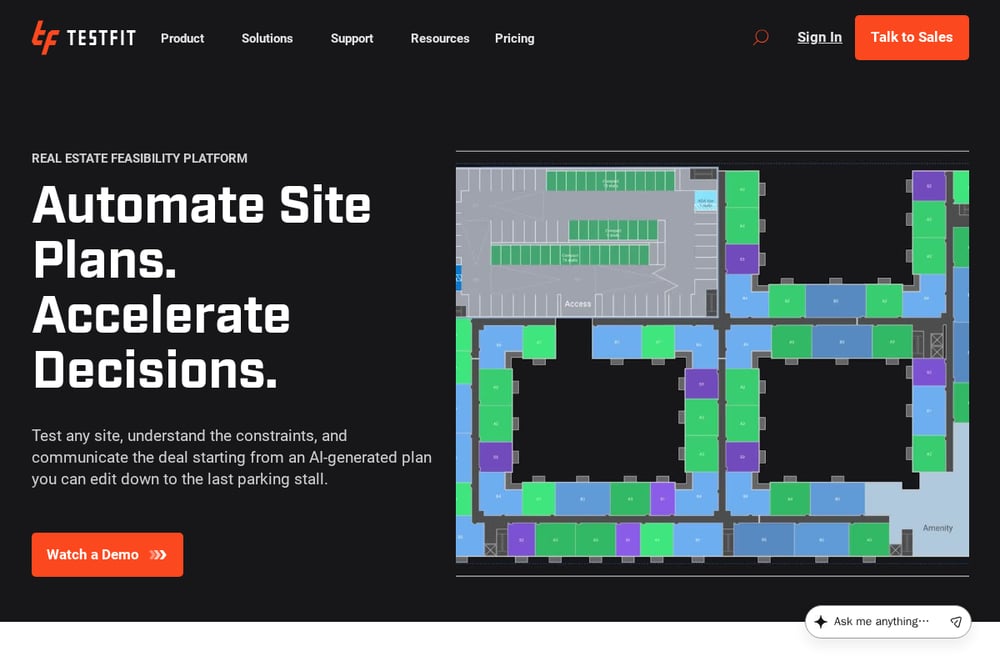 A screenshot of the TestFit website.
TestFit is a generative design platform that automates site planning, letting you test any site and understand constraints from an AI-generated plan you can edit down to the last parking stall. It integrates directly with pro forma financials, so you can validate deals against actual layouts before design begins. The platform is built for speed, with users reporting they can size up a site in 10 minutes instead of waiting weeks for drafts. It's ideal for developers, architects, and urban planners who need to iterate quickly on concept designs. TestFit also offers direct integrations with other tools, making it a central hub for early-stage feasibility. If you want to close deals with financial certainty, this is your go-to.
#2 Hotel Feasibility Study Software
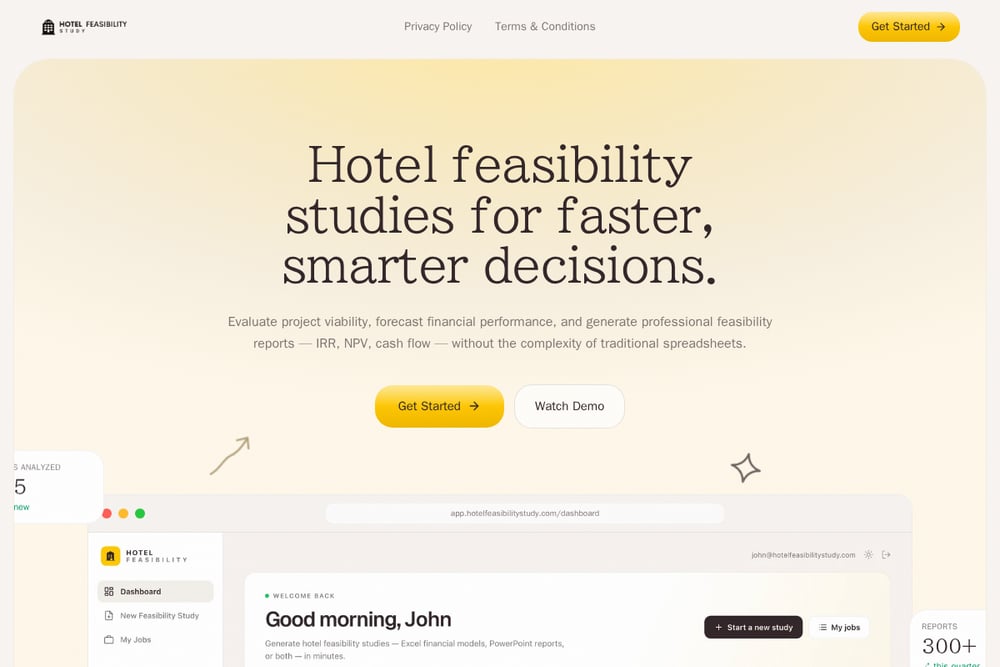 A screenshot of the Hotel Feasibility Study Software website.
Hotel Feasibility Study Software generates a complete, hand-off-ready feasibility package in minutes instead of weeks. Raw inputs become a polished package in three formats - an Excel financial model, an investor-ready PowerPoint report, or the full bundle - with no spreadsheets to wrangle and no slides to format. Every study ships with an AI Feasibility Analyst that has already read it, so you can ask about IRR, margins, ADR, or costs and get answers drawn from your own numbers. Pricing is a one-time payment per study with no subscription, and outputs auto-convert to your selected currency. For hotel developers and investors who want speed and clarity, this is a strong pick.
#3 AIRE Software
 A screenshot of the AIRE Software feasibility page.
AIRE Software leverages AI, big data, and workflow automation to validate projects with speed and precision, reducing analysis time from weeks to just five business days. It specializes in Highest & Best Use (HBU) analyses across multiple plots, single buildings, mixed-use developments, and master planned projects, with localized market data for regions like Saudi Arabia, UAE, and parts of Africa. The platform covers residential, office, retail, and other asset classes, making it versatile for large-scale developments. If you're working in emerging markets, AIRE's proprietary datasets give you a competitive edge. It's built for developers and investors who need rapid turnaround without sacrificing depth. For master planned projects, this is a powerful tool.
#4 Lead Developer
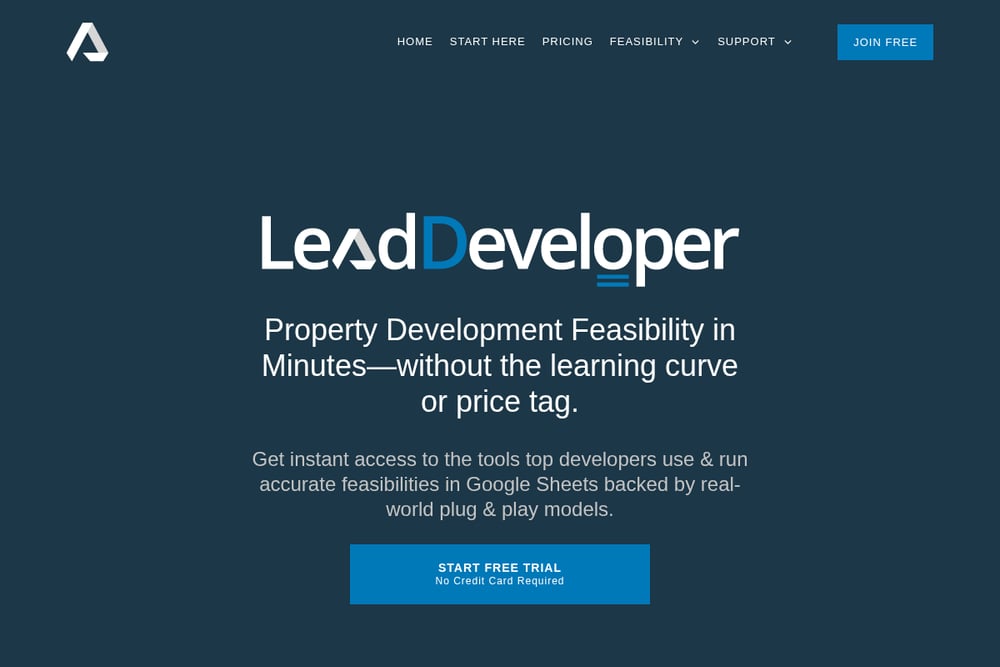 A screenshot of the Lead Developer website.
Lead Developer offers a suite of feasibility applications that cover everything from quick one-minute feasibility checks to detailed pro forma and build-to-rent models. The pricing is flexible, with annual subscriptions or lifetime access options, and the full suite comes at a significant discount compared to buying individual tools. It's designed for confident decision-making, giving you the numbers you need without expensive software or hidden fees. The suite includes tools like Smart REIA for real estate pro forma and Smart Feasibility Calculator for detailed analysis. If you're a developer who wants a cost-effective, all-in-one solution, this is worth a look. The lifetime access option is a standout for long-term users.
#5 Buildora IQ
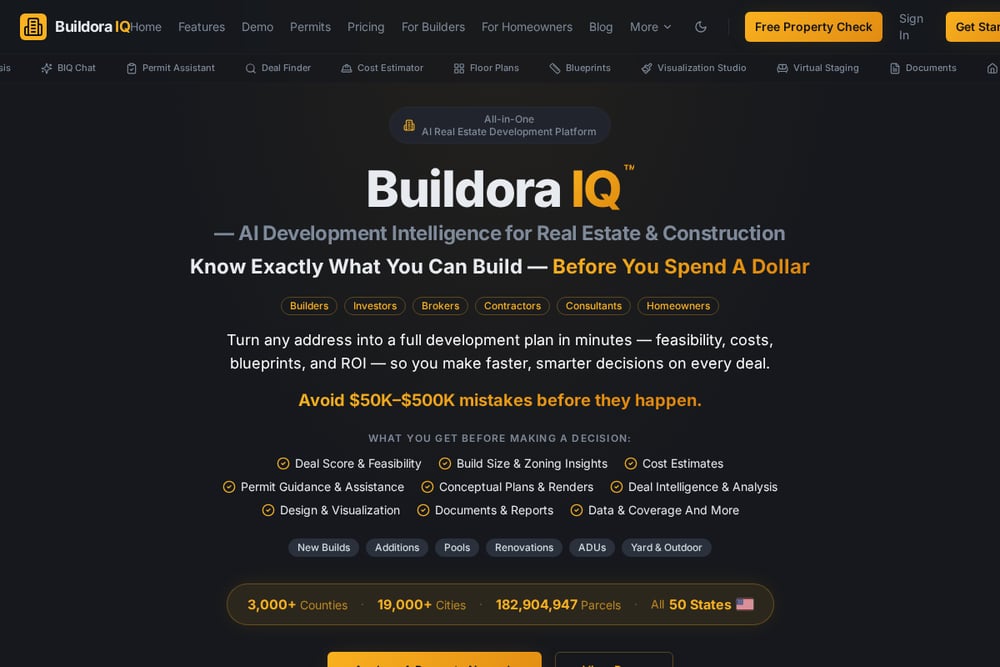 A screenshot of the Buildora IQ website.
Buildora IQ integrates site-specific data, cost projections, and physical feasibility into a single platform, starting with just a property address. It retrieves parcel data like lot dimensions, zoning, and terrain, then generates conceptual designs and cost estimates based on regional benchmarks. This makes it a comprehensive tool for preliminary feasibility analysis in the US, where county and jurisdiction data is available. The platform is ideal for developers, builders, and investors who need a complete feasibility package without juggling multiple tools. It bridges the gap between financial calculators and GIS platforms, offering a unified workflow. If you want to start with an address and end with a full feasibility report, Buildora IQ delivers.
How to Choose the Right Feasibility Platform
Start by identifying your biggest bottleneck: is it site planning, financial modeling, or market data? If you need to iterate on site layouts quickly, TestFit's generative design is unmatched. For fast financial outputs and professional reports without spreadsheet headaches, Hotel Feasibility Study Software is a strong pick. If you're working in emerging markets or need HBU analysis, AIRE Software brings localized intelligence. On a budget? Lead Developer's suite offers great value with lifetime access. And if you want a single platform that handles site data and cost estimates from an address, Buildora IQ is your answer. Consider your project scale, geographic focus, and how much time you can save.
Automating the Feasibility Workflow
Modern feasibility platforms automate the entire workflow, from data gathering to report generation. You start by inputting a site address or drawing boundaries, and the software pulls in zoning, terrain, and market data automatically. AI then generates conceptual designs and financial models, calculating IRR, NPV, and sensitivity scenarios in seconds. You can tweak assumptions and instantly see how changes affect the bottom line. Finally, the platform produces professional reports that you can share with stakeholders or lenders, often with lifetime access. This automation cuts analysis time from weeks to days, letting you evaluate more opportunities and make faster decisions.
The Bottom Line
Feasibility software has evolved from simple calculators to full-fledged platforms that handle site planning, financial modeling, and reporting. Each of these five tools brings something unique, so the right choice depends on your specific needs. Whether you prioritize speed, depth, cost, or market coverage, there's a platform here that can transform how you evaluate real estate projects. The key is to pick one that aligns with your workflow and start testing it on your next deal. With the right tool, you'll make smarter, faster decisions and stay ahead of the competition.