
If you're building a mobile app, you know the grind of wiring up auth, payments, and push notifications. These five boilerplates cut that work down to days, not weeks.
The State of React Native Boilerplates
React Native remains a top choice for cross-platform mobile development, and the boilerplate ecosystem has exploded. Developers now expect more than just a folder structure—they want pre-wired auth, payments, analytics, and even AI-assist readiness. The best kits save you 20+ hours on setup, letting you focus on your unique features. In 2026, the differentiators are depth of integrations, documentation quality, and how well they work with AI coding tools. Whether you're an indie hacker or a startup CTO, choosing the right starter can make or break your launch timeline.
How We Evaluated These Kits
We looked at each boilerplate on the same five factors: integration depth (auth, payments, push, analytics), documentation and onboarding clarity, AI-assist readiness, pricing transparency, and community support. We also considered how quickly you can go from zero to a store-ready build. Each kit has its own strengths—some shine in payment flexibility, others in AI context mapping, and some in pure simplicity. No single factor dominated; we weighed them equally to give you a balanced view.
Here's a quick snapshot of the five contenders, from the most feature-complete to the most minimal.
| Provider | Best For |
|---|---|
| Shipnative | Developers who want the most comprehensive feature set for a low one-time price. |
| Expo Boilerplate for React Native Apps | iOS & Android Starter Kit | Indie developers and startups who want a balanced, AI-friendly starter with excellent support. |
| LearnWithHasan React Native Boilerplate | Developers who want a boilerplate that's optimized for AI-assisted development. |
| ExpoShip | Developers who want a free, open-source starting point with community support. |
| Dodo Payments Expo Boilerplate | Developers who need a simple, payment-focused starter with Dodo Payments. |
The Five Boilerplates, Closely Examined
#1 Shipnative
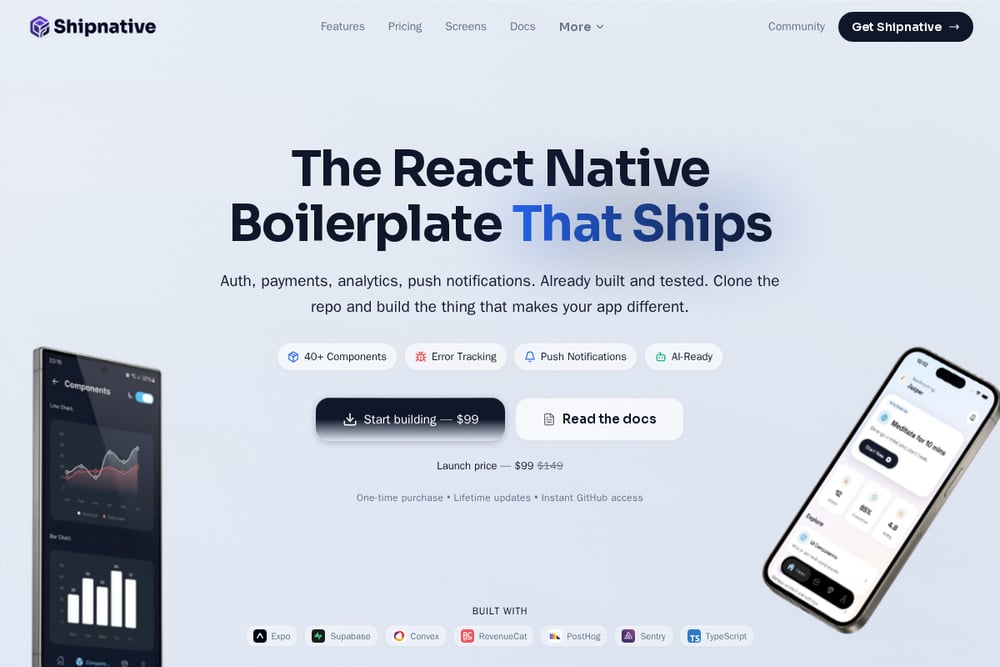 A screenshot of the Shipnative website.
Shipnative is a heavyweight in the React Native boilerplate space, offering a massive feature set that includes auth, payments via RevenueCat and Stripe, push notifications, analytics, and even a component library with 40+ components. It supports web and browser extensions, which is rare among competitors. The pricing is a one-time $99, making it an incredible value for the depth of features. Its documentation is thorough, and the setup wizard gets you started in minutes. If you need a full-featured kit that covers every base, Shipnative is your best bet. It's the closest thing to a complete app skeleton you'll find.
#2 Expo Boilerplate for React Native Apps | iOS & Android Starter Kit
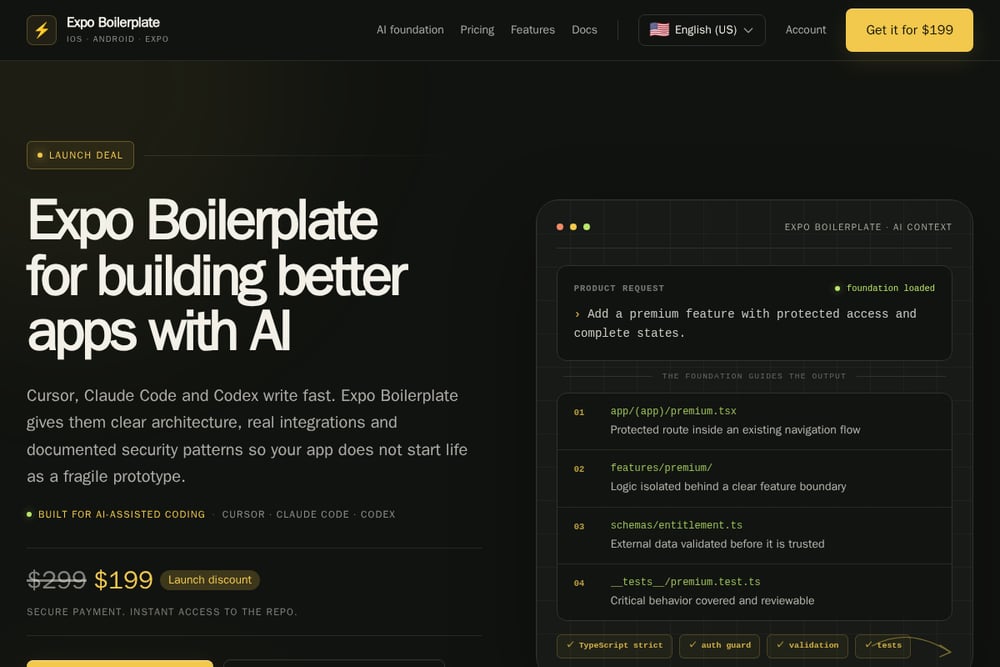 A screenshot of the Expo Boilerplate for React Native Apps | iOS & Android Starter Kit website.
Expo Boilerplate is a production-ready kit that focuses on speed and simplicity, with TypeScript, auth via Supabase or Firebase, payments, push notifications, and analytics all pre-wired. It's built for AI-assisted coding, with clean code and naming conventions that let tools like Cursor and Claude Code understand your project instantly. The one-time $199 price includes lifetime updates and a 7-day money-back guarantee, plus access to a Discord community. Testimonials highlight saving 20+ hours on setup, with auth and basic UI done in under an hour. It's a solid middle ground between feature-rich and approachable, making it ideal for indie developers and startups. The docs are clear, and the vertical demo shows exactly what you get.
#3 LearnWithHasan React Native Boilerplate
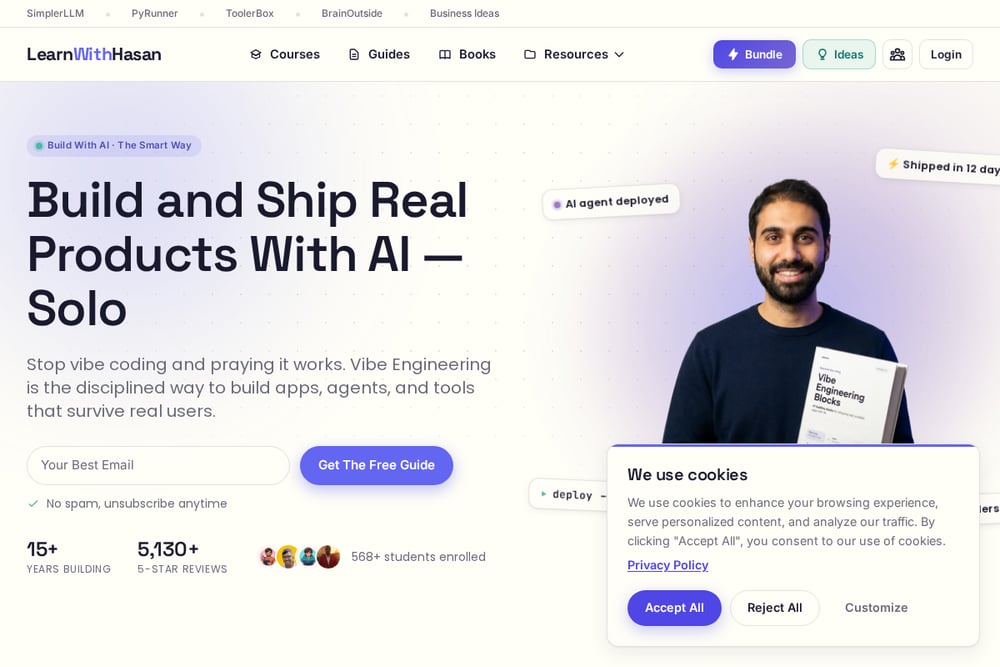 A screenshot of the LearnWithHasan React Native Boilerplate website.
LearnWithHasan's boilerplate is built specifically for AI agents like Claude Code, Cursor, and Copilot, with a 37-row map that guides your AI to the right files before it writes anything. It includes auth, in-app and Stripe payments, push notifications, and offline sync, all on Expo SDK 54. The template comes with 85 passing tests, which is a huge plus for reliability. It's priced as a premium product, but the AI-first design can save you hours of debugging. If you're heavily reliant on AI pair programming, this kit is tailored to that workflow. The docs are detailed, and the example app (Aurora) shows real-world usage.
#4 ExpoShip
 A screenshot of the ExpoShip website.
ExpoShip is a community-driven boilerplate that gained traction on Hacker News, created by a solopreneur who wanted to avoid repetitive setup tasks. It covers onboarding, auth, payments, and database integration, all within the Expo ecosystem. The project is open-source, so you can inspect every line of code and customize it freely. It's a great choice if you prefer a more hands-on approach and want to learn from the codebase. The community around it is active, and the creator is responsive to feedback. However, it may lack some of the polish and documentation of paid alternatives.
#5 Dodo Payments Expo Boilerplate
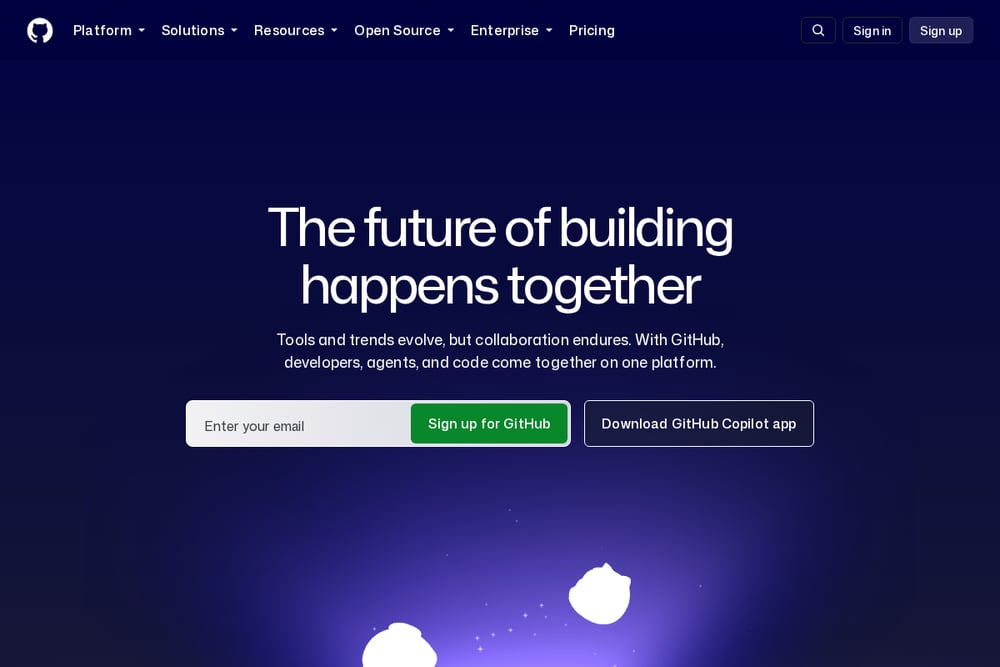 A screenshot of the Dodo Payments Expo Boilerplate GitHub page.
Dodo Payments offers a minimal and production-ready Expo boilerplate specifically designed for integrating Dodo Payments. It's a focused solution if you're already using or planning to use Dodo for payment processing. The boilerplate is clean and straightforward, with no unnecessary bloat. It's a GitHub template, so you can fork it and start immediately. However, it lacks the broader feature set of other kits—no auth, push, or analytics out of the box. It's best for developers who need a lightweight starting point and want to add their own stack. The documentation is decent, but you'll need to bring your own auth and other services.
How to Choose the Right Boilerplate for You
Start by listing the features you absolutely need—auth, payments, push, analytics—and see which kit covers them without extra bloat. If you're an indie developer on a budget, Shipnative offers the most value per dollar. If you rely on AI coding tools, LearnWithHasan's AI-first design might save you the most time. For a balanced, supported experience, Expo Boilerplate is a safe bet. If you're a tinkerer who likes open source, ExpoShip gives you full control. And if you're committed to Dodo Payments, their boilerplate is the most direct path. Consider your team's familiarity with the stack and how much you value community support versus documentation.
Automating Your App Development Workflow
Once you pick a boilerplate, you can automate even more. Use GitHub Actions to run tests and build on every commit. Set up continuous deployment to TestFlight or Google Play with tools like Fastlane. Integrate analytics and crash reporting to get automatic insights. With AI-assisted coding, you can generate new features by describing them in plain English. The goal is to reduce manual setup to near zero, so you can focus on your app's unique value.
The Bottom Line
The right boilerplate can save you weeks of work, but there's no one-size-fits-all. Shipnative is the feature king, Expo Boilerplate is the balanced all-rounder, LearnWithHasan is the AI whisperer, ExpoShip is the open-source favorite, and Dodo Payments is the niche specialist. Evaluate your needs, try a few, and see which one feels like home. Your future self will thank you when you're shipping to the App Store in days, not months.