Push notifications are only one part of keeping mobile app users engaged, so the services below are worth knowing for how they combine messaging with data, journeys, and analytics. This list is a plain overview, not a ranking. Each entry describes what the company offers and which mobile app teams it tends to suit, based only on the companies' own published pages.
How We Picked These Tools
These services were picked because each one presents push notifications as part of a broader mobile engagement toolkit, such as journey orchestration, segmentation, or cross-channel messaging. Every fact below is drawn from the companies' own homepages, with quotes copied exactly. No service is described as better than another, and the order is simply a list.
| Provider | Best For |
|---|---|
| OneSignal | Mobile app teams wanting lifecycle messaging with AI assistance and multi-framework SDKs |
| Braze | Mobile app teams that want engagement tied to a unified customer data platform |
| Airship | Mobile-first teams wanting push inside a broader cross-channel experience platform |
| Pushwoosh | App teams wanting detailed segmentation and omnichannel journeys in one platform |
| Batch | CRM and marketing teams wanting data, orchestration, and push in one platform |
The 5 Tools in Focus
#1 OneSignal
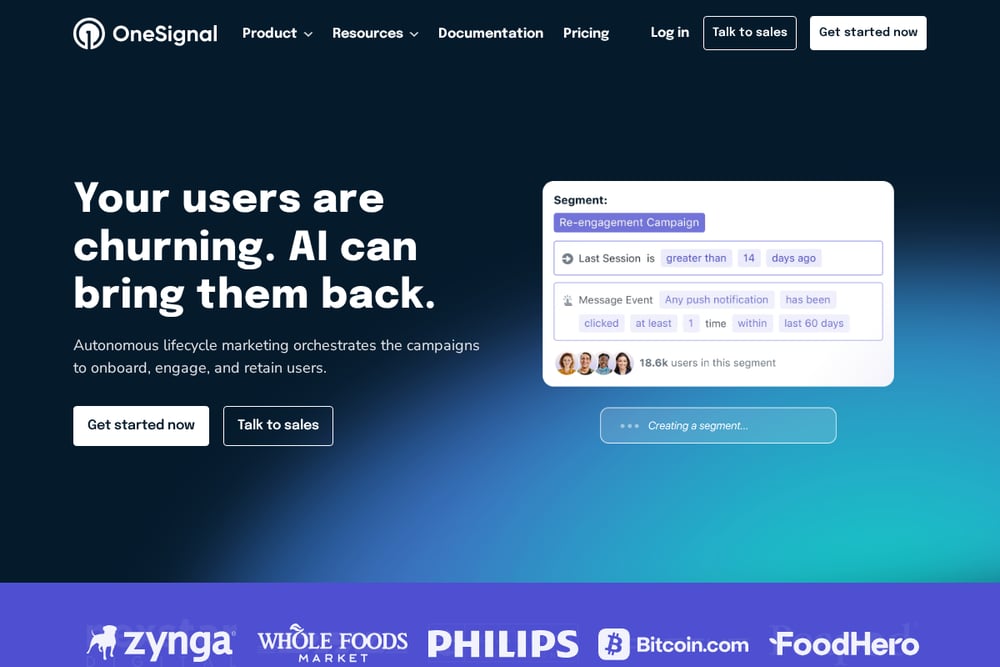 A screenshot of the OneSignal website.
OneSignal presents itself as a messaging engine for the full user lifecycle, with mobile push notifications listed alongside web push, email, in-app messaging, RCS, SMS, and Live Activities. It emphasizes AI-assisted campaign drafting, sending, testing, and optimization, plus journeys and personalization for onboarding, engagement, and retention. SDKs are offered for Android, iOS, Flutter, React Native, Expo, and Unity, which suits teams that want fast integration across common mobile stacks. It is aimed at app publishers and growth teams who want lifecycle messaging without heavy manual effort.
#2 Braze
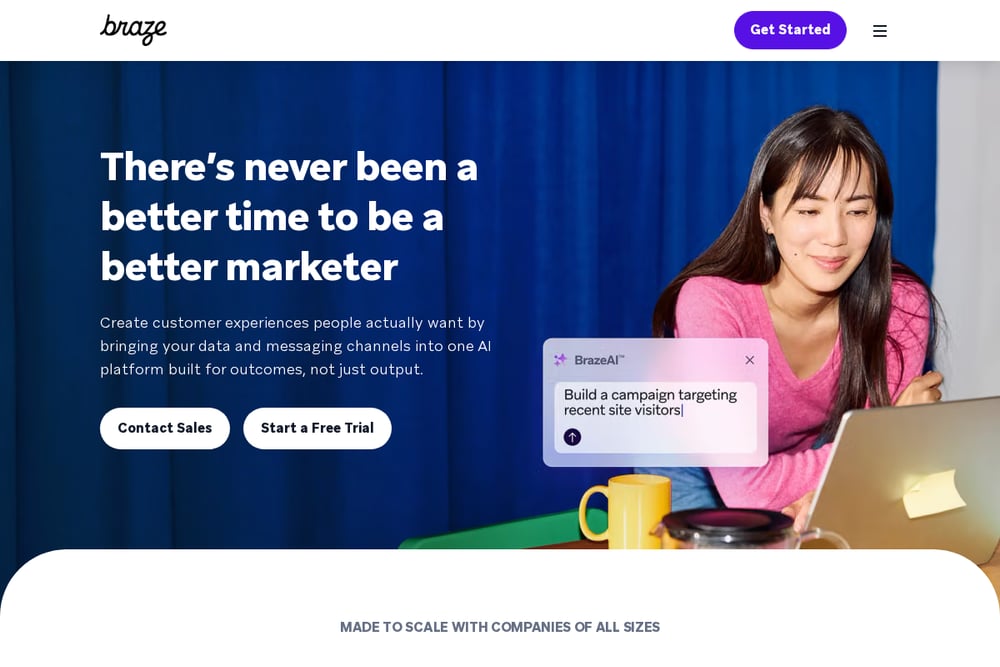 A screenshot of the Braze website.
Braze describes a platform that brings data, messaging channels, and orchestration together, with mobile app messaging listed among its channels. It highlights BrazeAI for building campaigns, creating content, and optimizing performance, plus journey orchestration for multi-step, cross-channel experiences. The Braze Data Platform is presented as unifying and activating customer data in real time. It suits mobile app teams that want engagement tied closely to customer data and cross-channel campaigns.
#3 Airship
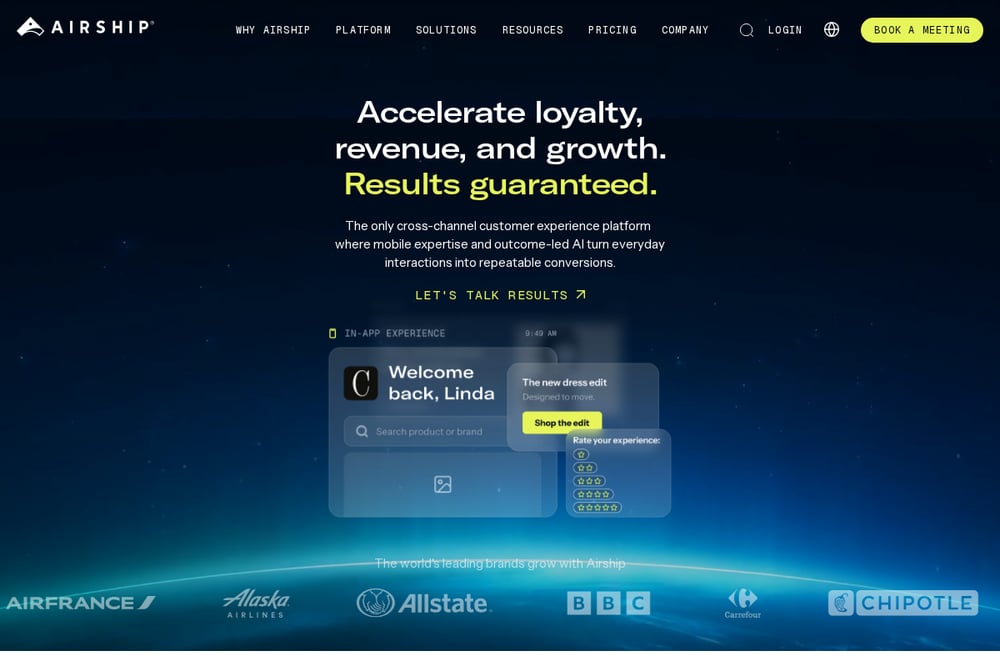 A screenshot of the Airship website.
Airship presents a customer experience platform built around orchestrating journeys and guiding customers toward conversions. Push notifications appear as one channel alongside SMS/RCS/MMS, email, and mobile wallet, with tools for surveys, preference centers, experimentation, and performance analytics. It also emphasizes no-code experience building and AI-powered personalization. It suits mobile-first teams that want push to sit inside a wider cross-channel experience and data strategy.
#4 Pushwoosh
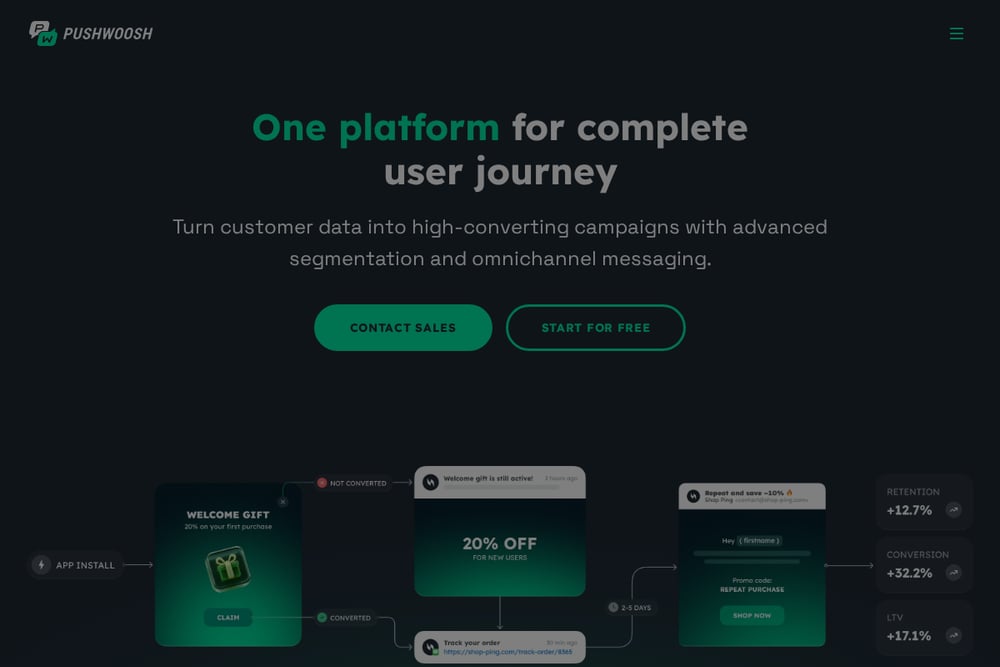 A screenshot of the Pushwoosh website.
Pushwoosh describes one platform for the complete user journey, with mobile push notifications as a core product alongside a customer journey builder, in-app messaging, email, web push, SMS, WhatsApp, and wallet passes. It emphasizes segmentation based on real-time behavior, historical data, and RFM criteria, plus personalized messaging and omnichannel campaigns. An AI marketing copilot is also presented as part of the offering. It suits app teams that want detailed segmentation and multi-channel journeys from a single tool.
#5 Batch
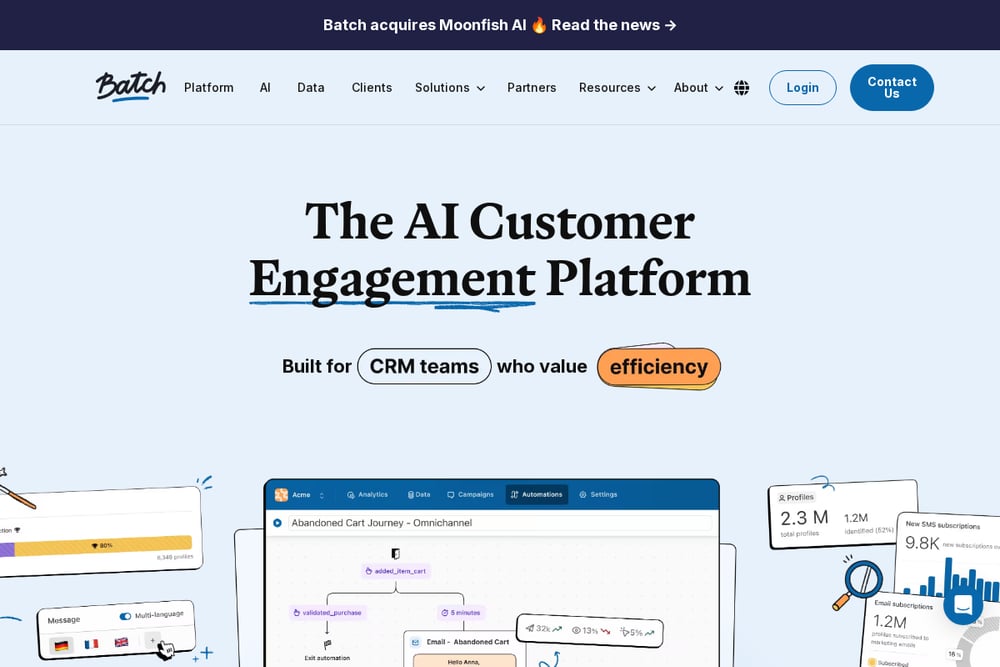 A screenshot of the Batch website.
Batch describes an AI customer engagement platform that lets teams design, test, and automate campaigns across acquisition, monetization, and retention. It lists mobile and web push among its CRM channels, alongside SMS, email, and in-app messages, and presents a marketing-ready data platform for unifying web, mobile, warehouse, and analytics data. Batch AI is described as helping find audiences, write messages, and build campaigns. It suits CRM and marketing teams in mobile app businesses that want data, orchestration, and messaging in one place.
Which One Should You Choose?
Start with how your app team already works. If you want fast SDK integration across frameworks and AI-assisted lifecycle campaigns, look at what each service supports for your mobile stack. If your priority is tying push to a unified customer data platform, compare how each service describes data unification and real-time activation. If you need detailed segmentation or multi-channel journeys, check which services present those as core features. For teams that want push inside a wider cross-channel experience platform, review the channel lists and orchestration tools. In every case, match the service's described strengths to your team's workflow rather than assuming one fits all.
Final Thoughts
These five services all treat push notifications as part of a larger engagement picture, whether through AI assistance, data platforms, journey orchestration, or segmentation. OneSignal emphasizes lifecycle messaging and multi-framework SDKs, Braze emphasizes data and cross-channel orchestration, Airship emphasizes cross-channel experiences and no-code tools, Pushwoosh emphasizes segmentation and omnichannel journeys, and Batch emphasizes a marketing-ready data platform with AI. The right fit depends on your team's priorities and existing stack, not on any single service being best.
Know a company that belongs on this list? Email us at editorial@peekwire.com.