
Public libraries are no longer just buildings full of books — they're digital hubs that need to engage patrons online. The right platform can turn a clunky ILS catalog into a discovery engine, automate email marketing, and build a community
The Public Library Digital Engagement Landscape in 2026
Public libraries are racing to meet patron expectations set by Amazon and Netflix. The old ILS catalog is no longer enough — patrons want personalized recommendations, seamless mobile access, and automated communication. The platforms in this roundup transform library transactions into engaging digital experiences. According to the 2025 Library Systems Report, the market is consolidating around a few key players, but open-source options remain strong. The winners are those that balance discovery quality, accessibility, marketing automation, and integration with existing ILS backends.
How I Ranked These Platforms
I evaluated each platform on five criteria: discovery layer quality (search accuracy, faceting, relevance), marketing automation (email campaigns, segmentation, personalization), website and events capabilities (CMS flexibility, calendar management), mobile app experience (iOS/Android functionality), and vendor independence (ability to work with multiple ILS backends). I also considered pricing transparency, support quality, and real-world success stories from public libraries.
Here's a quick comparison of the five platforms to help you narrow down your options.
| Provider | Best For | Pricing |
|---|---|---|
| Innovative (Clarivate) - Vega LX | Libraries wanting a complete, integrated digital suite | Custom quote; contact sales |
| SirsiDynix - BLUEcloud + Community Engagement Platform | Existing SirsiDynix ILS users looking to modernize patron engagement | Custom quote; contact sales |
| EBSCO Information Services - EDS + NoveList | Libraries that want best-in-class readers' advisory and discovery | Custom quote; contact sales |
| BiblioCommons | Libraries seeking a vendor-agnostic, patron-centric engagement platform | Custom quote; contact sales |
| ByWater Solutions (Koha Support) | Libraries wanting an open-source, customizable, and cost-effective solution | Open-source platform; support fees vary |
Deep Dive: How Each Platform Stacks Up
#1 Innovative (Clarivate) - Vega LX
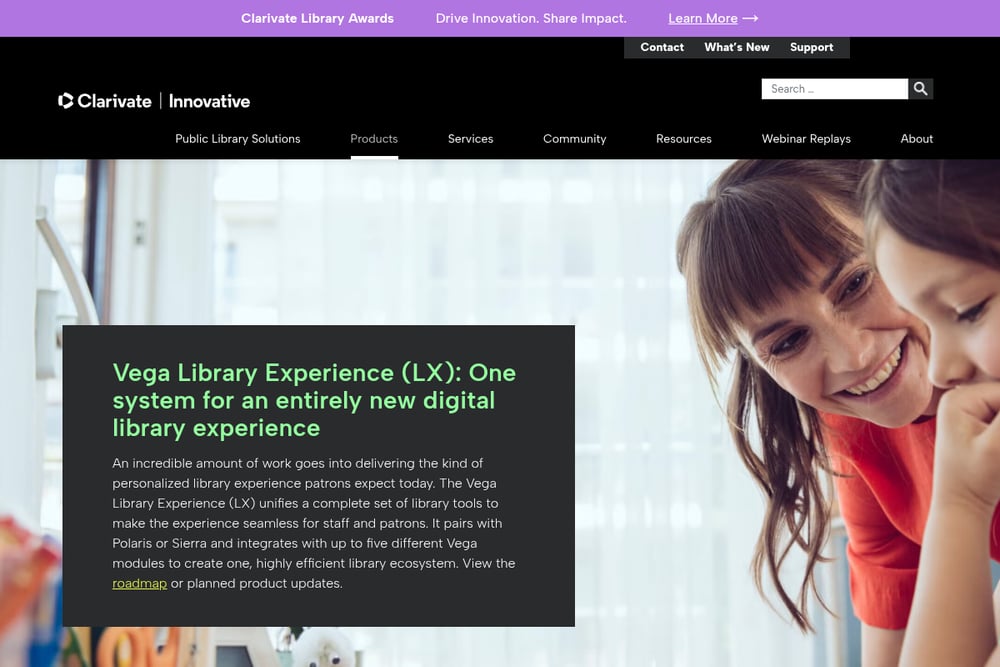 A screenshot of the Innovative (Clarivate) Vega LX website.
Vega LX is the most direct competitor to BiblioCommons and arguably the most comprehensive suite on the market. It includes Vega Discover for online catalog and discovery, Vega Promote for email marketing and campaigns, Vega WebBuilder for CMS website building, Vega Mobile for iOS/Android apps, Vega Program for events calendar, and Vega Interact for chatbot/live chat. According to Library Technology Guides, Vega LX is designed to serve public libraries of all sizes with a unified patron experience. Owned by Clarivate, this platform benefits from deep integration with the Sierra ILS and other backends. If you want an all-in-one solution that covers every digital touchpoint, Vega LX is hard to beat.
Platform Comparison at a Glance:
- Pro: Comprehensive suite covering catalog, website, email, mobile, events, and chatbot in one platform
- Con: Can be expensive for smaller libraries; vendor lock-in risk with Clarivate ecosystem
- Pricing: Custom quote; contact sales
#2 SirsiDynix - BLUEcloud + Community Engagement Platform
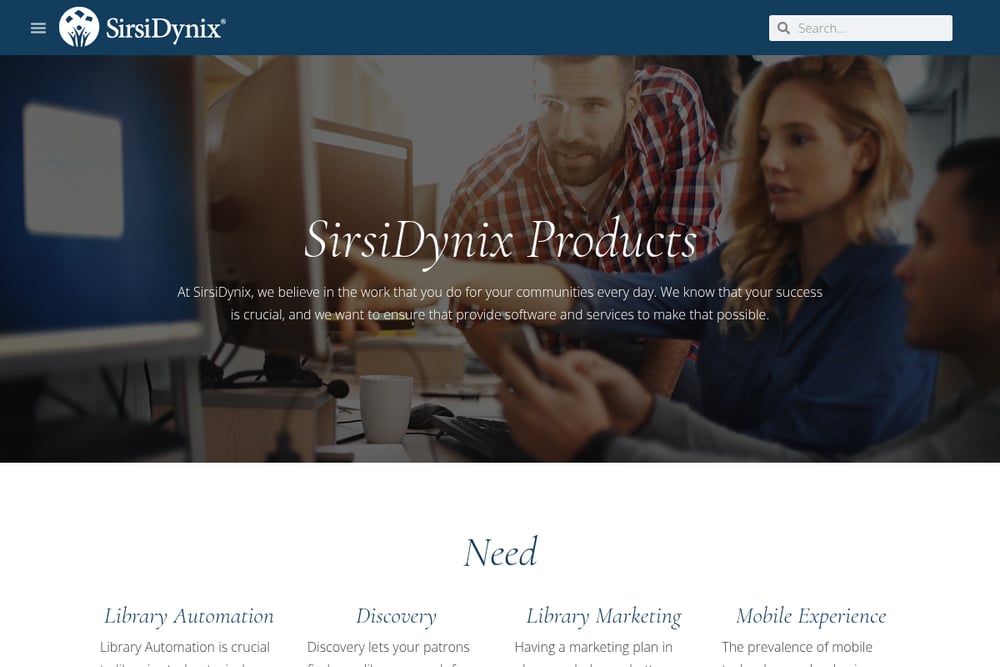 A screenshot of the SirsiDynix BLUEcloud website.
SirsiDynix's BLUEcloud Library Services Platform combined with the Community Engagement Platform (CEP) gives public libraries a powerful discovery layer and marketing automation engine. BLUEcloud Enterprise provides a modern, faceted search experience, while CEP enables targeted email campaigns, event promotion, and patron segmentation. The BLUEcloud Mobile2 app extends engagement to smartphones. As noted in the 2025 Library Systems Report, SirsiDynix remains a dominant force in US public libraries. Owned by Harris Computer (Constellation Software), the platform integrates deeply with Symphony and Horizon ILS. For libraries already on SirsiDynix, this is the natural upgrade path.
Platform Comparison at a Glance:
- Pro: Tight integration with Symphony/Horizon; strong email marketing and segmentation capabilities
- Con: Less vendor-agnostic than BiblioCommons; may require migration from legacy products
- Pricing: Custom quote; contact sales
#3 EBSCO Information Services - EDS + NoveList
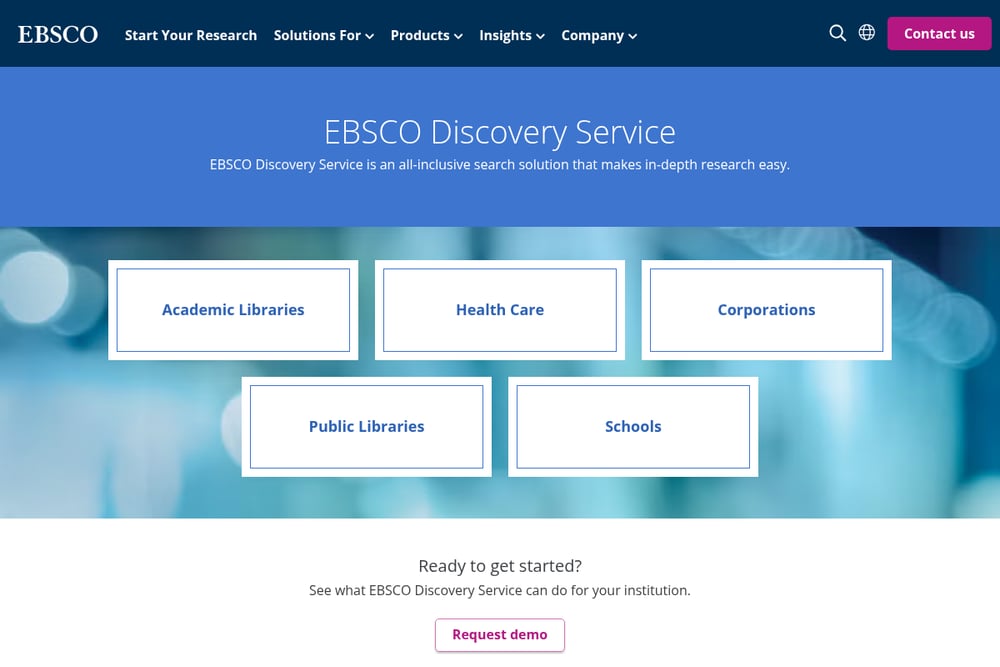 A screenshot of the EBSCO Information Services website.
EBSCO Discovery Service (EDS) is one of the most widely used discovery platforms in public libraries, offering a single search box across the library's entire collection. What sets EBSCO apart is NoveList, a readers' advisory and book discovery tool that directly competes with BiblioCommons' discovery and RA features. NoveList provides expert-curated reading recommendations, appeal factors, and series information that help patrons find their next great read. According to EBSCO's product page, the platform indexes over 3,400 collections. Family-owned with a buy-and-hold strategy, EBSCO is a stable choice for libraries that prioritize content discovery and reader engagement.
Platform Comparison at a Glance:
- Pro: NoveList integration provides unmatched readers' advisory; massive content index
- Con: Less emphasis on website building and email marketing compared to full-suite competitors
- Pricing: Custom quote; contact sales
#4 BiblioCommons
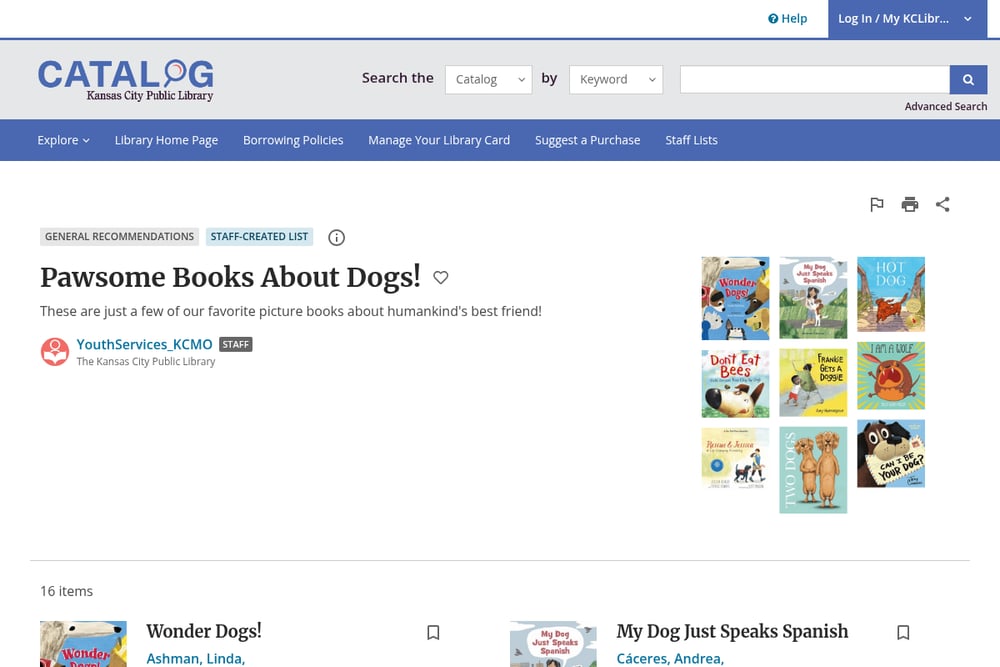 A screenshot of the BiblioCommons website.
BiblioCommons is the featured platform in this roundup, and for good reason — it's purpose-built for public library digital engagement. The suite includes BiblioCore (discovery layer), a mobile app, Website Builder (CMS), Events Calendar, and Email Marketing. What makes BiblioCommons unique is its vendor-agnostic approach: it works with any ILS backend (Sierra, Polaris, Symphony, Koha) and is used by libraries across the US, Canada, Australia, and New Zealand. As highlighted on their website, they focus on patron-centric design, accessibility, and DEI. Libraries like Edmonton Public Library praise its visually appealing catalog and seamless patron experience. If you want a platform that puts patron experience first without forcing you to switch ILS, BiblioCommons is a top contender.
Platform Comparison at a Glance:
- Pro: Works with any ILS; strong focus on accessibility and DEI; proven success stories
- Con: Less comprehensive than Vega LX in some areas (e.g., no chatbot); smaller market share than SirsiDynix
- Pricing: Custom quote; contact sales
#5 ByWater Solutions (Koha Support)
ByWater Solutions is the leading open-source alternative for public libraries, providing support, hosting, and development for Koha — the most widely deployed open-source library system. Koha includes a full ILS with an OPAC discovery layer, but libraries often pair it with third-party tools for website building and email marketing. ByWater recently partnered with Bibliotheca for RFID integration, as noted on Bibliotheca's site. The open-source model gives libraries full control and no vendor lock-in, but it requires more technical expertise or paid support. For budget-conscious libraries that value customization and community-driven development, ByWater is a compelling choice.
Platform Comparison at a Glance:
- Pro: No licensing fees; full control over code; active open-source community
- Con: Requires technical expertise or paid support; less out-of-the-box marketing automation
- Pricing: Open-source platform; support fees vary
How to Choose the Right Platform for Your Library
Start by assessing your current ILS. If you're on Sierra or Polaris, BiblioCommons and Vega LX are strong vendor-agnostic choices. If you're already using SirsiDynix, their BLUEcloud + CEP suite offers the tightest integration. For libraries that prioritize readers' advisory, EBSCO's NoveList is a game-changer. Budget-conscious libraries should consider ByWater's open-source Koha, but be prepared to invest in support and customization. Finally, think about your digital maturity: do you need a full suite (Vega LX) or can you piece together best-of-breed tools?
Automating Patron Engagement: A Workflow Example
Imagine a patron checks out a mystery novel. The platform automatically sends a personalized email with similar titles from NoveList, invites them to an upcoming author event via the events calendar, and suggests a related book club discussion on the library's website. This kind of automated workflow is possible with platforms like Vega LX, SirsiDynix CEP, and BiblioCommons. The key is integration between the discovery layer, email marketing, and events management — something these platforms handle natively.
Final Synthesis: Which Platform Wins?
There's no one-size-fits-all answer. For libraries that want the most comprehensive suite with minimal integration headaches, Innovative's Vega LX is the top pick. SirsiDynix is the safe bet for existing customers. EBSCO wins on content discovery. BiblioCommons is the best vendor-agnostic option with a proven track record in public libraries. And ByWater is the open-source champion for those who value freedom over convenience. Evaluate your library's specific needs, budget, and technical capacity — then choose the platform that aligns with your patron engagement goals.