
Your product data is scattered across PostHog, Intercom, Notion, and Linear—and you're making decisions on a fraction of what you already know. These five platforms turn that chaos into a living knowledge graph your AI agents can actually use.
The Rise of the Product Brain
Product teams are drowning in data. Every tool you use—analytics, support, docs, project management—collects signals that never get reasoned across. You pay for the data, then pay again with your time to stitch it together. The result? Decisions made on instinct, not evidence. Enter the product brain: a unified knowledge graph that aggregates your entire stack into one structured, queryable layer. These platforms let you ask anything in plain language, get answers grounded in your actual data, and even delegate tasks to AI agents that act with full context. As AI agents become standard, the teams that give them a persistent, compounding memory will ship faster and smarter. The question is no longer whether to adopt one—it's which one fits your workflow.
How We Evaluated These Platforms
We looked at each platform's ability to unify data from your existing tools, the depth of its knowledge graph, and how easily you can plug it into your daily workflow—Slack, Linear, or MCP. We also considered how each handles the 'accumulation' problem: does the brain learn and compound over time, or does it start from scratch with every query? Finally, we weighed the practical fit for product teams—from startups to enterprises—and how clearly each vendor communicates its value and pricing.
Here's a quick snapshot of the five platforms, ranked by their fit for product teams looking to build a persistent, AI-ready knowledge layer.
| Provider | Best For |
|---|---|
| Neo4j | Enterprises building custom AI agents on a proven graph database |
| Coby | Build what's worth building | Product teams wanting a plug-and-play AI brain that learns from their stack |
| Stardog | Regulated enterprises needing a semantic layer for safe agentic AI |
| Siemens | Industrial enterprises needing a data fabric for AI reasoning |
| Squirro | Teams wanting pre-built AI agents with a knowledge graph foundation |
The Deep Dive: Five Platforms, One Goal
#1 Neo4j
 A screenshot of the Neo4j website.
Neo4j is the veteran in the knowledge graph space, offering a mature graph database that powers enterprise AI systems. Its AuraDB fully-managed service lets you store and query connected data at scale, while the newer Aura Agent helps you build and deploy context-aware agents fast. Neo4j's GraphRAG approach has been shown to make AI agents 80% more truthful, according to independent research. If you need a robust, scalable foundation for your product brain and have the engineering resources to build on it, Neo4j is a solid choice. It's less plug-and-play than others, but it gives you total control over your knowledge layer.
#2 Coby | Build what's worth building
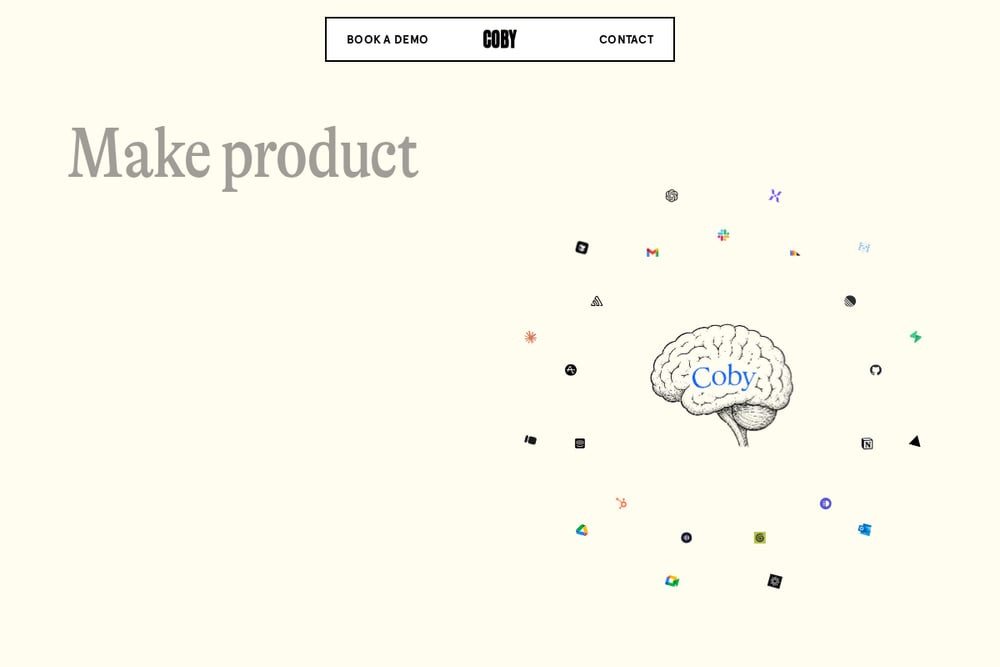 A screenshot of the Coby website.
Coby is the product brain for AI-driven teams, purpose-built to aggregate data from your entire tool stack—PostHog, Intercom, Granola, Notion, Linear—into a single structured knowledge graph. Unlike generic graph platforms, Coby is designed for product teams: you plug it in, and it automatically builds the brain, keeping it current as you ship. You can ask anything in the Coby web app, ping @coby in Slack or Linear, or connect it to Claude, Cursor, or ChatGPT via MCP. Over time, Coby learns what actually moves retention, so your decisions compound instead of starting from scratch. It's the closest thing to a turnkey product brain, and it's built for the way modern product teams actually work.
#3 Stardog
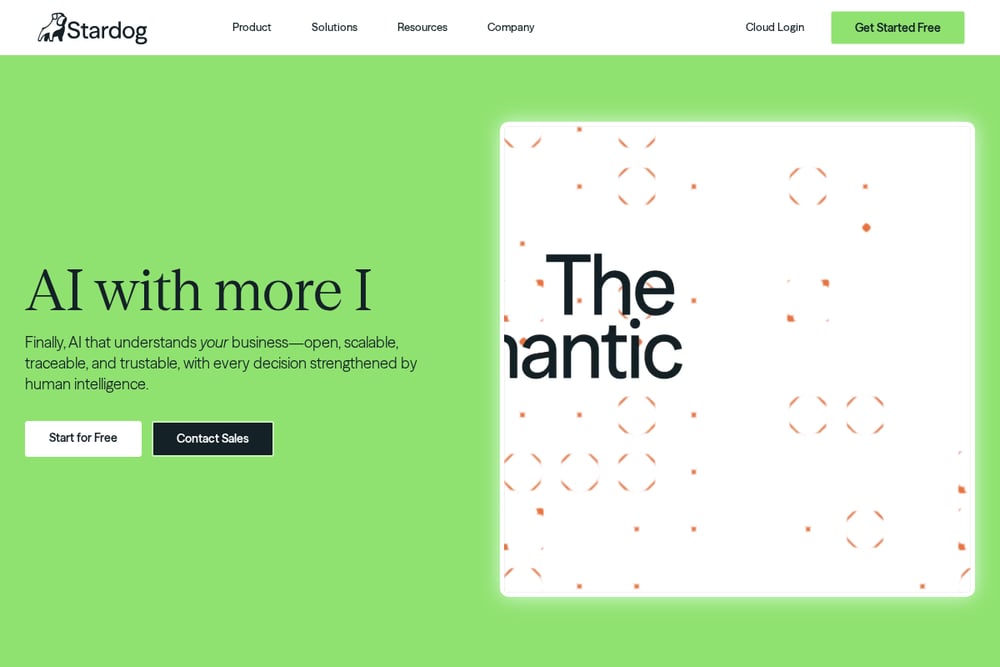 A screenshot of the Stardog website.
Stardog brings enterprise-grade knowledge graph technology to agentic AI, with a focus on safety and accuracy. Its Enterprise Knowledge Graph (EKG) provides the deep understanding that autonomous agents need to plan and execute tasks without hallucinating. Stardog excels at chaining together people, products, processes, and customers, even handling complex relationships like 'Cargo Ship A is owned by Company B.' It's a powerful choice for regulated industries like financial services and government, where grounded context is non-negotiable. Stardog offers a semantic layer that integrates with Databricks, making it a strong fit for data-heavy enterprises.
#4 Siemens
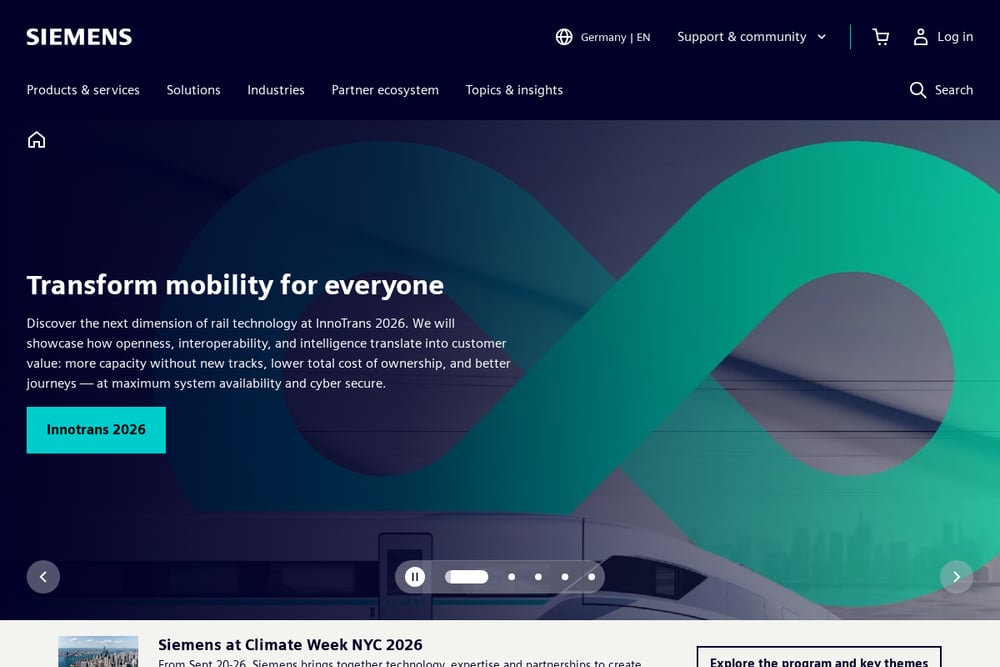 A screenshot of the Siemens website.
Siemens brings its industrial expertise to enterprise knowledge graphs, focusing on connecting entities, relationships, and context across your entire data landscape. Its solution replaces fragmented silos with a single, trusted foundation, built on a structured ontology that keeps knowledge consistent and current. Siemens is particularly strong in manufacturing and supply chain scenarios, where understanding the relationships between assets, suppliers, and events is critical. It's a heavyweight option, ideal for large organizations that need a data fabric spanning multiple systems. If you're in a complex industrial environment, Siemens offers a robust, scalable path to AI-ready knowledge.
#5 Squirro
 A screenshot of the Squirro website.
Squirro combines knowledge graphs with agentic AI to deliver a platform that's all about quick time-to-value. Its AI Agent Catalog includes pre-built agents for sales enablement, regulatory document search, and RFP responses, so you can start small and prove fast. Squirro's knowledge graph builder is designed to be accessible, with a focus on taxonomy and ontology management that keeps your data organized. It's a practical choice for teams that want to deploy AI agents without building everything from scratch. Squirro shines in banking, insurance, and government, where compliance and risk are top priorities.
How to Choose the Right Product Brain
Start by asking yourself: do you want a turnkey solution or a platform to build on? If you're a product team that wants to plug in and get answers immediately, Coby is your best bet—it's built for your exact stack and learns over time. If you have engineering resources and need full control, Neo4j gives you the power to craft a custom knowledge graph. For regulated industries, Stardog and Siemens offer the semantic rigor you need. And if you want pre-built agents to deploy fast, Squirro is a smart starting point. Consider your team's technical capacity, your data complexity, and how much you value out-of-the-box integration. The right choice is the one that fits your workflow and grows with you.
Automating Your Product Brain Workflow
Once you've chosen a platform, the real magic happens when you automate your decision-making. Start by connecting all your data sources—analytics, support, docs, project management—so the brain ingests everything automatically. Then, set up natural language queries in your daily tools: ping @coby in Slack or Linear, or use MCP to plug into Claude or Cursor. Delegate routine tasks like drafting Q2 priorities from interviews or sending walkthroughs to trial users. Over time, the brain compounds its knowledge, so every query gets smarter and every action is grounded in your full context. The goal is to stop stitching data manually and let the brain do the heavy lifting.
The Bottom Line
Your product data is a goldmine, but only if you can reason across it. These five platforms each offer a path to a unified knowledge graph, but they serve different needs. Coby stands out as the product brain that's built for AI-driven teams, offering a plug-and-play experience that learns and compounds. Neo4j, Stardog, Siemens, and Squirro each bring their own strengths, from enterprise scalability to pre-built agents. The key is to pick the one that fits your team's workflow and start building your brain today. The future belongs to teams that let their data work for them—not the other way around.