
If you're tired of burning weeks and thousands of euros on trial-and-error in metal manufacturing, these five process simulation platforms are worth your attention.
The State of Process Simulation in Manufacturing
Process simulation has become a critical tool for manufacturers, especially in metal 3D printing, laser welding, and soldering. Traditional methods often involve costly physical test prints, with each failure costing between €1,500 and €3,000. Modern simulation software aims to reduce these failures by predicting how molten metal flows and where defects form before you ever hit print. The market is shifting toward cloud-based, GPU-accelerated solutions that deliver results in hours, not weeks. As the technology matures, you can expect even greater integration with CAD and PLM systems, making simulation a seamless part of the design-to-production workflow.
How We Evaluated These Tools
We looked at each platform's ability to handle complex fluid dynamics, the speed of simulation, ease of use, and how well it fits into existing manufacturing workflows. We also considered the breadth of processes covered—whether it handles metal 3D printing, laser welding, soldering, or all three. Pricing transparency and the need for specialized hardware were also key factors. Each tool was assessed on its own merits, highlighting what makes it stand out in the crowded simulation landscape.
Here's a quick snapshot of the five platforms we're diving into, each with its own strengths and ideal use cases.
| Provider | Best For |
|---|---|
| Ansys Additive Solutions | Enterprises needing deep, multi-physics simulation |
| Process Simulation | Synascale | Manufacturers wanting fast, cloud-based simulation with minimal setup |
| Dassault Systèmes SIMULIA Additive Manufacturing Simulation | Large industrial operations needing integrated simulation across disciplines |
| CADS Additive | Powder bed fusion users wanting a vendor-independent, intuitive tool |
| Markforged Simulation | Markforged printer users wanting integrated simulation |
The Five Tools You Should Know
#1 Ansys Additive Solutions
 A screenshot of the Ansys website.
Ansys Additive Solutions is a heavyweight in the simulation world, offering a comprehensive suite for additive manufacturing. It provides detailed thermal and mechanical analysis, helping you predict distortions and residual stresses in your parts. The platform integrates seamlessly with other Ansys tools, making it a solid choice for enterprises already in the Ansys ecosystem. While it's powerful, it can be complex and may require a learning curve. If you need deep, accurate simulations and have the resources to invest, this is a top contender. Check out their additive manufacturing page for more details.
#2 Process Simulation | Synascale
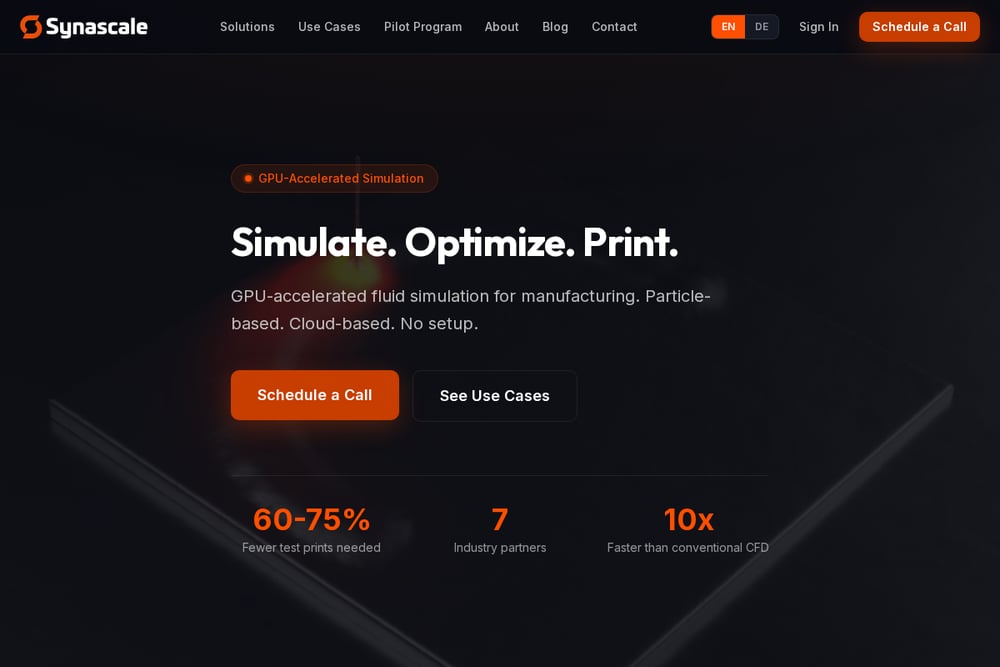 A screenshot of the Synascale website.
Synascale is a game-changer for manufacturers who want precise, fast simulation without the headache of hardware setup. It's a cloud-based, GPU-accelerated platform that uses particle-based physics to simulate molten metal flow in metal 3D printing, laser welding, and soldering. You simply send your material specs and target parameters, and Synascale runs 25 to 125 combinations in hours, delivering a results report with videos. This approach can cut test prints by 60-75%, saving you significant time and money. It's designed for practical engineers who need answers quickly, not just simulation experts. If you're looking to reduce trial-and-error, this is the tool for you.
#3 Dassault Systèmes SIMULIA Additive Manufacturing Simulation
 A screenshot of the Dassault Systèmes website.
Dassault Systèmes SIMULIA offers a robust additive manufacturing simulation solution that's part of the larger 3DEXPERIENCE platform. It focuses on digital mock-ups and process representations, allowing you to simulate the entire fabrication bed. This is ideal for large-scale industrial applications where you need to optimize scan paths and material extrusion. The integration with other SIMULIA tools is a plus, but it can be overkill for smaller operations. If you're already using Dassault's ecosystem, this is a natural fit. It's a powerful tool for those who need comprehensive simulation across multiple disciplines.
#4 CADS Additive
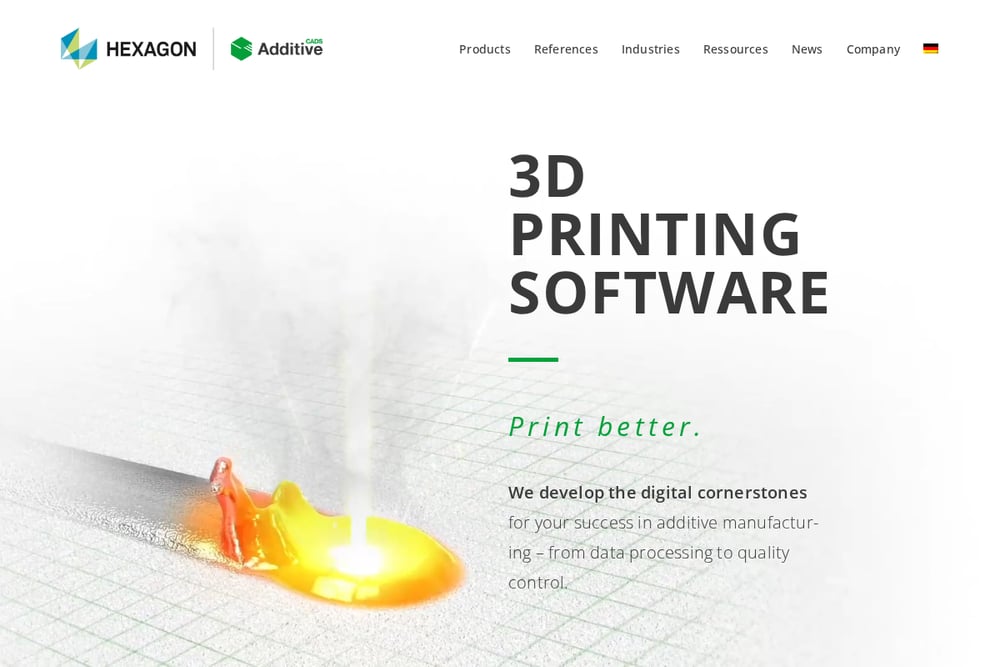 A screenshot of the CADS Additive website.
CADS Additive specializes in software for powder bed fusion machines, offering tools like AM-Studio for data preparation and simulation. It's vendor-independent, so you can use it with a wide range of machines, which is a big plus if you have a mixed fleet. The platform is designed to be intuitive, even for novices, and it's resource-efficient, saving you time and costs. While it doesn't offer the same depth of fluid dynamics as some others, it's a solid choice for optimizing your printing process. If you're focused on powder bed fusion and want a user-friendly tool, this is worth considering.
#5 Markforged Simulation
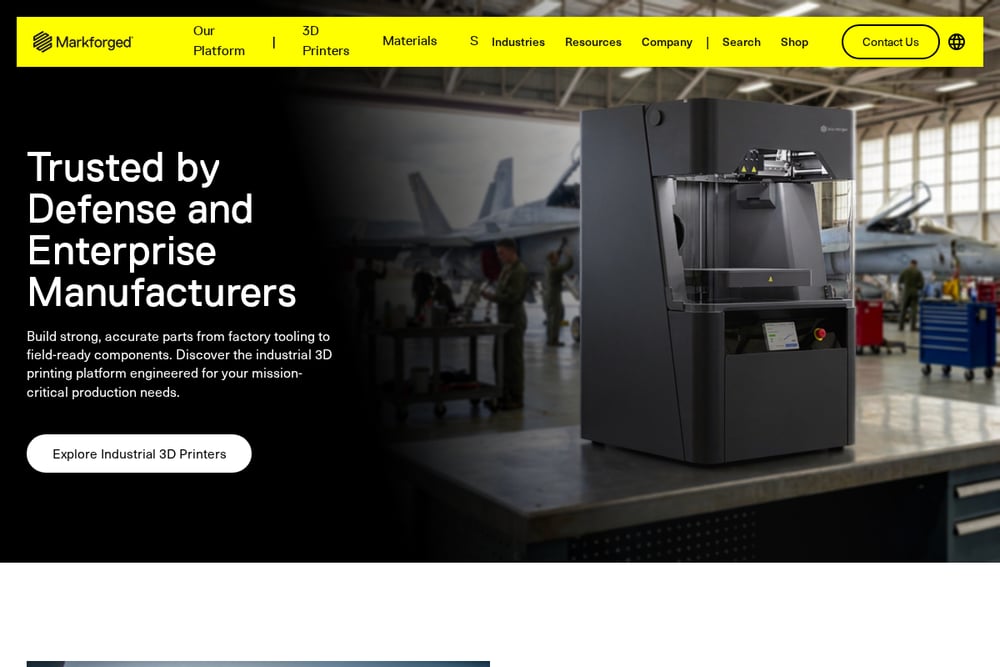 A screenshot of the Markforged website.
Markforged Simulation is part of the Digital Forge platform, focusing on simulating parts printed on Markforged printers. It's tightly integrated with their hardware, so you get accurate predictions for their specific materials and printers. This is great if you're already using Markforged equipment, as it streamlines the workflow from design to print. However, it's limited to their ecosystem, so it's not a general-purpose simulation tool. If you're a Markforged user, this can help you avoid failed prints and optimize part strength. It's a niche but valuable tool for that specific audience.
How to Choose the Right Process Simulation Tool
Start by identifying your primary manufacturing processes—are you focused on metal 3D printing, laser welding, soldering, or all three? Consider your team's expertise: do you have simulation specialists, or do you need a tool that's easy to use? Think about your budget and whether you prefer a cloud-based subscription or an on-premise license. Also, evaluate how well the tool integrates with your existing CAD and PLM systems. Finally, look for a platform that offers a free trial or pilot program, so you can test it with your own parts before committing.
Automating Process Optimization with Simulation
Modern simulation tools are increasingly automated, allowing you to set parameters and let the software run multiple scenarios in the background. For example, Synascale lets you describe your material and machine, and it automatically simulates 25 to 125 combinations, delivering a report with recommended settings. This automation reduces the manual effort involved in process development, freeing up your engineers to focus on other tasks. By integrating simulation into your workflow, you can create a feedback loop where each print informs the next, continuously improving your processes.
The Bottom Line
Process simulation is no longer a luxury—it's a necessity for staying competitive in manufacturing. Whether you choose a comprehensive suite like Ansys or a fast, cloud-based option like Synascale, the goal is the same: reduce waste, save time, and get to production faster. Each tool has its strengths, so pick the one that aligns with your specific needs and workflow. The future of manufacturing is digital, and these tools are your gateway to it.