
If you're exploring brain stimulation for depression, anxiety, or cognitive issues, these five practices are leading the way with measurement-based, personalized approaches.
The Shift to Measurement-Based Psychiatry
Traditional psychiatry often relies on symptom checklists and trial-and-error medication. But a new wave of clinics is using brain imaging and EEG to guide treatment directly. This approach—precision psychiatry—tailors stimulation protocols to each person's unique brain activity, promising better outcomes for treatment-resistant conditions. From academic medical centers to boutique private practices, the options are expanding across California.
How We Evaluated These Practices
We looked at each practice's service scope, use of brain measurement, treatment personalization, and local accessibility. We also considered how clearly they communicate their approach and whether they offer adaptive protocols. Each practice stood out for different reasons—some for their research backing, others for their hands-on, iterative style.
Here's a quick snapshot of each practice to help you compare at a glance.
| Provider | Best For |
|---|---|
| UC San Diego Health TMS Therapy | Comprehensive, research-backed TMS in an academic setting |
| Psychiatry & Brain Stimulation | EEG-guided, adaptive brain stimulation with a seasoned psychiatrist |
| Bella Vida TMS | Complex, treatment-resistant cases needing customized TMS |
| Cognitive FX | Intensive, functional brain imaging-guided treatment for complex symptoms |
| BrainCare Performance Center Carlsbad | Local, qEEG-guided rTMS in North County San Diego |
The Five Practices, Closer Look
#1 UC San Diego Health TMS Therapy
 A screenshot of the UC San Diego Health website.
UC San Diego Health is a leading academic provider of TMS in Southern California, offering multiple advanced protocols like Theta Burst and BrainsWay Deep. Their clinic is one of the largest in the region, with high patient satisfaction and success rates. They emphasize evidence-based care and have been offering TMS longer than most. If you want access to cutting-edge research and a multidisciplinary team, this is a solid choice. Their website clearly outlines what to expect and how to become a patient. For a hospital-based option with deep expertise, they're hard to beat.
#2 Psychiatry & Brain Stimulation
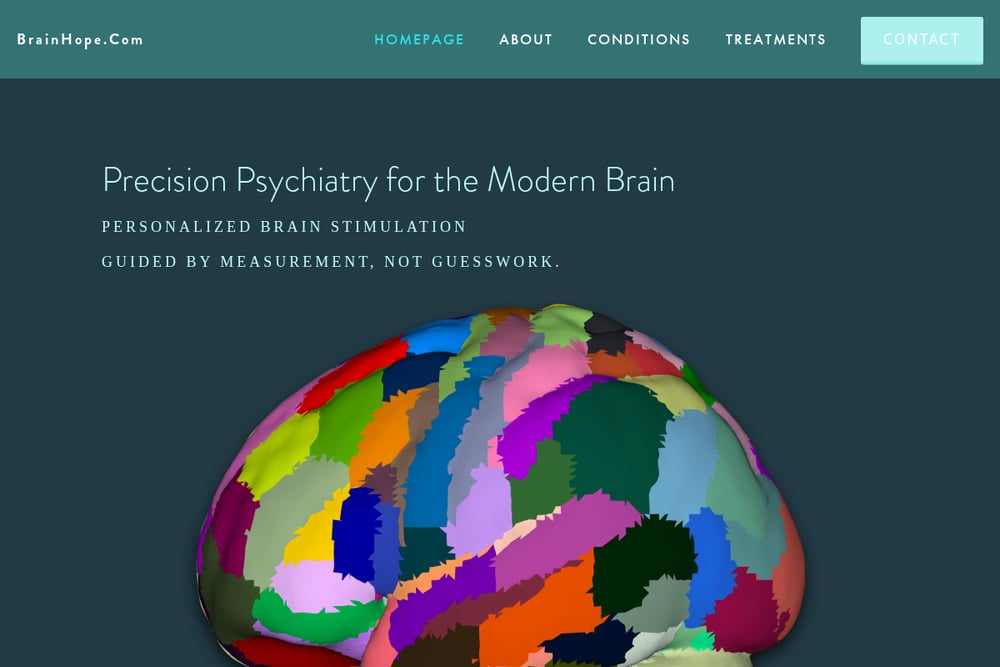 A screenshot of the Psychiatry & Brain Stimulation website.
This Del Mar practice, led by board-certified psychiatrist Dr. Rustin Berlow, focuses on precision psychiatry using EEG-guided brain stimulation. They treat depression, anxiety, bipolar spectrum conditions, and cognitive dysfunction with adaptive protocols that evolve based on your response. Their approach combines clinical evaluation, EEG, and behavioral testing to map your brain's function—not just your symptoms. With over 30 years of outpatient psychiatry experience, Dr. Berlow brings a seasoned, individualized perspective. Their website emphasizes measurement-based care and treating the brain as a dynamic system. If you're looking for a highly personalized, iterative treatment plan, this practice stands out.
#3 Bella Vida TMS
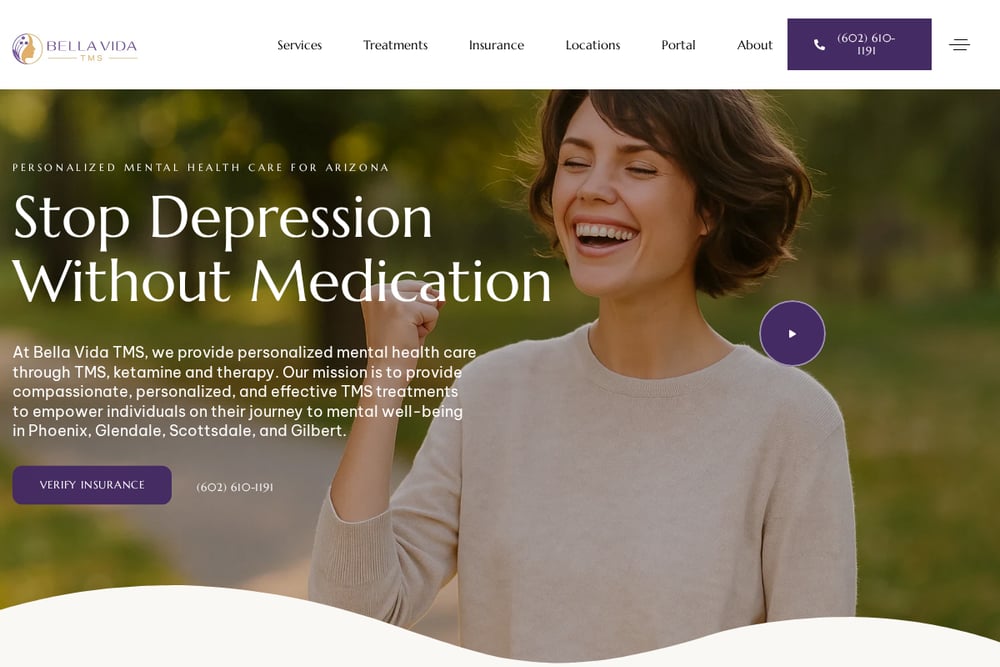 A screenshot of the Bella Vida TMS website.
Bella Vida TMS in Arizona offers EEG-guided TMS mapping for complex diagnoses like depression with OCD or PTSD, and for neurodivergent conditions. They go beyond standard protocols by customizing treatment based on brain data, which is especially helpful if you've had poor results elsewhere. Their services include psychiatric evaluations, therapy, and medication management, creating a full-spectrum care team. They also offer SPRAVATO and ketamine for treatment-resistant cases. Their website is clear about how they personalize TMS for atypical symptoms. If you have multiple diagnoses or haven't responded to standard TMS, they're worth considering.
#4 Cognitive FX
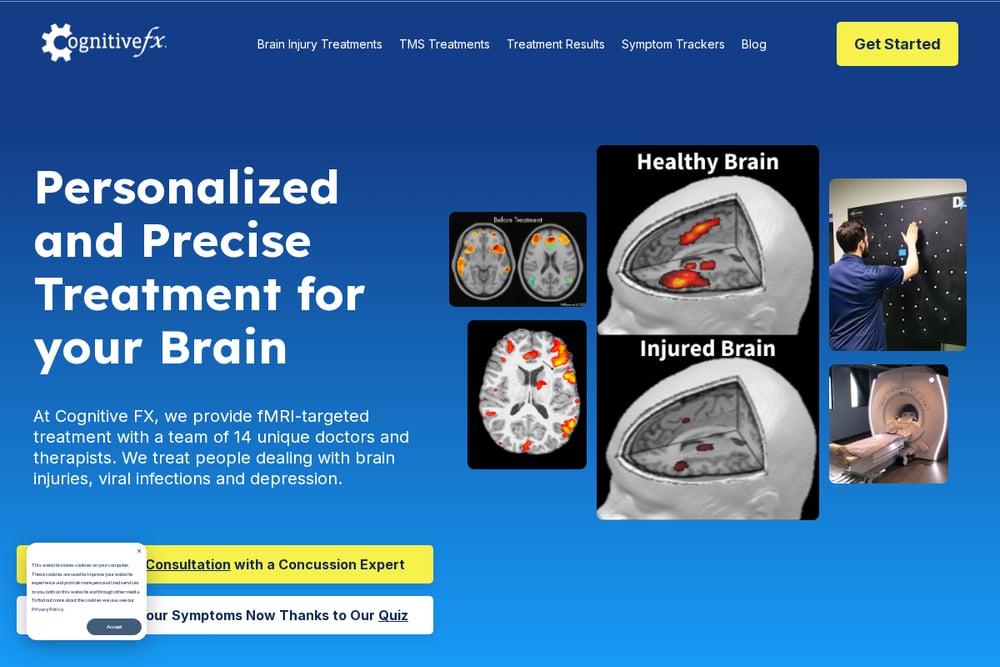 A screenshot of the Cognitive FX website.
Cognitive FX uses functional brain imaging (fNCI) to guide TMS and other treatments for depression, post-concussion syndrome, and brain injuries. Their approach is intensive—often compressing treatment into a few days—and they focus on restoring brain function, not just managing symptoms. They offer accelerated TMS protocols that can be completed in one day, which is a game-changer for busy people. Their team includes doctors who specialize in precision treatment, and they provide telehealth consultations. If you're dealing with brain fog, fatigue, or memory issues alongside depression, their functional approach might resonate. They're based in Utah but serve patients from across the country.
#5 BrainCare Performance Center Carlsbad
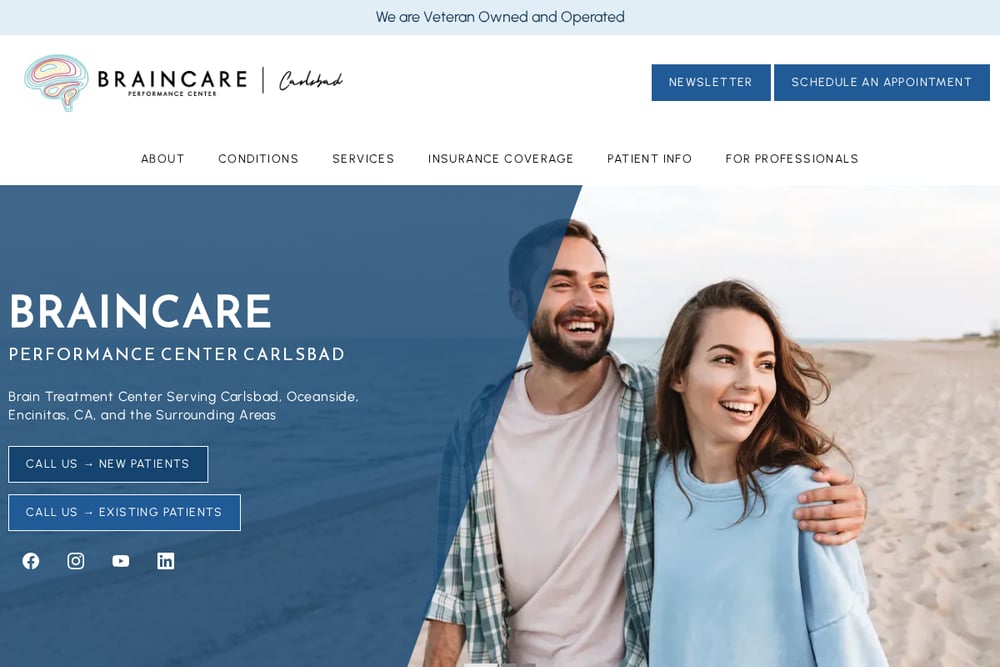 A screenshot of the BrainCare Performance Center Carlsbad website.
BrainCare Performance Center in Carlsbad starts with qEEG brain mapping and EKG to understand how your brain communicates before delivering rTMS. They focus on restoring healthier activity patterns, which can help with depression, anxiety, OCD, and even adolescent depression. Their approach is non-invasive and drug-free, and they often work with insurance. They also offer MeRT (Magnetic e-Resonance Therapy) for a more tailored stimulation. If you're in North County San Diego and want a local, measurement-based option, this is a convenient choice. Their website is straightforward about what to expect and who qualifies.
How to Choose the Right Practice for You
Start by considering your specific condition and treatment history. If you have multiple diagnoses or haven't responded to standard TMS, look for practices that offer EEG-guided mapping or functional imaging. Think about logistics—do you prefer a local clinic or are you open to traveling for an intensive program? Check whether they accept your insurance or offer self-pay options. Finally, schedule a consultation to see if their approach feels right. The best practice is one that listens to your story and uses data to personalize your care.
Automating Your Search for Brain Stimulation Care
You can streamline your decision by using online directories and telehealth consultations. Many practices offer free initial calls where you can ask about their protocols and success rates. Use filters like 'EEG-guided' or 'adaptive TMS' to narrow down options. Also, read patient testimonials and check if the practice publishes outcome data. Automating your research with these steps saves time and helps you compare apples to apples.
The Bottom Line
Precision psychiatry is changing the game for treatment-resistant depression and other brain conditions. Whether you choose a large academic center or a boutique private practice, the key is to find a team that measures your brain's function and adapts treatment accordingly. Each of these five practices brings something unique to the table, so take your time, ask questions, and pick the one that aligns with your needs and values.