Introduction
When Peekwire compiled its list of audio calculator tools worth knowing, SoundSystem LAB came up more than once in the research. The site's founder, Federico, agreed to answer three questions about what someone new to PA audio should understand before trusting the usual advice.
His answers return repeatedly to one theme: the gap between physics and marketing. As he puts it, "many of the issues boil down to a comparison between physics and marketing. That's also partly why I decided to start SoundSystem LAB."
Standard advice doesn't always fit the room
Asked when conventional PA setup guidance fails, Federico pushes back on the idea that a single standard exists. "In reality, there isn't a one-size-fits-all 'standard advice,' as everything depends heavily on the specific space and available gear."
He points to the classic Left-Right configuration, often recommended to beginners, noting that indoors it isn't always optimal and that a central subwoofer cluster is frequently a better choice.
Gear advice has its own problems. Beginners are often told to focus on watts, which Federico says means very little. Professionals instead look at SPL sensitivity, measured in dB/1W/1m, which varies with acoustic loading, cabinet volume, and other factors. For readers who want to go deeper on these concepts, general references on sound pressure level and loudspeaker sensitivity provide useful background.
He also flags a common mistake: mixing different types or brands of speakers to increase volume. "This almost always sounds worse than using a single, properly placed, and configured system."
The physics that beginner guides skip
On what existing pages leave out, Federico is direct about phase cancellation. "Most basic guides leave out the physics of phase cancellation."
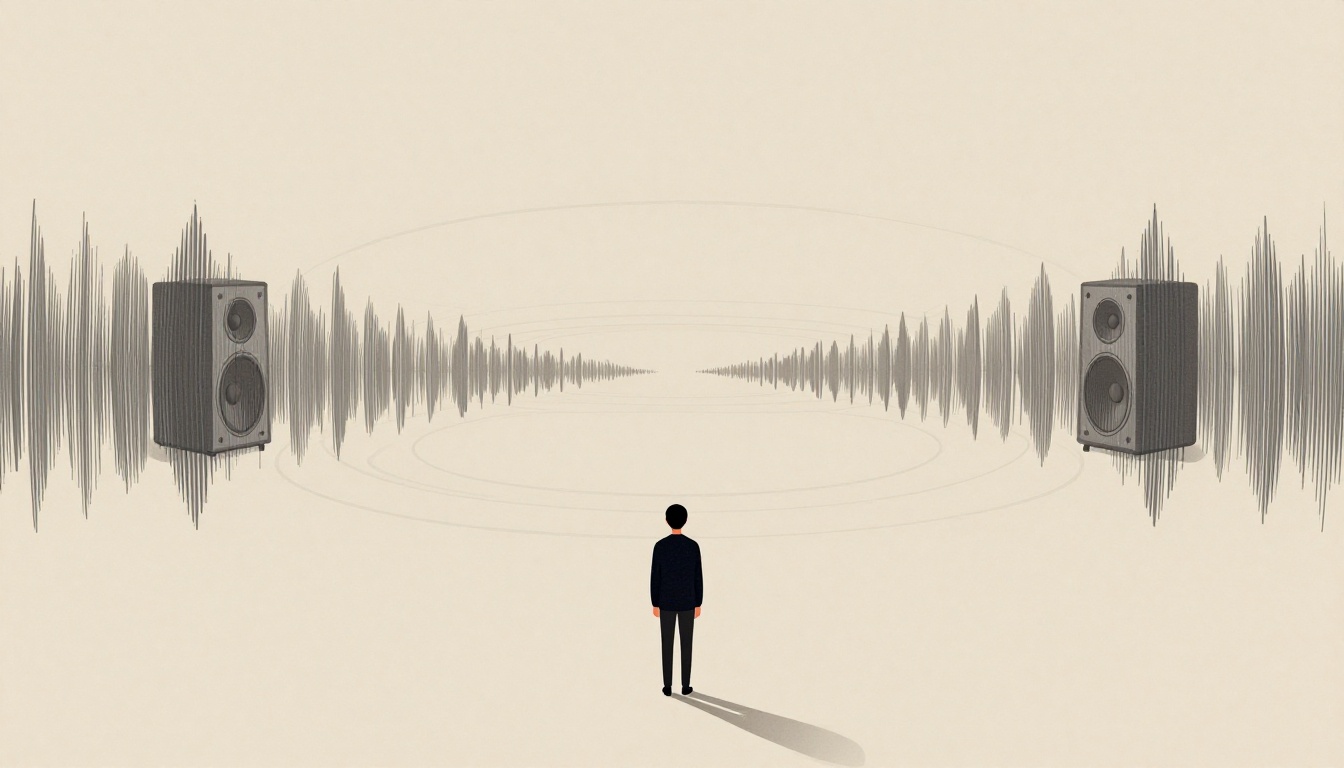
When speakers, especially subwoofers, are placed incorrectly or too far apart, they create acoustic dead zones. The behavioral consequence is what he thinks deserves more attention: to compensate for those empty zones, the DJ or sound tech simply pushes the volume higher. The result is "monstrous, deafening sound pressure right in front of the speakers, while other areas of the room still completely lack impact."
That pattern is worth recognizing because it looks like a volume problem when it is actually a placement problem. The phase cancellation involved is basic acoustics, but it rarely makes it into beginner-facing setup guides.
Decisions people rush
Federico says people often rush into purchases based on market trends rather than actual needs. His example is line array systems. "Beginners will use them in contexts where they are completely unnecessary and where a traditional Point Source system would actually perform much better and be easier to manage."
His advice for newcomers is to study the physics of sound rather than relying on what the market pushes. That is a modest ask with practical consequences: understanding why a configuration works in a given room matters more than following a product category's reputation.
A note on perspective
Federico adds a transparency point about his own background. "I am not a professional sound engineer myself, just someone who is deeply passionate about the physics of audio and sound systems."
That framing is consistent with the site's approach. SoundSystem LAB is built around calculators and reference material rather than gear sales, which makes it a natural fit for a list of audio calculator tools. For beginners, the takeaway from this conversation is straightforward: check the room, check the physics, and be skeptical of advice that starts with watts or product categories.