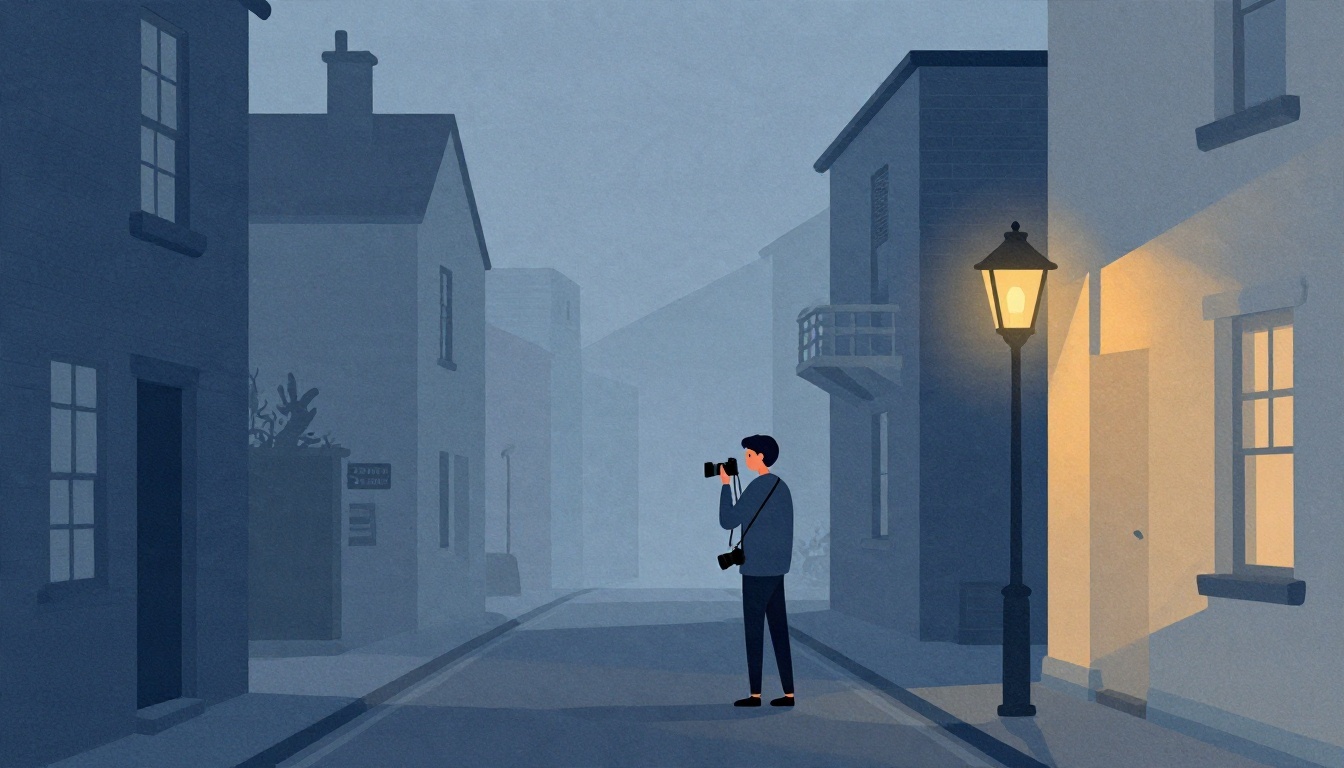
Photographing Salem: Familiar Ground, Complicated Feelings
Fine art photography is often framed as a pursuit of the faraway — the trip, the landmark, the once-in-a-lifetime view. Jack, the photographer behind Taibhse404, takes the opposite approach. His work grows out of places he has spent years walking through, and out of the quieter decision of what a photograph should leave behind.
Asked why he chooses the places he photographs around Salem over somewhere easier to reach, Jack points to familiarity rather than novelty. He said "Living in a place like Salem, there's certainly no shortage of things worth photographing, but the places I'm most drawn to are often places I've spent a great deal of time myself."
That repetition matters. These are, in his words, "familiar, comforting places where I can slow down, clear my head, and quiet the busy world around me." The connection shapes the work: "I think that personal connection influences how I see them and what I ultimately choose to photograph."
Not everything is deliberate. Jack separates his wildlife photography and costumed artist photos from the rest of his practice, noting that "most of those photographs aren't planned." Instead, "I'm usually just out enjoying my surroundings when something catches my attention, and sometimes I'm lucky enough to capture it."
Reading Mood in Places That Already Have One
Some locations arrive with atmosphere built in — old cemeteries, historic streets, weathered buildings. The risk is that the photographer simply records the obvious mood. Jack looks for something more layered.
He said "I tend to pay more attention to how a place feels than simply how it looks." What draws him are "the little details that can make a scene feel two different ways at once."
He points to one of his photographs, Church Music, as an example. "There's something eerie and unsettling about the scene, but at the same time, the lanterns are warm and inviting. I love that contrast and how those two feelings can exist together." That tension — unease and welcome in the same frame — is the kind of detail a viewer might walk past. Jack's conclusion is blunt: "Sometimes we have to get uncomfortable to see the beauty in something."
For readers interested in how mood and place interact in photography, resources on visual composition and on the history of landscape photography offer useful context for the contrast Jack describes.
Decide What You Want Viewers to Take Away
His advice for anyone chasing atmospheric photographs of a place they love is less about gear and more about intent. He said "I would tell them to think about what they want someone to take away from the photograph, even if they don't have it figured out right away."
That intent doesn't always arrive before the shutter. "Sometimes I go out with a specific artistic vision, and other times I just happen to find myself somewhere with a camera." Both are valid starting points, as long as the question of meaning stays present.
He offers another of his photographs, 238, as an illustration. "I have a lot of love for that place, but also some complicated feelings about the cemetery's very existence." The aim was not a straightforwardly pretty image: "I wanted someone to look at the photograph and realize there was a story behind it."
That, for Jack, is the measure of success. "Sometimes that's enough to make someone curious, to look a little deeper, or to seek out that history for themselves. If my photograph encourages someone to do that, I'm happy with it."
Practical Takeaways
- Start close to home. Familiar places reward sustained attention in ways that rushed visits to distant locations rarely do.
- Look for emotional contrast. A scene that holds two feelings at once — eerie and inviting, loved and complicated — gives viewers somewhere to linger.
- Decide the takeaway, not just the subject. Even a loose sense of what you want a viewer to feel or wonder about will shape your choices.
- Let some images stay unplanned. Being present in your surroundings is its own method.
Jack's approach sits within a longer tradition of photographers working a single region over time; the George Eastman Museum and similar archives document how place-based bodies of work develop. His own practice is documented at Taibhse404, where the photographs referenced here sit alongside the rest of his Salem work.