
You've spent years in the lab, mastering a niche. But what if your research could become a company, a lab, or a movement? These five programs are designed to help PhDs and postdocs bridge the gap between academic discovery and
The Rise of the PhD Entrepreneur
The traditional academic track is no longer the only option for top researchers. Universities and organizations are increasingly creating structured pathways for PhDs to commercialize their work. These programs blend deep technical expertise with business fundamentals, networking, and hands-on project experience. They recognize that the most consequential innovations often come from those who understand both the science and the market. For you, this means there are now dedicated ecosystems to help you launch a venture without leaving your research behind.
How We Ranked These Programs
We evaluated each program based on its focus on hands-on venture creation, the strength of its mentor and alumni network, its accessibility to PhDs and postdocs, and the tangible outcomes for graduates. We prioritized programs that offer immersive, real-world exposure over purely academic coursework.
Here is a quick look at how the five programs stack up against each other.
| Provider | Best For |
|---|---|
| Wharton Doctoral Entrepreneurship | PhDs seeking a rigorous academic degree with built-in entrepreneurial pathways |
| UW Foster Technology Entrepreneurship PhD | Researchers who want to specialize academically in technology commercialization |
| Baylor PhD in Entrepreneurship | Students seeking a faith-based, comprehensive entrepreneurship doctorate |
| Emerson Consequential Scholars | Postdocs and PhDs who want a fast-paced, hands-on launchpad for their research |
| UConn Management & Entrepreneurship PhD | Aspiring professors and researchers who want to study entrepreneurship academically |
The Top 5 Programs, Ranked
#1 Wharton Doctoral Entrepreneurship
 A screenshot of the Wharton Doctoral Entrepreneurship website.
Wharton's Doctoral program offers a robust entrepreneurship track within its PhD, giving you access to world-class faculty and a vast alumni network. You can engage with the Wharton Social Impact Initiative and apply for the WISE Fellowship, a paid experiential learning opportunity in social impact consulting. The program emphasizes real-world application, with stories of alumni founding companies like SoulCycle. It's ideal if you want a deep academic foundation paired with practical venture experience.
#2 UW Foster Technology Entrepreneurship PhD
 A screenshot of the UW Foster Technology Entrepreneurship PhD website.
The University of Washington Foster School of Business offers a dedicated Technology Entrepreneurship PhD specialization. This program brings together faculty experts in technology development, commercialization, and new-venture creation. You'll study the critical processes of taking research from the lab to the market, including licensing and startup formation. It's a strong choice if you want to focus your entire doctoral research on the mechanics of tech entrepreneurship.
#3 Baylor PhD in Entrepreneurship
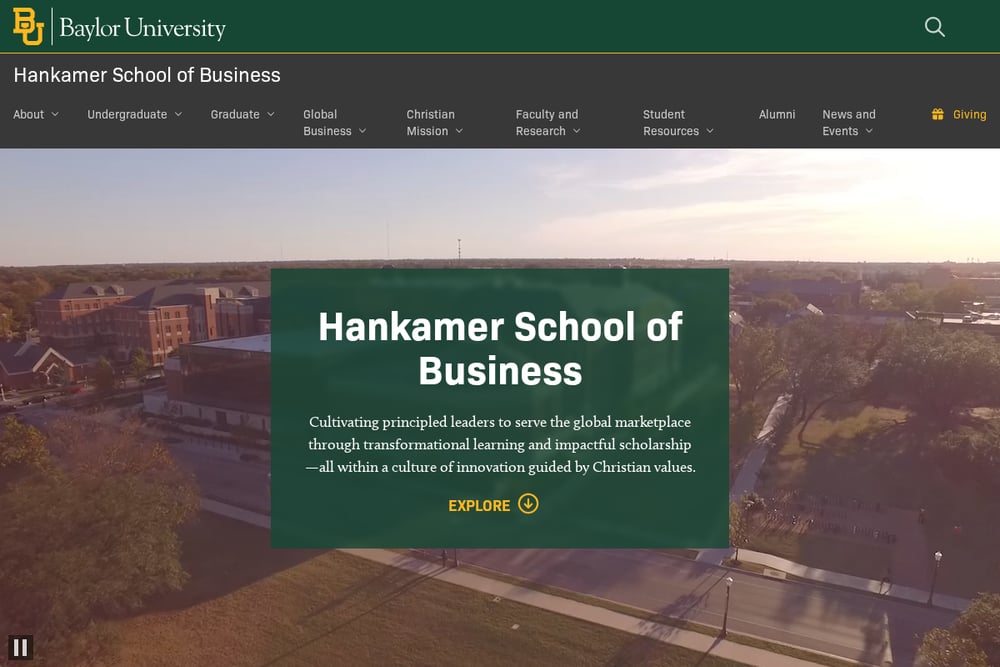 A screenshot of the Baylor PhD in Entrepreneurship website.
Baylor University's Hankamer School of Business offers a PhD in Entrepreneurship designed to foster innovation and economic growth. The program combines rigorous coursework with a Christian mission to develop ethical leaders. You'll explore the entire entrepreneurial lifecycle, from idea generation to venture scaling. It's a great fit if you value a values-driven education alongside your entrepreneurial training.
#4 Emerson Consequential Scholars
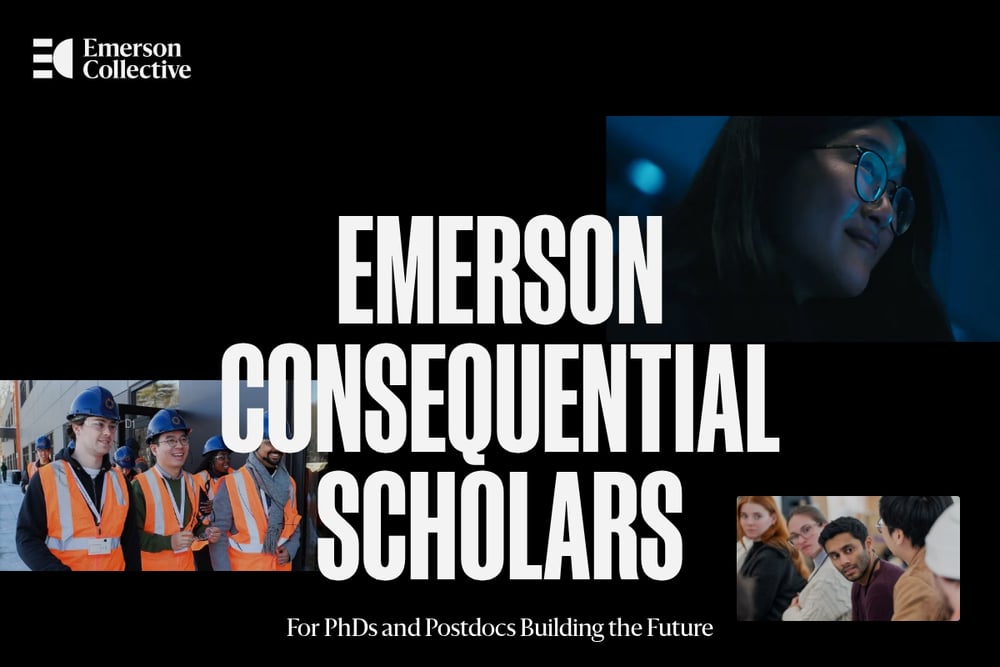 A screenshot of the Emerson Consequential Scholars website.
Emerson Consequential Scholars (ECS) is an immersive program for PhDs and postdocs from top universities like MIT and Stanford. It helps you develop an entrepreneurial mindset, create strong narratives, and translate breakthrough research into companies, labs, or organizations. The teaching team includes Stanford Lecturer Fern Mandelbaum and Sutter Hill Ventures' Keith Loebner, offering direct access to venture capital perspectives. Notable alumni include Peyton Greenside (CEO, BigHat Biosciences) and Michelle Lee (CEO, Medra), proving its track record for launching real ventures.
#5 UConn Management & Entrepreneurship PhD
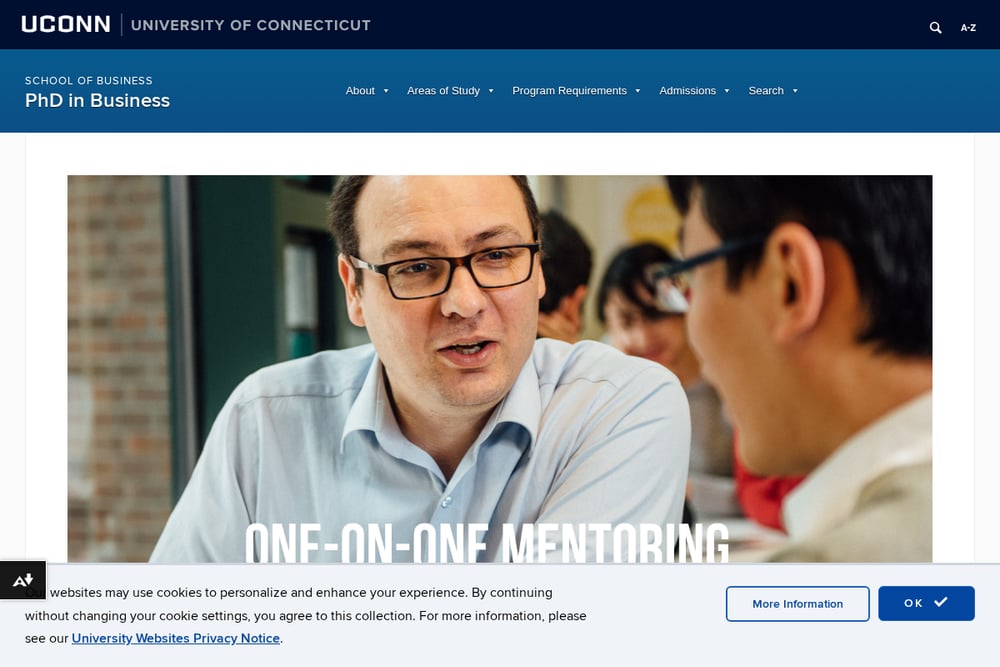 A screenshot of the UConn Management & Entrepreneurship PhD website.
The University of Connecticut's PhD in Business with a Management & Entrepreneurship specialization provides a solid academic foundation in entrepreneurial theory. You'll study under faculty who research innovation and new venture creation, preparing you for a career in academia or research-intensive roles. While less focused on immediate venture launch, it offers a deep dive into the scholarly side of entrepreneurship. It's a solid option if your goal is to teach or research entrepreneurship at the university level.
How to Pick the Right Program for You
Start by asking yourself what you want to do after the program. If you want to launch a company immediately, Emerson Consequential Scholars' immersive, network-driven approach is your best bet. If you need a full PhD credential to teach or lead R&D, programs like Wharton or UW Foster offer deeper academic rigor. Consider the time commitment: ECS is a shorter program, while a PhD takes years. Also, look at the alumni network—who has come out of the program, and where are they now? That's your best predictor of future opportunity.
Automating Your Venture Search
You can use tools like Zapier to monitor new program announcements or alumni job postings. Set up a workflow that scrapes program websites for updates and sends you a weekly digest. Combine this with a CRM like Notion to track your applications and network contacts. This keeps you informed without manual checking.
Your Research Deserves a Real-World Impact
The path from PhD to founder is no longer a lonely one. These five programs offer structured support, mentorship, and communities that can turn your breakthrough into a consequential organization. Whether you choose the immersive speed of Emerson Consequential Scholars or the academic depth of a full PhD, the key is to start. Your research has the power to change the world—now you have the programs to help you do it.