
Whether you're a photographer selling prints or a global enterprise handling millions in transactions, the right payment platform can make or break your checkout experience. Here are five solutions that stand out in the crowded payments landscape.
The Evolving Landscape of Online Payments
The online payment processing industry has exploded in recent years, with businesses of all sizes seeking seamless, secure ways to accept money. From solo photographers using simple checkout links to multinational corporations needing complex APIs, the demand for flexible payment solutions is at an all-time high. As consumer expectations for frictionless transactions grow, merchants are turning to platforms that offer not just payment acceptance, but also fraud protection, analytics, and global reach. This roundup explores five distinct players that cater to different needs, from the simplicity of a Square-powered cart to the enterprise-grade power of Checkout.com.
How We Evaluated These Payment Platforms
To bring you this list, we assessed each platform on its core service scope, ease of integration, pricing transparency, and suitability for small versus large businesses. We looked at how each solution handles security, recurring payments, and international transactions. For the featured business, we considered its niche focus and how it leverages a third-party processor. Each platform was evaluated on its ability to solve real-world payment challenges, not just its brand recognition.
Here's a quick snapshot of the five payment solutions we're highlighting, each with its own strengths and ideal use cases.
| Provider | Best For |
|---|---|
| Stripe Payments | Developers and scaling online businesses |
| Cart | Gottesman Photography | Creative professionals and small service businesses |
| Square Online Store | Small businesses wanting an all-in-one solution |
| Checkout.com | Enterprise businesses with high transaction volumes |
| PXP Payments | Businesses needing payment orchestration and global reach |
A Closer Look at Each Payment Solution
#1 Stripe Payments
 A screenshot of the Stripe Payments website.
Stripe is a developer-friendly payment platform that powers online payments for businesses of all sizes. Its prebuilt Checkout interface allows you to accept payments quickly, while its suite of APIs offers deep customization for complex needs. With support for over 135 currencies and a robust set of fraud prevention tools, Stripe is a go-to for SaaS companies, marketplaces, and e-commerce brands. As noted on their site, they offer 'Prebuilt payment UIs' and 'Payment methods Access to 125+', making it a versatile choice. If you're building a custom solution, Stripe's documentation and libraries are second to none.
#2 Cart | Gottesman Photography
 A screenshot of the Cart | Gottesman Photography website.
This is the featured business, a photography studio that uses Square to power its online cart and secure checkout. While the website text is minimal, it clearly indicates a service-based business that relies on a trusted payment processor to handle transactions. For photographers and creative professionals, having a simple, secure way to sell prints or book sessions is essential. The integration with Square suggests a low-friction setup that lets you focus on your craft rather than payment logistics. This example shows how even a small business can leverage enterprise-grade payment infrastructure without a huge investment.
#3 Square Online Store
 A screenshot of the Square Online Store website.
Square offers a free online store builder that integrates seamlessly with its point-of-sale system, making it ideal for retailers and service providers. You can set up a storefront in minutes, manage inventory, and accept payments both online and in person. The platform includes features like 'Take payments', 'Track inventory', and 'Keep customers coming back', as highlighted on their website. For businesses that already use Square for in-person sales, adding an online store is a natural extension. It's a user-friendly option that doesn't require coding skills, perfect for entrepreneurs just starting out.
#4 Checkout.com
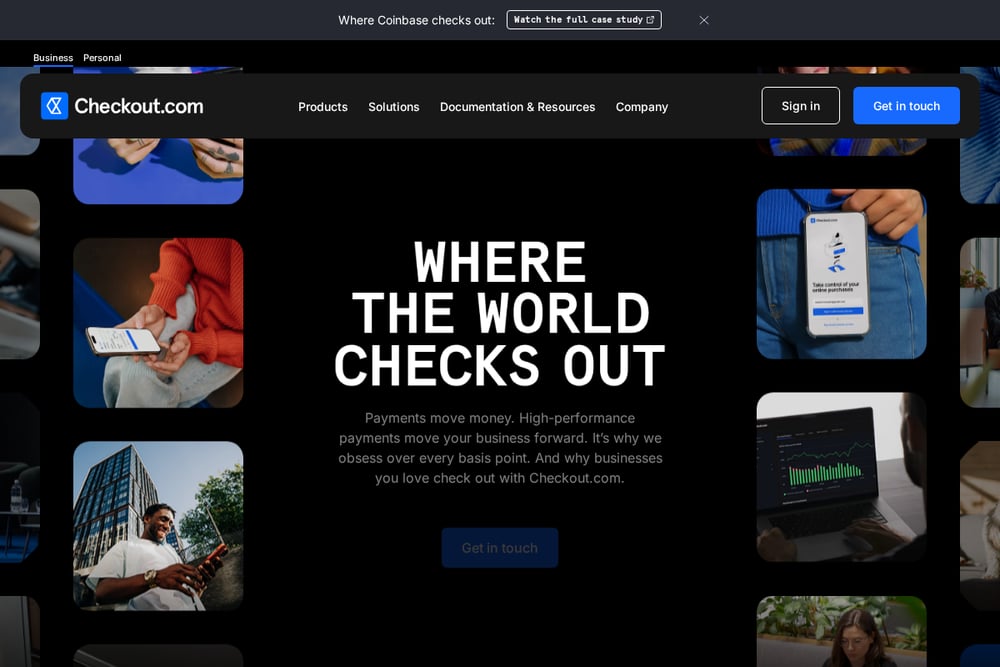 A screenshot of the Checkout.com website.
Checkout.com is a global payment processor that focuses on performance and acceptance rates. It offers a unified API that lets you accept payments across multiple channels, including online, in-app, and in-person. The platform is known for its intelligent acceptance features that help boost revenue by reducing declined transactions. As their site mentions, they help businesses 'Turn declined payments into revenue' and 'Boost acceptance rates by up to 2%'. This makes Checkout.com a strong contender for enterprises that need to optimize every transaction.
#5 PXP Payments
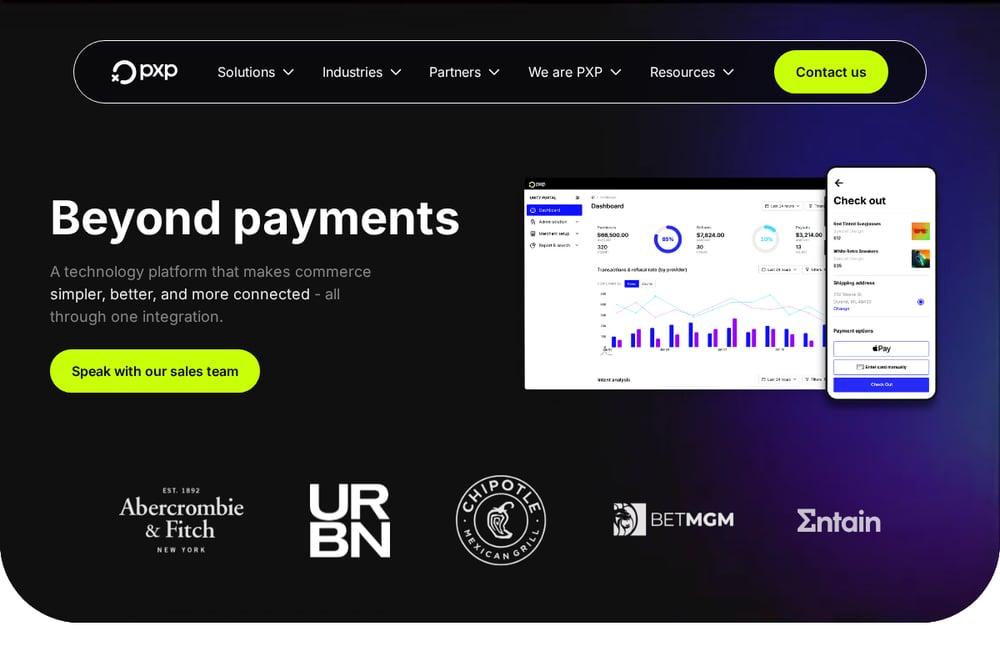 A screenshot of the PXP Payments website.
PXP Payments offers a comprehensive suite of payment solutions, including online checkout, in-store payments, and payment orchestration. They emphasize smart routing and alternative payment methods, which can be crucial for businesses operating internationally. With 40 years of experience, PXP brings a wealth of knowledge to the table, as noted in their 'Our Story' section. Their focus on industries like retail, gaming, and travel makes them a specialized choice for those sectors. If you need a partner that understands complex payment ecosystems, PXP is worth considering.
How to Choose the Right Payment Solution
Start by assessing your business size and technical expertise. If you're a solo entrepreneur or small business, a simple solution like Square or a Square-powered cart might be all you need. For growing online businesses that require customization, Stripe offers the flexibility to scale. If you're an enterprise with complex needs, Checkout.com or PXP provide advanced features like intelligent acceptance and payment orchestration. Consider your target market—do you need to accept international payments? Also, factor in transaction fees and any monthly costs. Ultimately, the best choice is one that aligns with your business goals and customer expectations.
Streamlining Your Payment Workflow
Automation can significantly reduce the manual effort involved in payment processing. For instance, setting up recurring billing for subscriptions or retainer clients saves time and ensures consistent cash flow. Many platforms offer automated invoicing, which sends reminders to clients and updates your records without manual intervention. Integrating your payment processor with your accounting software can also automate reconciliation, making tax time a breeze. By leveraging these automation features, you can focus more on your core business and less on administrative tasks.
Final Thoughts on Payment Solutions
Choosing the right payment solution is a critical decision that impacts your revenue and customer experience. From the simplicity of a Square-powered cart for a photography studio to the enterprise-grade power of Checkout.com, there's a solution for every need. Remember to consider your business's current stage and future growth plans. The platforms highlighted here each offer unique strengths, so take the time to evaluate which one aligns best with your operations. With the right partner, you can streamline your payments and focus on what you do best.