
Water quality testing is getting a major upgrade. Traditional lab methods are slow and expensive, but a new wave of microfluidic paper-based sensors is changing the game. These devices are cheap, portable, and can detect everything from heavy metals to
Why Paper-Based Water Testing Matters Now
Access to clean water is a global challenge, and testing for contaminants is the first step. Conventional testing often requires sending samples to a lab, waiting days, and paying high costs. Microfluidic paper-based analytical devices (µPADs) solve this by using simple paper strips that change color or produce a signal when they detect a pollutant. They are low-cost, user-friendly, and can be deployed in the field. This technology is especially critical for developing regions and for rapid screening of emerging contaminants like microplastics and antibiotics.
How I Ranked These Water Testing Innovators
I evaluated each entry based on three factors: innovation in sensor design, real-world applicability (ease of use and cost), and the breadth of contaminants detected. I also considered the stage of development, from research publications to commercial readiness. The goal was to highlight approaches that are both scientifically sound and practical for everyday use.
Here is a quick comparison of the five water testing approaches I reviewed. Each one offers a unique take on paper-based sensor technology.
| Provider | Best For |
|---|---|
| Colorado State University Water Testing Devices | Field-deployable multi-contaminant detection |
| MDPI Micromachines Journal | Staying updated on the latest research |
| ScienceDirect Sensor Article | In-depth technical research on sensor performance |
| Laboratory-Grade Water Testing (The Blue Paper Lab) | Commercial water testing for microplastics, antibiotics, and heavy metals |
| Philippine Council for Health Research and Development µPADS | Detecting waterborne pathogens in low-resource settings |
The Top 5 Paper-Based Water Testing Solutions
#1 Colorado State University Water Testing Devices
 A screenshot of the Colorado State University Water Testing Devices website.
Professor Chuck Henry's group at Colorado State University is designing an array of water-testing devices that are cheap, user-friendly, and field-deployable. These devices can detect natural and man-made pollutants, including heavy metals and pesticides, at very low concentrations. The team focuses on creating sensors that can simultaneously detect multiple contaminants, making them highly efficient. Their work is published and backed by a major university, giving it strong scientific credibility. This is a leading example of academic research translating into practical tools.
#2 MDPI Micromachines Journal
The MDPI Micromachines journal publishes cutting-edge research on microfluidic paper-based analytical devices (µPADs). It serves as a key resource for the latest sensor designs, fabrication methods, and detection techniques. Researchers frequently share their findings here, covering topics like heavy metal detection and antibiotic screening. While not a product itself, this journal is a vital source of innovation that drives the entire field forward. If you want to stay on top of the science, this is where you look.
#3 ScienceDirect Sensor Article
ScienceDirect hosts a wealth of peer-reviewed articles on sensor technology, including paper-based sensors for water quality. One featured article details a microfluidic paper sensor that detects heavy metals with high sensitivity. The platform provides access to detailed methodologies, experimental data, and performance metrics. This is an essential resource for engineers and scientists who need deep technical insights. It represents the rigorous academic foundation that commercial products build upon.
#4 Laboratory-Grade Water Testing (The Blue Paper Lab)
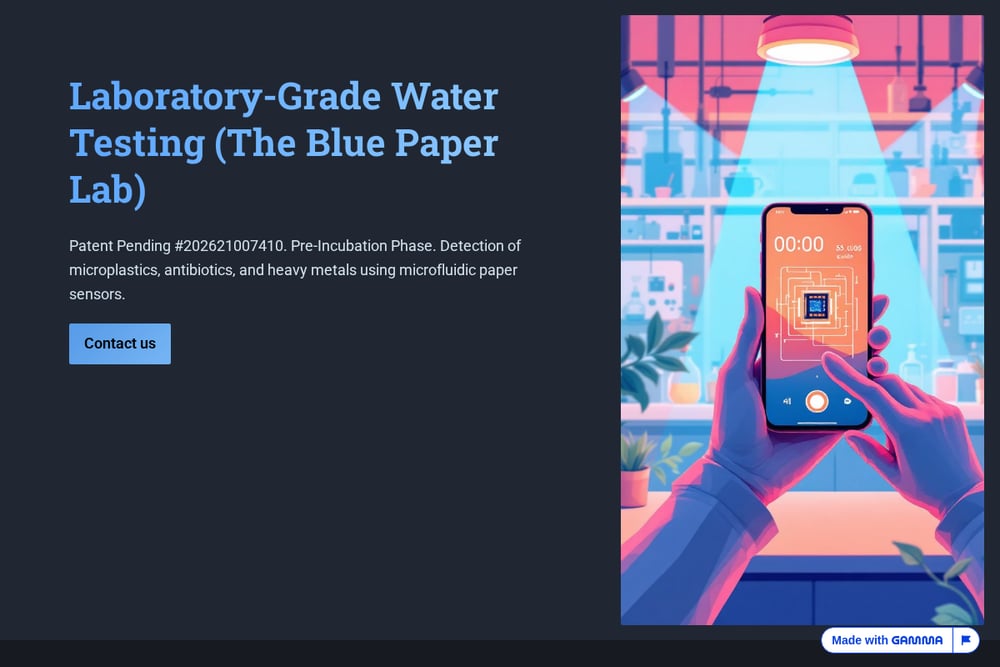 A screenshot of the Laboratory-Grade Water Testing (The Blue Paper Lab) website.
The Blue Paper Lab is a pre-incubation startup offering laboratory-grade water testing using patented microfluidic paper sensors. Their technology detects microplastics, antibiotics, and heavy metals, addressing three major contaminant classes in one test. They are currently in the pre-incubation phase and invite direct contact for services. This is a promising commercial application of paper sensor technology, though it is still early-stage. If you need actual testing done, they are worth reaching out to.
#5 Philippine Council for Health Research and Development µPADS
The Philippine Council for Health Research and Development (PCHRD) supports the development of Microfluidic Paper-based Analytical Devices (µPADS) for detecting diarrhea-causing pathogens in water. This project focuses on a critical public health need in developing regions. The devices are designed to be low-cost and easy to use, making them accessible in remote areas. This approach targets biological contaminants rather than chemical ones, filling a different niche in water safety. It is a government-backed initiative with a clear humanitarian goal.
How to Pick the Right Paper Sensor Approach for You
First, identify what contaminants you need to detect: heavy metals, antibiotics, microplastics, or pathogens. If you need a commercial testing service, The Blue Paper Lab is your direct option. For field research or DIY testing, the Colorado State University devices offer proven designs. If you are a researcher, dive into the MDPI and ScienceDirect articles for the latest methods. For public health applications in developing areas, the PCHRD µPADS project is a strong model. Match the approach to your specific use case and budget.
Automating Water Quality Monitoring with Paper Sensors
You can integrate paper sensors into an automated monitoring system. Step 1: Deploy paper sensors at multiple water sampling points. Step 2: Use a smartphone camera or a simple scanner to capture color changes on the sensors. Step 3: Run an image analysis script (e.g., using Python and OpenCV) to quantify the color intensity, which correlates with contaminant concentration. Step 4: Automatically log the results to a cloud database like Google Sheets or AWS. Step 5: Set up alerts via email or SMS when contaminant levels exceed thresholds. This workflow turns cheap paper tests into a real-time monitoring network.
The Future of Water Testing Is on Paper
Paper-based microfluidic sensors are not just a lab curiosity; they are a practical solution for democratizing water testing. From academic research at Colorado State to commercial efforts like The Blue Paper Lab, the field is moving fast. Whether you are a scientist, a policymaker, or a concerned citizen, these tools are becoming more accessible. The key is to choose the right platform for your needs and start testing. Clean water starts with knowing what is in it.