
If you're aligning optics, you need tools that are precise, portable, and won't break your budget. These five US-based companies deliver exactly that, each with a unique approach to keeping your systems centered.
The State of Optical Alignment Tools
Optical alignment is the unsung hero of precision manufacturing, from smartphone lenses to space telescopes. The market has shifted from bulky, lab-bound interferometers to compact, software-driven systems that you can take right to the assembly line. Companies are now blending traditional optical tooling with machine vision and AI to cut alignment time from hours to minutes. For you, this means more choices than ever, whether you need a quick portable check or a fully automated centering station. The key is finding a tool that matches your accuracy needs without overcomplicating your workflow.
How We Evaluated These Alignment Specialists
We looked at each company's core product lineup, focusing on how well they serve different alignment tasks. We considered the balance between automation and manual control, since some shops need hands-on flexibility while others want full robotic precision. Pricing transparency mattered too, as did the availability of calibration packages and software updates. We also weighed each company's reputation for supporting customers with technical resources and responsive service. Finally, we considered how portable and easy to use each system is, because your lab isn't always a cleanroom.
Here's a quick snapshot of the five companies, their flagship tools, and who they're best for.
| Provider | Best For |
|---|---|
| Opto Alignment | Automated high-volume optical assembly |
| Optical Perspectives Group | Portable, cost-effective alignment and centering |
| TRIOPTICS OptiCentric | Ultra-precision centration and bonding |
| ON-TRAK Photonics | Long-range laser alignment and optical tooling |
| Brunson | Classic optical tooling and calibration services |
The Five Alignment Toolmakers You Should Know
#1 Opto Alignment
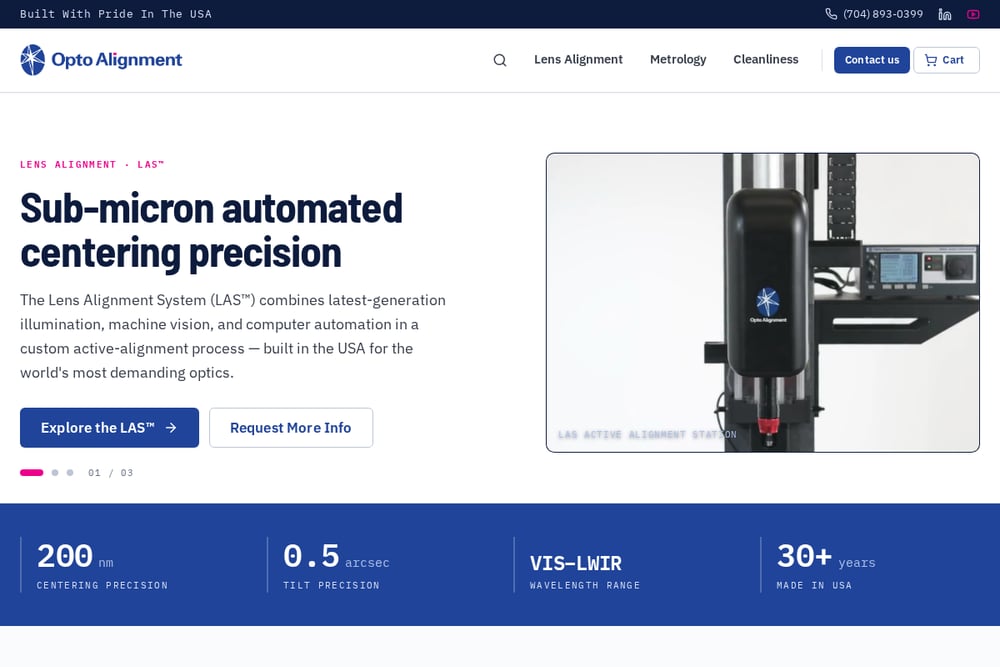 A screenshot of the Opto Alignment website.
Opto Alignment's LAS™ system brings sub-micron automated centering to your production line, using machine vision and computer automation to replace manual autocollimators. Their QuickPRO™ pairs chromatic confocal and interferometric sensors for 3D surface metrology at a fraction of the cost of comparable systems. They also sell Opto-Wipes™, optics-grade cleaning consumables, so you can keep your precision surfaces spotless. If you're manufacturing high-volume optics, this is the heavy hitter you want on your side. Their US-built systems are designed for demanding environments, and they offer a full range of support. Check out their product pages to see how they integrate alignment and metrology in one workflow.
#2 Optical Perspectives Group
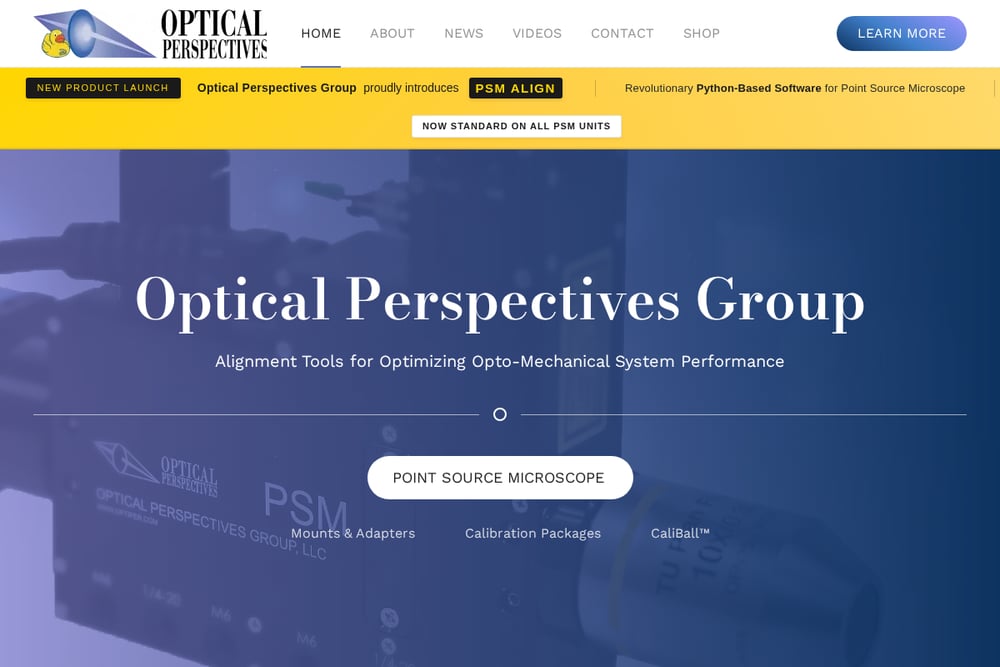 A screenshot of the Optical Perspectives Group website.
Optical Perspectives Group is your go-to for low-cost, portable alignment tools that don't sacrifice accuracy. Their Point Source Microscope (PSM) is a self-contained metrology system that's nearly as precise as an interferometer but far more flexible and easy to use. The PSM comes with Python-based PSM Align software, now standard on all units, which lets you automate data collection and analysis. They also offer calibration packages, tip/tilt mounts, and microscope objective adapters to customize your setup. Whether you're in a lab or out in the field, this is a swiss army knife for your optical alignment needs. Their website is packed with technical resources, including blog posts and videos, to help you get the most out of your PSM.
#3 TRIOPTICS OptiCentric
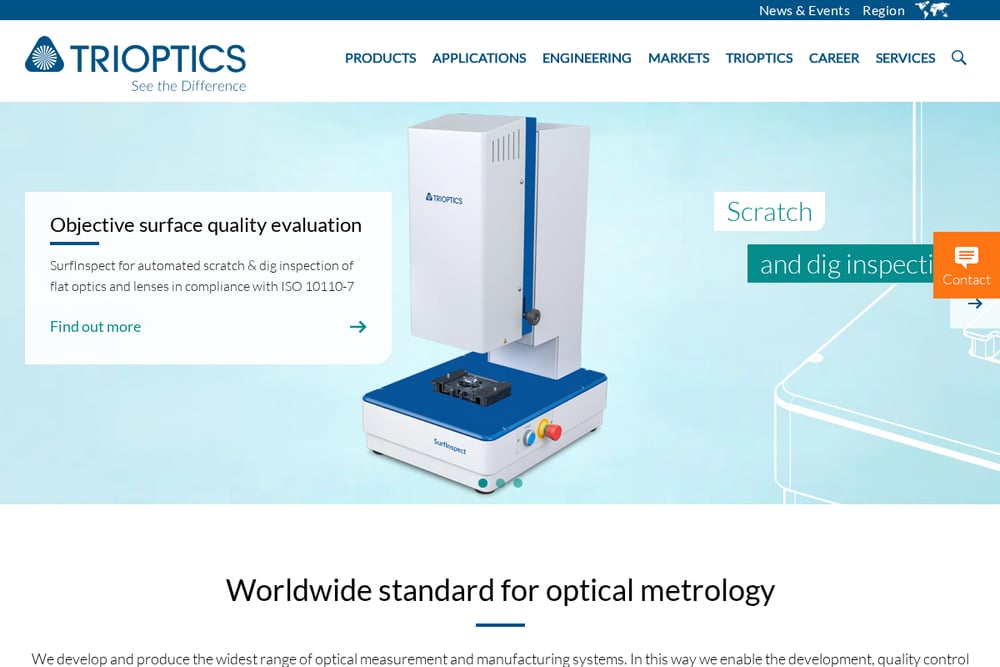 A screenshot of the TRIOPTICS OptiCentric website.
TRIOPTICS OptiCentric® is the global standard for high-precision centration testing and automated cementing of lenses. Their systems achieve absolute accuracy of 0.1 µm, making them indispensable for modern optics production. Whether you're working with small or large diameters, visible or IR, they have a modular solution that fits your needs. They offer both manual and automated systems, so you can scale from R&D to mass production. If you need the highest centration accuracy possible, this is the benchmark. Their website details a wide range of applications, from automotive to medical technology.
#4 ON-TRAK Photonics
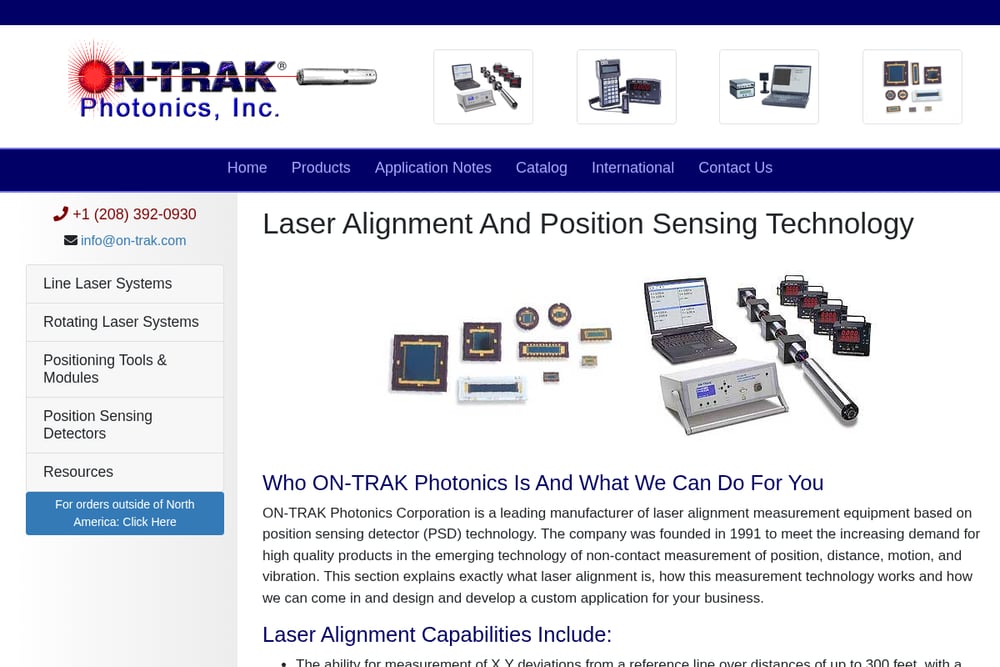 A screenshot of the ON-TRAK Photonics website.
ON-TRAK Photonics specializes in laser-based optical tooling, providing alignment lasers and position-sensing targets for precise line-of-sight measurements. Their systems are ideal for long-range alignment tasks where atmospheric turbulence can be a challenge. They offer a range of geometries for alignment measurements, from simple lines to complex planes. If you're setting up reference lines for large-scale projects, their technology is proven over 35 years of development. Their website includes detailed application notes to help you understand the principles behind optical tooling. For a digital, no-interpretation approach to alignment, this is a solid choice.
#5 Brunson
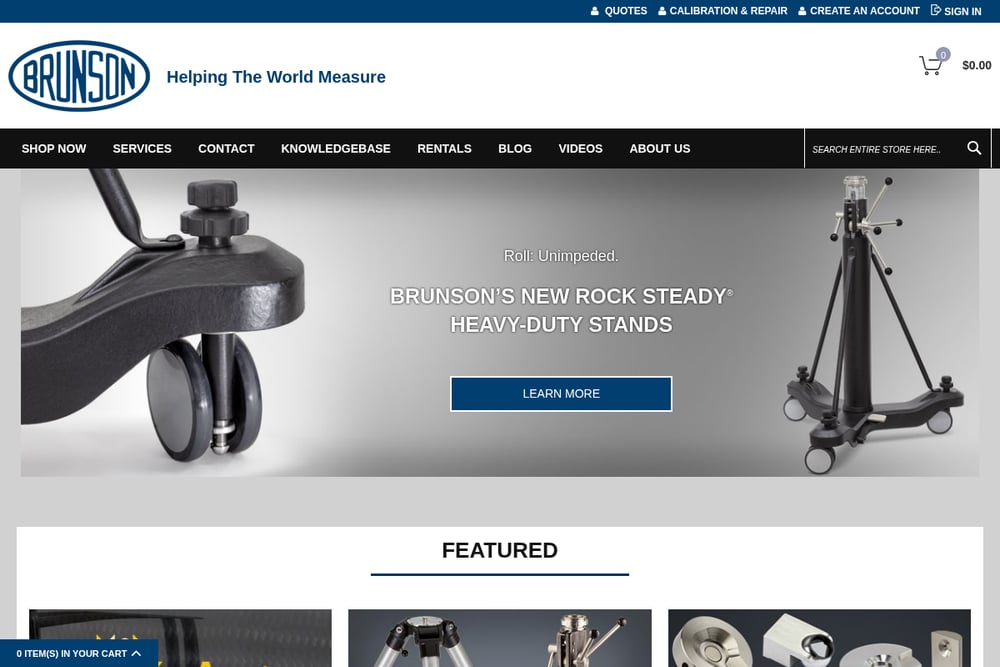 A screenshot of the Brunson website.
Brunson has been helping the world measure for decades, offering a full range of optical instruments including alignment telescopes, precision levels, and transits. Their product line extends to targets, stands, and custom solutions for specific alignment applications like sawmill or boring bar alignment. They also provide calibration and repair services to keep your existing tools in top shape. If you need a reliable, classic approach to optical tooling, Brunson has the experience and the inventory. Their website is a treasure trove of knowledge, with blog posts and manuals on optical tooling techniques. For a trusted name in metrology, Brunson is a safe bet.
How to Choose the Right Alignment Tool for Your Shop
Start by defining your accuracy requirements—do you need sub-micron centering or is a few arcseconds enough? Consider your production volume: if you're aligning hundreds of lenses a day, an automated system like Opto Alignment's LAS™ will save you time. If you're a small lab or work in the field, portability and ease of use are key, making the Point Source Microscope from Optical Perspectives Group a great fit. Think about your budget, not just for the initial purchase but for calibration packages and software updates. Finally, check what kind of support and training each company offers, because a tool is only as good as your ability to use it effectively.
Automation and Software: The New Frontier in Alignment
Modern alignment tools are increasingly software-driven, with Python-based interfaces and machine vision taking over repetitive tasks. For example, Optical Perspectives Group's PSM Align software automates data collection and analysis, turning a manual process into a repeatable workflow. Opto Alignment's LAS™ uses computer automation to actively align components, reducing operator error. Even traditional optical tooling from ON-TRAK and Brunson now offers digital readouts and computer interfaces. When you're evaluating a system, ask about its software ecosystem—can it export data, integrate with your existing tools, or be customized? The right software can turn a good instrument into a game-changer for your productivity.
The Bottom Line on Optical Alignment Tools
No single tool fits every alignment job, but these five companies cover the spectrum from portable to production-grade. For most labs, the Optical Perspectives Group PSM offers an unbeatable combination of accuracy, portability, and price. If you're scaling up to automated assembly, Opto Alignment's LAS™ is a powerful workhorse. TRIOPTICS OptiCentric remains the go-to for ultra-precision centration, while ON-TRAK and Brunson provide reliable solutions for long-range and classic optical tooling. Take the time to assess your specific needs, and you'll find the right partner to keep your optics perfectly aligned.