Local businesses live and die by what customers say about them online, and the tools that help collect, monitor, and respond to reviews have grown well beyond simple star-gathering. Some now bundle listings management, AI-assisted replies, and reputation defense. Others are built specifically for agencies managing many local brands. This list covers seven platforms worth knowing in 2026, described by what they do and who they suit, not by which one wins.
How We Picked These Tools
Each tool here appears on our radar because its own published materials describe review collection, monitoring, response, or reputation features aimed at local businesses, multi-location brands, or the agencies that serve them. We looked at what each platform says it does, who it says it is for, and the specific features it advertises. We did not test the tools head to head, and the order is a plain list, not a quality ranking.
| Provider | Best For |
|---|---|
| Birdeye | Multi-location brands wanting reviews tied to a broader CX platform |
| Podium | Local businesses wanting reviews alongside AI lead response and booking |
| Yext | Enterprise and franchise brands managing reputation across many locations |
| Grade.us | Marketing agencies reselling review management to local clients |
| NiceJob | Service-based local businesses growing reputation without a marketing team |
| GatherUp | Local businesses wanting review collection plus reputation defense |
| Reviewflowz | Teams wanting lean, integration-friendly review lifecycle management |
The 7 Tools in Focus
#1 Birdeye
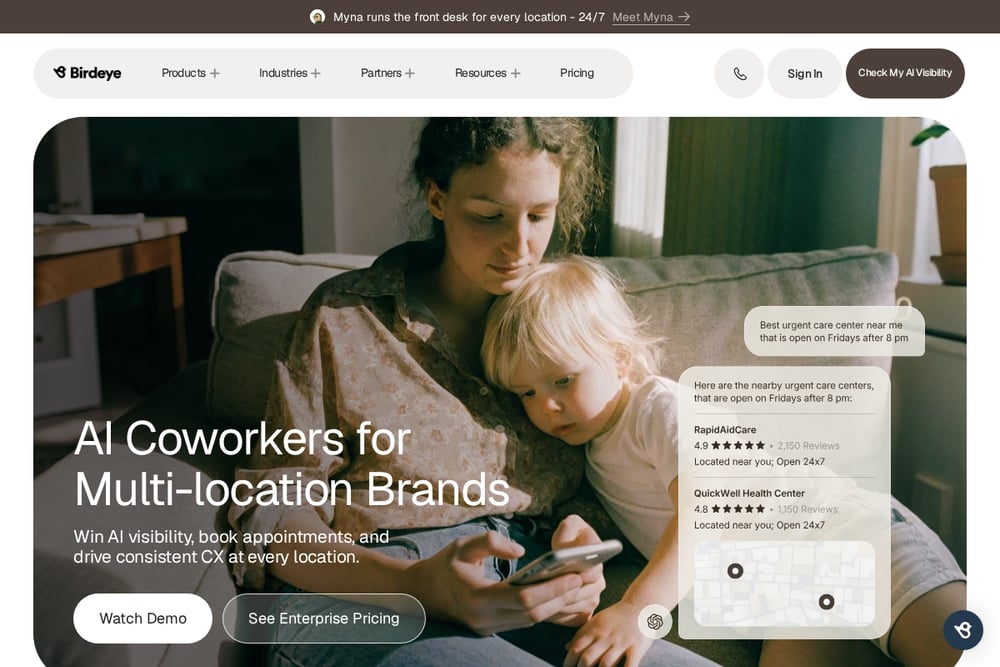 A screenshot of the Birdeye website.
Birdeye presents itself as an AI coworker platform for multi-location brands, with review generation and listings optimization folded into a broader marketing and operations suite. Its Jay coworker is described as orchestrating AI Search Optimization, Review Generation, and Listings Optimization. The platform also covers front desk, appointments, surveys, and competitive insights. It suits larger or multi-location operations that want reviews connected to a wider customer experience stack.
#2 Podium
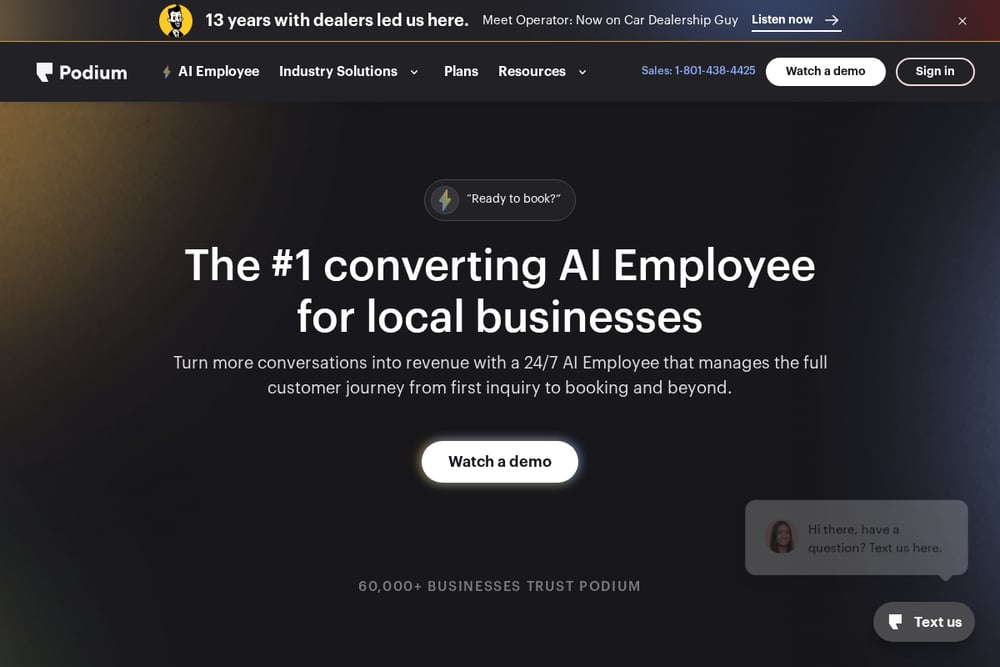 A screenshot of the Podium website.
Podium centers on an AI Employee that handles customer conversations, bookings, and follow-up for local businesses. Reviews sit within a broader push to turn inquiries into revenue, with the AI responding to leads and re-engaging past customers. The company frames its offering around keeping calendars full and responding quickly. It suits local service and retail businesses that want review and reputation work bundled with lead response and booking.
#3 Yext
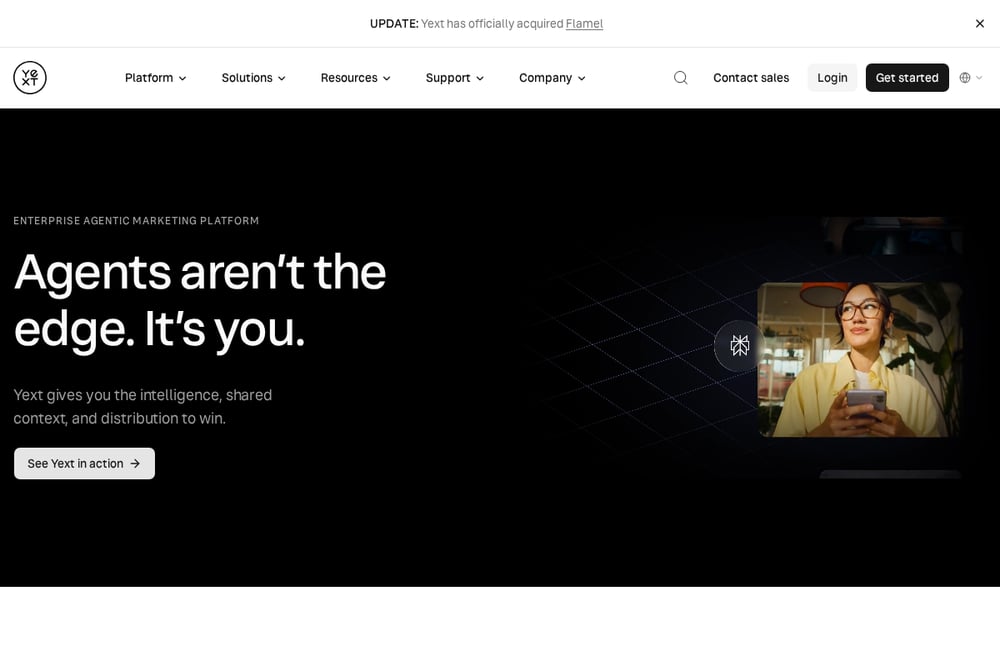 A screenshot of the Yext website.
Yext is an enterprise agentic marketing platform built around a Knowledge Graph of verified brand data. It covers reviews alongside listings, pages, social, and search, with agents that can create review responses and distribute content. The platform emphasizes visibility insights across AI and traditional search, down to individual locations. It suits larger brands and franchises that need consistent data and reputation management across many locations.
#4 Grade.us
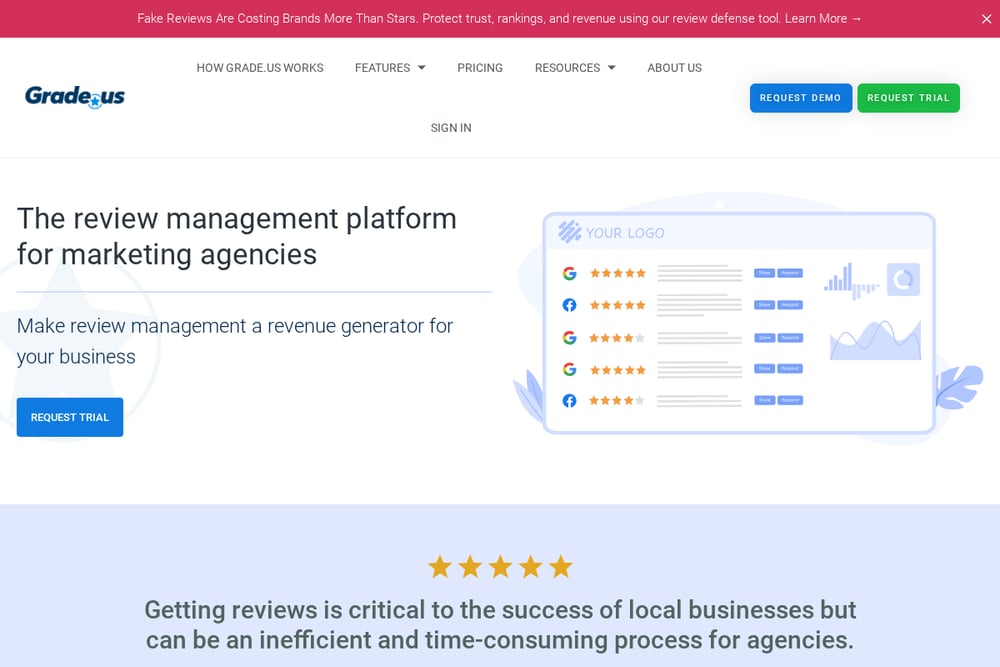 A screenshot of the Grade.us website.
Grade.us is a review management platform built specifically for marketing agencies. It offers white-label customization so agencies can present the platform under their own brand, domain, and logo. Features cover generating, monitoring, marketing, and reporting on reviews, plus listings management. It suits agencies that want to resell review management as a service to local business clients.
#5 NiceJob
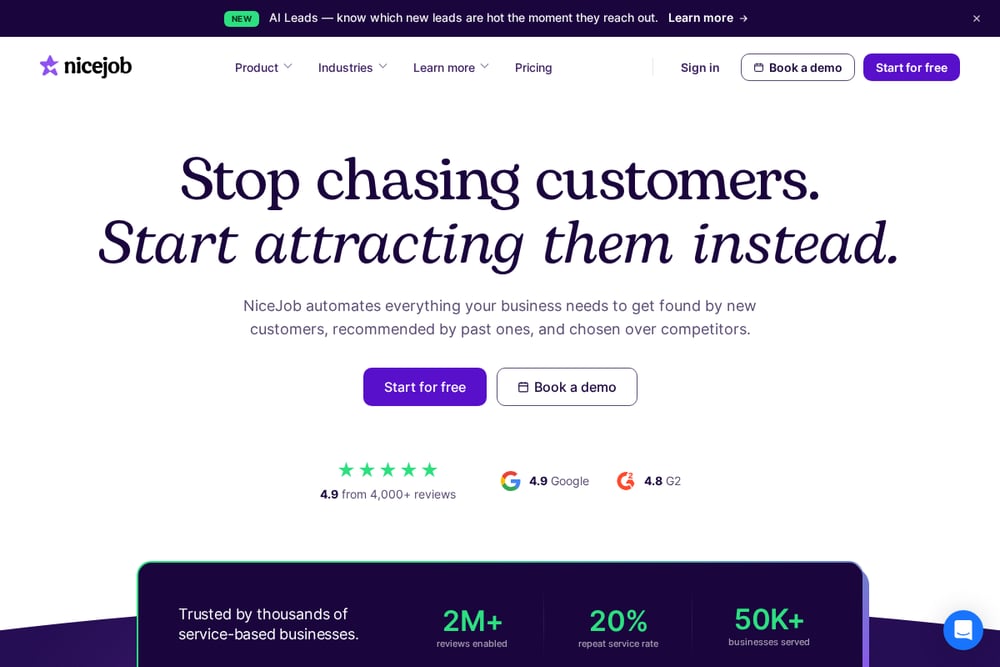 A screenshot of the NiceJob website.
NiceJob is an AI growth platform for service businesses that automates review collection and reputation building. Its starter features include reviews, social proof widgets, social sharing, a team leaderboard, and a reviews microsite. Pro features add automated booking reminders, referrals, AI replies, and competitive intelligence. It suits service-based local businesses that want to grow reputation and repeat business without hiring a marketing team.
#6 GatherUp
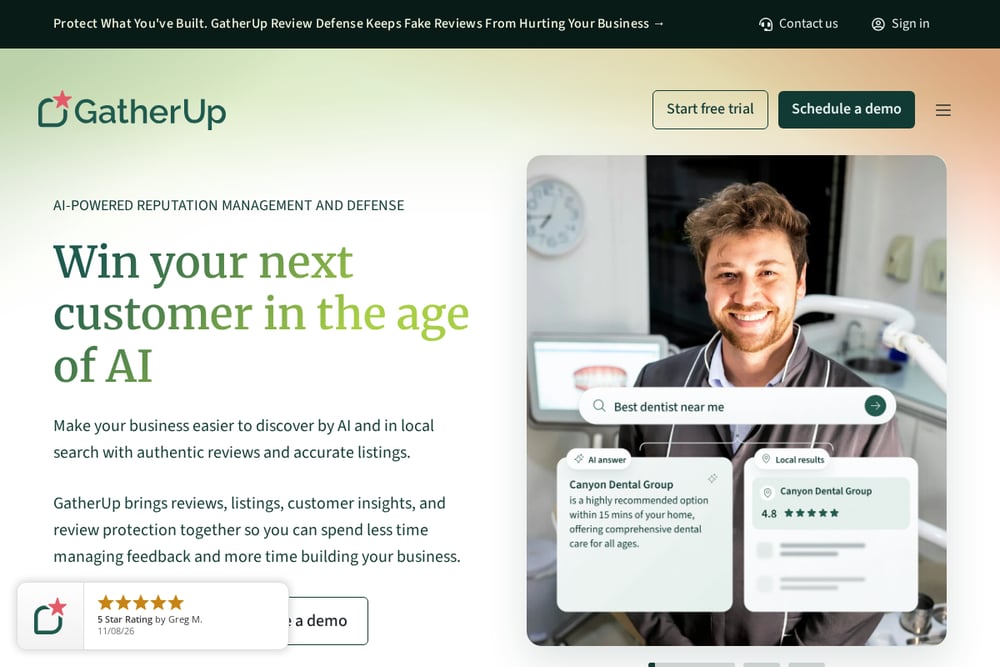 A screenshot of the GatherUp website.
GatherUp brings review generation, monitoring, response, listings management, and review defense into one connected system. It offers AI-assisted replies and feedback analysis, plus review defense that monitors for policy violations and can dispute supported cases. The company segments its offering for local businesses, multiple locations, and digital agencies. It suits local businesses and multi-location operators that want reputation protection alongside collection and response.
#7 Reviewflowz
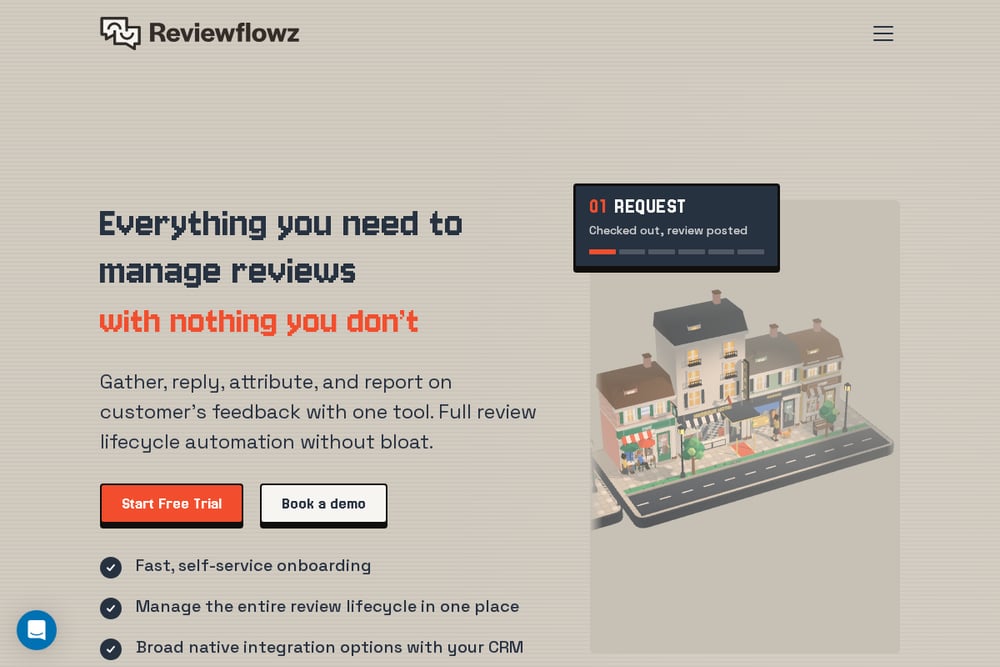 A screenshot of the Reviewflowz website.
Reviewflowz focuses on the full review lifecycle with a lean feature set. It requests reviews from a CRM, POS, or app at the right moment, monitors reviews across platforms in one timeline, and offers AI replies trained on past conversations. It also attributes reviews to team members and exports reviews and reports to tools like Power BI and Slack. It suits teams that want self-service onboarding and tight integration with their existing systems.
Which One Should You Choose?
Start with where your reviews actually live and how many locations you manage. A single-location service business has different needs than a franchise with dozens of storefronts or an agency juggling many clients. Decide whether you mainly need review collection, monitoring and response, or protection against fake and policy-violating reviews. Check how each tool fits your existing systems, since some emphasize CRM and POS integrations while others bundle listings, social, and broader marketing. If you serve clients rather than your own brand, look for white-label options. Finally, weigh how much automation you want versus hands-on control over replies.
Final Thoughts
The review management space in 2026 splits into a few broad shapes. Some platforms, like Birdeye, Podium, and Yext, fold reviews into a much larger marketing or customer experience system aimed at multi-location brands. Others, like Grade.us, are built for agencies reselling review management. NiceJob, GatherUp, and Reviewflowz lean toward local businesses and service teams, with varying emphasis on growth automation, reputation defense, and lean integrations. None of these is universally right. The useful move is to match the tool's shape to how your business collects, monitors, and protects its reputation.
Know a company that belongs on this list? Email us at editorial@peekwire.com.