Growing teams need goal-setting tools that keep everyone aligned without adding administrative overhead. This list covers OKR software options that support strategy execution, progress tracking, and team coordination as organizations scale. Each entry highlights what the platform does and who it suits, based on the companies' own descriptions.
How We Picked These Tools
These tools were selected for their relevance to growing teams, focusing on OKR management, strategy execution, and alignment features. The list is not a ranking of quality; ranks are a plain order.
| Provider | Best For |
|---|---|
| Lattice | HR teams and managers seeking an integrated people and performance platform |
| Leapsome | Lean HR teams looking to automate admin and connect talent processes |
| Quantive | Strategy and transformation leaders driving enterprise-wide alignment |
| Perdoo | Teams seeking transparent strategy execution with automated progress updates |
| Weekdone | Growing companies wanting simple OKRs with weekly progress reporting |
| Profit.co | Organizations connecting strategy, performance, and projects in one platform |
| Mooncamp | Teams replacing spreadsheets with a centralized strategy execution tool |
The 7 Tools in Focus
#1 Lattice
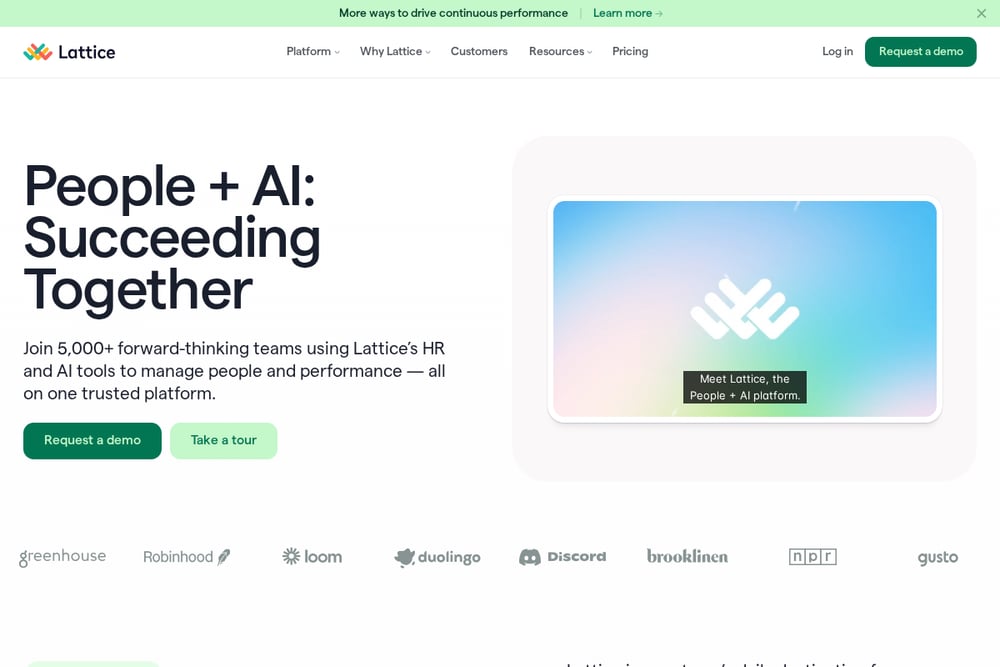 A screenshot of the Lattice website.
Lattice is a people management platform that combines performance reviews, engagement surveys, and goals and OKRs in one place. It helps teams set goals, track progress, and align work around priorities. The platform also includes tools for feedback, meetings, and career growth. Lattice is designed for HR teams and managers who want to connect performance and goal management.
#2 Leapsome
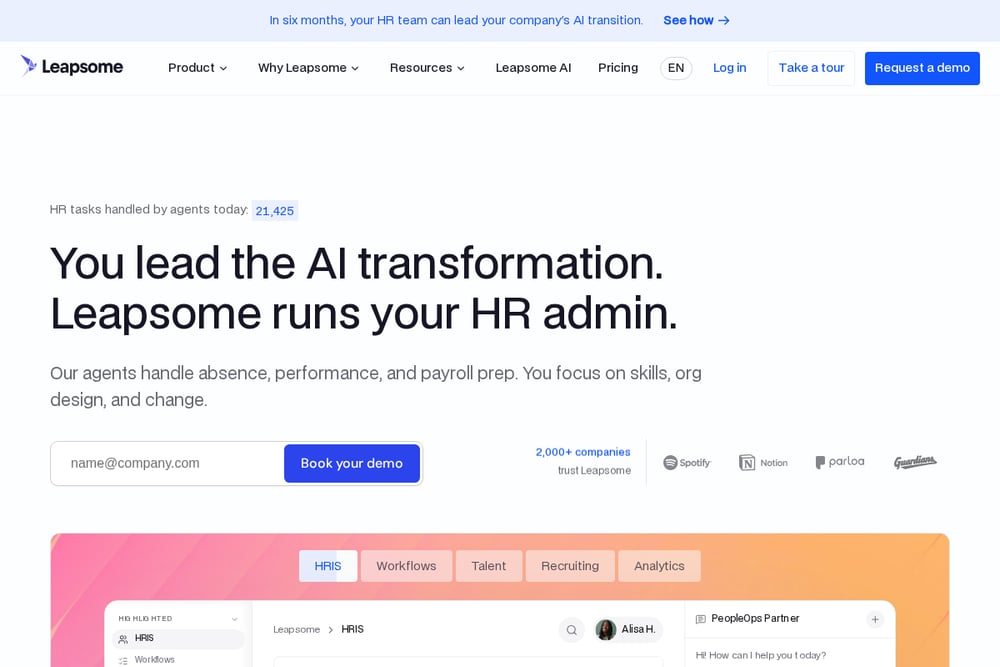 A screenshot of the Leapsome website.
Leapsome is an HR platform that covers the full employee lifecycle, from recruiting to compensation. It includes goals and OKRs alongside performance reviews, engagement surveys, and learning tools. The platform emphasizes AI agents that handle HR admin tasks like absence management and payroll prep. Leapsome is aimed at lean people teams that want to automate administrative work while supporting talent development.
#3 Quantive
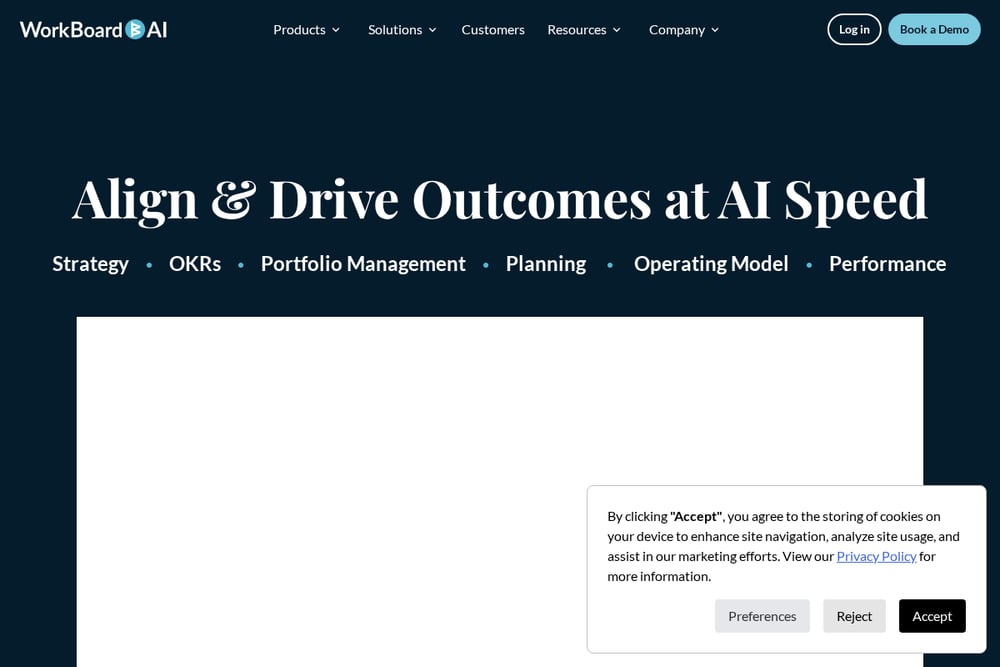 A screenshot of the Quantive website.
Quantive, formerly WorkBoard, is an AI-native strategy execution platform that connects OKRs, strategic portfolio management, and talent management. It provides AI agents for portfolio analysis, chief of staff functions, and leadership coaching. The platform helps organizations align strategy with execution through OKRs, scorecards, and automated reporting. Quantive suits strategy and transformation leaders who need to orchestrate goals across the enterprise.
#4 Perdoo
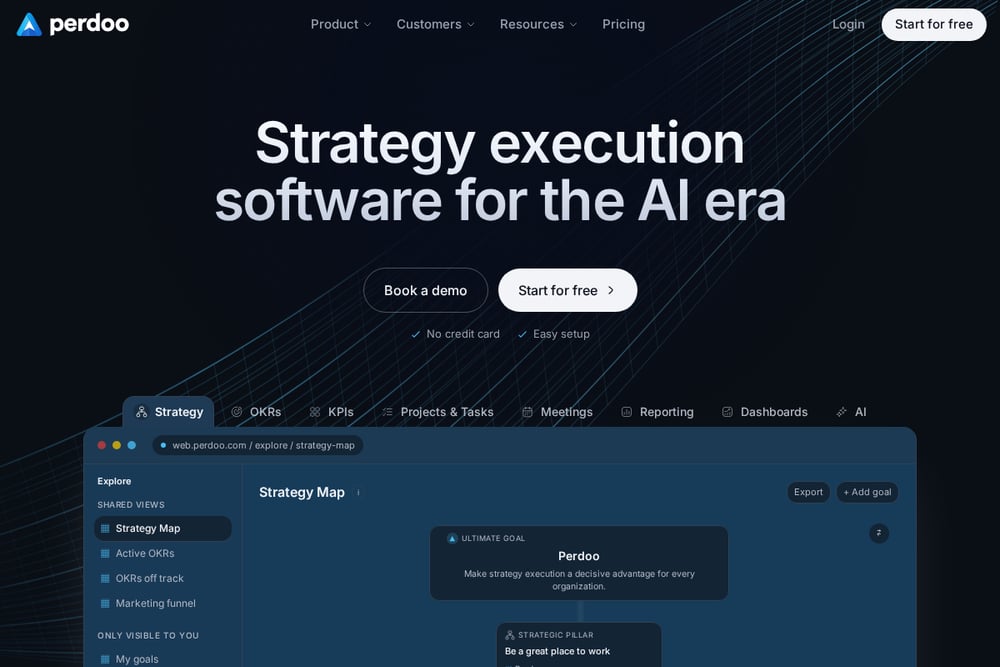 A screenshot of the Perdoo website.
Perdoo is strategy execution software that centers on OKRs, KPIs, and projects. It provides a strategy map to visualize how goals connect, and it pulls progress from connected apps to auto-generate status reports. The platform also includes an AI agent and coach. Perdoo is designed for teams that want to make strategy transparent and track accountability without manual reporting.
#5 Weekdone
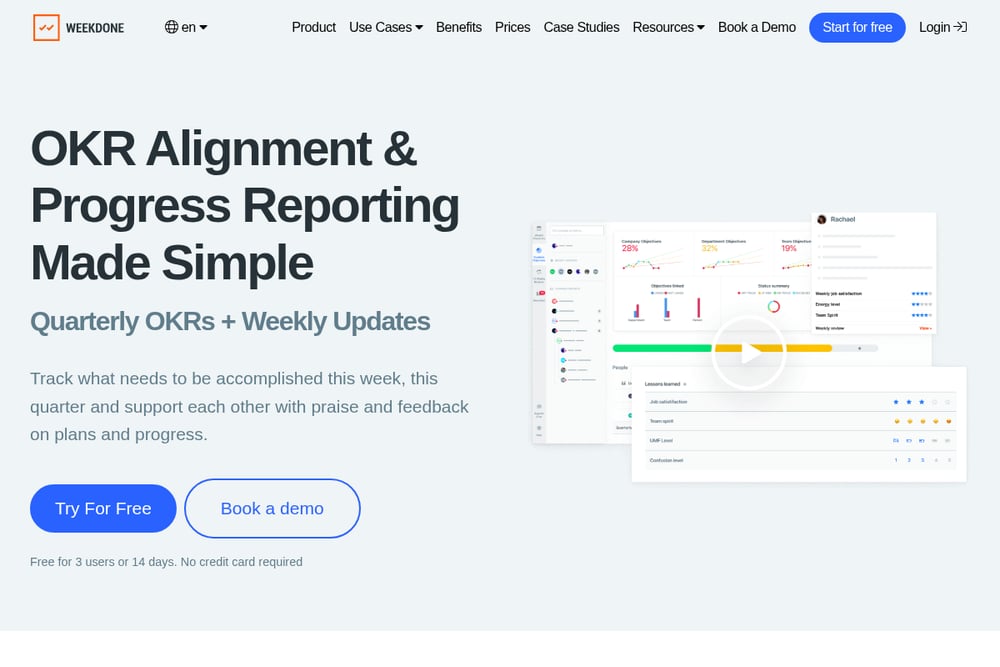 A screenshot of the Weekdone website.
Weekdone combines OKR management with weekly progress reporting and team planning. It helps teams set quarterly OKRs and track weekly plans, progress, and problems. The platform also includes pulse surveys, 1:1s, and feedback tools. Weekdone is suited for growing companies that want a simple rhythm of goal setting and weekly check-ins.
#6 Profit.co
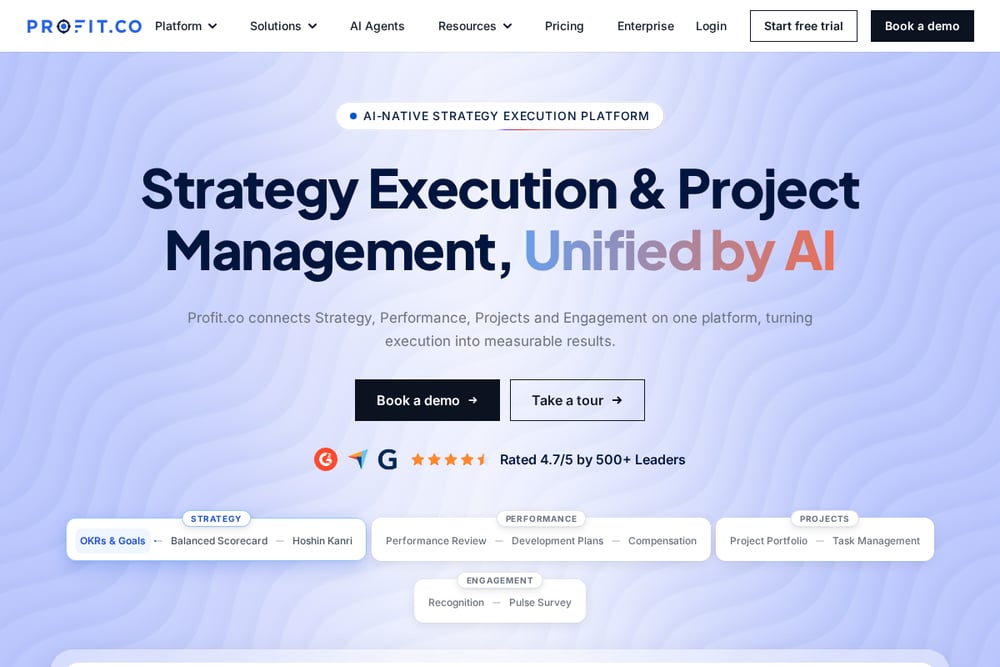 A screenshot of the Profit.co website.
Profit.co is an AI-native strategy execution platform that unifies OKRs, performance management, projects, and engagement. It supports multiple strategy frameworks including OKRs, Balanced Scorecard, and Hoshin Kanri. The platform includes AI agents for OKR authoring, quality scoring, and progress monitoring. Profit.co is aimed at organizations that want to connect strategy, performance, and project execution in one system.
#7 Mooncamp
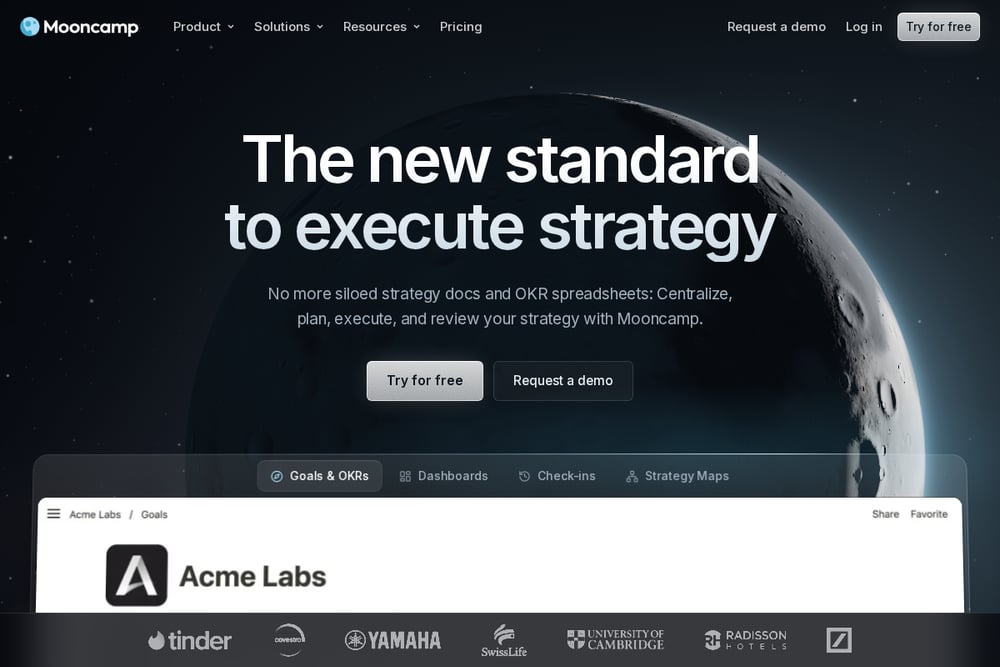 A screenshot of the Mooncamp website.
Mooncamp is a strategy execution platform that centralizes goals, OKRs, check-ins, and dashboards. It helps teams plan strategy, assign ownership, and track progress with automated updates from connected tools. The platform also provides strategy maps and dashboards for reviewing performance. Mooncamp is designed for teams that want to replace siloed strategy documents and spreadsheets with a single system.
Which One Should You Choose?
When evaluating OKR software for a growing team, consider how well the tool connects goals to daily work and whether it reduces manual reporting. Look for features like automated progress updates, check-ins, and dashboards that keep everyone aligned. Also assess whether the platform integrates with your existing HR and project tools, and whether it supports the frameworks your team uses. The right choice depends on your team's size, workflows, and the level of administrative support you need.
Final Thoughts
Each tool on this list approaches OKR management from a different angle, from people-centric platforms to strategy execution suites. Growing teams should prioritize tools that make goal setting transparent and progress tracking effortless, while fitting into their existing processes. Use the descriptions and verified facts above to shortlist options that match your team's needs.
Know a company that belongs on this list? Email us at editorial@peekwire.com.