
Looking for therapy that goes beyond talk? These five practices blend mindfulness, body awareness, and compassion to help you heal from the inside out.
The Rise of Mindful Somatic Psychotherapy
Mindful somatic psychotherapy is gaining traction as more people seek holistic approaches to mental health. Instead of just analyzing thoughts, this method tunes into the body's sensations, using gentle awareness and movement to release stored tension and trauma. Practices like Hakomi, yoga therapy, and self-compassion training are becoming mainstream, offering a path to healing that feels more embodied and less clinical. Whether you're dealing with stress, anxiety, or deep-rooted patterns, these approaches promise a more integrated way to find peace.
How We Evaluated These Practices
We looked at each practice's service scope, including the range of therapies and programs offered. We considered how clearly they communicate their approach and pricing, and how well they fit the needs of local and remote clients. We also noted their unique strengths, such as specialized training or community offerings, to give you a well-rounded view of what each brings to the table.
Here's a quick snapshot of the five practices, each with its own flavor and focus.
| Provider | Best For |
|---|---|
| Somatic Rehabilitation | Those wanting a deep, principled introduction to Hakomi |
| Go Slowly | Mindfulness- and Compassion-Based Psychotherapy | Integrating self-compassion with somatic therapy |
| Hakomi Mindful Somatic Psychotherapy Australia | Learning about Hakomi's origins and training opportunities |
| Bethany Cagen | Experienced, integrative therapy for life transitions |
| The Holistic Heart | Community-focused, integrative therapy with free workshops |
Deep Dive: The Five Practices
#1 Somatic Rehabilitation
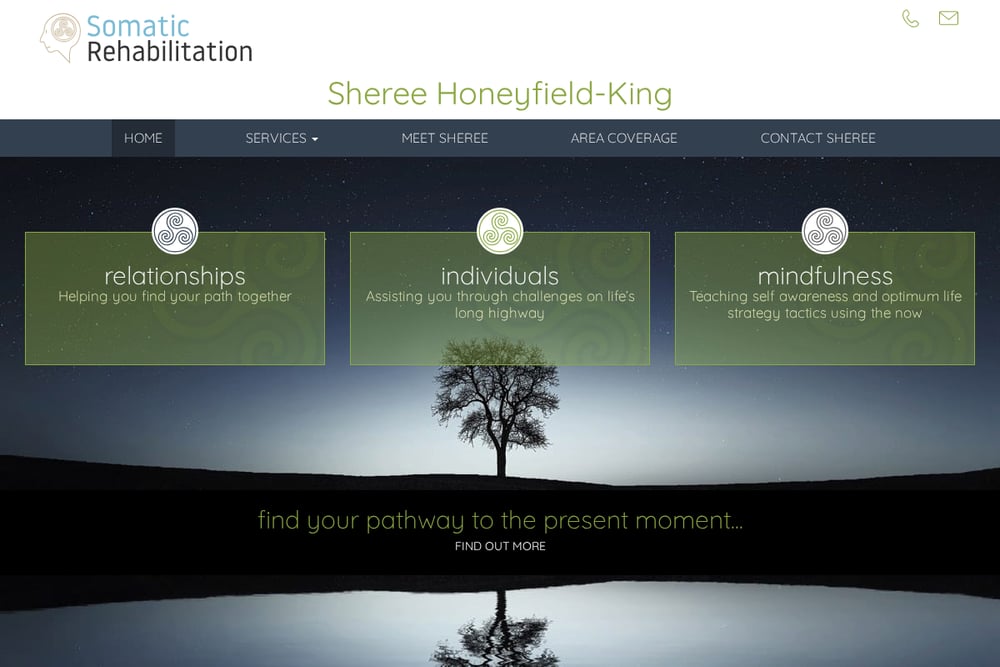 A screenshot of the Somatic Rehabilitation website.
Somatic Rehabilitation, led by Sheree Honeyfield-King, is a dedicated Hakomi practice that emphasizes the method's five core principles: mindfulness, organicity, unity, non-violence, and mind-body holism. The site explains how Hakomi is trauma-informed and gentle, yet effective, placing responsibility for healing in your hands. It highlights the neurological and biological changes that can occur with regular mindful practice, making it a science-backed choice. If you're curious about the 'why' behind somatic work, this site offers a clear, educational entry point. The focus on observable experience and present-moment awareness makes it a strong option for those seeking a structured yet compassionate approach.
#2 Go Slowly | Mindfulness- and Compassion-Based Psychotherapy
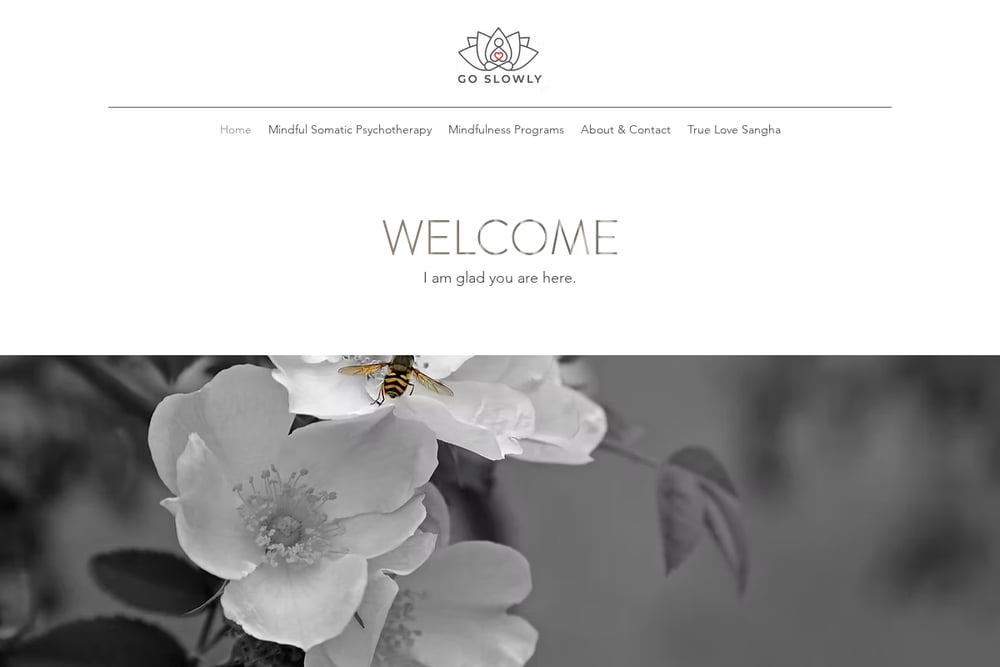 A screenshot of the Go Slowly website.
Go Slowly, run by Jorge, is a mindfulness- and compassion-based practice that combines somatic therapy, yoga, and various mindfulness programs. The site invites you to 'slow down' and connect with your body's wisdom through gentle awareness and movement, drawing on Hakomi-informed techniques and yoga therapy. It offers a range of programs including Mindful Self-Compassion, MBSR, and MBCT, often in collaboration with non-profits, making it a community-oriented choice. With locations in Providence, RI, and Swansea, MA, plus online options, it's accessible to a wide audience. The emphasis on self-compassion and transforming suffering makes it particularly appealing if you're looking to cultivate kindness toward yourself.
#3 Hakomi Mindful Somatic Psychotherapy Australia
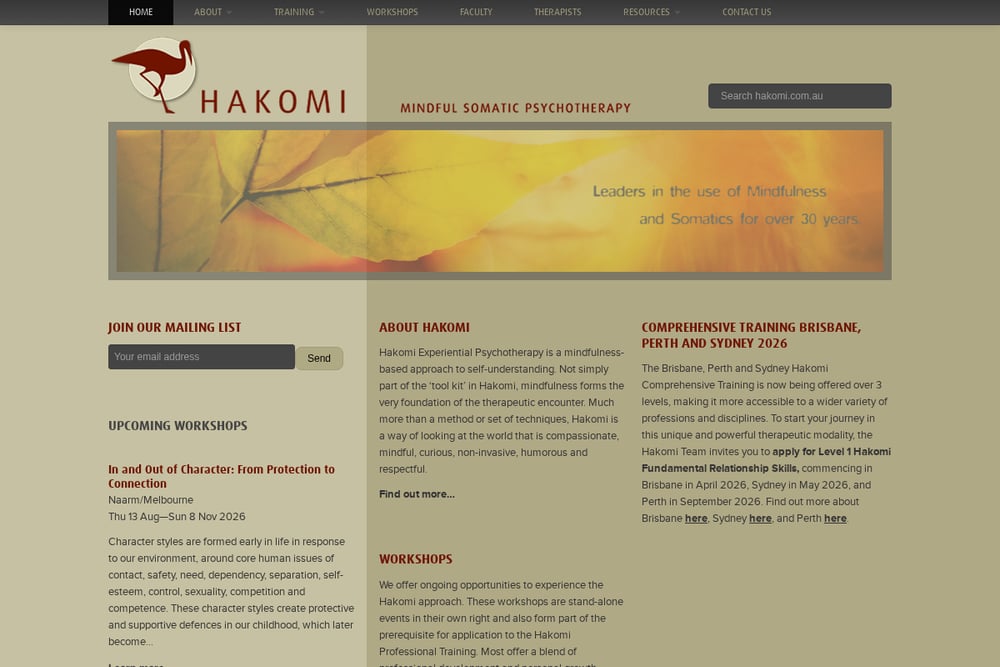 A screenshot of the Hakomi Mindful Somatic Psychotherapy Australia website.
Hakomi Mindful Somatic Psychotherapy Australia provides a comprehensive overview of the Hakomi method, tracing its origins to Ron Kurtz and its influences from Buddhism, Taoism, and body-centered therapies. The site emphasizes that mindfulness is the foundation of the therapeutic encounter, not just a tool, and highlights the method's flexibility and evolution. It offers training programs and resources, making it a hub for both practitioners and clients. If you're interested in the theoretical underpinnings and want to see how Hakomi has developed globally, this is a valuable resource. The focus on self-organizing systems and the body's innate blueprint for growth is both empowering and hopeful.
#4 Bethany Cagen
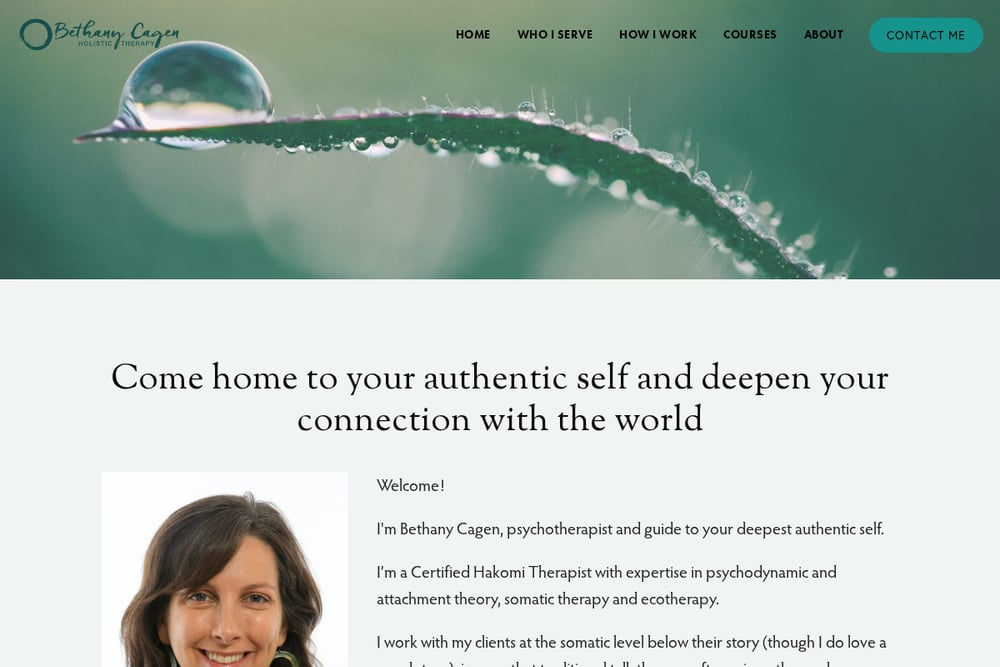 A screenshot of the Bethany Cagen website.
Bethany Cagen is a holistic therapist with 25 years of experience, licensed in Rhode Island, Massachusetts, and California. She brings her full self to sessions, offering a blend of psychotherapy, eco-therapy, craniosacral work, and psychedelic integration. Her approach is not a 'blank slate'—she actively guides and supports you in creating change. With certifications in Hakomi and training in Internal Family Systems, she integrates multiple modalities for a personalized experience. She also offers specialized programs like 'The Choice to Mother' for single mothers by choice, making her a great fit for specific life transitions. If you're looking for a seasoned therapist who walks alongside you, Bethany stands out.
#5 The Holistic Heart
 A screenshot of the The Holistic Heart website.
The Holistic Heart is a whole-person therapy practice that integrates talk therapy, somatic practices, mindfulness, yoga, and expressive arts. Their approach is explicitly integrative, moving beyond traditional talk therapy to include embodied experiences in sessions. They offer workshops, groups, and yoga classes, with at least one free group per month to increase accessibility. The team is neurodiversity-affirming and includes autistic and ADHD-affirming services, making it a welcoming space for diverse clients. If you're seeking a community-oriented practice that values holistic healing and inclusivity, this is a strong contender.
How to Choose the Right Practice for You
Start by considering what you're hoping to heal—whether it's stress, trauma, or a desire for deeper self-understanding. Look for a practitioner whose approach resonates with you, whether that's a focus on self-compassion, a deep dive into Hakomi principles, or a broad integrative style. Think about logistics: do you prefer in-person sessions in your area, or is remote flexibility important? Also, check if they offer programs or groups that align with your interests, like self-compassion courses or workshops. Finally, trust your gut—the right fit often feels like a safe, welcoming space where you can slow down and be heard.
Streamlining Your Search for Somatic Therapy
To find your ideal therapist, start by listing your top priorities—such as location, specialty, and budget. Use online directories and practice websites to shortlist candidates, then check their credentials and read client testimonials. Reach out for a consultation call to gauge their style and see if you feel comfortable. Many practices offer free initial sessions, so take advantage of those to make an informed choice. Automate reminders for follow-ups and keep a spreadsheet to compare your options side by side.
Final Thoughts
Mindful somatic psychotherapy offers a powerful path to healing that honors the connection between mind and body. Whether you're drawn to the structured principles of Hakomi, the self-compassion focus of Go Slowly, or the integrative approach of The Holistic Heart, there's a practice here that can meet you where you are. Take your time, explore your options, and remember that the right therapist will help you go slowly and find your own peace.