Mind mapping helps teams turn scattered ideas into shared visual structures. The right tool depends on how your team works: some prioritize real-time collaboration, others focus on structured planning or accessibility. This list covers five options worth knowing in 2026, each with different strengths for team use.
How We Picked These Tools
We selected tools that explicitly support team collaboration, offer features like shared workspaces or real-time editing, and provide clear information about their team-oriented plans. Each tool is described based on its own published materials, without ranking or endorsing any as the best.
| Provider | Best For |
|---|---|
| MindMeister | Teams seeking real-time collaboration with enterprise security |
| Xmind | Teams that want to blend brainstorming with project planning |
| Coggle | Teams needing simple, link-based collaboration |
| Mindomo | Teams that need versatile mapping and planning features |
| Ayoa | Teams with diverse thinking styles, including neurodivergent members |
The 5 Tools in Focus
#1 MindMeister
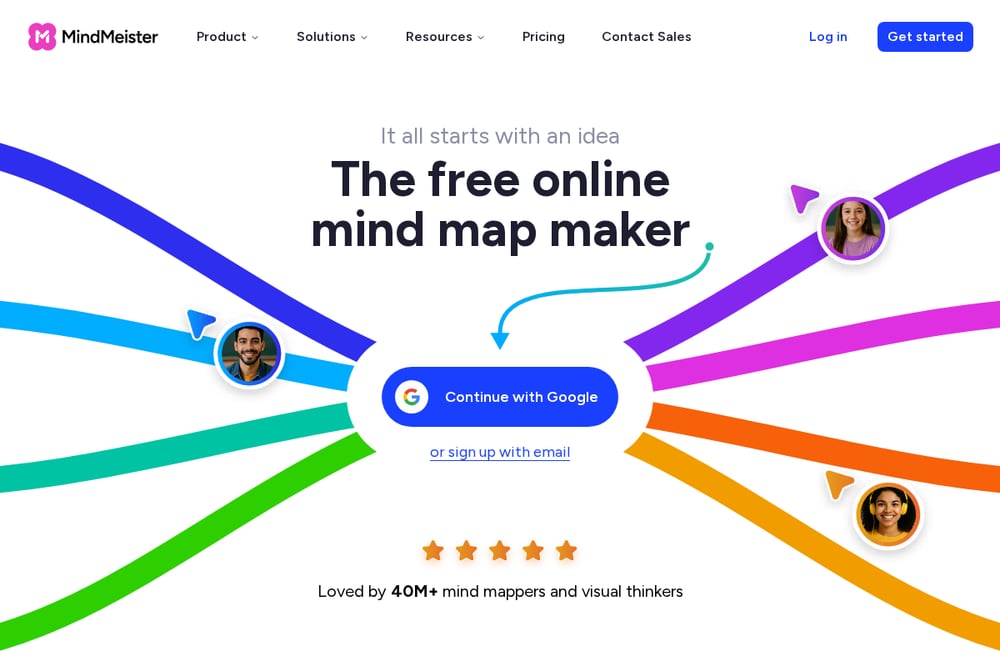 A screenshot of the MindMeister website.
MindMeister is an online mind mapping tool that emphasizes real-time collaboration and visual thinking. Teams can brainstorm live, add comments, and present directly from maps. It offers enterprise features like SAML SSO and role-based access controls, and integrates with MeisterTask to turn ideas into tasks. The tool is designed for a range of users, from educators to enterprises.
#2 Xmind
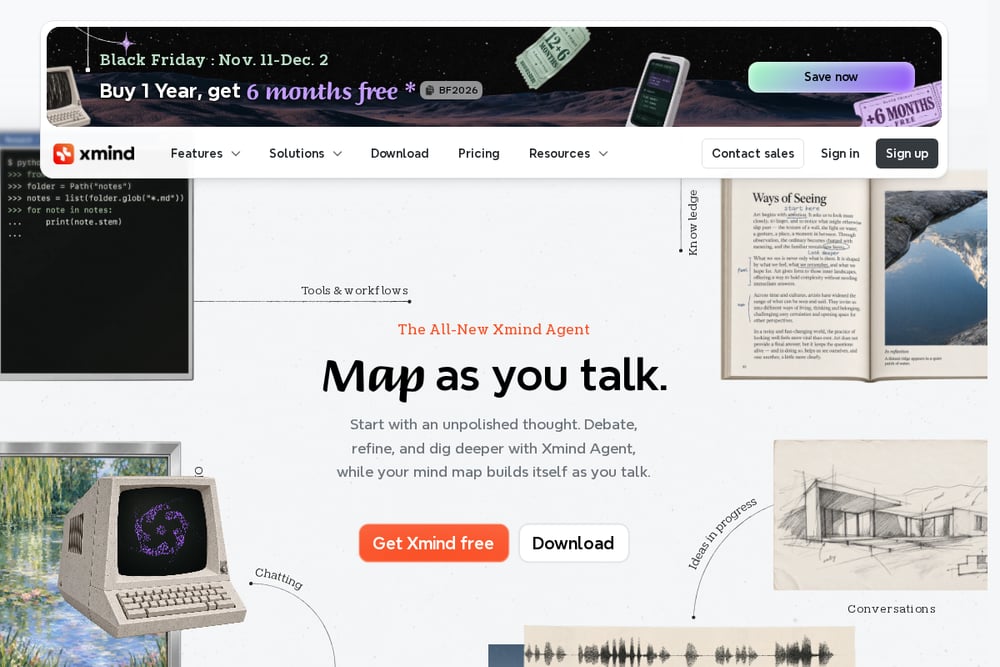 A screenshot of the Xmind website.
Xmind provides mind mapping with a focus on visual structure and team collaboration. It offers real-time collaboration, shared team spaces, and integration with tools like Claude, ChatGPT, and Notion. Xmind also includes AI-powered map generation and project management features such as Gantt charts. It is suitable for teams that want to combine brainstorming with planning.
#3 Coggle
 A screenshot of the Coggle website.
Coggle is a mind mapping tool that supports real-time collaboration and flowcharting. Teams can share diagrams via secret links without requiring logins, and the tool saves every change for version control. Coggle offers an Organisation plan with SAML Single Sign On and consolidated billing. It is designed for teams that need simple, accessible collaboration.
#4 Mindomo
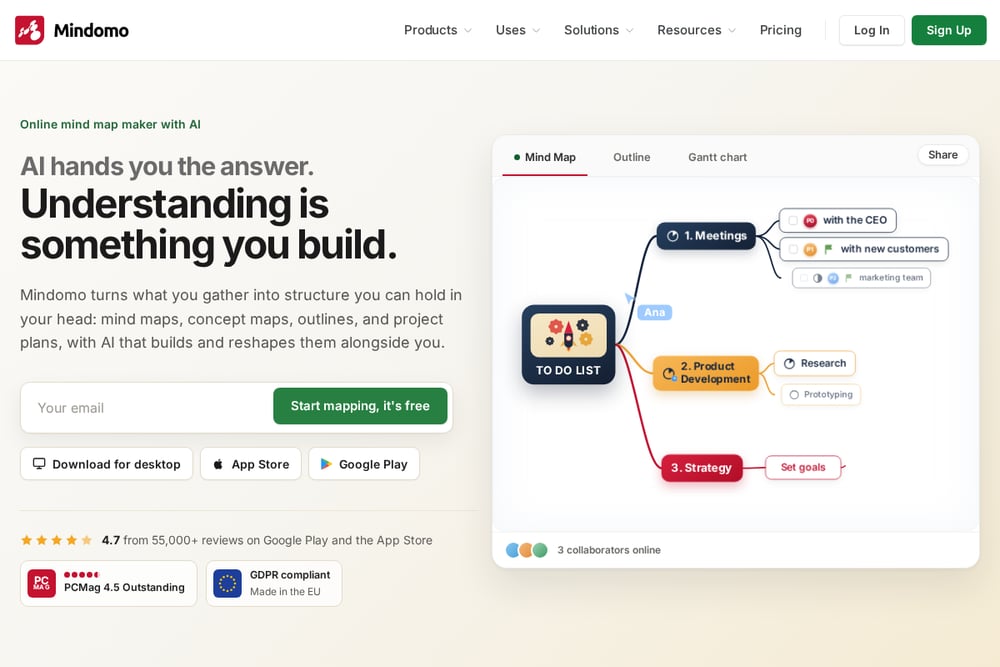 A screenshot of the Mindomo website.
Mindomo is an online mind mapping tool that combines mind maps, concept maps, outlines, and project plans. It offers team collaboration features and AI-powered map generation from prompts or documents. Mindomo also includes Gantt chart software and desktop apps for offline work. It suits teams that need a versatile tool for both ideation and project management.
#5 Ayoa
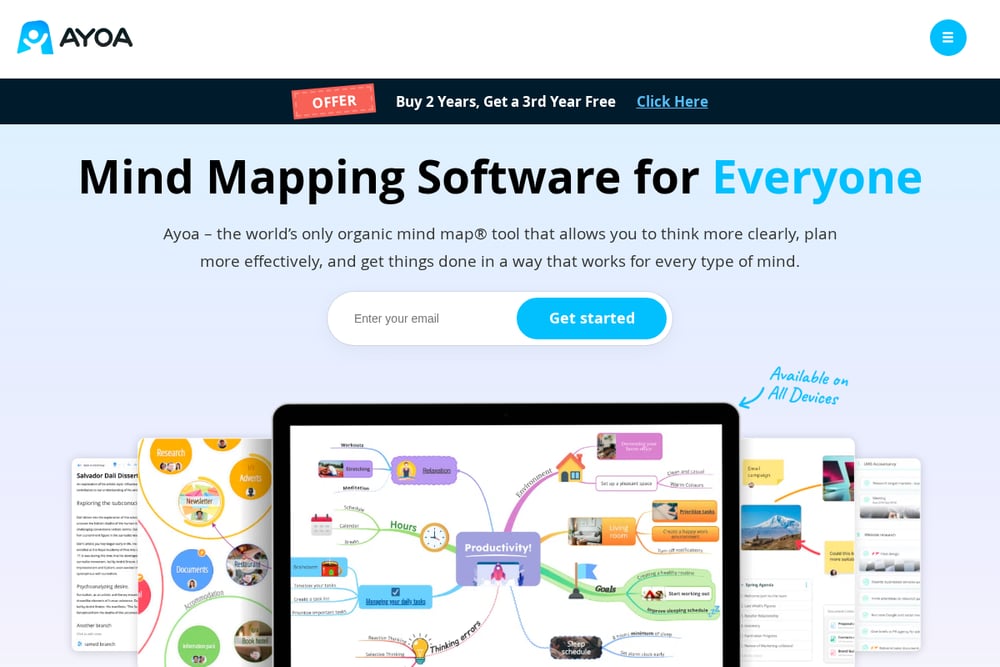 A screenshot of the Ayoa website.
Ayoa is a mind mapping and task management tool with a neuro-inclusive design. It offers organic mind maps, whiteboards, and the ability to convert ideas into tasks with deadlines. Ayoa includes AI-powered prompts and multiple views like workflow and Gantt timeline. It is built for teams with diverse thinking styles, including neurodivergent individuals.
Which One Should You Choose?
Consider how your team collaborates. If real-time editing is key, look for tools with live collaboration features. If security and admin controls matter, check for enterprise plans with SSO and role-based access. For teams that need to move from ideas to tasks, integration with project management or built-in task conversion is useful. Also think about accessibility and whether the tool supports different thinking styles.
Final Thoughts
Each tool on this list offers distinct features for team mind mapping. MindMeister emphasizes real-time collaboration and enterprise security. Xmind combines AI and project planning. Coggle provides simple link-based sharing. Mindomo offers versatile mapping and Gantt charts. Ayoa focuses on neuro-inclusive design and task management. Evaluate your team's priorities to find the best fit.
Know a company that belongs on this list? Email us at editorial@peekwire.com.