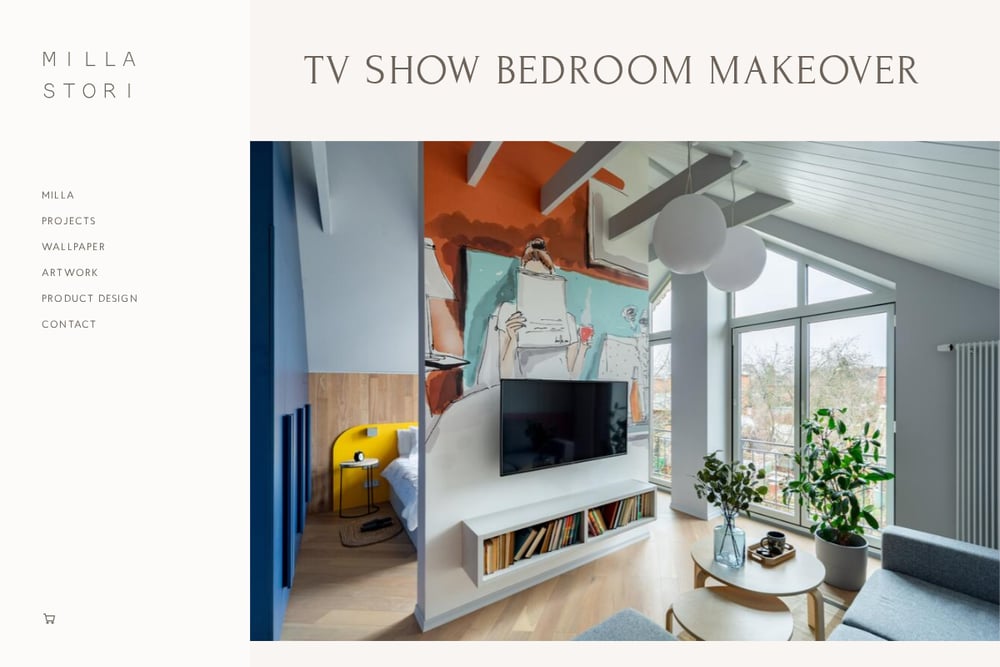
A Wallpaper That Belongs to the People Who Live With It
For interior designer Milla Stori, wallpaper is not a finish applied at the end of a project. It is a piece of art and part of the identity of the interior. Her work, documented at Milla Stori, centers on clean, architectural interiors with simple forms and carefully considered proportions.
She is also an artist, and over the years she has created a large body of illustrations in her own graphic style. Some clients arrive already knowing they want one of her artworks in their home. Sometimes they select an existing illustration that feels right for the family and the space. Other times, she creates something entirely new.
These custom pieces often tell the story of the family — where their story began, the places they have lived, or moments that are meaningful to them. She often builds the illustration around a city, filling it with small, personal details that only the family themselves will fully recognize. To a guest who does not know the story, the wallpaper simply reads as a beautiful graphic artwork within the interior. But for the people who live there, it has another layer: their own story, translated into art and integrated into their home.
Architecture and Natural Light Come First
Because she designs the interior as a whole, the wallpaper is usually considered from the very beginning rather than added as a decorative layer at the end. During the design process, she first determines where it makes sense architecturally — which wall can become a focal point and how the artwork will interact with the proportions of the room, furniture, and other elements in the space.
Since she creates the illustrations herself, she can adapt their character to the overall concept of the interior. Depending on the client, the color palette, and the atmosphere being created, the wallpaper might be very graphic and monochromatic, or softer, more colorful, and almost watercolor-like.
Natural light is part of that decision as well. Most of the homes she works with have generous windows and plenty of daylight, so she considers how the artwork will look throughout the day and how its colors and details will respond to changing light. For her, the wallpaper, architecture, light, and furnishings should never feel like separate decisions — they should read as one composition.
What Homeowners Should Weigh Before Committing
The first thing a homeowner should consider, she says, is how much visual intensity and decoration they are comfortable living with. Wallpaper — whether custom or not — naturally creates a focal point. It brings pattern, color, and visual energy into a space, and that is not inherently good or bad. It depends on the people who live there and how they want their home to feel.
Her interiors tend to be quite architectural, with clean forms and a restrained approach to color, but they are also very considered in their details. For her, wallpaper functions almost like a piece of art — something that can complete a room, add another layer to the interior, and reveal something about the people who live there.
That is why she thinks the choice should be thoughtful, especially when it comes to color, scale, and the subject of the artwork. A wallpaper can be incredibly inspiring, but it is also something you will live with every day. She always recommends considering how everyone in the household responds to it. In her experience, a color or pattern that feels beautiful and energizing to one person can feel overwhelming to another. The goal is to choose something that feels personal and meaningful, but also comfortable to live with — something that adds to the experience of the home rather than competing with it.
Bold Pattern Without an Expiry Date
When she creates a custom illustration for a family, it is very personal, but it is not rendered in a realistic style. She translates their story into a more stylized, contemporary visual language. The illustration may include places, objects, or small details connected to their life, but they are interpreted artistically rather than represented realistically. For someone who does not know the story behind it, the wallpaper can simply read as a piece of contemporary art.
She thinks this is also what gives a custom piece its longevity. For the family, the story behind it does not become outdated — it remains part of their history, whether they look at it a year, five years, or ten years from now.
With an existing illustration, it is slightly different. She still creates her work in a contemporary visual style, so it can remain relevant for many years, but she does not believe that every element of an interior has to last forever. Tastes evolve, interiors change, and so do the people who live in them. If, five or ten years from now, a wallpaper no longer feels right for the space or for the family, it can simply be replaced. To her, longevity is not necessarily about permanence — it is about creating something that feels meaningful and relevant for as long as it belongs in that home.
From First Consult to Finished Space
Projects usually begin in one of two ways. Some clients come to her after purchasing an existing home or townhouse that they want to completely transform — sometimes including changes to the layout, removing existing finishes, flooring, tile, and cabinetry, and essentially designing the interior again from the ground up. Others involve her much earlier, sometimes before a new home has even been built, when clients are deciding which builder upgrades are actually worth investing in and which decisions would be better made later as part of a custom interior.
Regardless of when she joins the project, her process always begins with a lot of questions. Before she can design a home, she needs to understand how the people who will live there actually live. How much time do they spend in the kitchen? Do they cook every day or rarely? Do they eat at the kitchen island or gather around a dining table? Do they entertain often? How do they use their bedroom? Does one person read in bed while the other never uses a bedside light? Do they need a bathtub, or would they much rather have a larger shower?
These may seem like small details, but they completely change the way a home should be designed. Sometimes the questions even make clients realize that they do not need something they assumed every home was supposed to have. That can also save them money — instead of investing in features simply because they are common, they can invest in the things that genuinely improve their own daily life.
That is why she does not believe in designing around a standard idea of how a family should live. The same solution can be perfect for one family and completely wrong for another. Once she understands their routines, priorities, habits, and aesthetic preferences, she can begin developing the layout, materials, lighting, furniture, and all the smaller details around them.
From there, the project gradually moves from concept and planning through all the design decisions and, ultimately, to the finished space. Her goal at the end is not simply to create a beautiful contemporary interior, but to create a home that feels as comfortable, intuitive, and personal as possible — one that genuinely reflects the way that particular family lives.
Practical Takeaways
- Treat wallpaper as part of the architectural composition, not a final decorative layer.
- Decide where the artwork belongs before choosing the artwork itself.
- Consider how the piece will read in daylight across the whole day.
- Ask how every member of the household responds to the color, scale, and subject.
- Start the design process with questions about daily routines, not assumptions about how a family should live.
- Accept that a meaningful piece can be replaced later without losing its value in the years it belonged in the home.