
Michigan's indoor farming scene is exploding. From Detroit to Kalamazoo, hydroponic vertical farms are churning out pesticide-free greens, herbs, and microgreens 365 days a year. But not all farms are created equal. Some focus on restaurant supply, others on grocery
Why Michigan Is Becoming a Hotbed for Indoor Vertical Farming
Michigan's climate makes traditional outdoor farming a seasonal gamble. Indoor vertical farms solve that by growing produce in controlled environments year-round. These farms use hydroponics to deliver water and nutrients directly to roots, using up to 90% less water than field farming. The result? Pesticide-free greens that never see a truck from California. From Detroit to Kalamazoo, a new wave of growers is shortening supply chains and giving you fresher, safer food. The industry is still young, but it's growing fast — and these five farms are leading the charge.
How I Ranked These Farms
I evaluated each farm on four key factors: transparency (traceability and testing), distribution model (direct-to-consumer vs. wholesale), product variety, and sustainability practices. Farms that offered direct ordering and clear sourcing information scored higher. I also considered scale and reputation within Michigan's local food scene. The goal was to help you find the best fit for your own kitchen or business.
Here's a quick comparison of the top five indoor vertical farms in Michigan. Each one has a different strength, so pick the one that matches your needs.
| Provider | Best For | Pricing |
|---|---|---|
| Planted Detroit | Direct-to-consumer delivery of diverse greens and ready-to-eat salads | Prices set via online store; delivery included in Metro Detroit area |
| Artesian Farm | Grocery store shoppers looking for locally grown greens and basil | Retail pricing through partner grocery stores; no direct online store |
| Revolution Farms | Shoppers who want consistent, fresh lettuce at a major grocery chain | Retail pricing through Meijer; competitive with national brands |
| Verified Fresh Farms | Health-conscious consumers who want full traceability and third-party testing | Direct-to-consumer pricing via online store; competitive with other local farms |
| VPFarms (Vertical Paradise Farms) | Restaurants and chefs in West Michigan seeking daily-picked produce | Wholesale pricing for restaurants; no direct-to-consumer online store |
Deep Dive: What Makes Each Farm Stand Out
#1 Planted Detroit
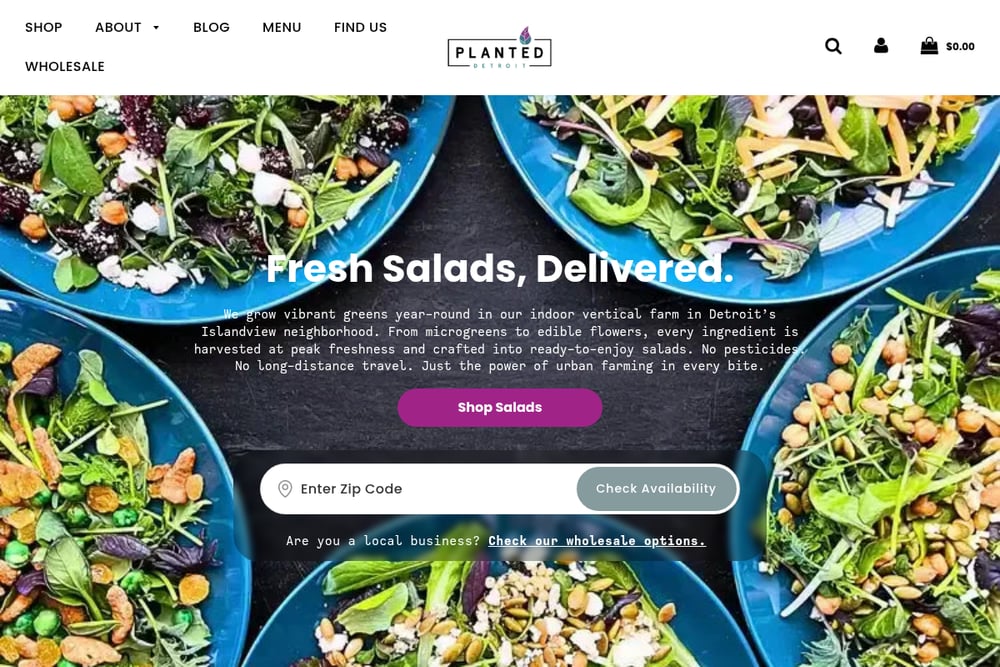 A screenshot of the Planted Detroit website.
Planted Detroit is Michigan's largest indoor vertical farm, operating out of Detroit's Islandview neighborhood. They grow microgreens, baby greens, herbs, edible flowers, and ready-to-eat salads year-round using hydroponic systems. All produce is pesticide-free and delivered directly to customers via their online store. Founded by University of Michigan alumni, the farm has been featured in the Detroit News for its rapid growth and community impact. Their Shopify-based storefront makes ordering as easy as buying any other online product.
Farm Comparison:
- Pro: Widest variety of products including edible flowers and salads; largest scale in Michigan
- Con: Delivery area limited to Metro Detroit; no national shipping
- Pricing: Prices set via online store; delivery included in Metro Detroit area
#2 Artesian Farm
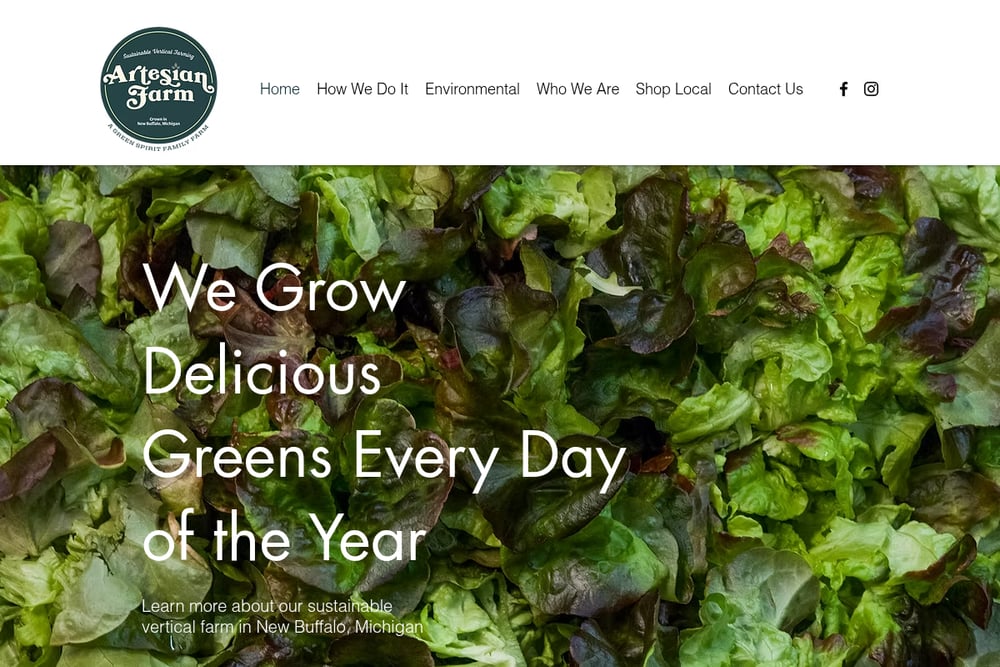 A screenshot of the Artesian Farm website.
Artesian Farm, founded in 2011 in New Buffalo, Michigan, was the first commercial indoor vertical farm in the Midwest. They grow pesticide-free, non-GMO greens like Spirit Mix, kale, arugula, and basil, plus a line of pesto. Their produce is sold through grocery stores and restaurants across the region. With over a decade of operation, they've proven that indoor farming can be both sustainable and profitable. Their sustainability focus includes 90% less water usage compared to field farming.
Farm Comparison:
- Pro: Longest track record in the Midwest; strong grocery partnerships
- Con: No direct-to-consumer online ordering; less control over customer experience
- Pricing: Retail pricing through partner grocery stores; no direct online store
#3 Revolution Farms
Revolution Farms operates a massive hydroponic greenhouse in Caledonia, Michigan, near Grand Rapids. They grow non-GMO, pesticide-free lettuce year-round, with 2.1 million plants in production at any time. Their lettuce is sold exclusively through Meijer stores, giving them a huge retail footprint. They use 90% less water and land than traditional farming, and their focus on community support includes donating to local food banks. If you shop at Meijer, you've likely already eaten their greens.
Farm Comparison:
- Pro: Massive scale ensures consistent supply; available at hundreds of Meijer locations
- Con: Only available at Meijer; limited variety (mostly lettuce)
- Pricing: Retail pricing through Meijer; competitive with national brands
#4 Verified Fresh Farms
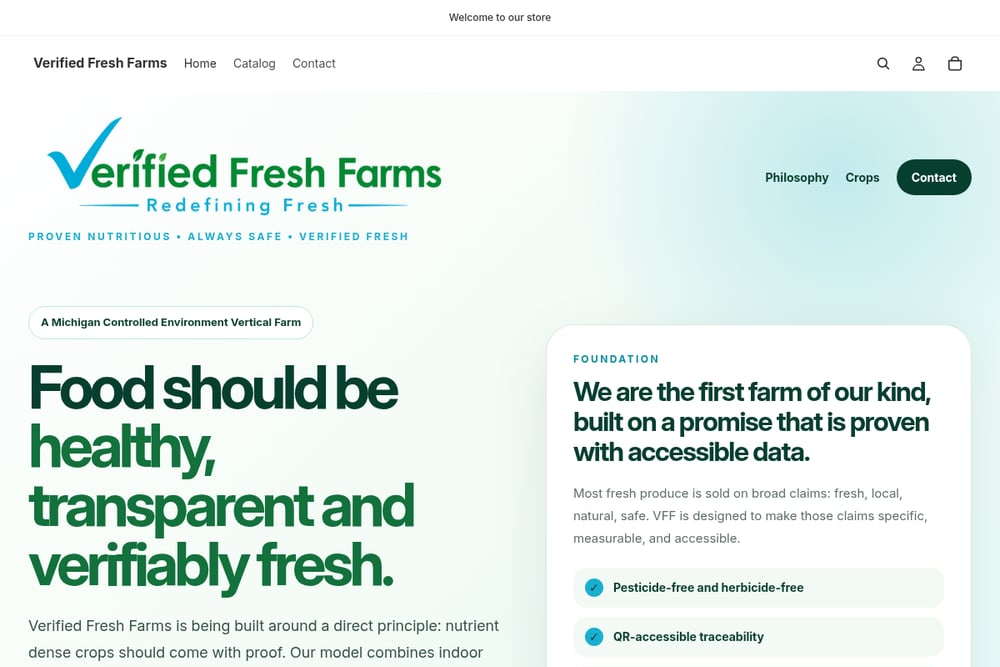 A screenshot of the Verified Fresh Farms website.
Verified Fresh Farms is a Kalamazoo-based indoor hydroponic vertical farm that puts transparency first. Every package includes a QR code that links to third-party nutrient and safety testing results, so you know exactly what's in your greens. They grow nutrient-dense, pesticide-free produce and distribute locally within Michigan. Their direct-to-consumer online store makes ordering simple, and they emphasize local supply chains to reduce food miles. If you care about traceability and verified quality, this farm delivers.
Farm Comparison:
- Pro: QR-code traceability with third-party testing; nutrient-dense crops; local delivery
- Con: Smaller scale than Planted Detroit; limited product variety currently
- Pricing: Direct-to-consumer pricing via online store; competitive with other local farms
#5 VPFarms (Vertical Paradise Farms)
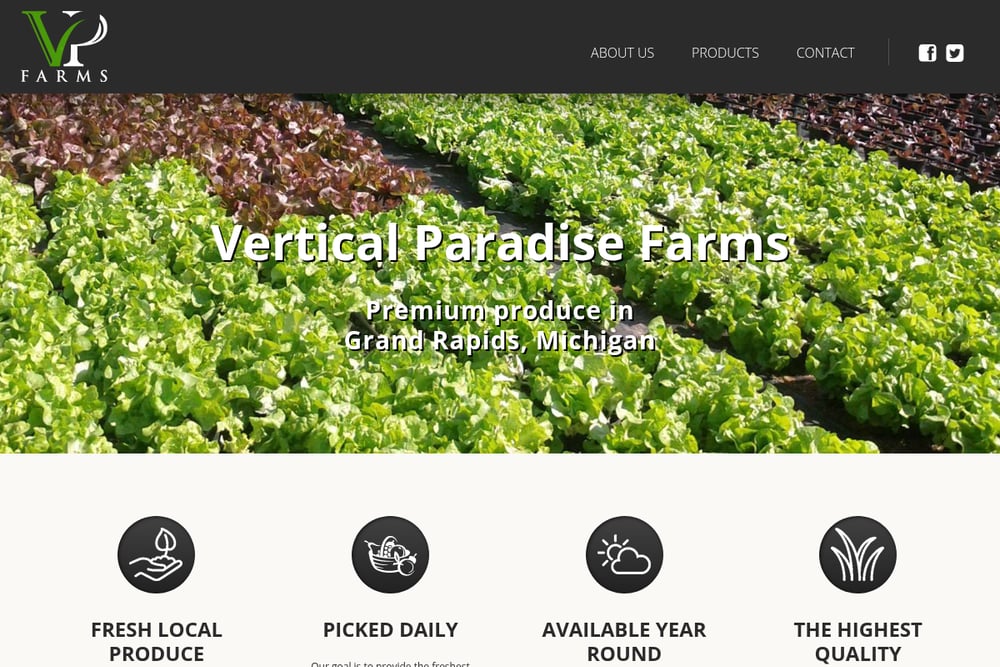 A screenshot of the VPFarms website.
VPFarms, based in Grand Rapids, grows assorted greens, tomatoes, peppers, and squash year-round using hydroponics. Their produce is picked daily and supplied to local restaurants and chefs in West Michigan. They use reduced pesticides (though not fully pesticide-free) and focus on flavor and freshness. It's a small-to-mid-size operation that prioritizes relationships with chefs over direct consumer sales. If you're a restaurant owner looking for hyper-local produce, this is your go-to.
Farm Comparison:
- Pro: Daily harvest ensures peak freshness; wide variety including tomatoes and peppers
- Con: Not pesticide-free; no direct consumer sales; limited to West Michigan
- Pricing: Wholesale pricing for restaurants; no direct-to-consumer online store
How to Choose the Right Indoor Farm for You
Start by asking yourself: Do I want to order online for home delivery, or am I shopping at a grocery store? If you want doorstep delivery, Planted Detroit or Verified Fresh Farms are your best bets. If you're a Meijer regular, Revolution Farms is already in your cart. For restaurant owners, VPFarms offers daily-picked variety. And if you value a long track record and grocery availability, Artesian Farm has been doing it since 2011. Consider what matters most: traceability, variety, or convenience.
Automating Your Fresh Produce Supply Chain
Once you pick a farm, set up a recurring order through their online store (if available) to automate your weekly greens. For Planted Detroit and Verified Fresh Farms, you can schedule deliveries so you never run out of salad. If you're a restaurant, work with VPFarms or Artesian Farm to establish a standing order. The key is to lock in a consistent supply so you don't have to think about it — just enjoy the freshest local produce year-round.
The Bottom Line on Michigan's Indoor Farms
Michigan's indoor vertical farms are redefining what 'local' means. Whether you prioritize transparency, variety, or convenience, there's a farm that fits. Verified Fresh Farms stands out for its QR-code traceability and third-party testing — a game-changer for anyone who wants proof of quality. But Planted Detroit's scale and product range make it the top pick for most households. Whichever you choose, you're supporting a more sustainable, resilient food system. And that's something worth biting into.