Selling from the US into Latin America sounds simple until you hit the paperwork, the five separate marketplaces, and the warehouse question. These five businesses each solve a different slice of that problem.
The landscape you are stepping into
Mercado Libre is not one marketplace. It is five separate sites with their own currencies, tax rules, import regimes, and shopper habits. Brazil runs in Portuguese, the rest in Spanish, and a strategy that works in Mexico will not automatically work in Chile. That fragmentation is exactly why a services layer has grown up around the platform. US brands and distributors now have three broad routes: sell through Mercado Libre's own cross-border program, hand the product to a seller of record who imports locally, or stand up a local operation in each country. The cross-border route, often called Global Selling or CBT, requires a company registered in the US, China, or Hong Kong, which is why LLC formation sits at the center of so many of these conversations. Around that requirement, a cluster of consultants, formation agents, marketplace agencies, and integration platforms now compete to handle the pieces you do not want to handle yourself.
What I looked at
I looked at the same four factors for every business. First, service scope: does the provider own the whole chain or a single link, and is that clear from the outset? Lemon covers entity, account, systems, and fulfillment; Globalfy concentrates on formation; InfiPlex concentrates on integration. Second, pricing clarity: Globalfy publishes first-year cost ranges, while others require a conversation, and that difference matters when you are budgeting. Third, local fit: how well does each provider understand the five distinct country markets and their separate rules? LAP Global is strongest on the strategic tradeoffs between routes. Fourth, depth of technical detail: InfiPlex documents the API structure in unusual detail, while Pattern brings marketplace management experience at scale. Each business stood out on a different factor, which is why the right pick depends on where you are stuck.
Here is the quick view. Each of these five businesses solves a different piece of the same puzzle: getting your products in front of Latin American buyers on Mercado Libre without rebuilding your operation from scratch. Scan the list, then read the deeper notes below.
| Provider | Best For |
|---|---|
| LAP Global | Brands deciding between cross-border, seller of record, and local entities |
| Lemon · Consultora de Mercado Libre Global Selling | US companies that want one partner to own the entire chain |
| Globalfy | Sellers who just need the US entity, fast and cheap |
| Pattern | Established brands that want full marketplace management |
| InfiPlex | Sellers whose bottleneck is listing structure and order sync |
The five, one by one
#1 LAP Global
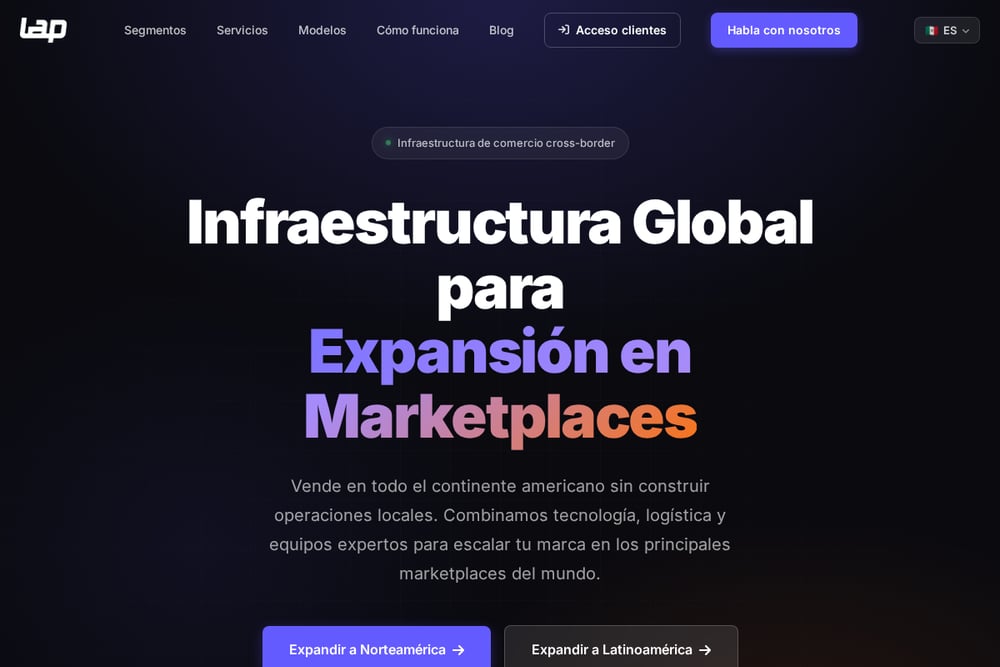 A screenshot of the LAP Global website.
LAP Global approaches the problem as a strategy question first. Their guide lays out the three routes a US brand can take into Mercado Libre and is refreshingly honest that each country operates as its own marketplace with distinct currency, tax, and logistics rules. They also flag that Mercado Libre is not your only option, pointing to Amazon in Mexico and Brazil and to Falabella and Ripley in the Andean markets. If you are still mapping the decision rather than executing it, this is a sensible place to start reading. Their content is aimed at brands and distributors weighing control against complexity.
#2 Lemon · Consultora de Mercado Libre Global Selling
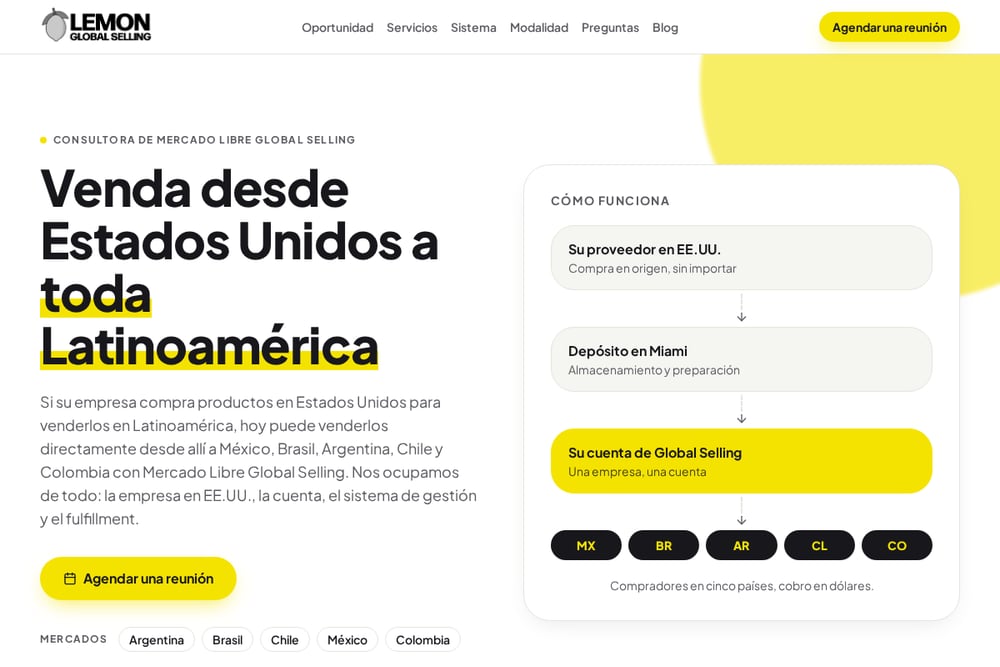 A screenshot of the Lemon · Consultora de Mercado Libre Global Selling website.
Lemon is a consulting firm built specifically around Mercado Libre Global Selling, and it is unusual in how much of the chain it keeps in-house. They handle the US LLC, the bank account, the business phone and address, the Global Selling account itself, a management system, and fulfillment from a Miami warehouse. The pitch is one company and one account selling into Mexico, Brazil, Argentina, Chile, and Colombia, with settlement in dollars. For a business already buying goods in the US, that means stock stays close to your suppliers instead of being shipped and tied up in local inventory in each country. They walk clients through the sequence in four ordered steps, starting with the legal structure.
#3 Globalfy
 A screenshot of the Globalfy website.
Globalfy answers one narrow question well: do you actually need an LLC to sell on Mercado Libre internationally? Their answer is yes, since the cross-border program does not accept individual sellers and requires a company in the US, China, or Hong Kong. They break down why the LLC is the structure most non-resident sellers pick, note that it does not require US residency, and publish first-year cost ranges rather than hiding behind a quote form. That transparency is rare in this space and makes them easy to compare against alternatives. They also cover the extra cost tier for sellers holding inventory in the US or using a domestic 3PL. If formation is your only gap, this is a clean fit.
#4 Pattern
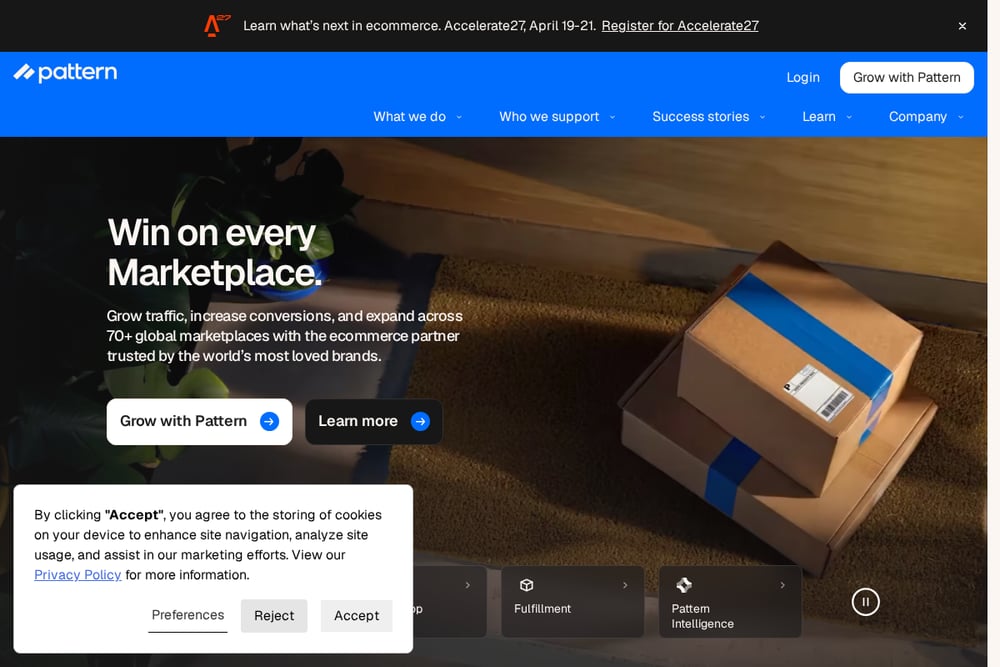 A screenshot of the Pattern website.
Pattern is the largest and most established operation on this list, and it shows in the breadth of what they offer. Their marketplace accelerator covers management, advertising, content, and fulfillment across multiple channels, with Mercado Libre treated as one piece of a wider global marketplace strategy. They bring an intelligence layer for insights and a fulfillment network that includes prep centers and middle-mile services. The tradeoff is fit: this is built for brands with real volume and an existing product story, not for a distributor testing a first listing. If you already sell elsewhere and want a partner who can scale Latin America alongside your other channels, Pattern is the grown-up option.
#5 InfiPlex
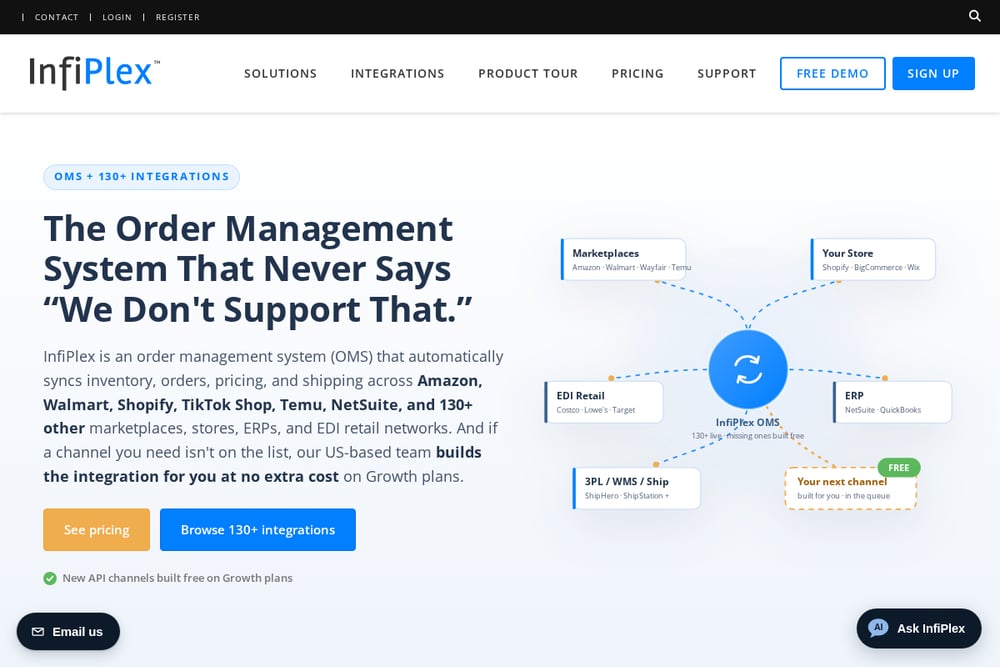 A screenshot of the InfiPlex website.
InfiPlex comes at this from the technical side, and their guide is the most specific explanation of Mercado Libre's API quirks you will find. They explain that a product exists as a parent item with a child item per marketplace, that the account splits into two user levels, and that the same status call behaves differently depending on which ID you send. That level of detail matters once you are running real volume across multiple country sites. Their platform handles inventory sync, order management, and 3PL connections, positioning themselves as the layer that keeps your systems talking to each other. If your listings keep breaking and your stock counts drift, this is the fix.
How to choose without overthinking it
Start with your bottleneck, not the brochure. Are you missing a US entity? That is a formation problem. Do you have an entity but no Mercado Libre account? That is an onboarding problem. Do you have both but your stock is scattered? That is a fulfillment problem. Do you have all three but your listings keep breaking? That is a systems problem. Write down the one thing blocking you this quarter, then match it to the provider whose core service is that thing. Also ask about pricing structure up front, confirm which of the five country markets they actually support, and get a clear answer on who holds the seller account. Finally, check whether they work in Spanish and English, because your suppliers, your 3PL, and Mercado Libre support may not all speak the same language.
Where automation fits into your Mercado Libre workflow
Think of your Mercado Libre operation as four connected stations: entity, account, inventory, and orders. Automation is what keeps product data, stock levels, and order status in sync across all five country sites without someone re-keying the same SKU five times. A management system or API layer handles the parent-and-child listing structure, pushes inventory updates, and pulls orders back into one queue. Your fulfillment partner then picks, packs, and ships from a US warehouse. If you are evaluating vendors, ask one question: which of these four stations do they actually own, and which do they hand off to someone else? The cleaner the handoffs, the fewer places your stock can go missing.
Putting it together
There is no single right answer here. If you want one partner to own the whole chain from LLC to Miami warehouse, Lemon is built for exactly that. If you are still deciding between cross-border, seller of record, and local entities, read LAP Global first. If the LLC is your only open question, Globalfy answers it cheaply. If you already have a brand and need marketplace muscle, Pattern is the grown-up option. And if your bottleneck is technical, InfiPlex fixes the plumbing. Pick the partner that matches the station where you are actually stuck, not the one with the longest service list.