
If you're an OEM or supplier wrestling with recycled content, carbon footprints, and regulatory audits, these five platforms are worth your attention. Each one tackles traceability differently, so you can find the right fit for your value chain.
The Traceability Imperative
Automotive and manufacturing supply chains are under the microscope. Regulators, investors, and customers demand proof of sustainability, not just promises. Visibility drops sharply beyond tier-one suppliers, creating blind spots that lead to compliance risks and operational inefficiencies. Digital traceability platforms are stepping in to digitize material flows, verify claims, and turn compliance into a competitive edge. The market is crowded, but the right platform can mean the difference between audit headaches and audit-ready confidence.
How We Evaluated These Platforms
We looked at each platform's ability to track materials end-to-end, from raw scrap to finished product. We considered the depth of sustainability features, like carbon accounting and circular economy metrics. We also weighed how well each platform handles regulatory compliance, from EU directives to local laws. Finally, we assessed the user experience and how easily you can integrate the platform into your existing operations.
Here's a quick snapshot of the five platforms, their focus, and what they're best for.
| Provider | Best For |
|---|---|
| TrusTrace | Fashion and textile supply chains needing high-volume traceability |
| MatNEXT — Traceability & Sustainability Platform | Automotive OEMs and suppliers needing end-to-end material tracking |
| TraceX | Companies navigating EUDR and farm-to-fork traceability |
| Dassault Systèmes | Manufacturers seeking circularity and material sovereignty at scale |
| Oritain | Brands needing forensic verification of product origin and claims |
The Deep Dive: Five Platforms, Five Approaches
#1 TrusTrace
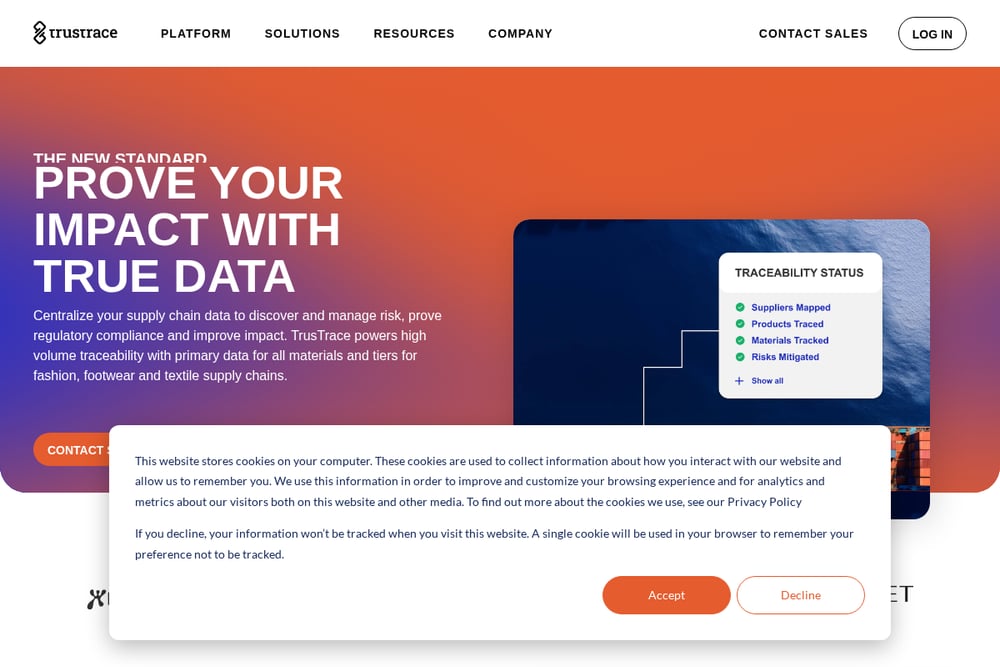 A screenshot of the TrusTrace website.
TrusTrace centralizes your supply chain data to manage risk, prove compliance, and improve impact. It's built for high-volume traceability with primary data across all materials and tiers, especially in fashion, footwear, and textiles. The AI-powered platform unifies supplier data and automates reporting, giving you instant insights. You can map your supply chain, identify risks, and navigate global regulations from one dashboard. It scales from enterprise giants to agile startups, so you won't outgrow it. If you need a proven, data-rich solution, TrusTrace is a solid contender.
#2 MatNEXT — Traceability & Sustainability Platform
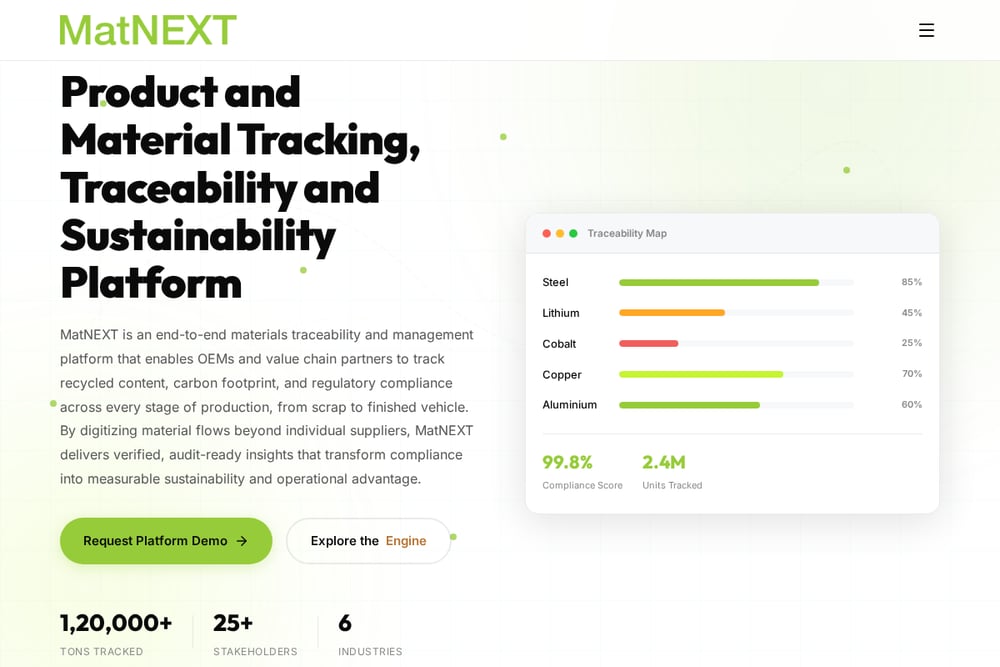 A screenshot of the MatNEXT website.
MatNEXT is an end-to-end materials traceability and management platform tailored for automotive OEMs and their value chain partners. It tracks recycled content, carbon footprint, and regulatory compliance across every production stage, from scrap to finished vehicle. With real-time traceability intelligence, you can monitor every material, batch, and transaction across your value chain. The platform also offers closed-loop management, circular economy insights, and GHG emissions calculation, all in one place. It boasts a 99.8% compliance score and has tracked over 2.4 million units, so you know it's battle-tested. If you're in automotive, this is your go-to for audit-ready sustainability.
#3 TraceX
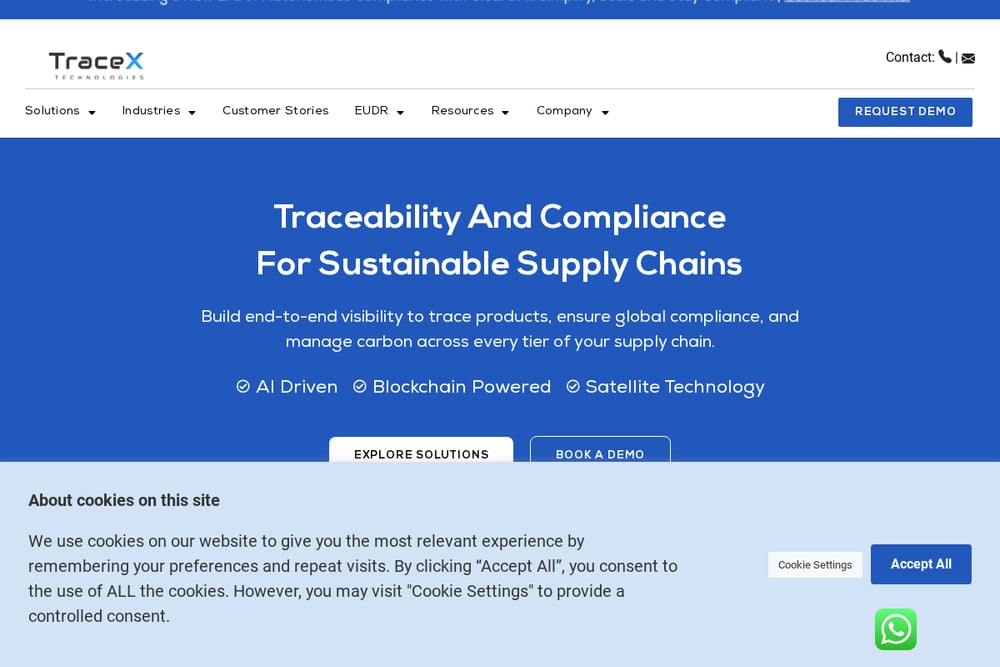 A screenshot of the TraceX website.
TraceX offers a platform that covers sustainable sourcing, regulatory compliance, and carbon management. It's particularly strong in EUDR compliance, with end-to-end traceability and automated due diligence. You can digitize farm operations, enable farm-to-fork traceability, and verify sustainability claims with audit-ready data. TraceX also supports Digital Product Passports and packaging data compliance, making it versatile across industries like food, agri, and automotive. If you're dealing with deforestation-free regulations, this platform is built for you. It's a practical choice for companies that need to prove compliance without the manual headache.
#4 Dassault Systèmes
 A screenshot of the Dassault Systèmes website.
Dassault Systèmes brings its 3DEXPERIENCE platform to traceability, focusing on circularity and material sovereignty. It helps you scale end-to-end traceability across operations to verify sustainability claims and unlock circular value. The platform addresses the visibility drop-off beyond tier-one suppliers, which is a common pain point. It supports regulatory requirements like CSDDD and EU Taxonomy, making it a heavyweight for compliance. If you're already using Dassault's design and simulation tools, this integrates seamlessly. It's a comprehensive solution for manufacturers looking to embed traceability into their product lifecycle.
#5 Oritain
Oritain takes a different approach by using forensic science to verify product origin and sustainability claims. It's not just about data entry; it's about scientifically proving where your materials come from. This is powerful for brands that need to back up their ESG claims with hard evidence. Oritain covers product origin verification, supply chain risk management, and compliance with forced labor and deforestation regulations. It's particularly strong for commodities like cotton, leather, and timber. If you're tired of greenwashing accusations, Oritain gives you the forensic proof to silence critics.
How to Choose Your Traceability Platform
Start by mapping your biggest pain points: is it regulatory compliance, supplier visibility, or carbon accounting? If you're in automotive, MatNEXT's deep focus on material flows and compliance scores is hard to beat. For fashion and textiles, TrusTrace's high-volume, multi-tier traceability is a proven path. If you're dealing with EUDR or farm-to-fork, TraceX has the specialized tools you need. Dassault Systèmes is ideal if you want to integrate traceability with your existing product lifecycle management. And if you need forensic proof of origin, Oritain is your scientific ally. Don't just pick the biggest name; pick the one that fits your specific supply chain complexity.
Automating Traceability for Real-Time Insights
The best platforms automate data collection from suppliers, eliminating manual spreadsheets. They use AI to flag risks and suggest alternative suppliers when disruptions hit. You can set up automated compliance reports that are always audit-ready. With real-time dashboards, you can monitor every material batch as it moves through your value chain. This turns traceability from a reactive chore into a proactive strategy.
The Bottom Line
Traceability is no longer optional; it's a license to operate. Each of these five platforms offers a unique angle, from forensic verification to end-to-end material tracking. MatNEXT stands out for automotive, TrusTrace for fashion, TraceX for EUDR, Dassault for circularity, and Oritain for scientific proof. Your choice depends on your industry, your regulatory pressures, and how deep you need to see into your supply chain. Pick the one that aligns with your biggest risks, and you'll turn compliance into a competitive advantage.