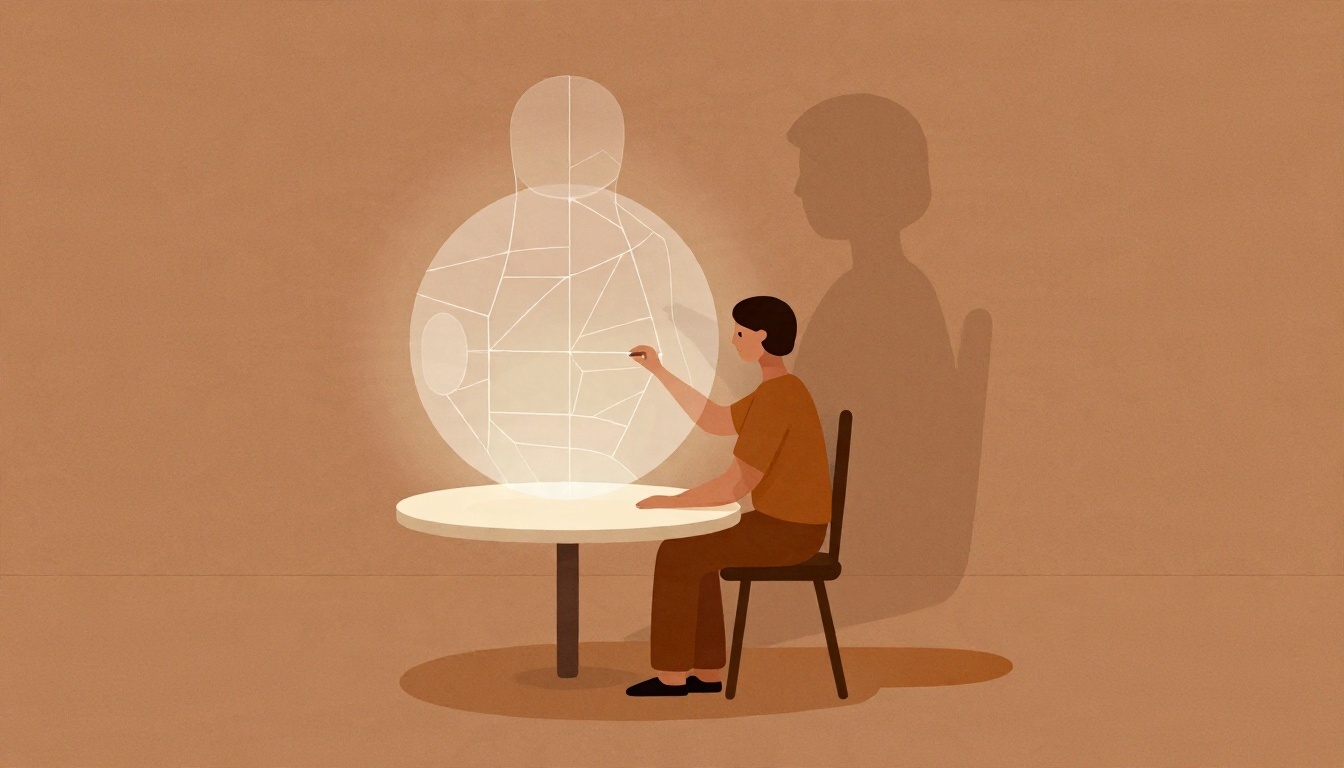
Beyond the Label: When the Type Doesn't Fit
Human Design readings often begin with a type — Manifestor, Generator, Projector, Reflector — and the standard guidance that comes with it. But according to Duhita, the reader behind Mata Readings, that label does not always match what a client is actually living.
She described clients saying "I thought I was a [insert human design type]" or "that doesn't sound like me." Rather than dismissing the mismatch, she asks people to describe specific examples from their lives. In her experience, what surfaces is usually "a reflection of their external conditioning and/or unhealthy expression of their design, rather than their true type."
That distinction matters. It suggests the chart is not a verdict on who someone is, but a lens for separating conditioned patterns from a more authentic way of operating. For readers new to the system, the Human Design type framework is a useful starting point, but Duhita's approach treats the lived experience as the more reliable signal.
The Question Articles Leave Out
In the first few minutes of a reading, one question comes up again and again: "So what can I do with this?"
Duhita notices "a sense of urgency in translating the chart into action" — or an assumption that the chart is mainly for big decisions. Some readers lean into that expectation, offering ways to use specific components of a design to grow a business, build followers, or manifest certain outcomes. Duhita takes a different route.
"My approach is maybe simpler," she said. "We focus on your authority center and how you use it to engage with the external world and your inner self."
The goal of a session, in her words, is for a client to leave able to say: "I know what my authority feels like and how I can tap into that feeling on a daily basis." For her, "human design lives in the small (and big) moments of our lives." Readers curious about the concept can explore how inner authority works in Human Design before a session, but Duhita's emphasis is on felt experience rather than memorized theory.
Two Reactions to a First Chart
When people first see their bodygraph, Duhita observes two common responses. The first is overwhelm — so many components that clients think "I'll never get it." The second is a belief that the chart is static: "this is who they are fated to be or become and that's it."
She is candid that she had the same reactions at her own first reading. Four years into her own experiment, her view has changed. She now experiences the chart as "a living tool to help you be in conversation with yourself." When something feels off — something she says you can sense in mind and body — the chart can direct attention and "give language to certain aspects of yourself and your patterns."
Her practical advice is to resist the urge to master everything at once. "It's ok to focus on one aspect of the chart at a time, that's where the experimentation is lifelong," she said. Centers, gates, lines, and channels each offer a different angle, and "each component offers an insight into your gifts."
What This Means for Anyone Booking a Reading
Three takeaways emerge from Duhita's answers. First, if the standard description of your type does not fit, that is worth exploring rather than ignoring — conditioning can obscure the picture. Second, the most useful outcome of a reading may not be a strategy for major decisions but a working familiarity with your own authority in everyday moments. Third, a first chart is a beginning, not a conclusion; the value comes from ongoing experimentation, one component at a time.
For readers comparing services, the Peekwire roundup of Human Design reading services places Mata Readings alongside other practitioners, and Duhita's emphasis on simplicity and daily practice offers a clear sense of what a session with her involves.