
You've built a life that looks like success, so why does it feel like you're one step from being found out? These five Los Angeles therapists understand the gap between how competent you look and how uncertain you feel.
The Los Angeles Therapy Landscape for High Achievers
Los Angeles has no shortage of therapists, but finding one who truly gets the intersection of imposter syndrome, multicultural identity, and high-pressure careers is harder than it should be. Many practices list these specialties, yet few therapists have lived the experience of code-switching between cultures or navigating the isolation of being the first in their family to reach a certain level. The rise of telehealth has expanded access across California, but it has also made it more difficult to distinguish between genuine specialization and generic marketing. You deserve a therapist who does not need you to explain the basics of your cultural context or the specific exhaustion of performing competence while feeling uncertain inside.
How We Evaluated These Practices
We looked at service scope, pricing clarity, local fit, and the depth of specialization in imposter syndrome and multicultural identity. For service scope, we considered whether a practice offers individual therapy, couples therapy, and telehealth options. For pricing clarity, we checked whether rates and insurance information are easy to find. For local fit, we assessed whether the therapist or practice is physically based in Los Angeles and understands the unique pressures of the city. For specialization, we examined how prominently imposter syndrome, multicultural identity, grief, and life transitions appear in their messaging and clinical focus. Each practice stood out in different ways: some for the breadth of their team, others for the specificity of their niche, and one for the lived experience the therapist brings to the room.
Here is a quick look at five Los Angeles therapy practices that specialize in imposter syndrome, multicultural identity, and the pressure of holding it all together.
| Provider | Best For |
|---|---|
| Root to Rise Therapy | High achievers who want a group practice with multiple therapist options |
| Julia Gueron, AMFT | Therapist in Los Angeles | Individual & Couples Therapy | Multicultural professionals and couples navigating imposter syndrome and identity |
| Monarchs Therapy | People who want a dedicated imposter syndrome specialty within a full-service practice |
| Therapy Collective of California | High performers who want to match with a therapist based on their specific imposter syndrome pattern |
| Janet Lee Therapy | Adult children of immigrant parents and third culture individuals |
A Closer Look at Each Practice
#1 Root to Rise Therapy
 A screenshot of the Root to Rise Therapy website.
Root to Rise Therapy is a Los Angeles-based group practice with a deep bench of marriage and family therapists, including several associates and licensed clinicians. Their blog tackles imposter syndrome head-on, describing the phenomenon as the nagging voice that asks, "Do I really deserve to be here?" even after you have landed the dream job or secured the life-changing role. The practice offers individual therapy, couples counseling, pre-marital therapy, and group therapy through their THE BIG LEAP program. They also provide virtual therapy, making them accessible across California. If you want a team with varied specialties and a strong online presence around imposter syndrome, this practice is worth a closer look.
#2 Julia Gueron, AMFT | Therapist in Los Angeles | Individual & Couples Therapy
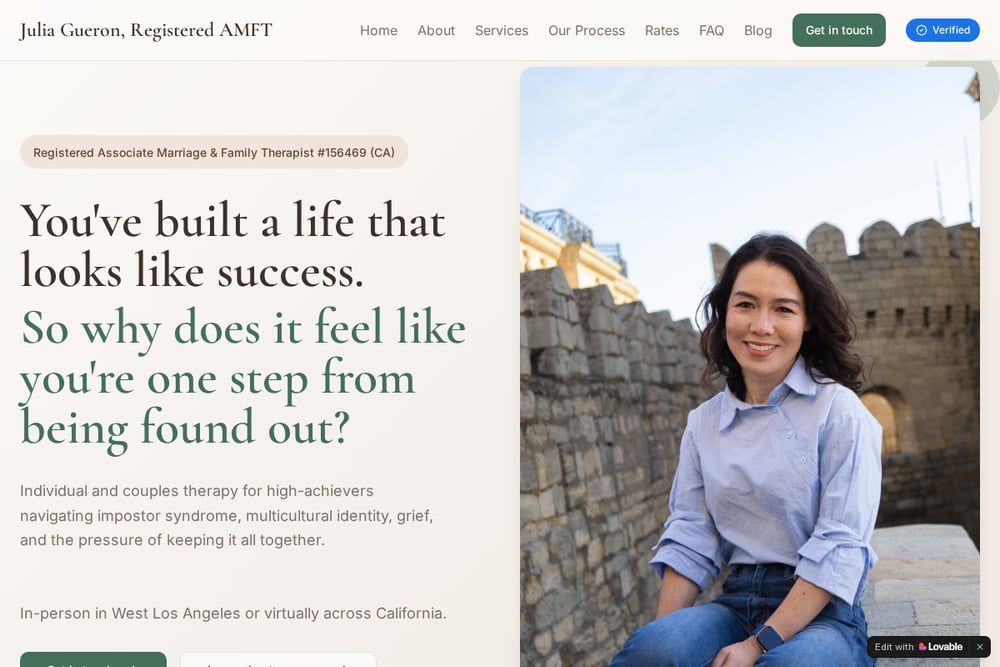 A screenshot of the Julia Gueron, AMFT website.
Julia Gueron is a Registered Associate Marriage and Family Therapist in Los Angeles who specializes in imposter syndrome, multicultural identity, grief, and life transitions. Growing up half-Japanese and half-Israeli, she knows what it means to navigate vastly different cultural landscapes and carve out a cohesive sense of self in the middle. She offers individual and couples therapy in West Los Angeles and virtually across California, with a focus on women in high-pressure careers and first-generation professionals. Her approach speaks directly to the exhaustion of code-switching and the gap between how competent you look and how uncertain you feel. If you have ever ChatGPT-ed your symptoms and still felt unseen, her practice is built for you.
#3 Monarchs Therapy
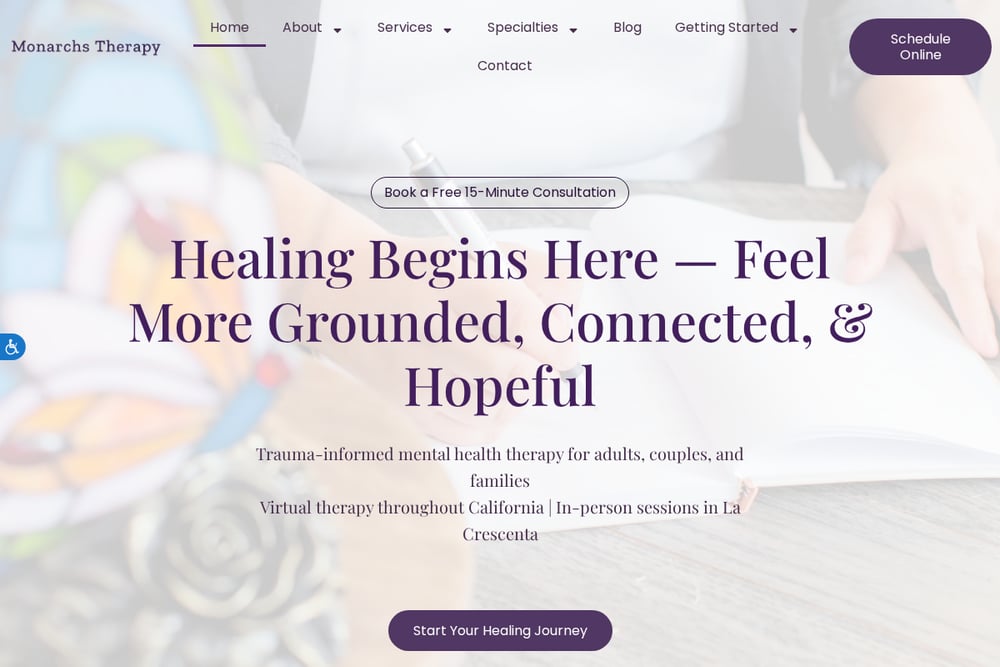 A screenshot of the Monarchs Therapy website.
Monarchs Therapy is a Los Angeles practice with a dedicated imposter syndrome specialty page that describes the silent burden of self-doubt and the fear of being exposed as a fraud. Their team includes associates and licensed therapists with a wide range of specialties, from anxiety and depression to grief, trauma, and life transitions. They offer individual therapy, couples therapy, family therapy, EMDR, and even walk-and-talk therapy. The practice also provides collaborative care and online scheduling, which makes getting started straightforward. If you want a practice that treats imposter syndrome as a core specialty rather than an afterthought, Monarchs Therapy is a strong option.
#4 Therapy Collective of California
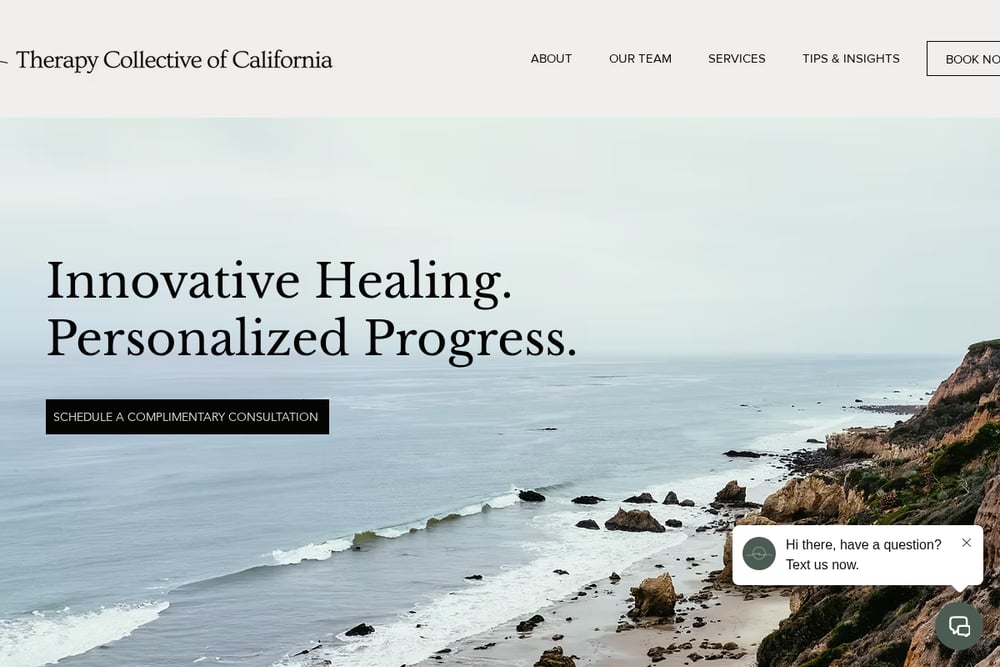 A screenshot of the Therapy Collective of California website.
Therapy Collective of California is a Los Angeles-based practice that features three therapists specifically for imposter syndrome, with no waitlist. Their page speaks directly to high-achieving individuals who second-guess themselves despite external success. The team includes Samantha Potthoff, Claire Summers Goldberger, and Klara Knypinski, each with a distinct focus: high performers with deep-rooted self-doubt, relationship-based imposter syndrome, and people-pleasers or perfectionists reconnecting with their authentic identity. They offer individual psychotherapy, ketamine-assisted psychotherapy, IFS therapy, and nationwide coaching. If you want to choose a therapist based on your specific flavor of imposter syndrome, this practice makes that easy.
#5 Janet Lee Therapy
 A screenshot of the Janet Lee Therapy website.
Janet Lee Therapy is a San Francisco-based practice that specializes in cross-cultural therapy for adult children of immigrant parents, third culture individuals, and those holding multiple identities. While not in Los Angeles, their virtual services may be accessible to California residents, and their focus on the complexities of straddling two worlds is directly relevant to multicultural identity work. They address the guilt, resentment, and unworthiness that can come with family expectations and the pressure to succeed. If you are looking for a therapist who deeply understands the immigrant family dynamic and cross-cultural identity, Janet Lee Therapy is worth exploring.
How to Choose the Right Therapist for You
Start by getting clear on what you actually need. Are you looking for someone who specializes in imposter syndrome specifically, or do you need a therapist who understands the broader context of multicultural identity and grief? Do you prefer in-person sessions in West Los Angeles, or is telehealth a better fit for your schedule? Next, consider the therapist's lived experience. If you are half-Japanese and half-Israeli, or if you are the first in your family to reach a certain level of success, a therapist who has navigated similar terrain can save you months of explaining. Finally, check the practical details: rates, insurance, availability, and whether the practice offers a free consultation. The right fit is about more than credentials; it is about feeling seen from the first session.
What to Automate in Your Search
You can streamline your therapist search by setting up a simple workflow. First, create a spreadsheet with columns for name, location, specialties, rates, insurance accepted, and telehealth availability. Then, use the contact forms on each practice's website to request a free consultation, and filter responses into a folder in your email. If you want to go further, set a calendar reminder to follow up with any practice that has not responded within three business days. You can also use a note-taking app to jot down your initial impressions after each consultation call, so you can compare them later without relying on memory. The goal is to reduce the administrative friction so you can focus on finding the right therapeutic fit.
The Bottom Line on Finding Your Therapist
Los Angeles is full of therapists, but the right one for you is the one who understands the specific weight of your experience. Whether you are battling imposter syndrome in a high-pressure career, navigating multiple cultural identities, or grieving a loss while trying to hold it all together, the five practices above offer different paths to the same goal: feeling less alone and more grounded in who you are. Start with a free consultation, ask direct questions about their experience with your specific concerns, and trust your gut. The best therapist for you is the one who makes you feel understood from the very first conversation.