Logs are where incidents get explained, and for DevOps teams the tool that holds them shapes how fast a problem gets understood. The five platforms below all treat logs as part of a wider operational picture, but they come at that job from different directions. Some bundle logs into a broad observability platform, some build the log store around search, and some focus on cost and predictability. This list is a plain walkthrough of what each one does and who it tends to suit, not a verdict on which is better.
How We Picked These Tools
These tools were picked because each one offers a dedicated log management capability aimed at teams running production systems, and because each has public material describing how its logging works. The list favors variety: a broad monitoring platform, a search-driven data platform, an observability stack with bundled pricing, a machine data platform built for scale, and a full-stack monitoring service with transparent pricing. Descriptions stick to what the source pages say about features and positioning.
| Provider | Best For |
|---|---|
| Datadog | Teams consolidating logs with broader monitoring and security |
| Elastic | Teams that want a search-centric log analytics foundation |
| Better Stack | Teams that want logs bundled with on-call and incident response |
| Axiom | High-volume teams that want to keep every log without self-managing storage |
| Sematext | Teams that want logs inside a full-stack monitoring suite with predictable pricing |
The 5 Tools in Focus
#1 Datadog
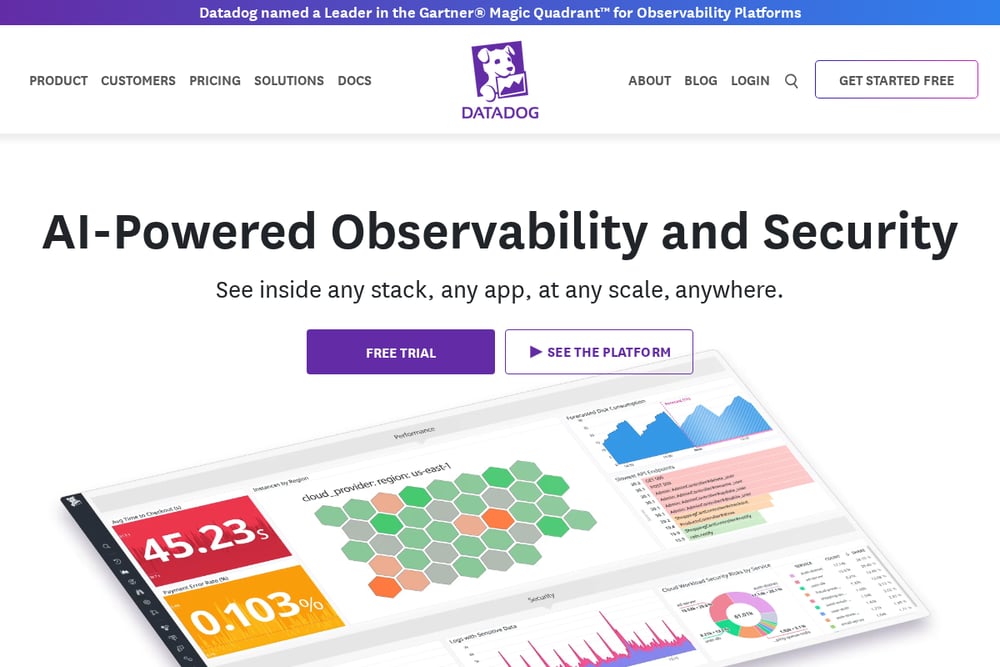 A screenshot of the Datadog website.
Datadog presents itself as an integrated platform for monitoring and security, with log management sitting alongside infrastructure monitoring, APM, and security products. Its log offering includes log management, audit trail, observability pipelines, error tracking, and a bring-your-own-cloud log management option. Because logs live next to metrics, traces, and dashboards, the platform suits teams that want one place to correlate signals during an incident. It is aimed at organizations consolidating monitoring and security tooling rather than running logs as a standalone system.
#2 Elastic
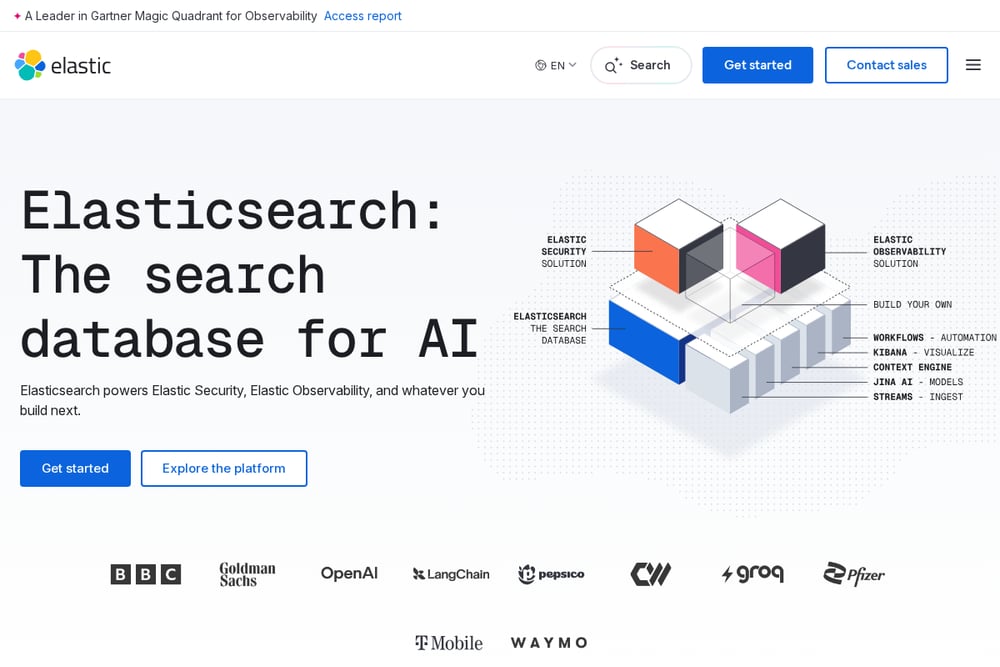 A screenshot of the Elastic website.
Elastic builds its platform around Elasticsearch, described as a distributed, RESTful search and analytics engine, with Kibana for exploring and visualizing data. Log analytics is positioned as a way to centralize and analyze logs using Search AI to detect, investigate, and remediate incidents. The same search engine also powers security and observability products, so logs can be queried alongside other data. It suits teams that want a search-centric foundation and the option to self-manage or run in the cloud.
#3 Better Stack
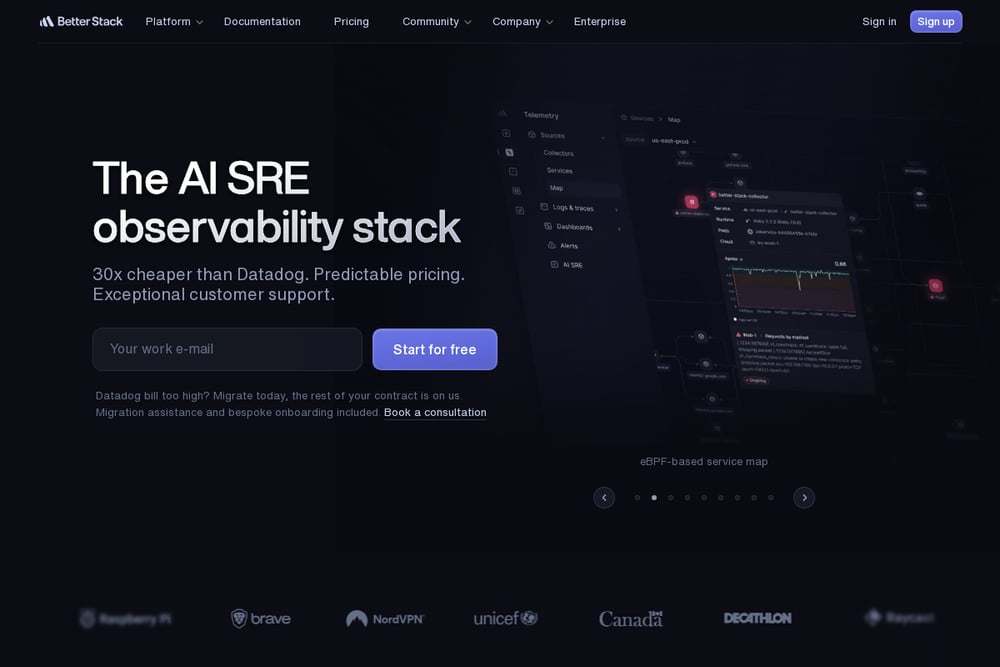 A screenshot of the Better Stack website.
Better Stack describes itself as an AI SRE observability stack with log management as one part of a wider set of tools. Around logs it bundles tracing, infrastructure monitoring, uptime monitoring, error tracking, incident management, and status pages. The pitch centers on predictable pricing and ingesting more data for the same budget, with a published comparison against Datadog. It suits teams that want logs tied closely to on-call, incident response, and cost control in one stack.
#4 Axiom
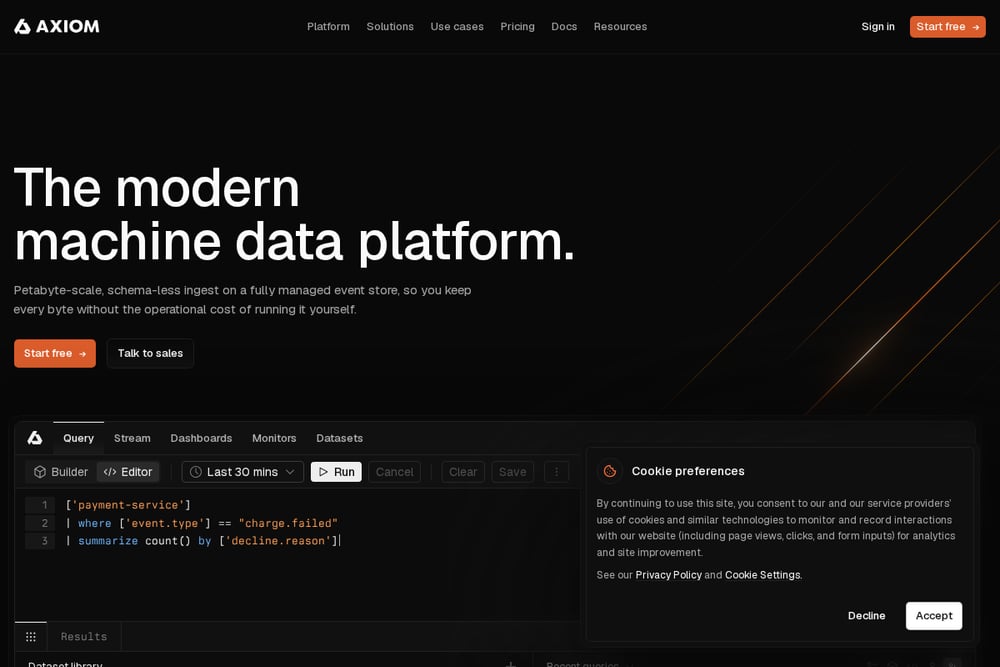 A screenshot of the Axiom website.
Axiom calls itself a modern machine data platform built on petabyte-scale, schema-less ingest on a fully managed event store. Its approach is stream-oriented and schema-on-read, with virtual fields for query-time transformation and no indexes to manage. The company emphasizes keeping every byte of data rather than sampling, and pricing that scales sub-linearly with usage. It suits teams dealing with high log volumes who want to avoid managing their own cluster.
#5 Sematext
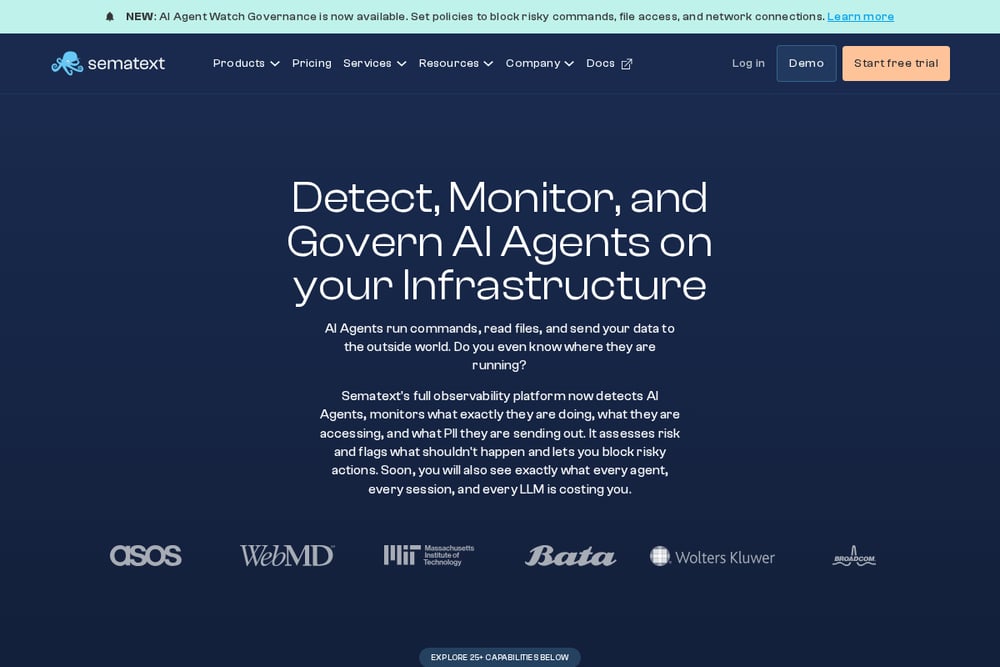 A screenshot of the Sematext website.
Sematext offers a full observability platform that includes log monitoring, mobile logs, and pipelines aimed at reducing costs. Logs sit alongside infrastructure monitoring, tracing, synthetic monitoring, and alerting, with a stated emphasis on transparent pricing and paying only for what you use. A Max Daily Volume setting automatically rejects excess data to prevent unexpected charges. It suits teams that want logs within a broad monitoring suite and care about predictable monthly bills.
Which One Should You Choose?
Start with where logs need to live in your workflow. If incident response happens in chat and on-call rotations, a stack that ties logs to alerting and status pages may reduce tool switching. If you mostly need to search and correlate logs with other data, a search-centric platform gives you that flexibility. Volume matters too: teams generating large amounts of log data should look closely at how each platform handles retention, sampling, and ingest pricing, since those choices shape both visibility and cost. Finally, check whether you want a fully managed store or the option to self-manage, and whether the pricing model is predictable enough for your budget cycle.
Final Thoughts
Each of these platforms treats log management as one piece of a larger operational picture, but the emphasis differs. Datadog and Sematext lean toward broad monitoring suites, Elastic leans on search, Better Stack ties logs to on-call and incident work, and Axiom focuses on scale and keeping all your data. None of them is universally right. The useful question is which one matches how your team already investigates problems, how much log volume you produce, and how you want to pay for it.
Know a company that belongs on this list? Email us at editorial@peekwire.com.