SaaS teams ship fast, and localization can either keep pace or become a bottleneck. The platforms in this list are built to connect with development workflows, automate translation steps, and help teams manage multilingual content without slowing releases. Each entry describes what the platform does and who it tends to suit, based on information from the companies themselves. No single platform is presented as the best choice; the right fit depends on your team, stack, and process.
How We Picked These Tools
We selected platforms that explicitly address software localization, offer developer-friendly features such as APIs, CLIs, or integrations with code repositories, and provide automation for continuous localization. The list includes a mix of established and newer tools, and every fact is drawn from the companies' own websites. We did not rank them by quality; the order is simply a numbered list.
| Provider | Best For |
|---|---|
| Lokalise | SaaS teams seeking a connected, AI-driven localization workflow |
| Phrase | Enterprises and development teams managing complex multilingual content |
| Crowdin | Teams needing a flexible localization hub with extensive integrations |
| Smartling | Enterprises seeking a translation orchestration platform with AI and human options |
| Transifex | Product and developer teams automating continuous localization |
| Tolgee | Developers and teams wanting in-context, open-source localization |
| Localazy | Startups and SaaS teams seeking automated localization with human review |
The 7 Tools in Focus
#1 Lokalise
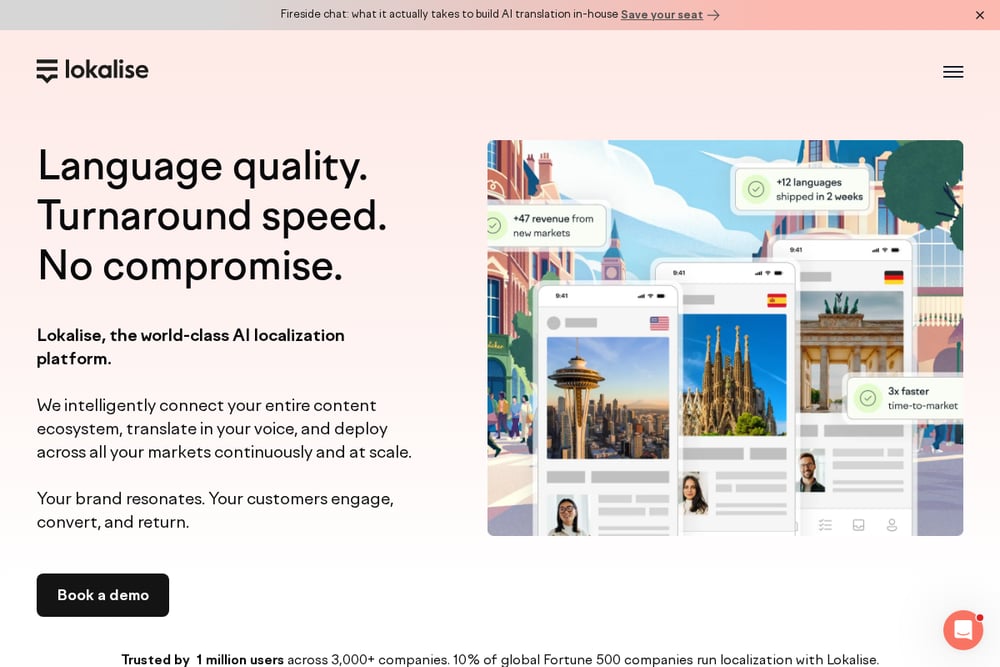 A screenshot of the Lokalise website.
Lokalise is an AI localization platform that connects content systems and automates translation workflows. It emphasizes on-brand AI translation, context management, and integrations with tools like Figma, GitHub, and Jira. The platform supports continuous localization with automated workflows and over-the-air updates for mobile apps. It is designed for product managers, developers, designers, marketers, and localization managers who need to ship multilingual software efficiently.
#2 Phrase
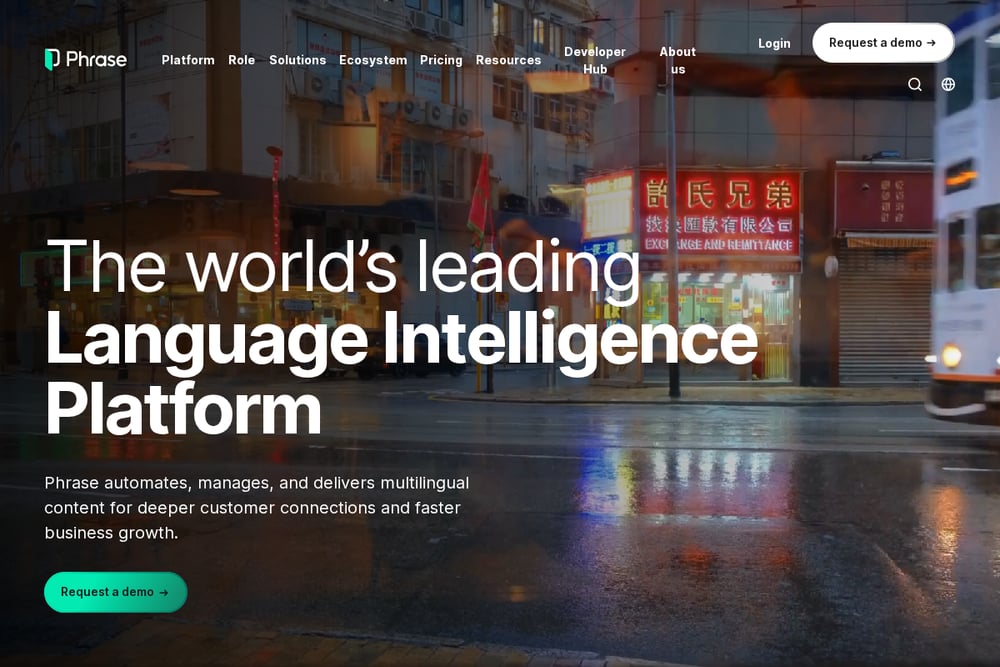 A screenshot of the Phrase website.
Phrase is a language intelligence platform that automates, manages, and delivers multilingual content. It offers capabilities such as AI-powered translation, intelligent automation, quality evaluation, and multimedia localization. The platform includes a translation management system, a developer hub with APIs and CLI, and integrations with GitHub, Figma, and Contentful. It suits enterprises and development teams that need to govern global content at scale while maintaining brand voice and cultural nuance.
#3 Crowdin
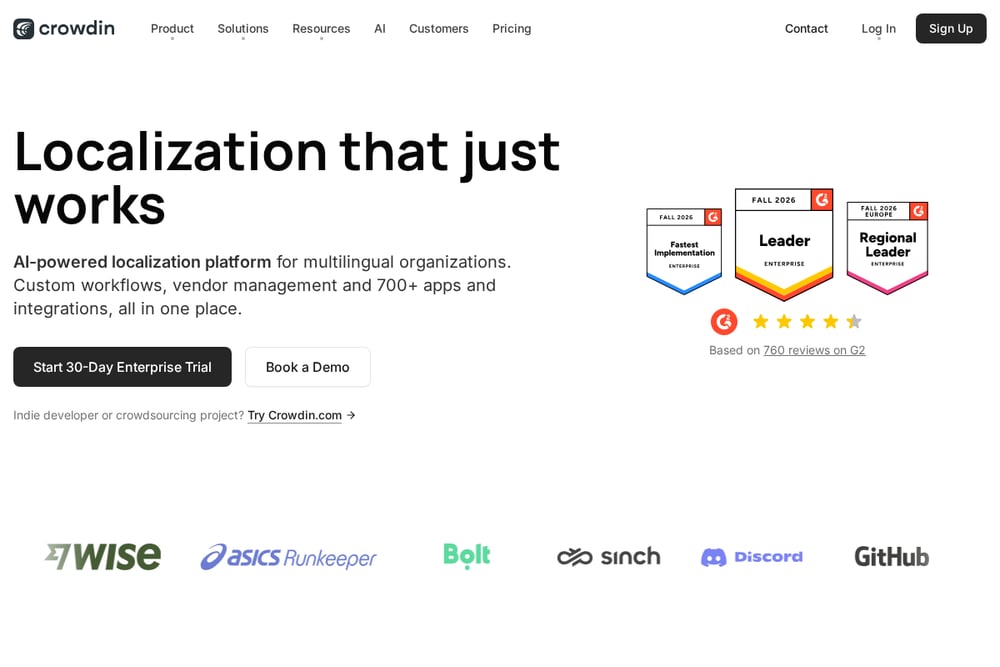 A screenshot of the Crowdin website.
Crowdin is an AI-powered localization platform for multilingual organizations, offering custom workflows, vendor management, and a large app and integration ecosystem. It supports software localization with Git integrations, in-context preview, and over-the-air updates. The platform also covers mobile apps, websites, games, marketing, and documentation. It is suitable for teams that want a flexible localization hub with strong developer tooling and community or vendor collaboration options.
#4 Smartling
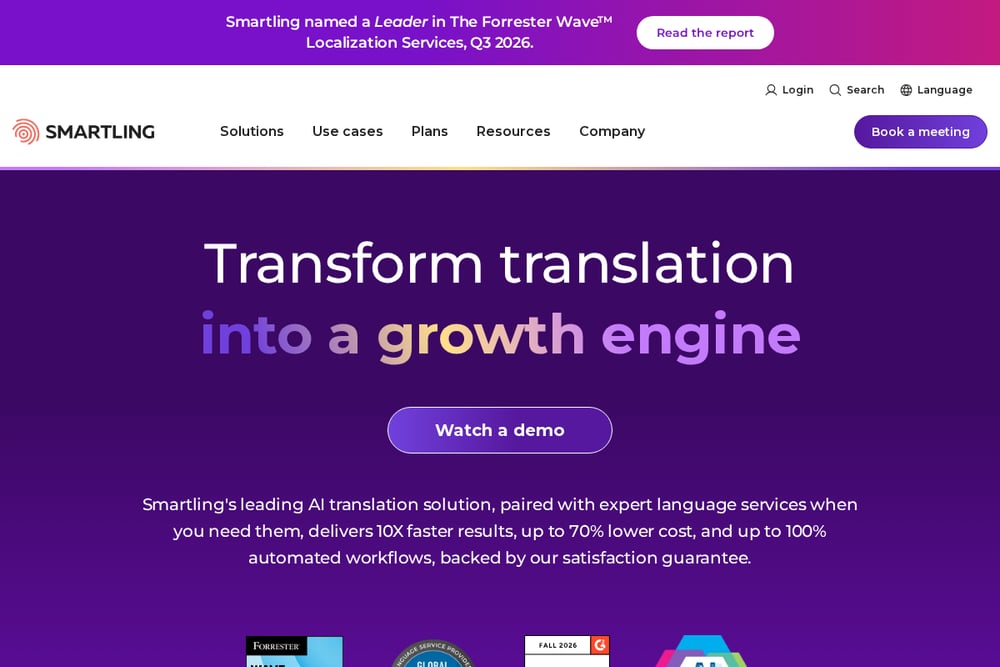 A screenshot of the Smartling website.
Smartling is a translation orchestration platform that combines AI translation, machine translation, and human translation options. It provides a translation management system, a translation proxy, analytics, and connectors to many software platforms. The platform aims to automate manual steps while keeping language experts in the loop for judgment calls. It is designed for enterprises that need to manage translation across marketing, engineering, and other teams.
#5 Transifex
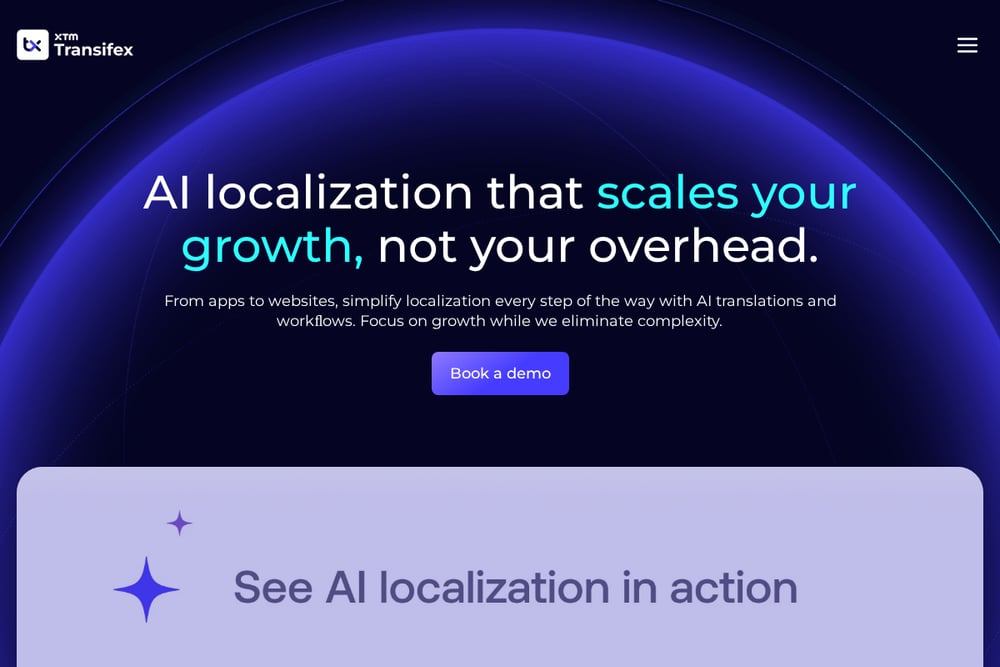 A screenshot of the Transifex website.
Transifex is a localization platform that provides a translation management system and AI-powered translation. It supports continuous localization with CI/CD workflows and offers a developer hub with API, CLI, webhooks, and SDKs for various frameworks. The platform includes features for project management, translation QA, and team collaboration. It suits product teams, developers, marketing teams, and localization managers who want to automate localization steps and keep software continuously localized.
#6 Tolgee
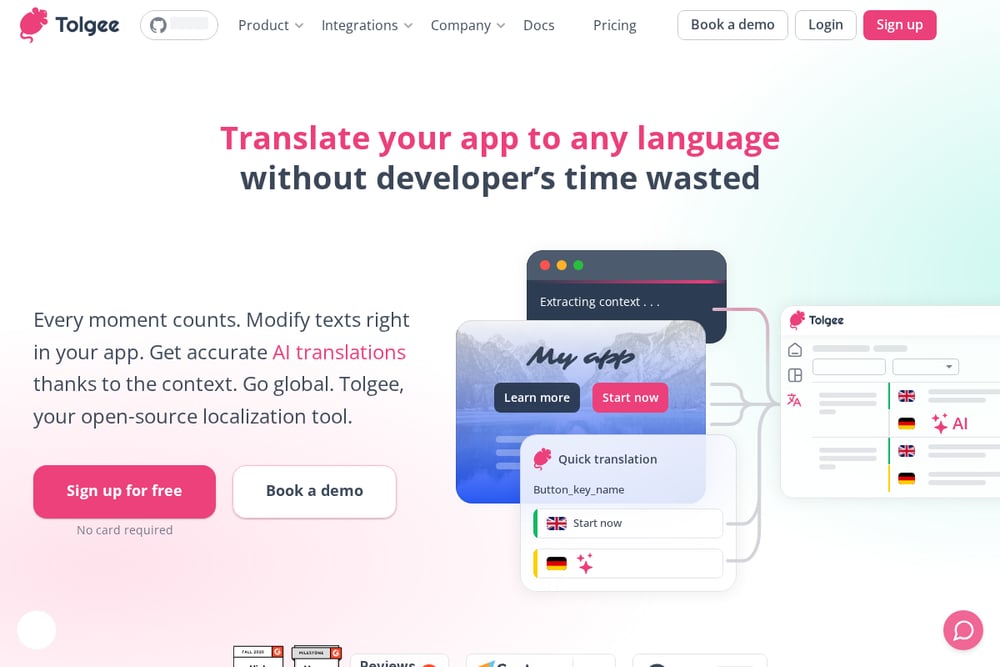 A screenshot of the Tolgee website.
Tolgee is an open-source localization tool that focuses on in-context translation and developer-friendly workflows. It allows users to modify texts directly in the app and provides AI translation that uses context for accuracy. The platform offers SDKs, a CLI, REST API, and a Figma plugin. It is designed for developers and teams that want to delegate localization tasks without constant developer involvement.
#7 Localazy
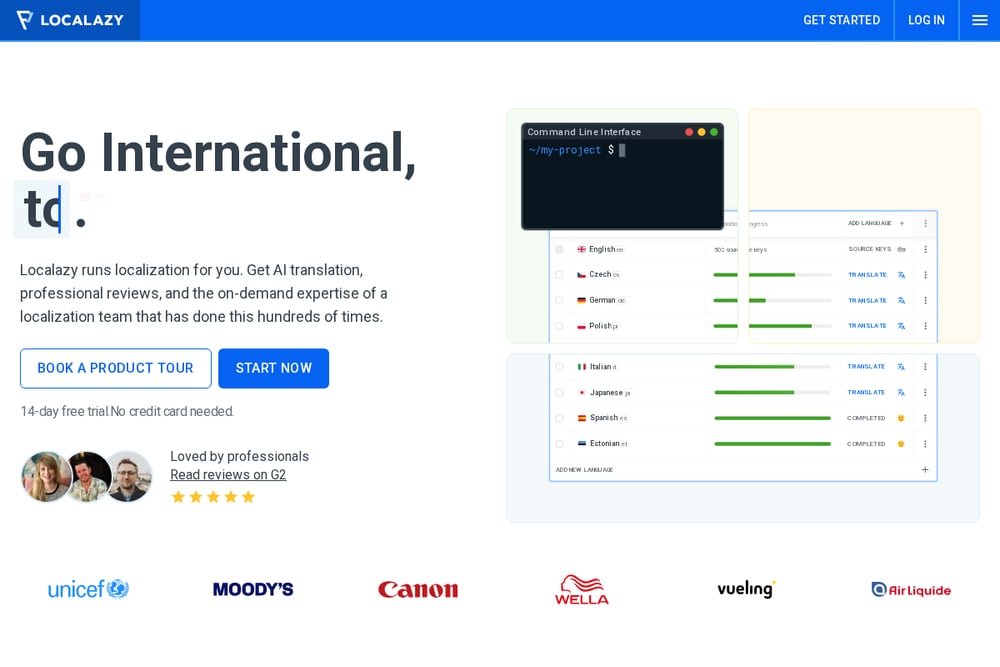 A screenshot of the Localazy website.
Localazy is a localization platform that supports software, mobile app, website, and game localization. It combines AI translation with human review and offers features like context screenshots, glossaries, style guides, and localization testing. The platform provides a CLI, API, and integrations with various frameworks and tools. It is aimed at startups, SaaS companies, and development teams that want to automate localization while maintaining quality through human oversight.
Which One Should You Choose?
When choosing a localization platform for a SaaS product, start by mapping your development workflow. Look for integrations with your code repository, CI/CD pipeline, and content management systems. Consider whether you need AI translation, human review, or a mix of both, and check how each platform handles context and quality assurance. Evaluate the level of automation for repetitive tasks and the available APIs or CLIs for custom workflows. Also think about collaboration features for developers, translators, and marketers. Finally, review pricing and trial options to ensure the platform fits your budget and team size. The platforms in this list offer different strengths, so match their capabilities to your specific needs rather than assuming one is universally better.
Final Thoughts
The localization platforms in this list each bring different strengths to SaaS teams. Some emphasize deep integrations and automation, others focus on in-context editing or human-reviewed AI translation. The right choice depends on your team's workflow, technical stack, and quality requirements. Use the facts and descriptions here as a starting point for your own evaluation, and consider requesting demos or trials to see which platform aligns with your product goals.
Know a company that belongs on this list? Email us at editorial@peekwire.com.