Load testing is no longer a separate phase owned by a specialist team. Developers are expected to validate performance early, often, and inside the pipeline. The tools in this list reflect that shift: they are scriptable, automatable, and designed to fit into the way software is built today. Each entry describes what the tool does and who it suits, without ranking one above another.
How This List Was Chosen
The list focuses on tools that developers can adopt directly: scriptable test definitions, CI/CD integration, and the ability to generate load without heavy setup. Each tool was included because its public materials describe a developer-oriented workflow, whether through code-based tests, open-source editions, or automation-friendly interfaces. The order is a plain list, not a quality ranking.
| Provider | Best For |
|---|---|
| BlazeMeter | Teams seeking a unified performance testing platform with CI/CD integration |
| Gatling | Developers who prefer test-as-code and a choice between open-source and enterprise editions |
| Artillery | Teams wanting a combined load testing and Playwright testing toolkit |
| Locust | Python developers who want to define load tests in code |
| LoadNinja | Teams that want no-code, record-and-replay load testing with real browsers |
5 Load Testing Tools for Developers to Know
#1 BlazeMeter
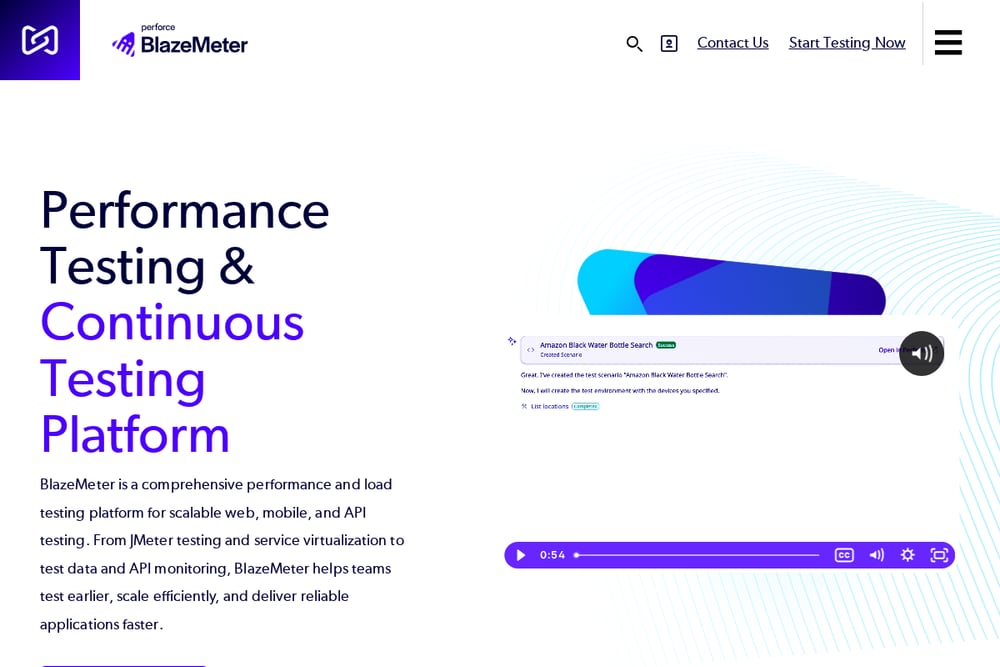 A screenshot of the BlazeMeter website.
BlazeMeter is a performance and load testing platform for web, mobile, and API testing. It supports open-source frameworks and integrates performance gates into CI pipelines. The platform also covers service virtualization, test data generation, and API monitoring. It suits teams that want a unified environment for performance testing alongside functional and API checks.
#2 Gatling
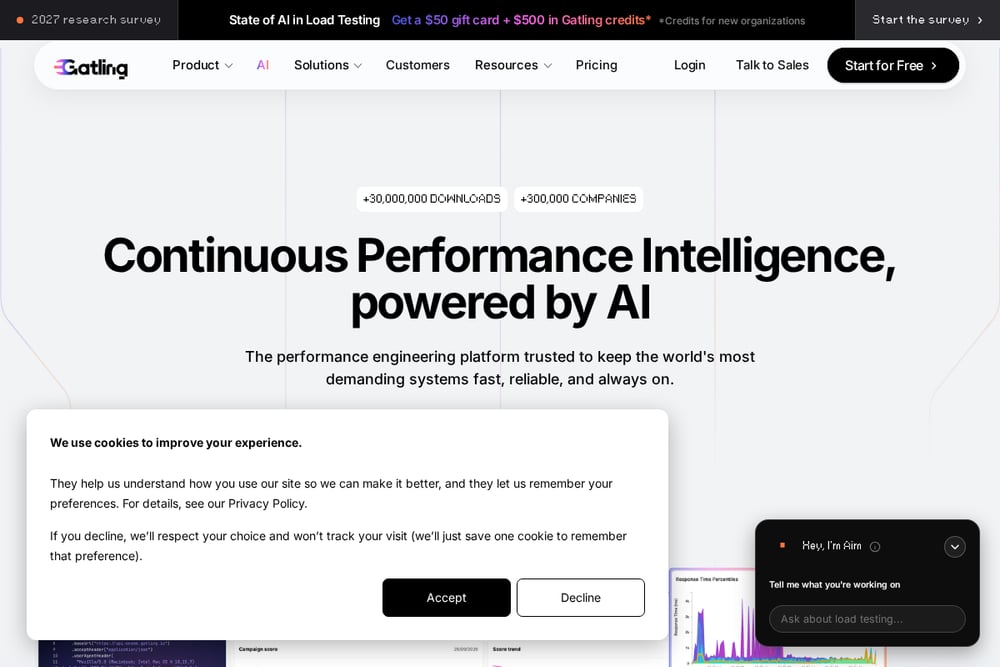 A screenshot of the Gatling website.
Gatling is a load testing platform built around a test-as-code philosophy. It offers both a Community Edition and an Enterprise Edition, with tools for test creation, automation, collaboration, and analysis. The platform includes converters for LoadRunner and JMeter scripts and supports integrations across CI/CD and observability workflows. It suits developers and performance engineers who prefer to define tests in code and manage load testing as part of their engineering process.
#3 Artillery
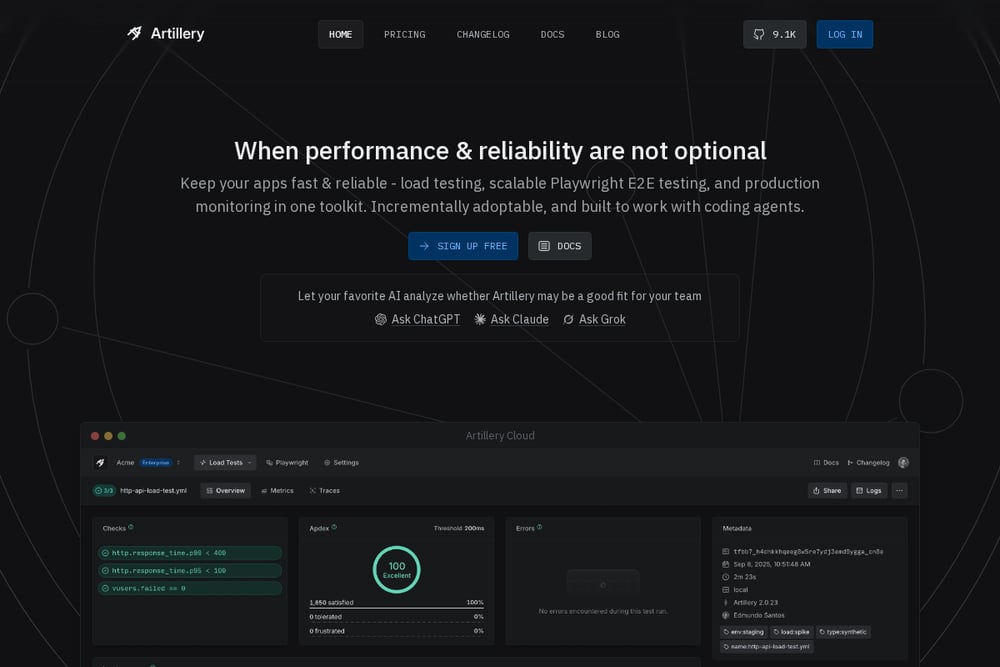 A screenshot of the Artillery website.
Artillery is a toolkit that combines load testing, scalable Playwright end-to-end testing, and production monitoring. It supports HTTP APIs, GraphQL services, and Socket.IO apps, and includes distributed load testing using your own AWS or Azure account. The tool is designed to work with coding agents and provides out-of-the-box integrations for CI/CD and monitoring with OpenTelemetry. It suits teams that want an incrementally adoptable toolkit covering load testing and browser-based testing.
#4 Locust
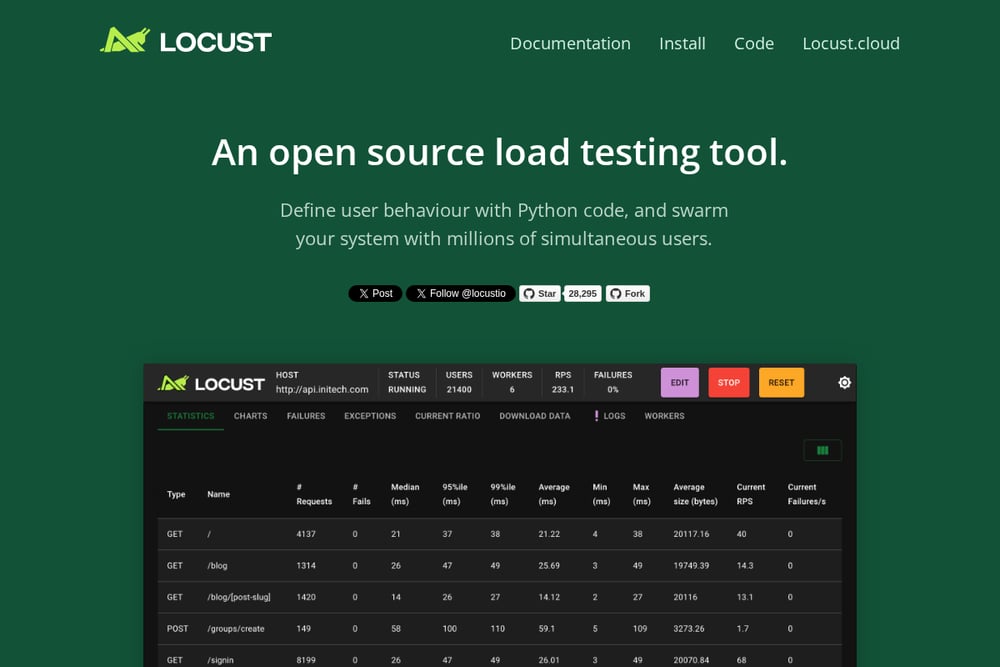 A screenshot of the Locust website.
Locust is an open-source load testing tool where user behavior is defined in Python code. It supports distributed load testing across multiple machines to simulate large numbers of simultaneous users. Tests are written as plain code rather than through a UI or XML configuration. It suits developers who are comfortable with Python and want to define load tests programmatically.
#5 LoadNinja
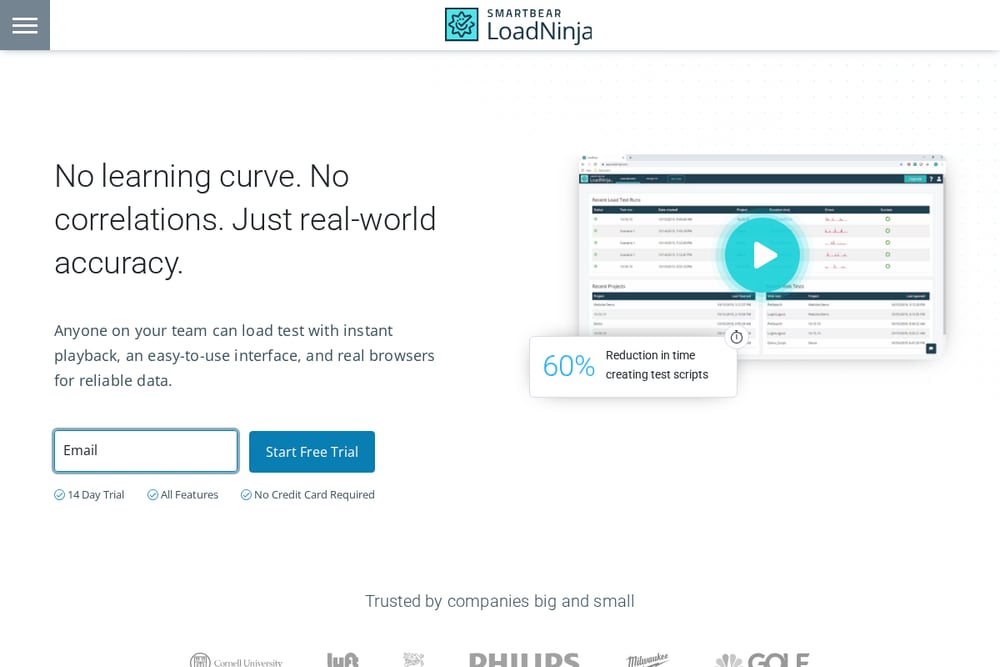 A screenshot of the LoadNinja website.
LoadNinja is a load testing tool that uses record and replay with real browsers. It aims to remove manual correlation and lets users create web and API load tests through the InstaPlay Recorder without coding. The tool provides browser-based navigation timings for diagnosing bottlenecks and supports automation through a public REST API or CI/CD plugins. It suits teams that want to create load tests quickly without writing scripts.
Which One Should You Choose?
Start with how your team already writes and runs tests. If you define infrastructure and tests as code, a code-first tool will feel natural. If you need a broad platform that covers performance, API, and functional testing in one place, look for a unified platform. If you want to reuse existing browser tests, consider a tool that supports Playwright or real-browser replay. Check how each tool fits your CI/CD pipeline and whether you need an open-source edition, a hosted service, or both. The right choice depends on your workflow, not on a universal ranking.
Final Thoughts
These tools show different paths into developer-driven load testing: unified platforms, test-as-code frameworks, combined toolkits, open-source Python scripting, and no-code recorders. None is universally better; each fits a different way of working. Use the descriptions and verified facts to match a tool to your team's skills and pipeline, then validate with a small trial before committing.
Know a company that belongs on this list? Email us at editorial@peekwire.com.