LLM observability has grown from a nice-to-have into a core part of the AI engineering loop. Teams now need to trace every model call, evaluate outputs, manage prompts, and watch cost and latency in production. The tools below each approach that problem from a slightly different angle. Some lean open source and self-hosting, some bundle evals and datasets, and some focus on gateway routing or enterprise controls. This list is a plain overview of what each one does and who it tends to suit, not a verdict on which is best.
How We Picked These Tools
These tools were picked because their public pages describe tracing, evaluation, prompt management, or cost and latency monitoring for LLM applications. Each entry is backed by quotes copied from the company's own source page. The order is a plain list, not a quality ranking, and no company is presented as better than another.
| Provider | Best For |
|---|---|
| Langfuse | Teams wanting an open, integrated tracing and eval platform |
| LangSmith | Agent teams that want observability alongside evals and deployment |
| Helicone | Engineers who want to route, debug, and analyze model traffic |
| Arize Phoenix | Engineers who want open-source tracing with self-hosting |
| Braintrust | Teams that want observability tied to evals and datasets |
| Lunary | Enterprises needing debugging, analytics, and security controls |
| Weights & Biases Weave | Engineers already exploring the Weights & Biases ecosystem |
The 7 Tools in Focus
#1 Langfuse
 A screenshot of the Langfuse website.
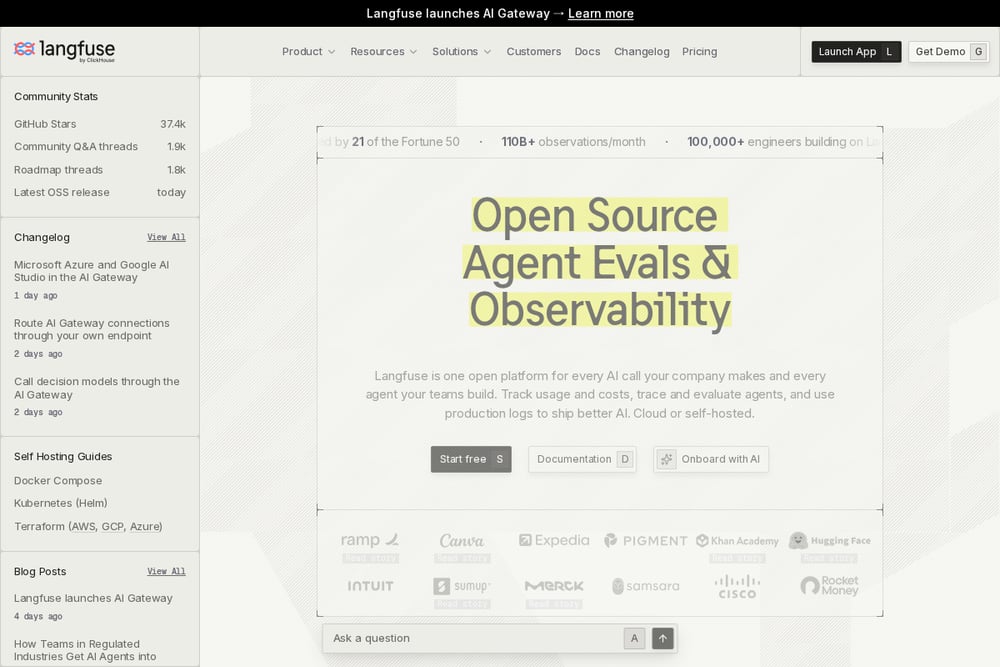
Langfuse describes itself as one open platform for every AI call a company makes and every agent its teams build. It combines tracing, prompt and skill management, evaluation, metrics, and an AI Gateway in a single product, available as cloud or self-hosted. Engineers can instrument agents with SDKs or OpenTelemetry, or route model calls through the gateway without changing code. It suits teams that want tracing, evals, and cost tracking in one place and value an open-source option.
#2 LangSmith
 A screenshot of the LangSmith website.
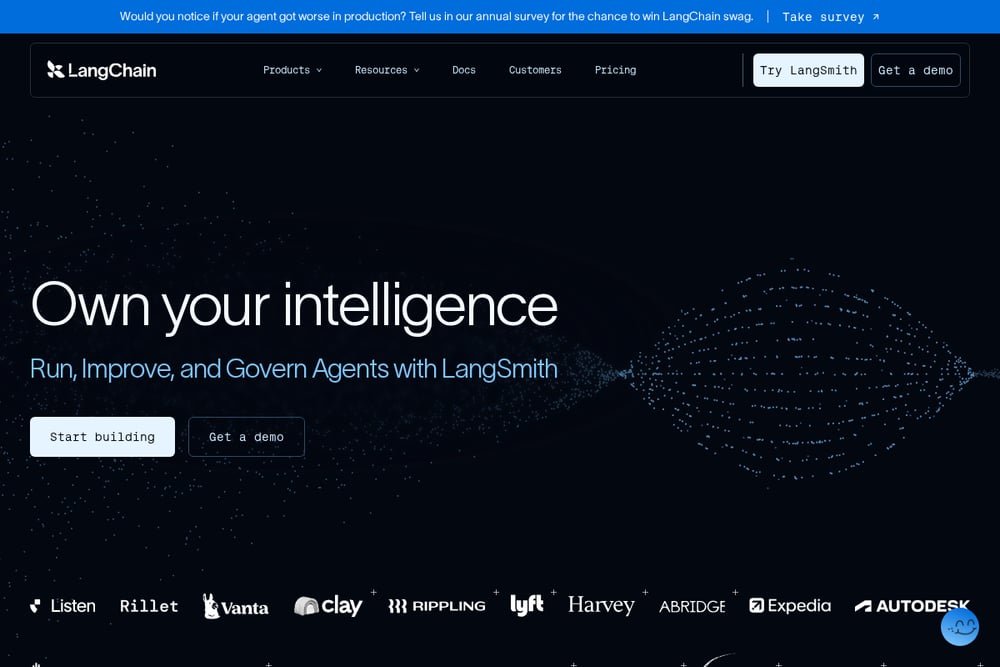
LangSmith is described as an agent engineering platform that covers the agent development lifecycle: build, test, deploy, monitor, iterate, and govern. Its observability features include step-by-step tracing, online evals, dashboards, and alerts built for agents. It also offers evaluation, an agent server, sandboxes, and an LLM Gateway for controlling model calls and spend. It suits teams building and operating agents that want observability tied closely to evaluation and deployment.
#3 Helicone
 A screenshot of the Helicone website.
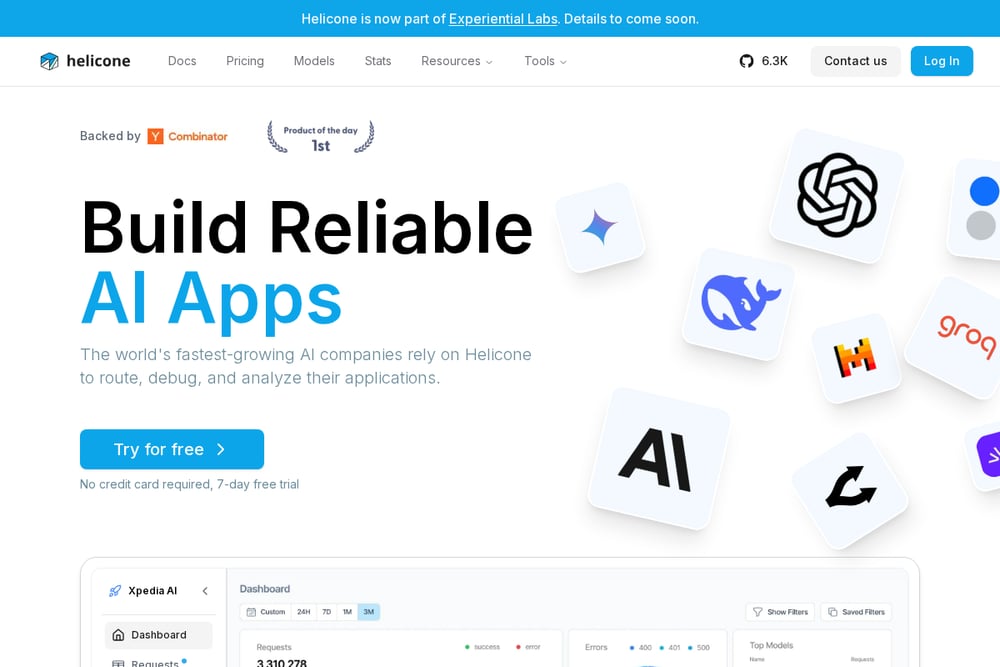
Helicone presents itself as a way to build reliable AI apps, with companies using it to route, debug, and analyze their applications. Its dashboard surfaces requests, segments, sessions, users, and an HQL query interface. It also lists prompts, datasets, a playground, rate limits, and alerts as part of the product. It suits engineers who want a focused observability layer over their model traffic with routing and debugging in mind.
#4 Arize Phoenix
 A screenshot of the Arize Phoenix website.
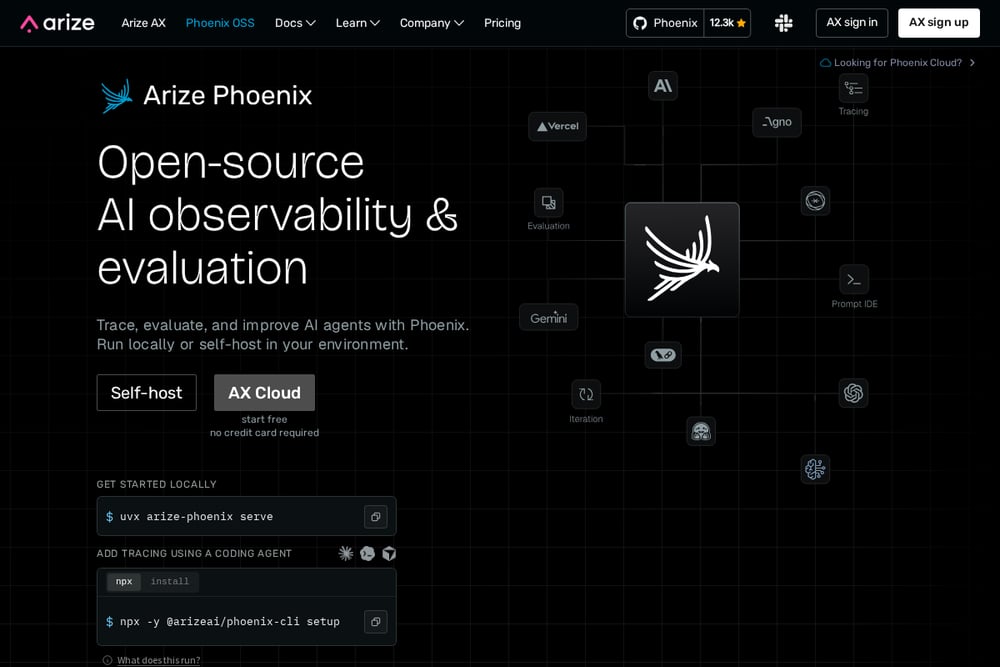
Phoenix is an open-source AI observability and evaluation tool from Arize that can run locally or be self-hosted. It traces every step an agent takes, including prompts, retrievals, tool calls, and outputs, and supports annotations with human review or LLM-as-judge. Datasets, experiments, and evaluations let teams test changes and measure cost, latency, and performance. It suits engineers who want an open-source option and prefer to keep traces in their own environment.
#5 Braintrust
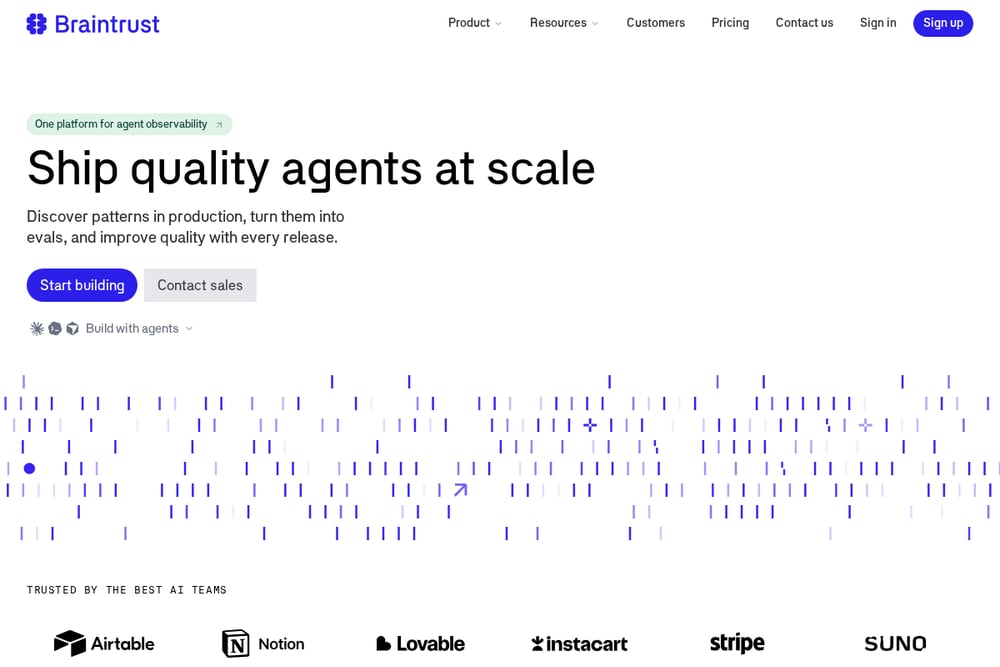 A screenshot of the Braintrust website.
Braintrust describes itself as one platform for agent observability, built around observing, evaluating, and discovering patterns in production. It traces prompts, responses, and tool calls in real time, runs evals scored by LLMs, code, or humans, and turns production traces into eval datasets. It also offers pattern automations, custom trace views, and an MCP server for connecting coding agents. It suits teams that want observability tightly coupled to evaluation and quality improvement.
#6 Lunary
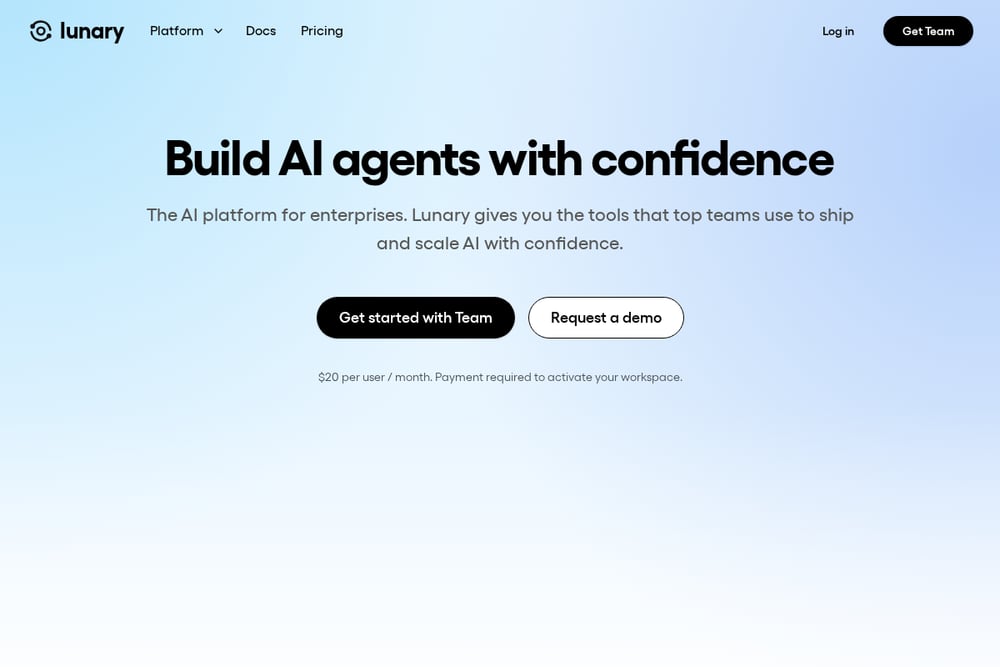 A screenshot of the Lunary website.
Lunary is presented as an AI platform for enterprises, giving teams tools to ship and scale AI with confidence. It logs prompts and results, offers traces and error stack traces, analytics on model usage and costs, prompt templates with versioning and A/B testing, and PII masking. It is designed to be self-hosted and lists SOC 2 Type II and ISO 27001 certification. It suits teams that need debugging and analytics with enterprise security controls.
#7 Weights & Biases Weave
 A screenshot of the Weights & Biases Weave website.
Weights & Biases is listed here through its homepage, which is the provided source page. The page as captured focuses on cookie consent and privacy preferences rather than product detail, so this entry stays limited to what that page shows. It appears in this list because it is a commonly referenced name in the LLM observability space. Engineers evaluating it should consult its own documentation for tracing and evaluation specifics.
Which One Should You Choose?
Start with where your traces need to live. If data must stay on your own infrastructure, look at tools that emphasize self-hosting, such as Phoenix or Lunary. If you want tracing, evals, and prompt management in one integrated platform, Langfuse and Braintrust both describe that combined approach. If your work centers on agents and you want observability next to deployment and governance, LangSmith frames its platform around the full agent lifecycle. If you mainly want a layer over model traffic for routing and debugging, Helicone describes that focus. Check each tool's own documentation for current pricing, integrations, and deployment options before deciding.
Final Thoughts
The LLM observability space in 2026 is less about a single winner and more about fit. Some tools lean open source and self-hosted, some bundle evals and datasets tightly with tracing, and some emphasize enterprise controls or gateway routing. The useful move for an AI engineer is to map each tool's described strengths to your own constraints: where traces must live, how much evaluation you need, and whether prompt management belongs in the same place. Treat this list as a starting point for that comparison rather than a ranking.
Know a company that belongs on this list? Email us at editorial@peekwire.com.