Mid-size companies need service desk software that is powerful enough for real IT operations but not so heavy that it takes a quarter to deploy. This list covers five platforms that appear in the market and are worth knowing when you are comparing options. Each entry describes what the product does and who it tends to suit, using only the vendors' own published material. No product is declared the best; the order is simply a list.
How We Picked These Tools
We looked for service desk products that are actively presented for IT service management and that publish material relevant to mid-size organizations. We included tools that cover core service desk functions such as incident management, self-service, and asset management, and that offer either AI-assisted or automation features. Each item is backed by quotes from the vendor's own pages. We did not rank by quality or declare a winner.
| Provider | Best For |
|---|---|
| Jira Service Management | Teams already working in the Atlassian ecosystem |
| ManageEngine ServiceDesk Plus | Organizations wanting a service desk inside a broader IT management suite |
| TOPdesk | Mid-size organizations focused on data residency and flexible service processes |
| SysAid | IT teams seeking AI-driven automation with governance |
| InvGate | Organizations unifying service and asset management with no-code flexibility |
The 5 Tools in Focus
#1 Jira Service Management
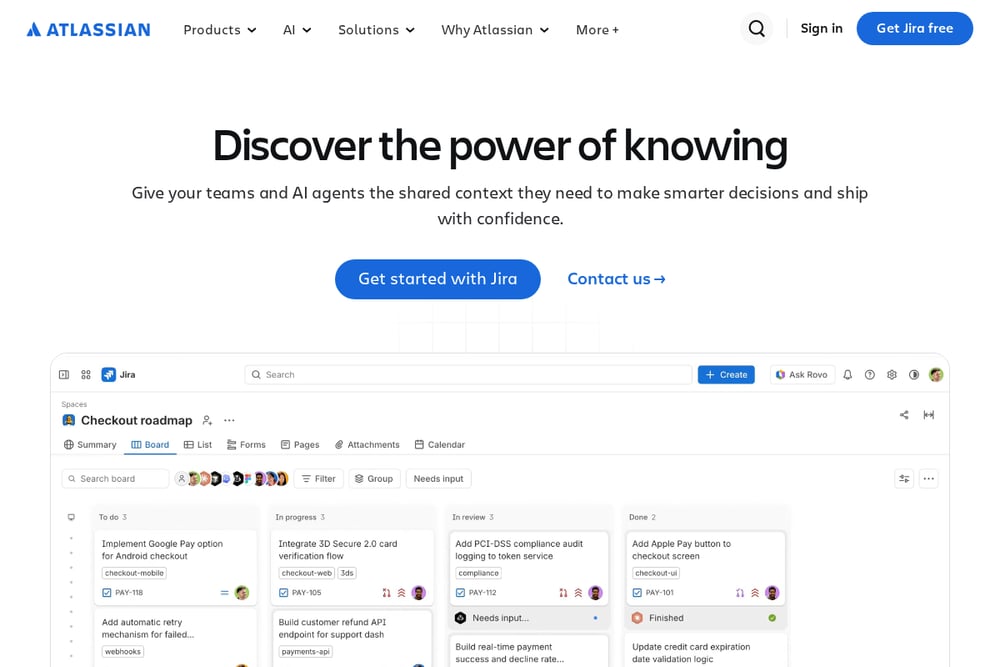 A screenshot of the Jira Service Management website.
Jira Service Management is Atlassian's service management product, positioned to help teams deliver service at high velocity. It sits within the broader Atlassian ecosystem alongside Jira, Confluence, and other tools, so teams already using those products can connect service work to development and knowledge management. Atlassian also offers Customer Service Management and Assets as related capabilities. It suits organizations that want service management closely tied to software development and project work.
#2 ManageEngine ServiceDesk Plus
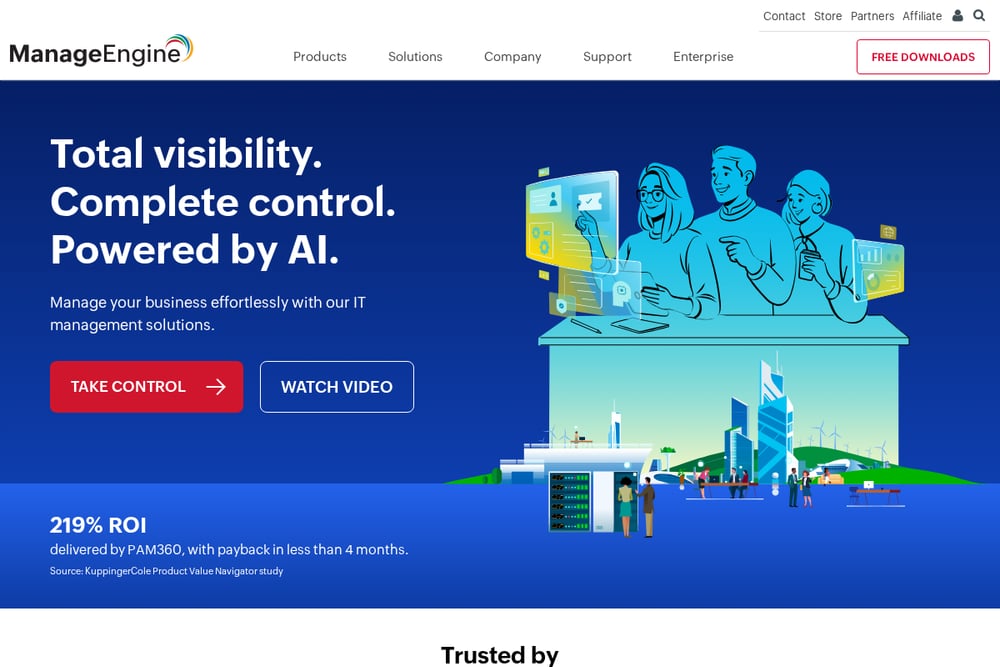 A screenshot of the ManageEngine ServiceDesk Plus website.
ManageEngine ServiceDesk Plus is part of ManageEngine's unified service management offering, which covers enterprise and IT service delivery, IT asset management, and customer support. ManageEngine presents a broad portfolio of IT management solutions, including identity and access management, endpoint management, and security information and event management. The service management line is described as designing, automating, delivering, and managing IT and business services. It suits organizations looking for a service desk within a wider IT management suite.
#3 TOPdesk
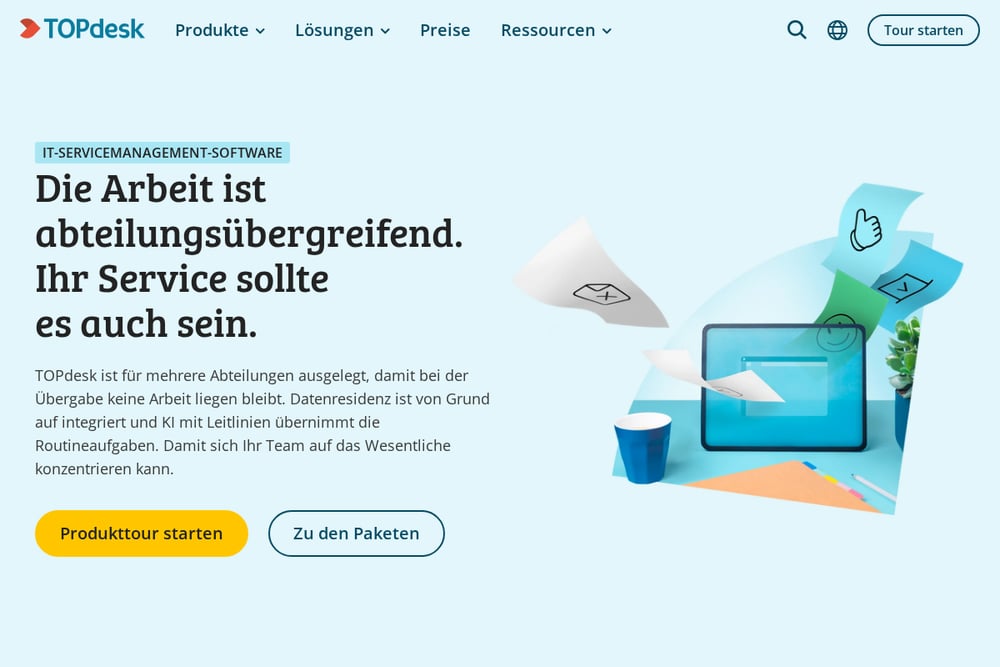 A screenshot of the TOPdesk website.
TOPdesk is IT service management software built for multiple departments so that work does not get lost during handovers. It includes task management, knowledge management, reports and dashboards, self-service, and asset management. TOPdesk emphasizes data residency and guided AI for routine tasks. The vendor states that it is designed for mid-size organizations. It suits mid-size organizations that want a standard yet flexible service desk with strong data control.
#4 SysAid
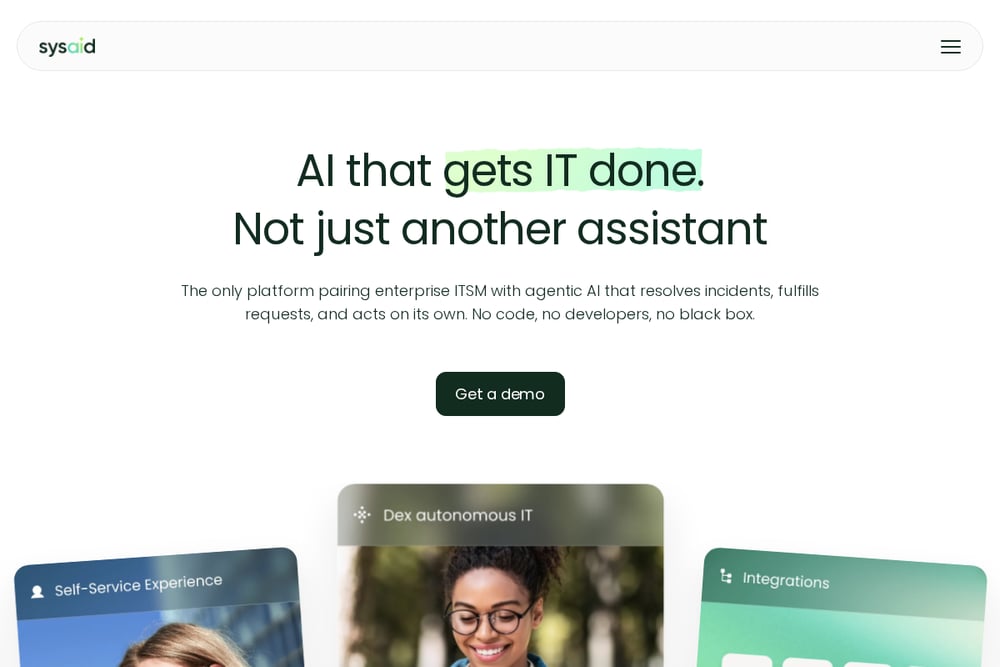 A screenshot of the SysAid website.
SysAid combines enterprise ITSM with agentic AI that can resolve incidents, fulfill requests, and act on its own. The platform covers incident management, request fulfillment, CMDB, change management, and SLAs, and the vendor says it can be configured by your team rather than a consultant. SysAid emphasizes governance, with every AI action logged and traceable. It suits IT teams that want AI-driven automation with built-in governance and a short implementation.
#5 InvGate
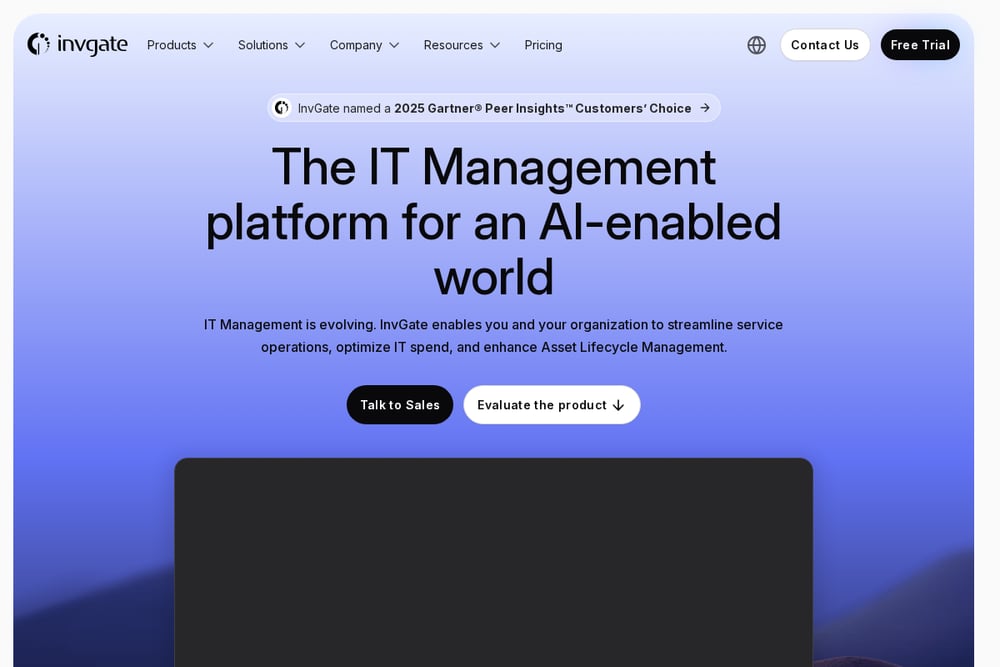 A screenshot of the InvGate website.
InvGate offers an IT Management platform with Service Management and Asset Management as two stand-alone solutions that work together. The service management product is described as efficient, seamless, and highly scalable, with a no-code workflow builder and a unified service catalog. InvGate also provides AI features such as a virtual service agent and knowledge article generation. It suits organizations that want to unify service management and asset management with no-code customization.
Which One Should You Choose?
Start with the work your service desk actually handles. If your team already lives in a development and project tool ecosystem, a service desk that connects to those tools may reduce friction. If you want a single vendor for many IT management functions, a broader suite can simplify procurement. For mid-size organizations, data residency and governance may matter, so check where data is stored and how AI actions are logged. Consider how much configuration you can do without consultants, and whether you need asset management alongside service management. Ask vendors for a trial or demo and test your real workflows before deciding.
Final Thoughts
These five products approach the service desk from different angles: ecosystem integration, suite breadth, mid-size focus, AI automation, and unified service and asset management. None is presented as the best; the right fit depends on your existing tools, your governance needs, and how much customization you want to own. Use the quotes and vendor pages as a starting point, then validate with your own requirements.
Know a company that belongs on this list? Email us at editorial@peekwire.com.