
Investigative teams drown in fragmented data. These five platforms help you see the whole case picture—without losing provenance.
The Shift from Fragmentation to Clarity
Investigative case management has moved beyond simple document storage. Modern teams need to ingest messy material—reports, audio, video, tips—and synthesize it into a living picture. The challenge is that cases fail on fragmentation, not effort. Overlooked connections and weak links hide when the story is scattered across many artifacts. That's why the latest platforms emphasize unified graph, timeline, and map views, plus AI-assisted hypothesis generation. They cut manual reconciliation work so you can spend more time investigating and less time synthesizing.
How We Evaluated These Platforms
We assessed each platform on its ability to consolidate diverse case material, support team collaboration, and preserve source provenance. We also looked at how well each tool handles AI-driven insights—like transcription, redaction, and hypothesis generation—without sacrificing security or auditability. Finally, we considered the breadth of use cases, from law enforcement to corporate investigations, and how intuitive the interface is for daily investigative work.
Here's a quick look at the five platforms we evaluated, with their primary strengths and ideal use cases.
| Provider | Best For |
|---|---|
| Kaseware | Comprehensive law enforcement and intelligence operations |
| Proxim Intelligence | Clarity from Complexity. | Investigative teams needing AI-driven synthesis and hypothesis testing |
| Casefleet | Litigation and investigations that require detailed fact chronologies |
| Case Closed | Law enforcement agencies needing CJIS-compliant case management |
| Case IQ | Corporate compliance and workplace investigations |
The Five Platforms, Closely Examined
#1 Kaseware
 A screenshot of the Kaseware website.
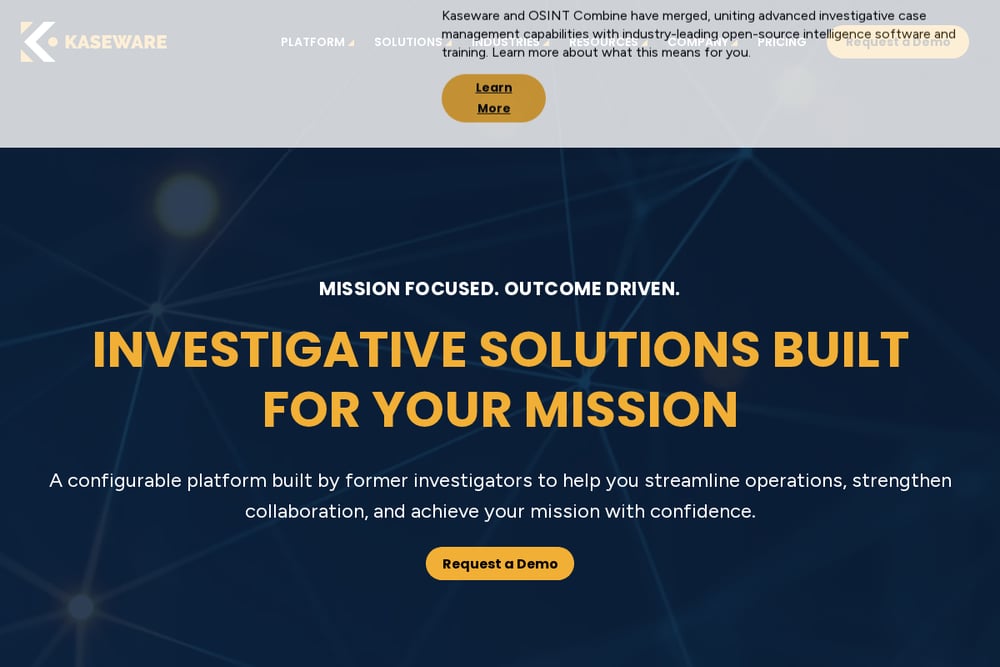
Kaseware is a configurable investigative case management platform built by former FBI Special Agents. It offers a full suite of tools—search, incident management, evidence management, link analysis, and geospatial analysis—all in one secure system. The platform is designed to streamline operations for law enforcement, intelligence agencies, and corporate security teams. Its AI services and OSINT operations help you uncover hidden connections across vast datasets. Kaseware's strength lies in its mission-focused, outcome-driven approach, making it a top choice for agencies that need a robust, all-in-one solution. You can tailor it to your specific workflow, from insider threats to fraud investigations.
#2 Proxim Intelligence | Clarity from Complexity.
 A screenshot of the Proxim Intelligence website.
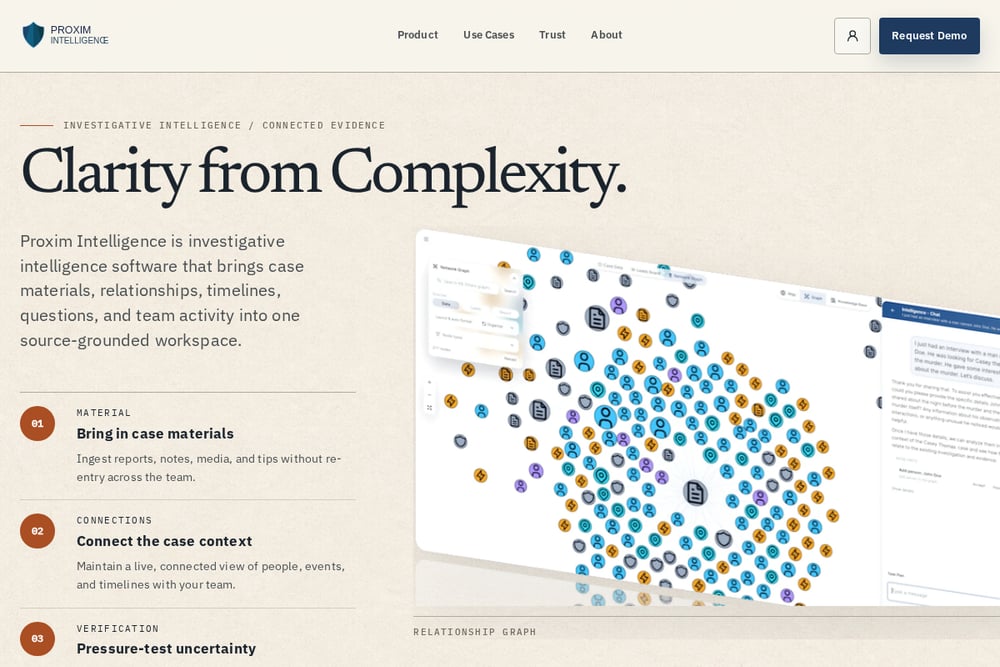
Proxim Intelligence is a cloud-based investigative workspace that turns messy case material into a unified graph, timeline, and map view. It ingests reports, docs, images, audio, and video, with features like handwritten text extraction and multi-speaker audio transcription. You can redact across documents, images, PDFs, and audio, and even pull RECAP/CourtListener docs directly. The platform lets you track facts, claims, and hypotheses, and chat with the case to surface hints and gaps. It's built for teams that need to pressure-test the case picture and prepare review or handoff without losing provenance. Proxim's auto-investigation runs explore plausible explanations, helping you reduce missed leads and increase case clarity.
#3 Casefleet
 A screenshot of the Casefleet website.
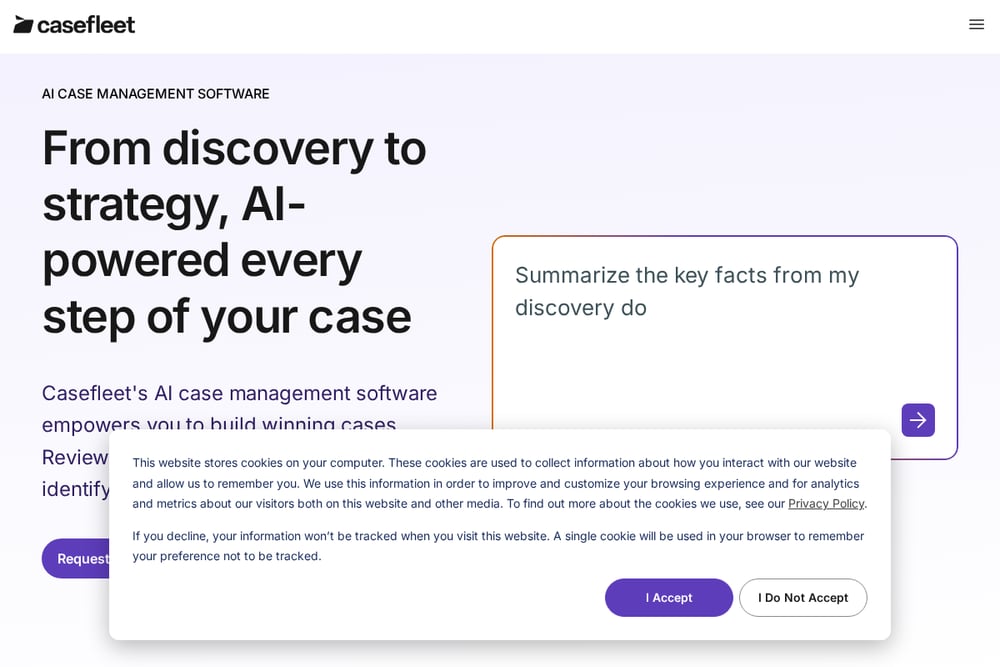
Casefleet is an investigation management software that focuses on building fact chronologies from your documents. Its AI-powered Casey assistant can chat with you about the case, draft facts for your approval, and even handle multi-step tasks. You get document intelligence with AI summaries, entity extraction, and bulk tagging, making it easy to organize large volumes of material. The platform offers full-text search, timeline makers, and case outlines to structure issues and arguments. It's particularly strong for litigation-heavy workflows, like criminal law, personal injury, and employment law. Casefleet's strength is in turning raw documents into a clear, source-linked narrative.
#4 Case Closed
 A screenshot of the Case Closed website.
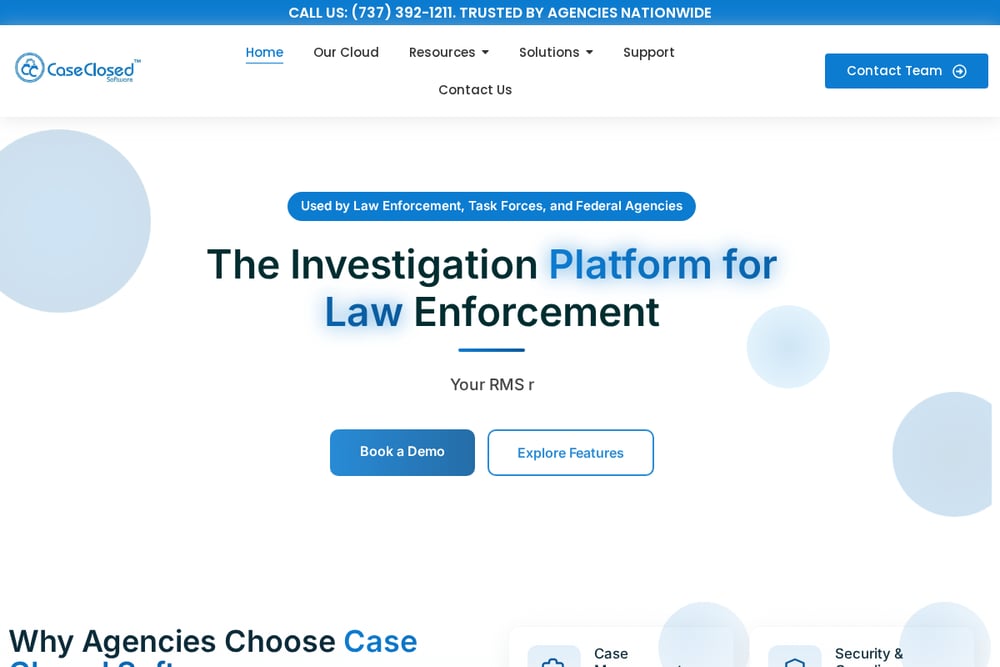
Case Closed is a law enforcement case management software designed for police departments, task forces, and multi-jurisdictional agencies. It provides one secure system to manage evidence, intelligence, and collaboration from intake to prosecution. The platform is CJIS-compliant with 256-bit encryption, and you can deploy it in the cloud or on-premise. It offers full lifecycle control—intake, evidence, link analysis, court tracking, and auto-reports. Case Closed is built for investigators who need a secure, compliant, and efficient way to handle complex cases. It's particularly strong for specialized units like anti-human trafficking, narcotics, and ICAC.
#5 Case IQ
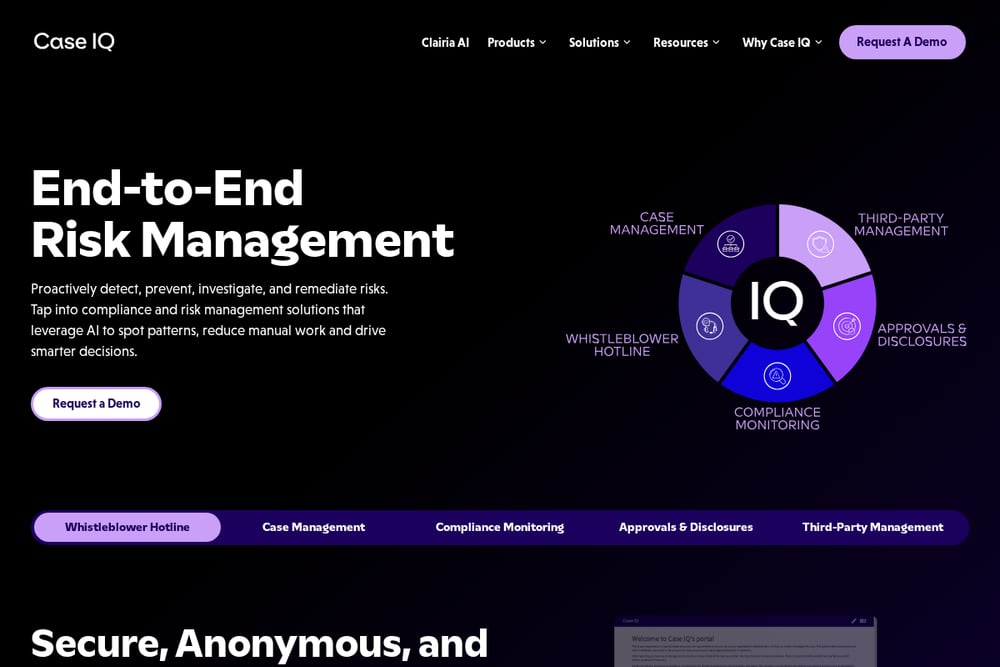 A screenshot of the Case IQ website.
Case IQ is a workplace investigative case management software that focuses on compliance and risk. It offers omni-channel intake, configurable workflows, and AI-powered insights to help you investigate with confidence. The platform includes a whistleblower hotline for anonymous reporting in 100+ languages, plus compliance monitoring that detects fraud and corruption across millions of transactions. You can automate approvals and disclosures, and manage third-party risk throughout the vendor lifecycle. Case IQ is ideal for corporate investigation teams that need to handle internal complaints, ethics violations, and regulatory compliance. Its strength lies in streamlining intake and triage, so you can close cases faster.
How to Choose the Right Investigative Workspace
Start by identifying your primary use case—are you in law enforcement, litigation, or corporate compliance? For law enforcement, you'll want CJIS compliance and features like evidence management and link analysis. If you're handling litigation, look for tools that build fact chronologies and integrate with court documents. For corporate teams, focus on intake channels, whistleblower hotlines, and compliance monitoring. Consider the size of your team and whether you need multi-agency collaboration. Finally, think about AI capabilities—do you need transcription, redaction, and hypothesis generation? Choose a platform that fits your workflow, not one that forces you to adapt.
Automating the Investigative Workflow
Modern investigative platforms automate the heavy lifting. You can ingest documents, audio, and video, and the system automatically transcribes, extracts entities, and redacts sensitive information. AI assistants like Casey in Casefleet can draft facts and summarize long documents, while Proxim's auto-investigation runs explore plausible explanations. These tools help you surface hints, gaps, and connections that might otherwise be missed. By automating synthesis, you free up time to focus on actual investigation—interviewing witnesses, analyzing leads, and building your case.
The Bottom Line
The right investigative workspace can transform how your team handles complex cases. Whether you need a comprehensive law enforcement platform like Kaseware, an AI-driven synthesis tool like Proxim Intelligence, or a litigation-focused system like Casefleet, there's a solution that fits. The key is to find a platform that reduces fragmentation and keeps your team aligned on one living case picture. With the right tool, you'll spend less time synthesizing and more time investigating—and that's what leads to case clarity.