
We would never hand a child the keys to a car without practice — yet every day we hand kids a powerful smart device connected to the entire world and say 'be careful.' Online predators are sophisticated, patient, and strategic.
Why Interactive Training Is the Only Way Forward
The old model of internet safety education — handing out pamphlets, showing a video, and saying 'be careful' — is failing. According to NCMEC, online predator reports surged 75% in the first half of 2025, and AI-generated child exploitation increased by over 6,000%. Kids are getting smartphones younger, and predators are using sophisticated grooming techniques that static lessons can't prepare them for. Neuroscience shows that experiential learning builds 90% stronger memory than reading alone. That's why interactive tools that let kids practice making decisions in realistic scenarios are becoming the gold standard. The tools on this list represent the best of this new approach, each with a different focus and age range.
How We Ranked These Tools
We evaluated each tool based on five criteria: realism of scenarios (does it simulate actual predator tactics?), engagement (will kids actually want to use it?), educational depth (does it teach transferable skills?), accessibility (is it free and easy to use?), and age appropriateness. We prioritized tools that require active decision-making over passive consumption. The PlaySafe Game scored highest on realism and engagement, while Google Interland led on production value and classroom adoption.
Here's a quick comparison of the top five interactive online safety tools for kids, ranked by overall effectiveness in teaching predator awareness.
| Provider | Best For |
|---|---|
| Be Internet Awesome (Interland) | Younger kids learning broad digital citizenship |
| NetSmartzKids | Young children learning through videos and simple games |
| CSNP Kids Safety Resources | Hands-on activity books and gaming-specific safety guides |
| The PlaySafe Game | Realistic predator chat simulations for tweens and teens |
| Disney Wild About Safety | Young kids learning basic safety with beloved characters |
Detailed Reviews of Each Tool
#1 Be Internet Awesome (Interland)
Google's Interland is a free, browser-based game that teaches kids ages 7-12 the fundamentals of digital safety and citizenship. Players navigate four floating islands, each focused on a core topic like phishing, password strength, and sharing wisely. The game uses colorful animations and puzzle-like challenges to reinforce concepts like 'Don't Fall for Fake' and 'Secure Your Secrets.' It's polished, backed by Google's resources, and widely used in classrooms. However, the scenarios are more about general internet safety than direct predator chat simulations. A screenshot of the Google Interland website.
#2 NetSmartzKids
 A screenshot of the NetSmartzKids website.
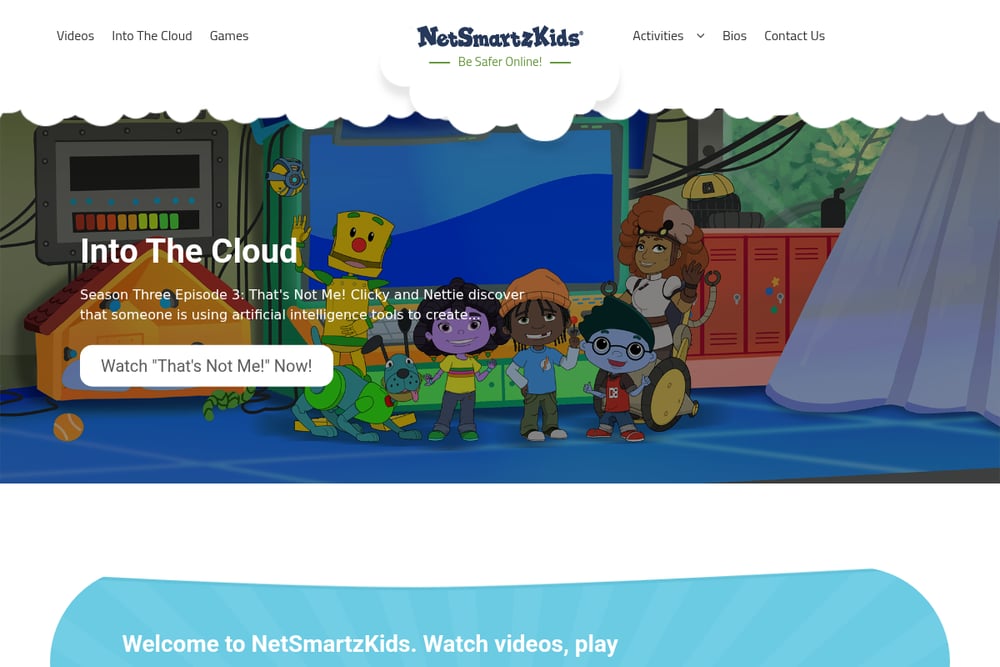
Created by the National Center for Missing & Exploited Children (NCMEC), NetSmartzKids offers a library of videos, games, and activities for children ages 5-10. The 'Into the Cloud' video series follows characters who encounter online risks like sharing too much or meeting strangers. Kids can also play 'Cloud Chaos!' and other games that test their knowledge. The content is age-appropriate and trusted by educators, but it leans heavily on passive video watching rather than active decision-making. A screenshot of the NetSmartzKids website.
#3 CSNP Kids Safety Resources
 A screenshot of the CSNP Kids Safety Resources website.
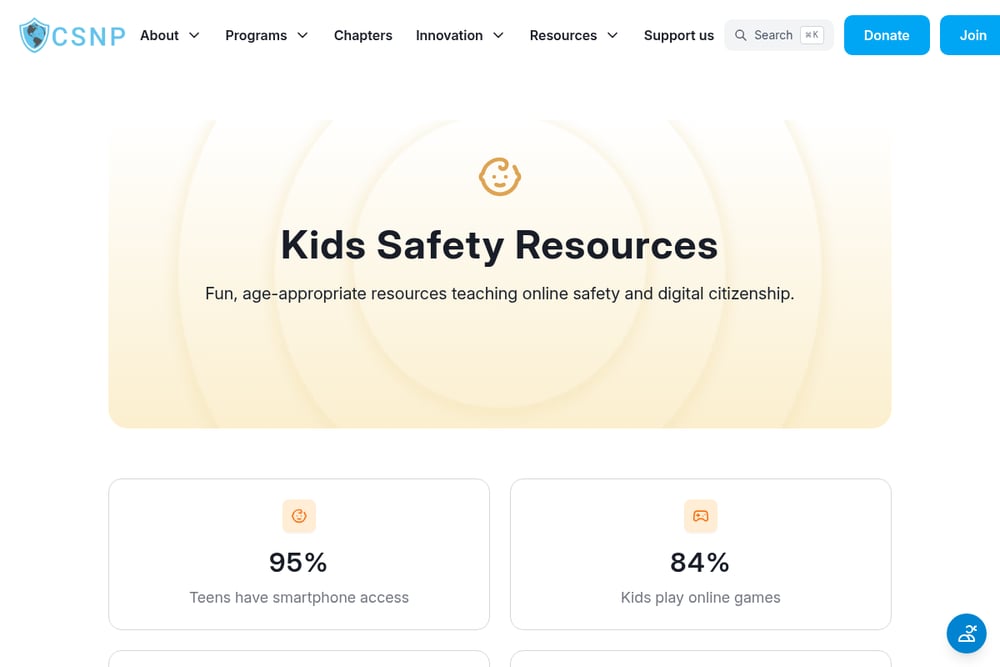
The Child Safety Network provides a collection of free, printable activity books and interactive games like the 'Internet Safety Adventure Game' and 'Digital Detective Mysteries.' These resources cover topics from password safety to gaming chat risks. The materials are designed for elementary and middle school students and include a Minecraft Safety Handbook and Fortnite Friend Safety Guide. While the variety is impressive, the experience is fragmented across multiple downloads and pages rather than a single immersive tool. A screenshot of the CSNP Kids Safety Resources website.
#4 The PlaySafe Game
 A screenshot of The PlaySafe Game website.
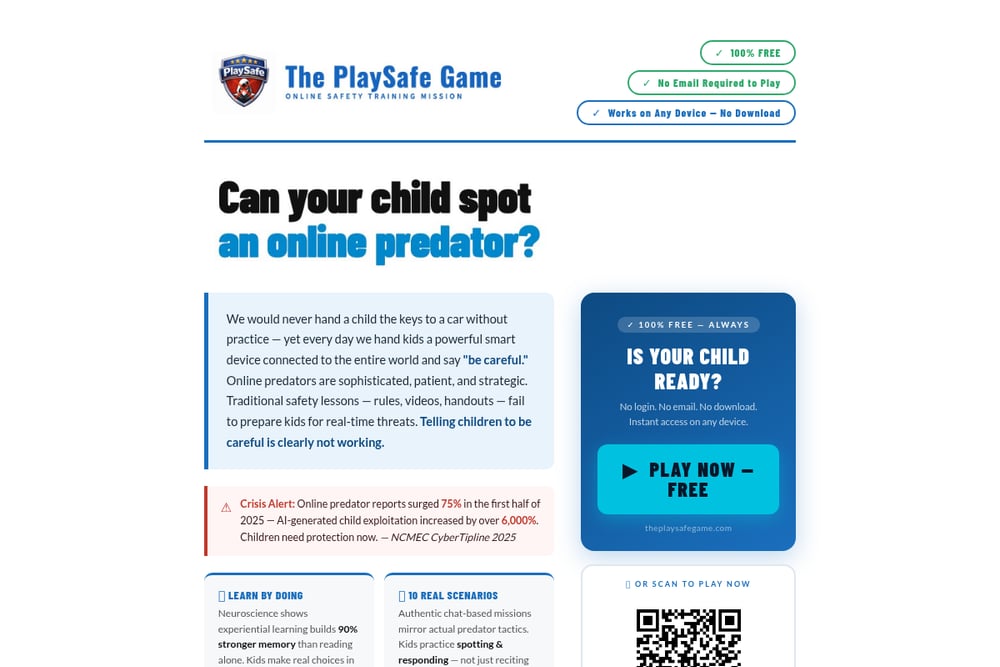
The PlaySafe Game is a free, interactive online tool that uses realistic chat-based scenarios to teach kids ages 10-16 how to spot and respond to online predators. Neuroscience shows experiential learning builds 90% stronger memory than reading alone, and this game delivers exactly that: kids make real choices in simulated predator conversations. With 10 authentic missions that mirror actual predator tactics, the entire experience takes under 15 minutes. Upon completion, kids earn a printable Online Safety Detective Badge and signed pledge certificate — proof of mastery they'll be proud of. No login, no email, no download required. A screenshot of The PlaySafe Game website.
#5 Disney Wild About Safety
 A screenshot of the Disney Wild About Safety website.
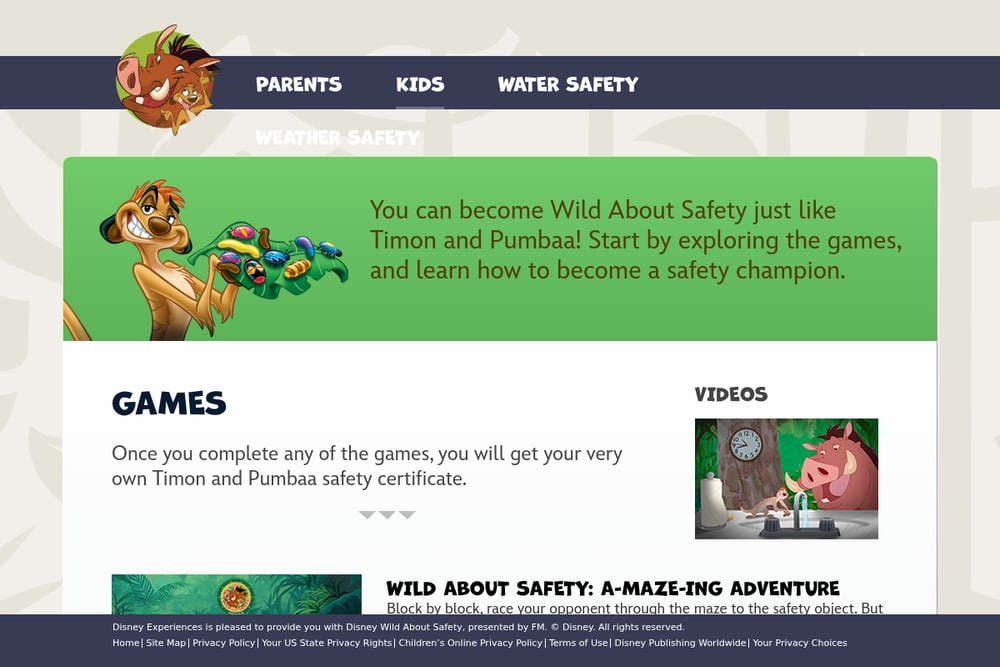
Disney's Wild About Safety features Timon and Pumbaa from 'The Lion King' in a series of free online games that teach general safety, including some internet safety tips. Kids can play maze puzzles, jumble games, and bubble-popping challenges to earn a printable safety certificate. The Disney branding makes it highly appealing to younger children, but the content focuses on broad safety (like crossing the street) rather than specific online predator tactics. It's a fun introduction but lacks the depth needed for today's digital threats. A screenshot of the Disney Wild About Safety website.
How to Choose the Right Tool for Your Child
Start with your child's age. For kids 5-10, Disney Wild About Safety or NetSmartzKids offer gentle introductions. For ages 7-12, Google Interland provides a polished, game-like experience. If your child is 10-16 and you want them to practice real predator conversations, The PlaySafe Game is the most direct and effective option. Consider your child's learning style: do they prefer videos, puzzles, or interactive chat? Also think about the setting — classroom, home, or community workshop. All tools on this list are free, so you can try multiple and see which resonates.
Build a Weekly Safety Workflow
Create a simple routine: every Sunday, have your child play one scenario from The PlaySafe Game (takes under 15 minutes). On Wednesday, watch one NetSmartzKids video together and discuss it. On Friday, let them explore Google Interland for 20 minutes. This three-touch approach reinforces lessons through different formats and keeps safety top of mind without overwhelming them.
The Bottom Line on Online Safety Tools
The days of 'just be careful' are over. With predator tactics evolving faster than ever, kids need hands-on practice to build real instincts. The PlaySafe Game stands out because it directly simulates the grooming conversations predators use, giving kids a safe space to make mistakes and learn. Combine it with Google Interland for broader digital citizenship and NetSmartzKids for foundational knowledge, and you'll have a comprehensive safety curriculum that actually works. Start today — no login, no cost, just a few minutes that could change how your child navigates the online world.