
If you're into digital art that feels alive, these five platforms let you bend code and color into something uniquely yours. From quick browser doodles to deep parametric playgrounds, here's where to start.
The State of Interactive Generative Art
Generative art has moved from niche coding circles to a mainstream creative outlet. Today, artists, designers, and hobbyists use browser-based tools to create everything from flowing silk-like patterns to complex fractal zooms. The appeal is simple: you set the rules, and the system draws. With real-time controls and instant feedback, these tools lower the barrier to entry while still offering depth for tinkerers. Whether you're making wallpapers, social media visuals, or just exploring, the scene is more accessible than ever.
How We Evaluated These Tools
We looked at each tool's ease of use, depth of customization, visual variety, and how well it fits different creative workflows. We also considered community features and whether the tool encourages experimentation. Each platform brings something different to the table, so the focus is on what stands out for each, not on crowning a single winner.
Here's a quick snapshot of the five tools we're diving into, from the most beginner-friendly to the most technically adventurous.
| Provider | Best For |
|---|---|
| Silk – Interactive Generative Art | Quick, meditative art sessions |
| soft lifes | Deep customization and atmospheric effects |
| Zazow :: Algorithmic Generative Art | Exploring multiple generative styles |
| generativeart.io | Understanding generative systems |
| Antlii | Designers needing video or vector outputs |
The Five Tools, Explored
#1 Silk – Interactive Generative Art
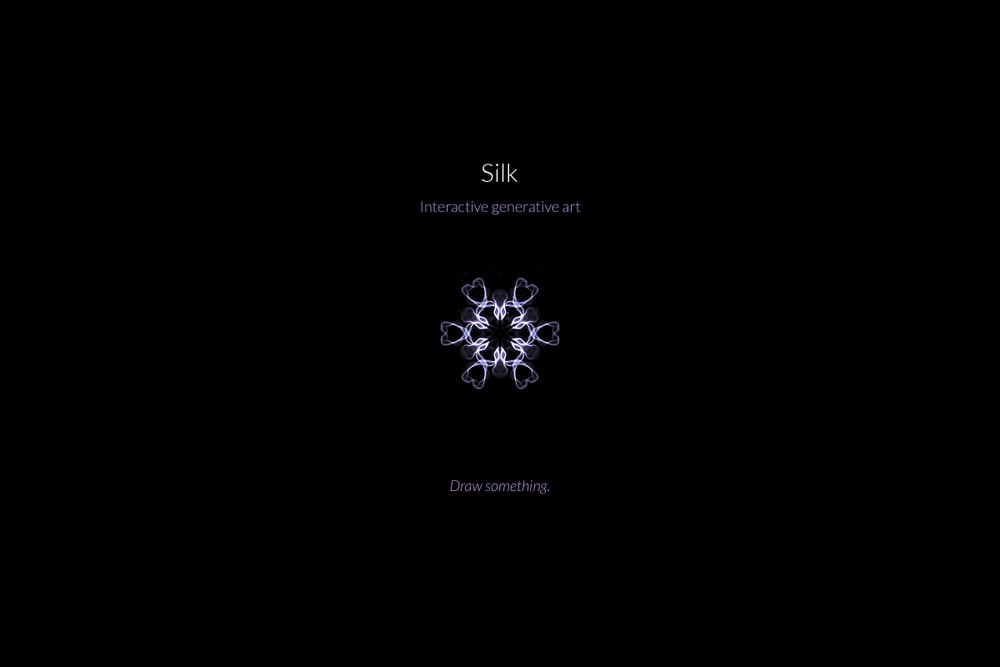 A screenshot of the Silk – Interactive Generative Art website.
Silk is a beloved classic that turns your mouse movements into flowing, symmetrical patterns. You drag to draw, and the tool mirrors your strokes across the canvas, creating intricate mandalas and organic shapes. It's incredibly intuitive—you can start making something beautiful within seconds, no tutorial needed. The sound design adds a meditative layer, making the whole experience feel almost therapeutic. If you want a quick, satisfying creative break, Silk is your go-to. It's perfect for beginners and anyone who loves pure visual play.
#2 soft lifes
 A screenshot of the soft lifes website.
Soft Lifes is a creative studio that's building a real-time generative art tool with a focus on mist and flow effects. The interface is packed with sliders for everything from swirl frequency to mouse wave strength, giving you granular control over your visuals. You can tweak performance settings, export your work as JSON, and even randomize all parameters for instant inspiration. It feels like a playground for digital painters who want to craft atmospheric, ever-changing scenes. The tool is early-stage but already shows serious depth for those who love to fiddle. If you're into experimental, human-and-machine collaboration, this one's worth watching.
#3 Zazow :: Algorithmic Generative Art
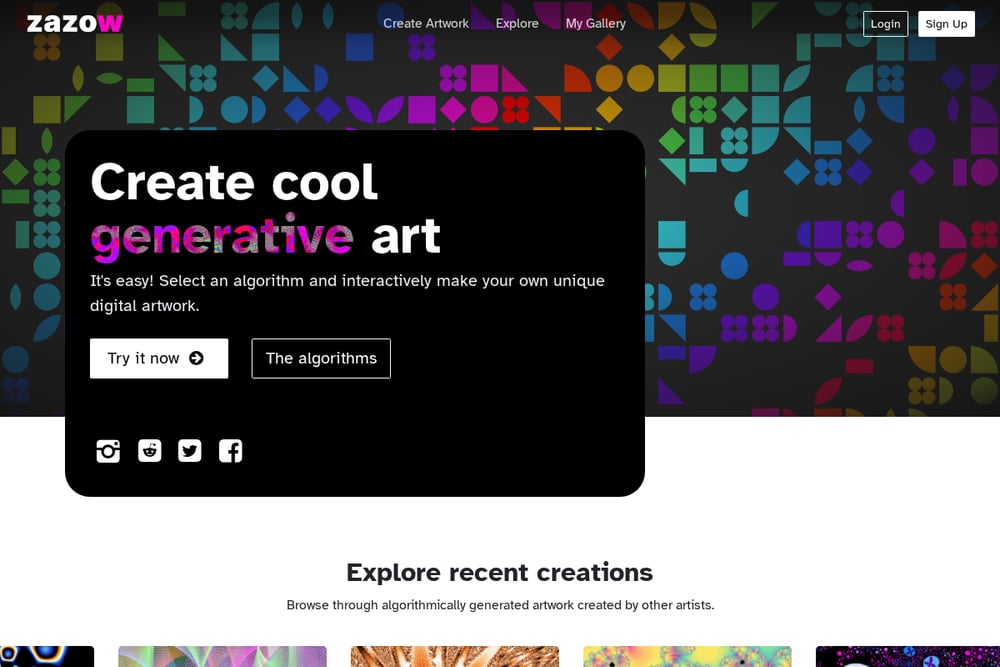 A screenshot of the Zazow :: Algorithmic Generative Art website.
Zazow offers a suite of algorithmic art generators, from Mandelbrot fractals to plasma flows and Bauhaus-style geometric tiles. You pick an algorithm, tweak the settings, and watch your artwork evolve in real time. It's easy to save your creations and share them with the community, or download them for use as wallpapers or video backgrounds. The variety of styles means you can switch from cosmic zooming to clean geometric patterns in a click. Zazow is great for exploring different generative techniques without needing to code. It's a solid choice for artists who want a bit of everything.
#4 generativeart.io
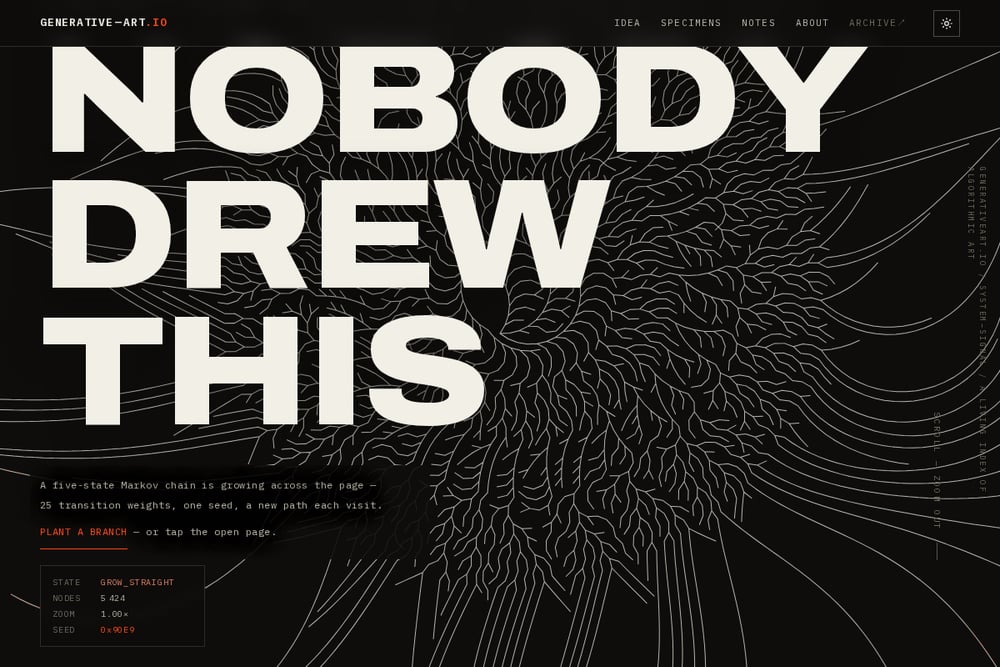 A screenshot of the generativeart.io website.
generativeart.io is a living index of algorithmic art, with a Markov chain system that grows a branching structure across the page. You can adjust transition weights and watch the drawing change in real time, all from a single seed. The site also features five different generative systems, each running live in your browser. It's more of an educational experience than a tool for creating finished pieces, but it's fascinating to see how rules and probabilities shape the output. If you're curious about the mechanics behind generative art, this is a great place to learn. It's a bit more abstract, but deeply rewarding for the curious mind.
#5 Antlii
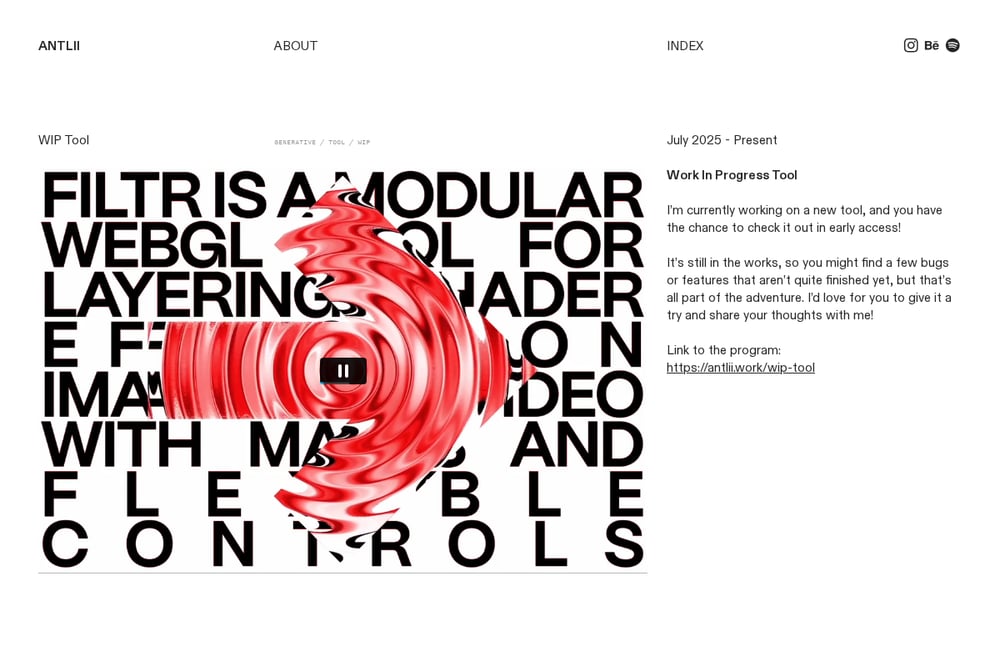 A screenshot of the Antlii website.
Antlii is a portfolio of generative tools, including a boids simulation for flocking behavior and a flake tool for creating symmetrical patterns. Each tool is parametric, meaning you can adjust sliders to control everything from agent separation to shape scale. The tools are web-based and output video or vector files, making them useful for motion graphics and design projects. Antlii also has a work-in-progress tool you can try in early access, so there's always something new to experiment with. It's a great resource for designers who want to incorporate generative elements into their work. The focus on practical outputs sets it apart.
How to Pick the Right Tool for You
Start by thinking about what you want to create. If you're after a quick, relaxing creative session, Silk is your best bet. If you love tweaking every parameter and want deep control, soft lifes offers that granularity. For variety, Zazow gives you multiple algorithms to play with. If you're more interested in the theory behind generative art, generativeart.io is a fascinating dive. And if you need outputs for professional projects, Antlii's video and vector exports are handy. Try a couple and see which one feels right for your workflow.
Automating Your Generative Art Workflow
You can integrate these tools into a more automated pipeline. For instance, use soft lifes to generate a base image, then export it as JSON and feed it into a script that tweaks parameters and renders multiple variations. With Zazow, you can save your settings and batch-create different color schemes. For Antlii, you can use the parametric controls to generate a series of frames for animation. The key is to treat the tool as a module in your larger creative system, letting you produce a whole family of artworks from a single seed.
The Takeaway
Interactive generative art is a playground for the imagination, and these five tools each offer a unique doorway in. Whether you're a casual doodler or a serious designer, there's something here to spark your creativity. Start with Silk for instant gratification, then dive into soft lifes for deeper control. Explore Zazow for variety, generativeart.io for understanding, and Antlii for professional outputs. The best part? You don't need to be a coder to make something stunning. So go ahead, play with the sliders, and see where the algorithms take you.